Essays
126 audiobooks
To encounter an essay is to sit down with a keen mind, to be invited into a thought process, to share in a moment of genuine reflection. It is a form that prizes the individual voice, offering a singular perspective on subjects grand and small, abstract and immediate. Listeners turn to essays when they seek not merely information or entertainment, but companionship in contemplation. They come for the direct address, the persuasive argument, the intimate confession, or the sharp social observation, all delivered with the careful craft of someone wrestling with an idea, inviting you to wrestle alongside them. This literary form provides a quiet space for mental engagement, a chance to slow down and consider the nuances of human experience through the lens of another.
The essay as a distinct literary form first appeared in the late 16th century, owing its very name and initial character to the French philosopher Michel de Montaigne. He coined the term "essai," meaning an "attempt" or "trial," to describe his written reflections which made no pretense of offering definitive answers. Instead, Montaigne’s writings were explorations of his own mind, his experiences, and his readings, moving fluidly from topic to topic with a disarming honesty and an almost conversational tone. His work liberated personal thought from rigid academic structures, opening the door for future writers to express doubt, curiosity, and subjective experience. This spirit of personal inquiry laid the groundwork for the genre's enduring appeal, celebrating the act of thinking itself.
Following Montaigne’s groundbreaking work, the essay evolved, adapting to the intellectual currents of successive centuries. In England, Francis Bacon soon adopted the form, though his essays were more concise, aphoristic, and didactic, offering practical wisdom on morality, politics, and life with a detached, authoritative voice. The 18th century saw the rise of the periodical essay, exemplified by Joseph Addison and Richard Steele in *The Spectator*. These daily papers used essays to comment on social manners, current events, and moral philosophy with wit and elegance, aiming to cultivate refined taste and virtuous behavior among a wider reading public. The Romantic era then brought a resurgence of the personal essay, with writers like Charles Lamb and William Hazlitt crafting pieces rich in sentiment, memory, and subjective impression, often blurring the lines between autobiography and critical thought. The essay became a versatile tool for both public discourse and private introspection, capable of carrying the weight of philosophical argument or the lightness of a passing fancy.
Listeners will discover the profound introspection of Michel de Montaigne’s *Essays*, first published between 1580 and 1588. Here, Montaigne openly discusses his fears, habits, and opinions, using himself as the primary subject for understanding humanity. His work stands as the genre’s origin, a testament to the power of self-examination. Shortly after, Francis Bacon's *Essays*, appearing in various editions from 1597 to 1625, offered a contrasting style: short, pithy observations on human affairs, ambition, and morality. Bacon's writing provided a more formal, instructional approach, packing complex thoughts into memorable maxims, a style influential for centuries. Later, the collaborative brilliance of Joseph Addison and Richard Steele brought us *The Spectator* papers, published daily from 1711 to 1712. These essays entertained and instructed London society, offering keen social commentary and moral reflections through fictional personas, shaping public opinion with engaging prose.
The 19th century further expanded the essay’s scope. Charles Lamb’s *Essays of Elia*, published in 1823, charmed readers with its whimsical, nostalgic accounts of London life, literary anecdotes, and deeply personal reflections on friendship and solitude. Lamb’s distinct voice, full of warmth and eccentricity, defined the familiar essay for generations. William Hazlitt, a contemporary of Lamb, delivered sharp literary criticism and incisive observations on art, politics, and life in collections like *Table-Talk* (1821-1822). Hazlitt’s essays are known for their intellectual vigor and passionate arguments, challenging readers to consider ideas anew. Across the Atlantic, Ralph Waldo Emerson’s *Essays: First Series* (1841) offered a cornerstone of American Transcendentalism, advocating for self-reliance, individualism, and a connection to nature, inspiring a generation with its philosophical depth. His contemporary, Henry David Thoreau, presented his profound meditations on simple living, nature, and civil disobedience in *Walden; or, Life in the Woods* (1854), a work often considered a long-form essay that continues to shape environmental and social thought. Finally, John Ruskin, a towering figure of Victorian England, gave us *Sesame and Lilies* (1865), a powerful critique of society, education, and art, arguing for moral purpose and beauty in all aspects of life.
Listeners can expect certain major themes and conventions within the form. Essays often present a singular, well-developed argument or a series of interconnected reflections on a chosen subject. Common recurring subjects include reflections on nature, meditations on art and literature, social and political critique, philosophical inquiry into ethics and existence, and deeply personal reminiscences. The essay typically features a clear, individual voice, an open demonstration of the writer's thought process, and a nuanced consideration of complexities rather than dogmatic pronouncements. While some essays aim to persuade with logical rigor, others seek to evoke an emotion, prompt contemplation, or simply share a unique perspective on the ordinary.
The essay finds a particularly comfortable home in the audiobook format. The pacing inherent in a well-written essay—the ebb and flow of thought, the carefully constructed argument, the deliberate unfolding of an idea—lends itself naturally to spoken delivery. A skilled narrator can perfectly capture the author’s voice, whether it is Montaigne’s gentle wandering, Bacon’s crisp authority, Lamb’s tender whimsy, or Emerson’s earnest exhortation. The intimacy of a voice speaking directly to the listener creates an atmosphere akin to a private conversation with a brilliant mind, allowing the listener to absorb complex thoughts at their own rhythm. This direct connection transforms what might be dense on the page into an engaging, auditory experience, making the essay an ideal companion for moments of quiet reflection, commutes, or simply unwinding with a compelling idea.
We invite you to experience the rich and varied world of essays. From the first tentative attempts at self-understanding to incisive critiques of society, these audiobooks offer direct access to some of history's most compelling thinkers. A quiet moment with a good essay can open new perspectives and spark your own reflections. Take this opportunity to discover your next intellectual companion among the 127 titles available in this category on our site.
1st ed. Days Off and Other Digressions
A Lecture On Heads. As Delivered By Mr. Charles Lee Lewes, To Which Is Added, An Ess- Full Audiobook
A Miscellany of Men
A Review of Uncle Toms Cabin: Or an Essay on Slavery
A Traveller in Little Things (Collected Works of W. H. Hudson)
Afoot in England (Stanfords Travel Classics)
American Sketches
An Essay On Mediaeval Economic Teaching (1920)
An Essay On The American Contribution: And The Democratic Idea
An Essay on the History of Civil Society
An Essay on the Trial
And Even Now
Arrows of Freethought
As Seen By Me
As We Are and As We May Be
Back Home
Backlog Studies
Being a Boy
Bible Studies: Essays on Phallic Worship and Other Curious Rites and Customs
Birds and Bees, Sharp Eyes, and Other Papers
Books And Culture
Cambridge Sketches
Collected Articles of Frederick Douglass
Cornelius O'Dowd: Upon Men and Women and Other Things in General
Critiques and Addresses
Crowded Out! and Other Sketches
Darwiniana: Essays And Reviews Pertaining To Darwinism
Days with Sir Roger De Coverley
Dollars and Sense

England and the War
Escape, and Other Essays
Essays in War-Time Further Studies in the Task of Social HygieneEllis, Havelock,
Essays of Michel de Montaigne (Volume 10)
Essays of Michel de Montaigne (Volume 13)
Essays of Michel de Montaigne (Volume 14)
Essays of Michel de Montaigne (Volume 15)
Essays of Michel de Montaigne (Volume 7)
Essays of Michel de Montaigne Volume 17
Essays of Michel de Montaigne — Volume 05
Essays of Michel de Montaigne — Volume 08
Essays of Michel de Montaigne — Volume 16
Essays of Robert Louis Stevenson. Selected and Edited With an Introduction and Note
Essays on Political Economy
Essays on Work and Culture
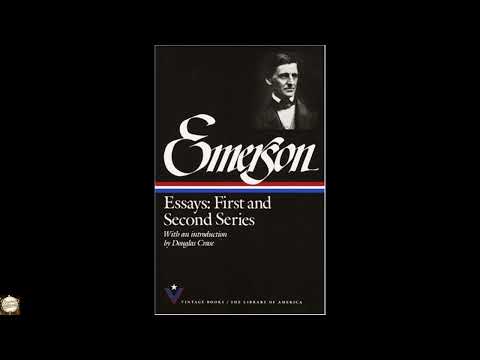
Essays: First and Second Series
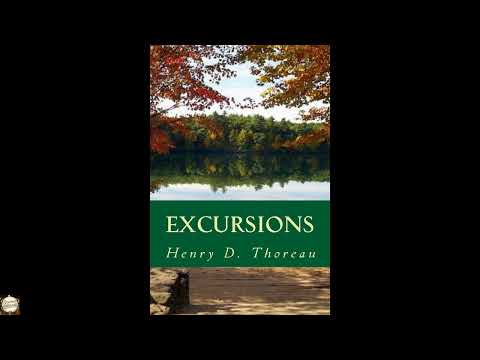
Excursions
Facts and Fictions of Life
For Every Music Lover: A Series Of Practical Essays On Music
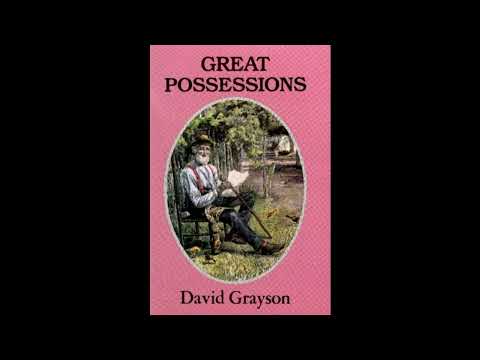
Great Possessions: A New Series of Adventures
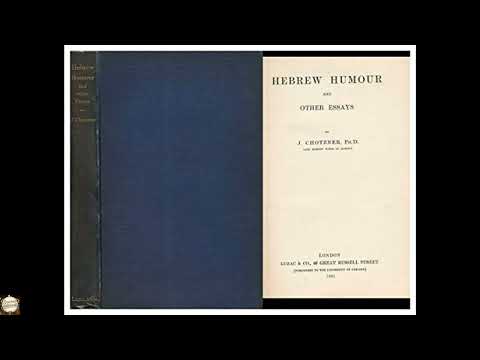
Hebrew Humour and Other Essays
Historical Essays
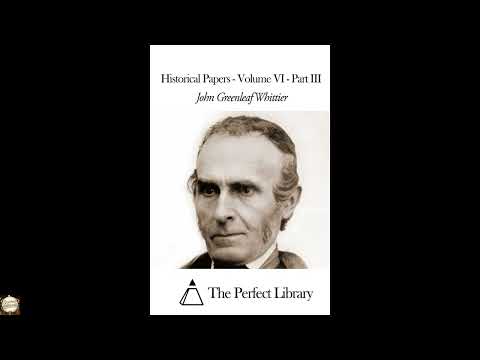
Historical Papers - Volume VI - Part III
Hospital Sketches
How It Feels to Be Fifty
How to Tell a Story And Other Essays
Humanly Speaking
Hunting sketches
Imaginations and Reveries
Impressions and Comments
In a green shade; a country commentary
Lectures on Art
Lessons in Life: A Series of Familiar Essays
Levels of Living: Essays on Everyday Ideals
Literary and Social Essays
Little Ferns For Fanny's Little Friends
Little rivers;: A book of essays in profitable idleness
Love, Life & Work: Being a Book of Opinions Reasonably Good-Natured Concerning How
Magazine, or Animadversions on the English Spelling (1703) (Classic Books)
Matisse Picasso and Gertrude Stein. With Two Shorter Stories
Memorials and Other Papers
Miscellaneous Essays

Miscellaneous Prose
Mornings in Florence
Mushrooms on the Moor
My Summer in a Garden
Narrative and Miscellaneous Papers Volume I
Nine Short Essays
No Refuge But in Truth
Obiter Dicta
Old Junk
Old Picture Books with Other Essays on Bookish Subjects
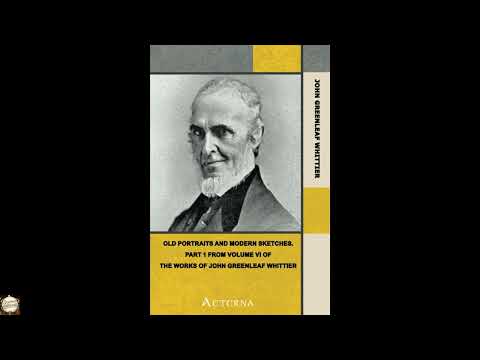
Old Portraits and Modern Sketches. Part 1 from Volume VI of The Works of John Green
On Horseback
On Nothing and Kindred Subjects
On Something
On the Choice of Books
Our Village
Over the Fireside with Silent Friends
Over the Teacups
Pagan Papers

Pages From an Old Volume of Life: A Collection of Essays, 1857-1881
Pebbles on the Shore Alpha of the Plough
Penelope's progress; being such extracts from the commonplace book of Penelope Hami
Reflections and Comments, 1865-1895
Reflections on the Decline of Science in England
Reveries of a Schoolmaster
Round about a Great Estate
Roundabout Papers
Saunterings
Search-Light Letters
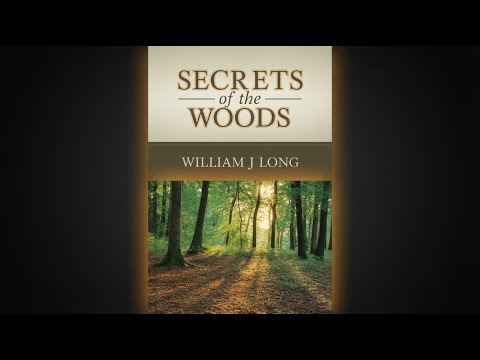
Secrets of the Woods
Selections From the Works of John Ruskin
Sketches
Sketches and Studies
Sketches from Concord and Appledore
Sketches from Memory(From: The Doliver Romance and Other Pieces: Tales and Sketches
Studies and Essays: Quality and Others
The Aesthetical Essays
The Essays of Montaigne - Volume 04
The Essays of Montaigne - Volume 06
The Essays of Montaigne - Volume 09
The Essays of Montaigne - Volume 12
The Essays of Montaigne - Volume 18
The Essays of Montaigne - Volume 19
The Essays of Montaigne, Volume 11
The Essays of Montaigne, Volume 2
The Plain Man and His Wife
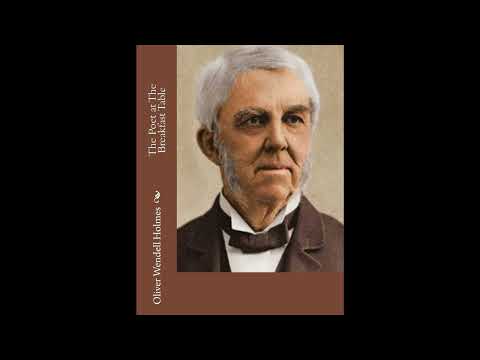
The Poet at The Breakfast Table
The Profits of Religion: An Essay in Economic Interpretation

The Project Gutenberg Collection of Works
The Relation of Literature to Life
The Voice of the Machines - An Introduction to the Twentieth Century
The Way to Peace

Times Square hits completely different after dark #NYC #nightlife #perspective

Visión de Anáhuac (1519) Alfonso Reyes