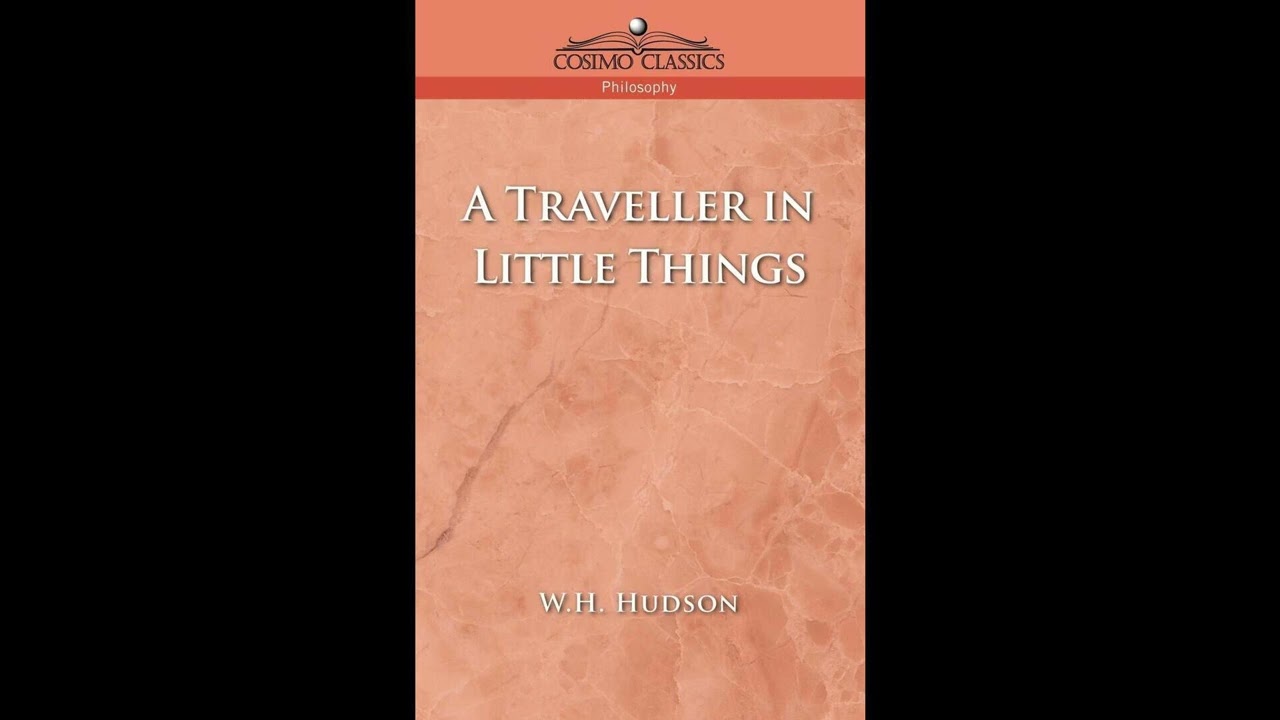
A Traveller in Little Things (Collected Works of W. H. Hudson)
"A Traveller in Little Things" is an invitation to pause, look closer, and rediscover profound beauty hidden within the world's seemingly insignificant corners. This compelling collection, bearing the name of W. H. Hudson, gathers essays and observations celebrating nature's quiet miracles and rural life's gentle rhythms. In an age often overwhelmed by speed, this audiobook offers a restorative counterpoint, guiding the listener through landscapes both wild and domesticated, revealing the complex connections that bind all living things. It champions attentiveness as a virtue, urging us to find wonder not in grand gestures, but in a bird's wing, a subtle shift of light, or a country elder's wisdom—lessons resonating with clarity and purpose today. While not a novel with a single storyline, "A Traveller in Little Things" constructs a unique narrative arc through its diverse essays. The listener becomes a silent companion to an ever-observant protagonist, a figure who moves through landscapes with spiritual reverence. This "traveller" is less interested in grand adventures than intimate details. The setting oscillates between the English countryside and the South American pampas, reflecting the writer's broad experiences. Each essay offers a brief, vivid encounter—with a rare bird, an eccentric villager, or a plant holding a hidden secret. The central "conflict" is the narrator's gentle struggle to truly see and convey the essence of these fleeting moments, rescuing them from oblivion against modern indifference and nature's erosion. The characters are as varied as the natural world itself: a robin, an old woman, the wind. Through these encounters, the "story" unfolds as a cumulative effect, building a panoramic view of a world imbued with delicate beauty and profound meaning, often overlooked. The arc is one of deepening understanding and appreciation, leaving the listener with heightened wonder and an ongoing invitation to observe. The name W. H. Hudson, prominently featured in the title, signifies a particular kind of writer associated with the late nineteenth and early twentieth centuries, who cultivated a distinctive voice in nature writing. While the precise authorship details for this specific compilation may be listed as "Unknown"—a common occurrence with older texts whose origins blur—the works bear the unmistakable hallmarks of a tradition pioneered by writers like Hudson. This tradition embraces scientific curiosity, poetic sensibility, and a deep, empathetic connection to the natural world. Such writers often spent formative years immersed in wild landscapes, developing an unparalleled intimacy with birds, plants, and seasonal shifts. These observers were typically self-taught naturalists, relying on keen eyesight and patient vigil. They translated nature's elaborate language into prose both scientifically accurate and deeply evocative. Their contribution rests in bridging the gap between scientific observation and lyrical expression, shaping a genre that profoundly influenced how readers perceived their environment. Through their writings, they documented biodiversity and articulated a philosophy of living in harmony with nature, often lamenting the encroaching industrial world and advocating for thoughtful interaction with the earth. Their unique place comes from their role as both chroniclers and advocates for a vanishing world. One core theme resonating through this collection is the sacredness of the ordinary. The writer consistently elevates moments and creatures often dismissed as mundane—a swallow skimming water, the quiet tenacity of a wildflower. These aren't merely descriptive passages; they are imbued with wonder and revelation. For instance, a seemingly simple observation of a beetle meticulously navigating a twig becomes a meditation on purpose and resilience, revealing complex drama unfolding in miniature. The text makes a powerful argument that true beauty and meaning are found not in the spectacular, but in the persistent, humble presence of everyday things, waiting for an attentive eye. Another significant theme is the fragility of nature and the fading of traditional ways of life. Many pieces carry an undercurrent of elegy, a quiet mourning for what is being lost in the march of progress. The narrator often contrasts the enduring wisdom of country folk, whose lives are deeply intertwined with the land, against the encroaching anonymity of urban expansion. We might witness a poignant description of an ancient hedgerow, teeming with life, now threatened by development, or hear recollections of an old shepherd whose knowledge is on the brink of disappearing. This lends the writing urgency, transforming simple observations into a plea for conservation and a lament for the erosion of ecological and cultural heritage. The late nineteenth and early twentieth centuries, when these works were likely penned, witnessed profound shifts. Industrialization reshaped landscapes and societies, drawing populations into cities. This era also saw the rise of empirical science and natural history, spurred by figures like Charles Darwin. Simultaneously, cultural anxiety grew about the loss of wilderness and a romanticized agrarian past. Against this backdrop, a distinct literary movement emerged. Writers sought to document, celebrate, and often lament the natural world. These keen observers of nature and rural life provided an antidote to perceived urban harshness, offering readers a return to fundamental truths found in nature's cycles. Their writings shaped public awareness and appreciation for the natural world at a critical juncture. Listening to "A Traveller in Little Things" as an audiobook transforms the quiet act of reading into an immersive, meditative experience. The length of several hours allows for sustained engagement, perfect for long walks in nature, quiet evenings, or daily commutes where calm reflection is sought. The narrator's voice becomes the very guide the text implies—a thoughtful, patient presence leading the listener through each delicate observation. Pay attention to the subtle shifts in pacing, reflecting moments of intense focus versus expansive contemplation. This auditory presentation brings to life the nuanced prose, making each "little thing" resonate with profound clarity and beauty, almost as if secrets of the natural world are whispered directly into your ear.
Enjoyed A Traveller in Little Things (Collected Works of W. H. Hudson)? A few ways to support us
Audible & Amazon links are affiliate; we may earn a small commission at no extra cost.
About this production
Human narration by a volunteer reader from LibriVox.org, the public-domain audiobook project. LibriVox volunteers record literary works whose copyright has expired in the United States, releasing the resulting recordings into the public domain.
A Traveller in Little Things (Collected Works of W. H. Hudson) by W. H. Hudson. The underlying text is in the U.S. public domain. We do not republish any modern copyrighted edition, translation, or commentary.
The 4K cinematic visuals accompanying this audiobook are generated by an AI image model from prompts derived from the source text. No copyrighted photos, paintings, or stock footage are used. AI generation is disclosed on every video on our YouTube channel as required by YouTube's altered/synthetic content policy.
English subtitles are transcribed from the LibriVox recording with OpenAI Whisper. Translations into the 11 other supported languages are produced by Meta's NLLB-200 neural translation model. No human translator's copyrighted translation is used.
Questions about sourcing or rights? See our DMCA & Sourcing policy or contact us.
Enjoyed this audiobook?
If you'd like to own a copy of A Traveller in Little Things (Collected Works of W. H. Hudson) or hear a professionally produced edition, the links below help support free audiobook production at no extra cost to you.
As an Amazon Associate we earn from qualifying purchases. Audible / print links are affiliate.