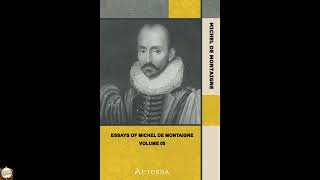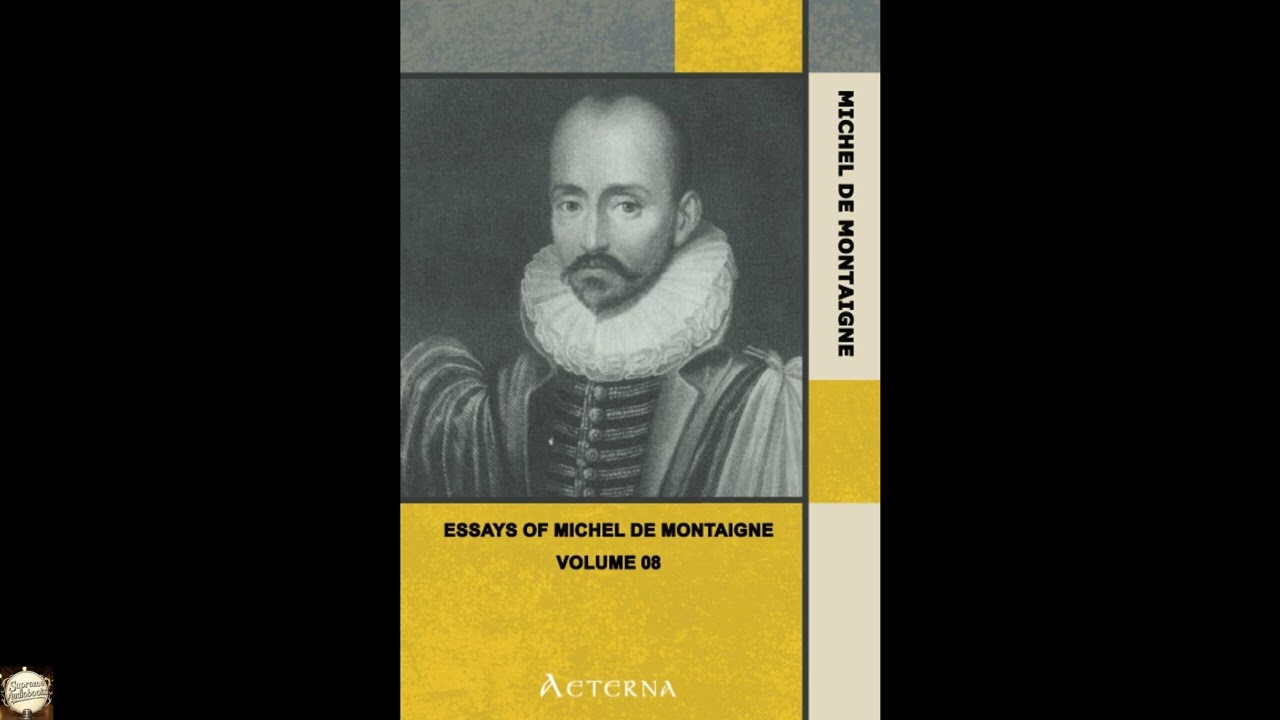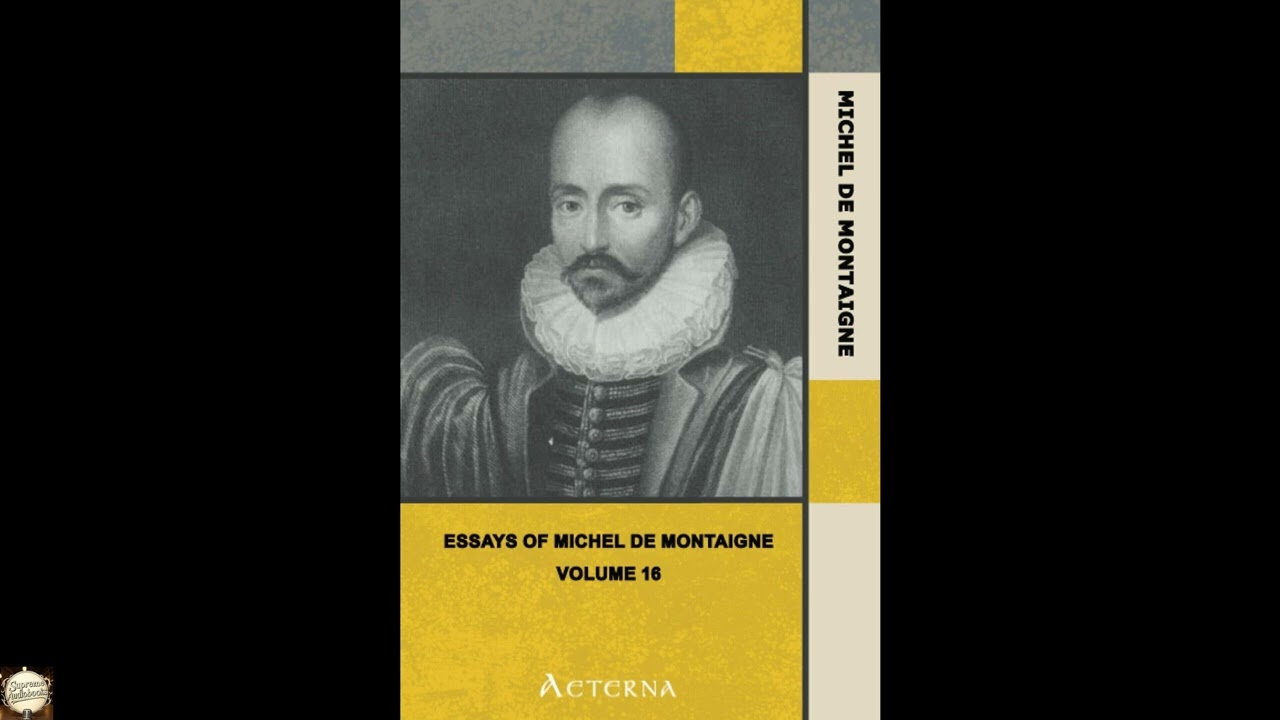
Essays of Michel de Montaigne (Volume 14)
Open the door to a mind that revolutionized how we understand ourselves, a voice from the sixteenth century that feels startlingly contemporary. Michel de Montaigne’s Essays, presented here in Volume 14, are not mere academic treatises but candid conversations with a brilliant, questioning spirit. Imagine sitting down with a remarkably intelligent friend who possesses an unparalleled gift for introspection, a companion willing to lay bare his own doubts, contradictions, and observations on the human condition without pretense. This collection offers a profound invitation to self-reflection, making it not just a cornerstone of Western literature but a guiding light for anyone seeking clarity and wisdom in a complex world, a direct link to the intellectual ferment of the Renaissance that continues to resonate with our own anxieties and triumphs. Montaigne’s Essays offer no traditional plot in the narrative sense; there are no heroes on an epic quest, no villains to overcome, no romantic entanglements. Instead, the central figure is Montaigne himself, as he attempts to sketch his own changing visage on the page. His setting is often his library tower, a sanctuary from the tumultuous French Wars of Religion that raged outside his chateau in Périgord. Here, surrounded by books and the quiet hum of his own thoughts, he turns inward, making himself both the subject and the object of his intense scrutiny. He records his opinions on everything from the mundane details of daily life—his eating habits, his memory, his bodily functions—to the grand philosophical questions of existence, death, friendship, and the nature of truth. The central 'conflict,' if one can call it that, is Montaigne’s relentless intellectual pursuit of understanding, not just of the world, but primarily of himself. He grapples with the unreliability of human reason, the shifting sands of custom and opinion, and the profound uncertainty that marks our brief lives. The 'arc' of these essays is the evolving portrait of a mind in motion, a continually revised and expanded self-examination. He does not aim for definitive answers but for a frank accounting of his current thoughts, often contradicting himself from one essay to the next, or even within the same piece, mirroring the inconsistencies he observes in all people. The beauty lies in witnessing this process unfold, a stream of consciousness that, for the first time in literary history, became a subject worthy of its own expansive attention. Michel de Montaigne was born in 1533 at the Château de Montaigne in the Aquitaine region of France, to a wealthy aristocratic family. His education was unusual and thorough; his father, a prosperous merchant, ensured he learned Latin as his first language, speaking to him exclusively in it, a pedagogical experiment that shaped his intellectual development. He pursued a career in law, serving as a magistrate in the Parlement of Bordeaux, where he befriended Étienne de La Boétie, whose early death profoundly affected Montaigne and became a significant impetus for his later writing. In 1571, weary of public life and the constant political strife, Montaigne retired to his estate, converting his third-floor tower into a study adorned with classical texts and inscriptions. It was in this peaceful retreat that he began to write what would become the Essays, dedicating himself to a profound program of self-observation and reflection. He published the first two books in 1580, and a greatly expanded edition, including a third book, in 1588. Throughout this period, he also served a term as mayor of Bordeaux and acted as a diplomatic intermediary between the Catholic King Henry III and the Protestant Henry of Navarre (the future King Henry IV) during the height of the French Wars of Religion. Montaigne's unique blend of classical learning, personal anecdote, and profound skepticism positioned him at the vanguard of Renaissance humanism, though he was often critical of human arrogance. He died in 1592, leaving behind a work that would forever change the landscape of literature. The Essays resonate with several fundamental themes. Foremost among them is self-knowledge and introspection. Montaigne's project is, at its core, an attempt to know himself, famously declaring, "I want to paint my passage, not a stayed object." He constantly monitors his own faculties, his memory, his bodily sensations, his changing moods, presenting a dynamic and often contradictory image of a thinking individual. For instance, in an essay discussing the unreliability of memory, he candidly admits to his own poor retention, using this personal failing as a springboard for broader observations on human fallibility. Another significant theme is skepticism and doubt, particularly evident in his monumental "An Apology for Raymond Sebond." Here, Montaigne dismantles the pretensions of human reason, arguing that our intellect is limited and prone to error, incapable of grasping ultimate truths with certainty. He suggests that custom and habit often dictate our beliefs more than sound reasoning, fostering a humility about human knowledge that was revolutionary for his time. A third theme is humanism and the acceptance of contradiction. Montaigne embraces the full spectrum of human experience, including our physical nature, our passions, and our inconsistencies. He sees these not as flaws to be overcome, but as integral parts of what it means to be human. He muses on how we are "marvelously vain, diverse, and undulating," celebrating this complexity rather than trying to smooth it over. He can discuss the most profound philosophical questions and then, without apology, pivot to the mundane details of his digestive system, showing how the high and low, the spiritual and the corporeal, are interwoven in our existence. Finally, his work often touches upon the art of living—how one might navigate the complexities of life, death, friendship, and society with a degree of grace and equanimity. He offers no prescriptive doctrines but rather a model of a mind grappling honestly with these challenges, suggesting that wisdom comes not from certainty but from continuous, open-ended inquiry. Montaigne wrote during a period of intense upheaval in Europe. The mid-to-late sixteenth century saw the bloody French Wars of Religion tearing his homeland apart, fracturing traditional social and political structures. The rise of Protestantism challenged the monolithic authority of the Catholic Church, leading to widespread sectarian violence and a crisis of faith. Intellectually, the Renaissance was in full swing, rediscovering classical antiquity and placing a new emphasis on human potential and achievement, yet Montaigne's skepticism offered a counterpoint to the era's burgeoning confidence in human reason. Furthermore, the Age of Discovery was bringing Europeans into contact with vastly different cultures, raising questions about ethnocentrism and the relativity of customs and beliefs. Montaigne’s Essays emerged as a direct response to this turbulent environment, a personal retreat into introspection as a means of finding stability amidst chaos, a private search for truth when public certainties were crumbling. His work offered a sanctuary of individual thought, proposing that a clear-eyed understanding of oneself might be the most reliable compass in a world turned upside down. Listening to Essays of Michel de Montaigne (Volume 14) as an audiobook offers a uniquely intimate experience of this foundational text. The very nature of Montaigne’s prose—meandering, conversational, deeply personal—lends itself perfectly to the spoken word. A skilled narrator can bring Montaigne’s voice to life, allowing the listener to feel as though they are sharing a quiet moment with the philosopher in his tower study, privy to his most private musings. The measured pacing of the narration allows ample time for reflection, encouraging the listener to pause and ponder Montaigne’s often profound or surprisingly witty observations. Listen for the subtle inflections that convey Montaigne’s renowned skepticism, his gentle humor, and his profound humanity. The sustained run length of these essays means you can return to Montaigne’s company again and again, letting his thoughts wash over you during commutes, quiet evenings, or moments of deep concentration, transforming a solitary reading into a shared act of contemplation.
Enjoyed Essays of Michel de Montaigne (Volume 14)? A few ways to support us
Audible & Amazon links are affiliate; we may earn a small commission at no extra cost.
About this production
Human narration by a volunteer reader from LibriVox.org, the public-domain audiobook project. LibriVox volunteers record literary works whose copyright has expired in the United States, releasing the resulting recordings into the public domain.
Essays of Michel de Montaigne (Volume 14) by Michel de Montaigne. The underlying text is in the U.S. public domain. We do not republish any modern copyrighted edition, translation, or commentary.
The 4K cinematic visuals accompanying this audiobook are generated by an AI image model from prompts derived from the source text. No copyrighted photos, paintings, or stock footage are used. AI generation is disclosed on every video on our YouTube channel as required by YouTube's altered/synthetic content policy.
English subtitles are transcribed from the LibriVox recording with OpenAI Whisper. Translations into the 11 other supported languages are produced by Meta's NLLB-200 neural translation model. No human translator's copyrighted translation is used.
Questions about sourcing or rights? See our DMCA & Sourcing policy or contact us.
Enjoyed this audiobook?
If you'd like to own a copy of Essays of Michel de Montaigne (Volume 14) or hear a professionally produced edition, the links below help support free audiobook production at no extra cost to you.
As an Amazon Associate we earn from qualifying purchases. Audible / print links are affiliate.