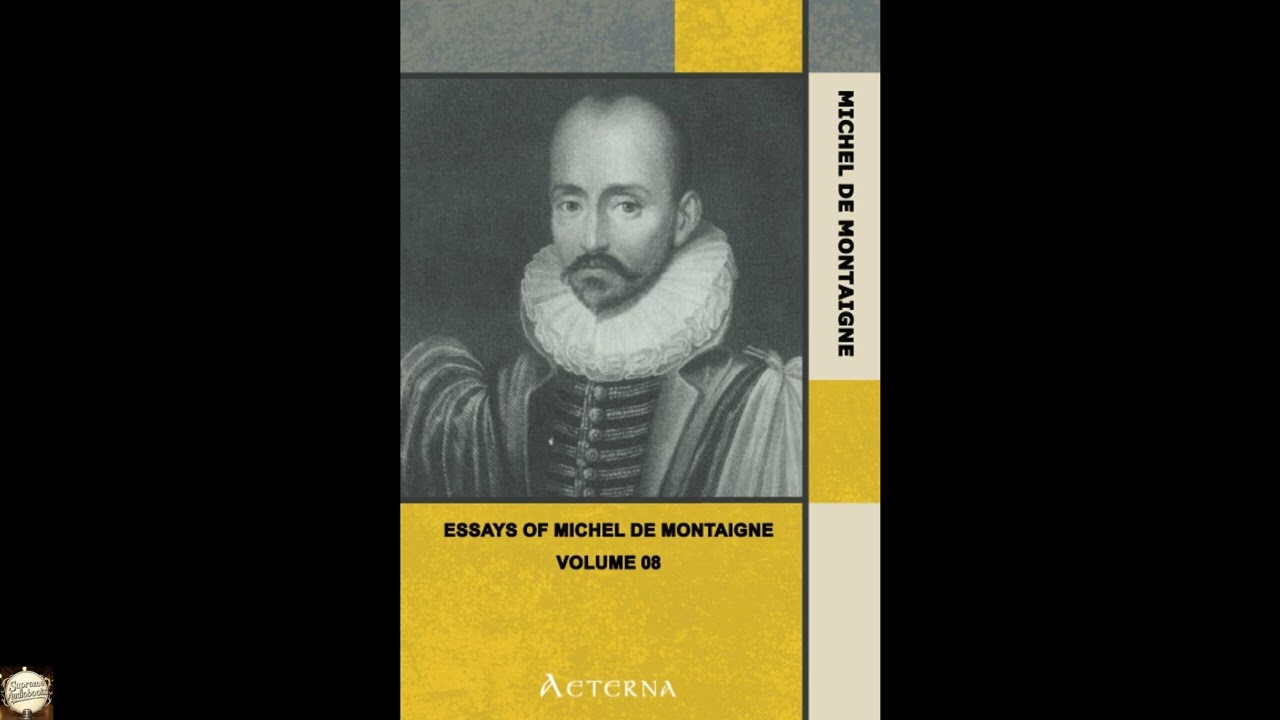
Essays of Michel de Montaigne (Volume 15)
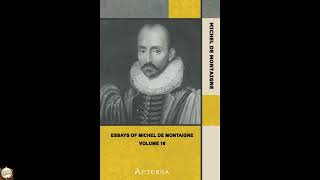
The very first "essays" – the attempts, the mental wanderings of Michel de Montaigne – introduced a revolutionary way of thinking: a radical turn inward still echoing in our age of self-reflection. "Essays of Michel de Montaigne (Volume 15)" offers listeners a vital segment of this foundational literary project, engaging directly with a mind that scrutinized itself, dissected human nature, and questioned prevailing wisdom. Why listen to a 16th-century French nobleman? Montaigne’s candid observations on fear, friendship, grief, education, and the strangeness of being human are as pertinent today as centuries ago. His relentless pursuit of self-knowledge laid the groundwork for modern autobiography, psychology, and critical self-thought. Montaigne's "Essays" do not unfurl a conventional narrative with characters or storyline, yet they present a profound intellectual unfolding, a "story" of a mind in constant motion. The setting for this intimate drama is Montaigne's private study, a circular library tower on his southwestern French estate, its walls inscribed with Greek and Latin maxims. From this sanctuary, Montaigne, the singular protagonist, directs his gaze both inward and outward. He presents himself not as a philosopher delivering grand pronouncements, but as an ordinary man grappling with life's big questions, inviting the listener to witness his intellectual process, his doubts, and changing perspectives. His method is to take any subject – a classical quotation, a personal anecdote, a current event – and circle around it, always returning to "What do I know?" The central conflict animating these meditations is Montaigne's struggle to understand himself and the human condition in a world riddled with uncertainty and strife. He pits his experience and reason against tradition's weight, the dogmatism of religious and political factions, and society's unexamined customs. His intellectual project's arc is not resolving this conflict definitively, but embracing its inherent complexity. Across the essays, we observe his thoughts evolve, his self-portrait gaining detail and nuance, his skepticism deepening into wisdom that prizes adaptability and honesty over rigid conviction. The aim is not absolute truth, but a more complete, authentic understanding of one’s own limitations and possibilities. Michel Eyquem de Montaigne was born in 1533 at the family estate in the Dordogne region of France. His father, a wealthy merchant and mayor of Bordeaux, ensured his son received an innovative education: Montaigne was taught Latin exclusively from birth and immersed in classical literature. After studying law, he held judicial posts and served as mayor of Bordeaux, placing him at the heart of French political life during a period of intense religious wars between Catholics and Huguenots. In 1571, at the age of 38, Montaigne retired from public life, retreating to his library tower to pursue scholarly contemplation. This deliberate withdrawal marked the true beginning of his writing career. From this retreat, he spent the next two decades compiling and continually revising his Essays, a work that would define a new literary form. He died in 1592, but not before seeing multiple editions of his work published and gaining considerable renown. Montaigne stands as a towering figure of the French Renaissance, a humanist who placed human experience and reason at the center of his philosophical inquiry. While he did not produce other named literary works of the same scope, the Essays themselves were a sprawling, growing organism, a lifelong undertaking that became his singular, monumental contribution to Western thought. His influence can be traced through subsequent thinkers from René Descartes to William Shakespeare, Francis Bacon, Ralph Waldo Emerson, and beyond, cementing his place as the father of the modern essay. At the heart of Montaigne's writing lies an unwavering commitment to self-knowledge and introspection. He famously declares, "I am myself the matter of my book." This radical choice to make his thoughts, feelings, and experiences the primary subject was unprecedented. In "On Custom, and Not Easily Changing a Received Law," he examines his own ingrained habits, showing how personal experience shapes understanding. Another key idea is skepticism, best encapsulated by his motto, "Que sais-je?" or "What do I know?" He persistently questions dogmatic assertions—religious, philosophical, or scientific. For instance, in "An Apology for Raymond Sebond," he systematically dismantles human pride and reason, arguing for humility in the face of nature's vastness and understanding's limitations. A third significant idea running through the Essays is the variability and paradox of human nature. Montaigne presents humanity not as a fixed entity, but as a creature of contradictions, capable of both virtue and cruelty. He reflects deeply on mortality, acknowledging death's inevitability with a calm, analytical gaze, as seen in essays where he discusses pain, grief, and the fear of dying. In his celebrated "Of Cannibals," Montaigne confronts prevailing European prejudices by presenting an imagined conversation with indigenous Brazilians. He critiques European claims of superiority, showing how "barbaric" or "civilized" is often a matter of perspective and custom, thereby enacting a profound cultural relativism. Montaigne wrote during a period of intense upheaval in Europe, specifically the latter half of the 16th century, which saw France embroiled in the brutal and protracted Wars of Religion. The conflict between Catholics and Protestant Huguenots tore the country apart, leading to widespread violence, political instability, and moral chaos. Having witnessed firsthand the fanaticism and bloodshed fueled by absolute certainty in belief, Montaigne's retreat to his library and his embrace of skepticism were not merely academic exercises. They were a deeply personal and intellectual response to a fractured world. Listening to Montaigne's Essays as an audiobook offers a uniquely personal, contemplative experience, perfectly suited to his conversational style. The narrator's voice becomes Montaigne himself, speaking directly, almost as if you are seated across from him in his tower study. The pace often feels unhurried, allowing his thoughts to unfurl naturally, much like a profound conversation with a learned friend. You can appreciate the subtleties of his rhetorical shifts, the deliberate pauses, and the wry humor embedded in his observations. Hearing the precise language, classical allusions, and carefully constructed arguments read aloud brings a different dimension to his prose, making his winding intellectual paths feel more accessible than a dense academic text. It's an opportunity to absorb his ideas through the ear, letting his insights about life, death, and human folly wash over you, allowing his wisdom to sink in with quiet, persistent resonance.
Enjoyed Essays of Michel de Montaigne (Volume 15)? A few ways to support us
Audible & Amazon links are affiliate; we may earn a small commission at no extra cost.
About this production
Human narration by a volunteer reader from LibriVox.org, the public-domain audiobook project. LibriVox volunteers record literary works whose copyright has expired in the United States, releasing the resulting recordings into the public domain.
Essays of Michel de Montaigne (Volume 15) by Michel de Montaigne. The underlying text is in the U.S. public domain. We do not republish any modern copyrighted edition, translation, or commentary.
The 4K cinematic visuals accompanying this audiobook are generated by an AI image model from prompts derived from the source text. No copyrighted photos, paintings, or stock footage are used. AI generation is disclosed on every video on our YouTube channel as required by YouTube's altered/synthetic content policy.
English subtitles are transcribed from the LibriVox recording with OpenAI Whisper. Translations into the 11 other supported languages are produced by Meta's NLLB-200 neural translation model. No human translator's copyrighted translation is used.
Questions about sourcing or rights? See our DMCA & Sourcing policy or contact us.
Enjoyed this audiobook?
If you'd like to own a copy of Essays of Michel de Montaigne (Volume 15) or hear a professionally produced edition, the links below help support free audiobook production at no extra cost to you.
As an Amazon Associate we earn from qualifying purchases. Audible / print links are affiliate.