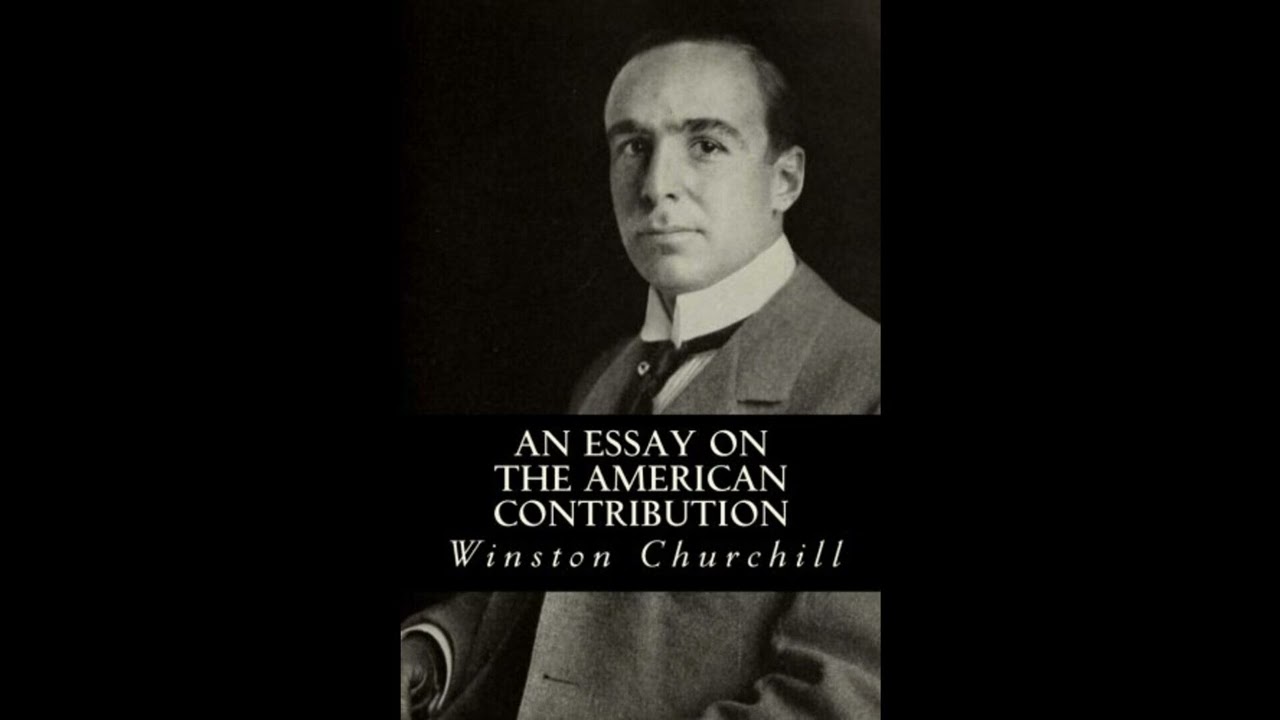
An Essay On The American Contribution: And The Democratic Idea
Amidst the clamor and complexities of the modern world, where the very foundations of self-governance often seem to be under scrutiny, a voice of unparalleled authority and experience speaks to us directly about the enduring principles that have shaped nations and ideas. An Essay On The American Contribution: And The Democratic Idea by Winston Churchill offers listeners a rare opportunity to engage with one of the twentieth century's most profound thinkers on subjects that remain critically relevant: the distinctive role of the United States in global affairs and the perennial vitality of the democratic ideal itself. It is a work that calls for reflection on the historical currents that brought these concepts to the fore and demands an honest appraisal of their continued necessity in an ever-changing landscape. Churchill's essay does not present a narrative in the traditional sense, but rather constructs a powerful intellectual argument, guiding listeners through a carefully articulated defense and celebration of core tenets. The "setting" for this discourse is the expansive stage of modern history, particularly the period of immense ideological struggle that defined much of the twentieth century. Churchill places America—not merely as a geographical entity, but as a concept, an experiment, and a force—at the heart of his examination. The "main characters" are the very ideas he champions: liberty, self-determination, the rule of law, and the unique spirit that he perceives to animate the American political project. He functions as the commanding voice of an era, analyzing the development of these ideals and their practical application. The central conflict animating Churchill's discussion is the ongoing struggle between systems that elevate individual freedom and popular sovereignty, and those that seek to suppress them under authoritarian control or collectivist dogma. He traces the roots of this ideological battle, showing how the "American Contribution" – be it through its foundational documents, its historical precedents, or its interventions on the global stage – has consistently pushed back against forces that would undermine the democratic idea. His "arc of the story" is less a sequence of events and more a progression of thought: he begins by defining the distinctive features of America's political evolution, then demonstrates how these specific contributions coalesce into a universal defense of democracy, ultimately asserting its essential nature for human progress and international stability. He meticulously builds his case, moving from historical anecdote to philosophical principle, from specific policy implications to grand strategic visions, without revealing the specific conclusions he draws about the future. Winston Churchill, born in 1874 at Blenheim Palace, England, and passing away in 1965, remains one of history's most iconic and influential figures. His life was a remarkable blend of military service, political leadership, and prodigious literary output. After an early career as a cavalry officer and war correspondent, which saw him witness conflicts from India to the Boer War, he entered Parliament in 1900. He held various ministerial positions before World War I, and again during the interwar period, often standing out for his prescient warnings about the rise of totalitarian regimes. His most celebrated role, of course, came during World War II, when he served as Prime Minister, inspiring a nation with his indomitable spirit and unparalleled oratorical skills. Beyond the political arena, Churchill was a gifted writer whose works often reflected his keen understanding of history and his exceptional command of the English language. He authored numerous volumes, including his monumental six-volume history The Second World War, his acclaimed four-volume A History of the English-Speaking Peoples, and his engaging autobiography, My Early Life. His literary achievements were formally recognized when he was awarded the Nobel Prize in Literature in 1953, not only for his historical and biographical narratives but also for his masterful and persuasive public speaking. In An Essay On The American Contribution: And The Democratic Idea, Churchill brings his unique blend of historical insight and rhetorical power to bear on several fundamental themes. One prominent theme is the concept of American exceptionalism, not as a boast, but as a recognition of the singular circumstances that allowed democracy to flourish in the New World. He might illustrate this by pointing to the unique constitutional framework crafted by the Founding Fathers, designed with checks and balances to safeguard individual liberties, or perhaps by examining how the vast geographical expanse and diverse populace forged a distinct national character. Another recurring theme is the inherent resilience of the democratic idea itself, often demonstrated through moments of severe crisis. Churchill might cite the American Civil War as a crucible that tested and ultimately reaffirmed the nation's commitment to its founding principles, or he might discuss how the spirit of popular sovereignty has repeatedly overcome internal divisions and external threats. A third significant theme woven through the essay is the critical interplay between individual freedom and collective responsibility. Churchill frequently champions the notion that a truly democratic society depends on citizens who are both free to pursue their ambitions and willing to shoulder the burdens of self-governance. He might evoke the image of a citizen-soldier, defending the common good, or the entrepreneur, innovating for societal benefit, as exemplars of this balance. Finally, the essay underscores the vital importance of a shared historical narrative and common values in forging both national identity and international alliances. Churchill often draws on history to provide context and inspiration, perhaps by recalling the shared heritage and evolving relationship between Britain and America, demonstrating how a convergence of ideals can become a powerful force for global stability and progress. This essay emerged from a historical period rife with ideological conflict and geopolitical upheaval. While the exact year of its composition remains unspecified, the very nature of its title suggests it was written at a moment when the "democratic idea" was under significant challenge and the "American contribution" to world order was becoming increasingly clear. This could have been during the interwar years, when the rise of fascism and communism presented existential threats to liberal democracies, or perhaps in the immediate aftermath of World War II, as the globe grappled with reconstruction and the emerging Cold War. Churchill himself was a keen observer and active participant in these defining struggles, making him uniquely positioned to articulate the stakes. The essay, therefore, serves as both a historical commentary and a persuasive appeal, intended to clarify fundamental principles for a world that desperately needed guidance amidst the competing doctrines of the age. It speaks to the ongoing necessity of vigilance and conviction in defending the values of freedom and self-determination against any form of tyranny. Listening to An Essay On The American Contribution: And The Democratic Idea as an audiobook offers a singular opportunity to engage with Churchill's powerful intellect. Over its several hours of runtime, a skilled narrator can bring forth the gravitas and persuasive force of Churchill's prose. The measured pace of an audible presentation allows listeners to absorb the nuances of his argument, to consider the weight of each carefully chosen word, and to appreciate the rhetorical strategies that made him such an impactful orator and writer. The clarity and authority in the narrator's voice transforms the written essay into a compelling spoken address, echoing the very rhythm and cadences that defined Churchill's own public delivery. This format allows the intellectual atmosphere of the piece to fully resonate, inviting thoughtful consideration of the historical lessons and philosophical insights he imparts.
Enjoyed An Essay On The American Contribution: And The Democratic Idea? A few ways to support us
Audible & Amazon links are affiliate; we may earn a small commission at no extra cost.
About this production
Human narration by a volunteer reader from LibriVox.org, the public-domain audiobook project. LibriVox volunteers record literary works whose copyright has expired in the United States, releasing the resulting recordings into the public domain.
An Essay On The American Contribution: And The Democratic Idea by Winston Churchill. The underlying text is in the U.S. public domain. We do not republish any modern copyrighted edition, translation, or commentary.
The 4K cinematic visuals accompanying this audiobook are generated by an AI image model from prompts derived from the source text. No copyrighted photos, paintings, or stock footage are used. AI generation is disclosed on every video on our YouTube channel as required by YouTube's altered/synthetic content policy.
English subtitles are transcribed from the LibriVox recording with OpenAI Whisper. Translations into the 11 other supported languages are produced by Meta's NLLB-200 neural translation model. No human translator's copyrighted translation is used.
Questions about sourcing or rights? See our DMCA & Sourcing policy or contact us.
Enjoyed this audiobook?
If you'd like to own a copy of An Essay On The American Contribution: And The Democratic Idea or hear a professionally produced edition, the links below help support free audiobook production at no extra cost to you.
As an Amazon Associate we earn from qualifying purchases. Audible / print links are affiliate.