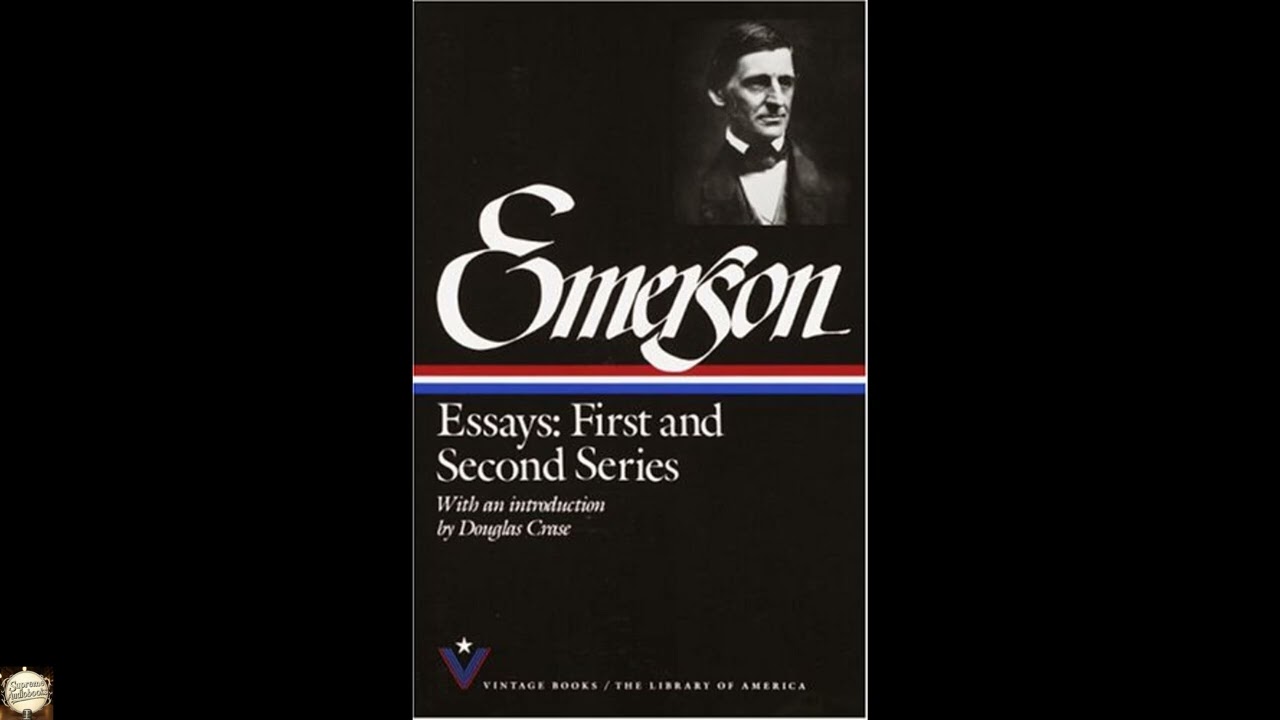
Essays: First and Second Series
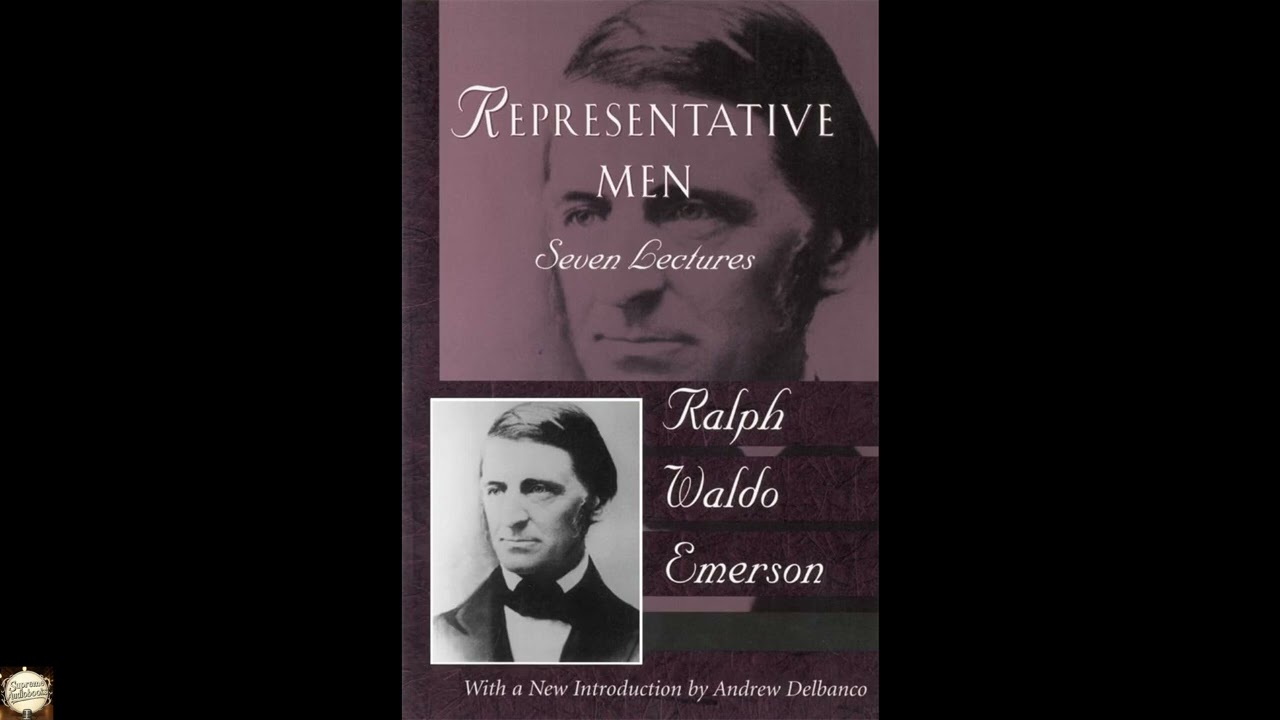
Step into the mind of a visionary, a towering figure whose pronouncements shaped not only American literature but the very spirit of individuality that defines the nation. Ralph Waldo Emerson's Essays: First and Second Series gathers the seminal works that established him as a prophet of selfhood and a profound interpreter of the human experience. These are not mere academic exercises; they are invitations to rethink existence, to challenge convention, and to discover the boundless potential within each person. For listeners today, in an age often marked by conformity and distraction, Emerson's voice resonates with urgent clarity, urging us to cultivate authentic self-trust and to find divinity in the everyday, making his insights as vital and challenging now as they were in the bustling intellectual ferment of nineteenth-century New England. The "plot" of these essays is less a narrative of events and more an unfolding of thought, a sustained, vigorous argument presented across two distinct collections. The first series, published in 1841, introduces key concepts with essays like "Self-Reliance," "Compensation," "Spiritual Laws," and "Friendship." Emerson sets his intellectual stage not in a particular geographical location, but within the landscape of the human mind, often using vivid natural imagery to ground his abstract ideas. The main "character" is arguably the universal seeker, the individual striving for an authentic life amidst societal pressures. The central conflict lies in the tension between the soul's innate drive for truth and originality, and the external forces of tradition, custom, and expectation that threaten to stifle it. Emerson offers not solutions, but a framework for navigating this conflict, empowering the reader to forge their own path. The second series, released in 1844, deepens and expands upon these initial ideas, with essays such as "The Poet," "Experience," "Character," and "Nature." While each essay stands alone as a complete meditation, together they form an arc of philosophical inquiry. The essays do not tell a linear story with a beginning, middle, and end in the conventional sense. Instead, they represent a progression of interconnected meditations, each building upon underlying tenets. Listeners witness Emerson wrestle with the practical implications of his idealism, confronting doubt and the complexities of human existence. He maintains a consistent focus on the power of individual intuition and the spiritual connection between humanity and the natural world, culminating not in a final resolution but in a renewed call for individual awakening and an ongoing engagement with life's profound questions. Ralph Waldo Emerson, born in Boston, Massachusetts, in 1803, emerged from a long line of Unitarian ministers, a lineage that deeply influenced his intellectual and spiritual development. After attending Harvard College and Divinity School, he followed in his family's footsteps, serving as a Unitarian pastor in Boston. However, his questioning mind soon found the confines of institutional religion too restrictive. He famously resigned his pastorate in 1832, unable to reconcile his beliefs about individual spiritual experience with conventional church doctrine. This pivotal decision marked his definitive turning point from clergyman to philosopher and lecturer. Relocating to Concord, Massachusetts, Emerson became the intellectual epicenter of a groundbreaking literary and philosophical movement known as Transcendentalism. From his home, he hosted spirited conversations with contemporaries like Henry David Thoreau, Margaret Fuller, and Bronson Alcott. He supported himself primarily through lecturing, traveling widely to share his evolving ideas on nature, self-reliance, and the divine potential within every person. His early work, particularly his groundbreaking essay Nature (1836), laid the philosophical groundwork for the Transcendentalist movement, advocating for a direct, intuitive experience of God in nature, rather than through mediated religious institutions. He continued to publish influential works, including Representative Men and numerous poems, cementing his reputation as the preeminent American man of letters until his passing in 1882. At the core of Emerson's essays lies the profound theme of Self-Reliance. This is not merely an encouragement to be independent, but a radical call to trust one's own intuition, to prioritize one's inner voice over the clamor of societal expectations, past traditions, and even the advice of revered figures. In the essay "Self-Reliance" itself, Emerson famously declares, "Whoso would be a man, must be a nonconformist." He urges individuals to recognize the divine spark within themselves, asserting that conforming to others' opinions or institutions is a betrayal of that sacred inner light. He illustrates this by contrasting the genuine impulses of a child, unburdened by convention, with the often-constrained actions of adults, suggesting that true genius lies in maintaining that original connection to one's own unique thought. Another central theme is the spiritual connection between humanity and Nature. For Emerson, the natural world is not merely a collection of resources or a beautiful backdrop; it is a direct manifestation of the divine, a source of spiritual revelation and moral instruction. In essays like "Nature" from the second series, he describes how a walk in the woods can elevate the spirit, leading to a profound sense of unity with the universe and a direct apprehension of universal truths. The changing seasons, the rustling leaves, the silent majesty of the stars—all serve as metaphors and direct avenues for understanding the "Oversoul," his concept of a universal spiritual essence that pervades all existence and connects all beings. He suggests that genuine engagement with nature can restore one's spirit and clarify one's purpose. Emerson's philosophical output emerged during a period of intense cultural and intellectual ferment in the United States. The early to mid-nineteenth century was a time of burgeoning national identity, as Americans sought to define themselves distinct from their European colonial past. The Second Great Awakening had profoundly impacted religious life, leading to a questioning of established doctrines and a focus on individual spiritual experience. In this climate, Unitarianism, with its emphasis on reason and the inherent goodness of humanity, provided a fertile ground for new ideas. Emerson's Transcendentalism built upon these foundations, pushing further into idealism and advocating for a direct, intuitive apprehension of truth, emphasizing the individual's direct connection to God without the need for intermediaries or rigid dogma. The publication of Essays: First and Second Series coincided with growing debates over social reform, abolitionism, and women's rights, all movements that resonated with Emerson's call for individual conscience and moral uprightness. His radical ideas provided a philosophical underpinning for many who sought to challenge the status quo, encouraging a critical examination of institutions and a trust in one's own moral compass. The work was a direct response to, and a shaping force for, an America grappling with its identity, seeking to establish its own intellectual and spiritual independence. Listening to Emerson's Essays: First and Second Series as an audiobook offers a unique and highly suitable way to engage with these profound texts. Emerson, himself a renowned public speaker and lecturer, crafted his prose with a distinct rhythm and cadence, designed to be heard and absorbed. A skilled narrator can bring out the inherent musicality of his language, the surprising turns of phrase, and the compelling force of his arguments, transforming what might feel like dense philosophical prose on the page into a vibrant, living conversation. The run length of several hours allows for a sustained immersion in his thought, perfect for contemplative listening during walks, commutes, or quiet moments of reflection. You can absorb his expansive ideas at a natural pace, allowing his observations on self-reliance, friendship, and nature to resonate, making the philosophical discourse feel immediate and personal.
Enjoyed Essays: First and Second Series? A few ways to support us
Audible & Amazon links are affiliate; we may earn a small commission at no extra cost.
About this production
Human narration by a volunteer reader from LibriVox.org, the public-domain audiobook project. LibriVox volunteers record literary works whose copyright has expired in the United States, releasing the resulting recordings into the public domain.
Essays: First and Second Series by Ralph Waldo Emerson. The underlying text is in the U.S. public domain. We do not republish any modern copyrighted edition, translation, or commentary.
The 4K cinematic visuals accompanying this audiobook are generated by an AI image model from prompts derived from the source text. No copyrighted photos, paintings, or stock footage are used. AI generation is disclosed on every video on our YouTube channel as required by YouTube's altered/synthetic content policy.
English subtitles are transcribed from the LibriVox recording with OpenAI Whisper. Translations into the 11 other supported languages are produced by Meta's NLLB-200 neural translation model. No human translator's copyrighted translation is used.
Questions about sourcing or rights? See our DMCA & Sourcing policy or contact us.
Enjoyed this audiobook?
If you'd like to own a copy of Essays: First and Second Series or hear a professionally produced edition, the links below help support free audiobook production at no extra cost to you.
As an Amazon Associate we earn from qualifying purchases. Audible / print links are affiliate.