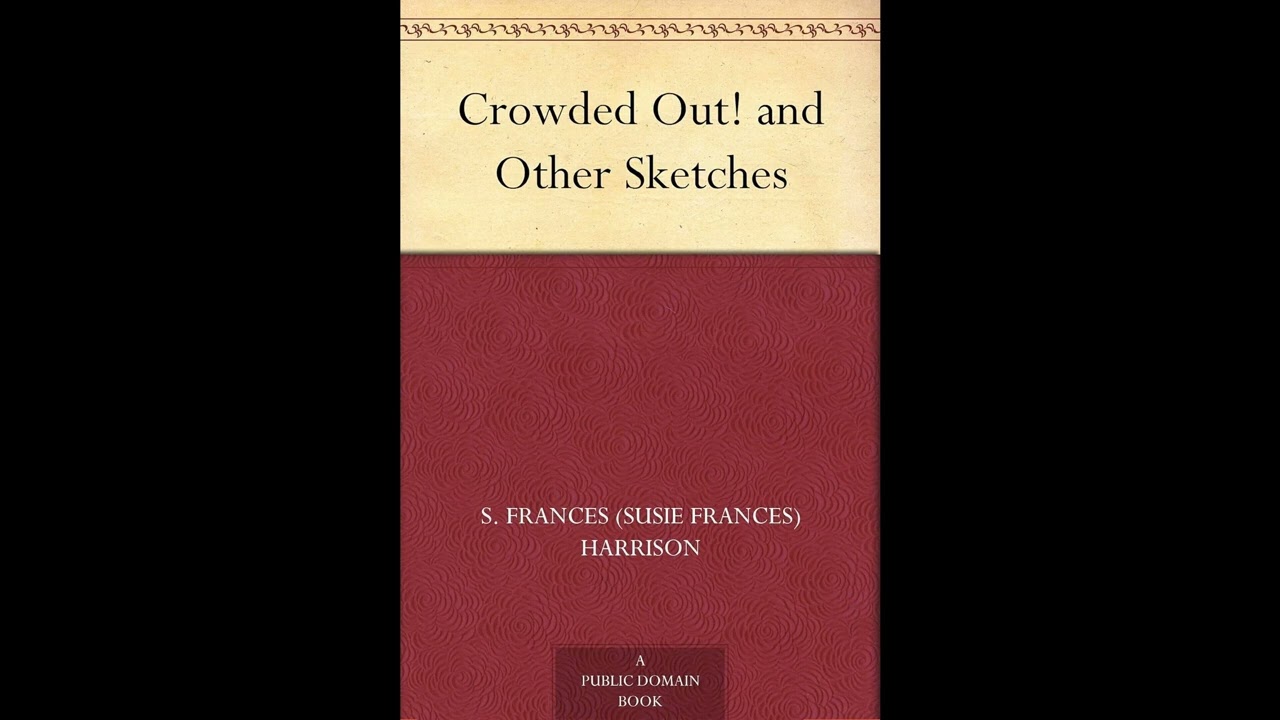
Crowded Out! and Other Sketches
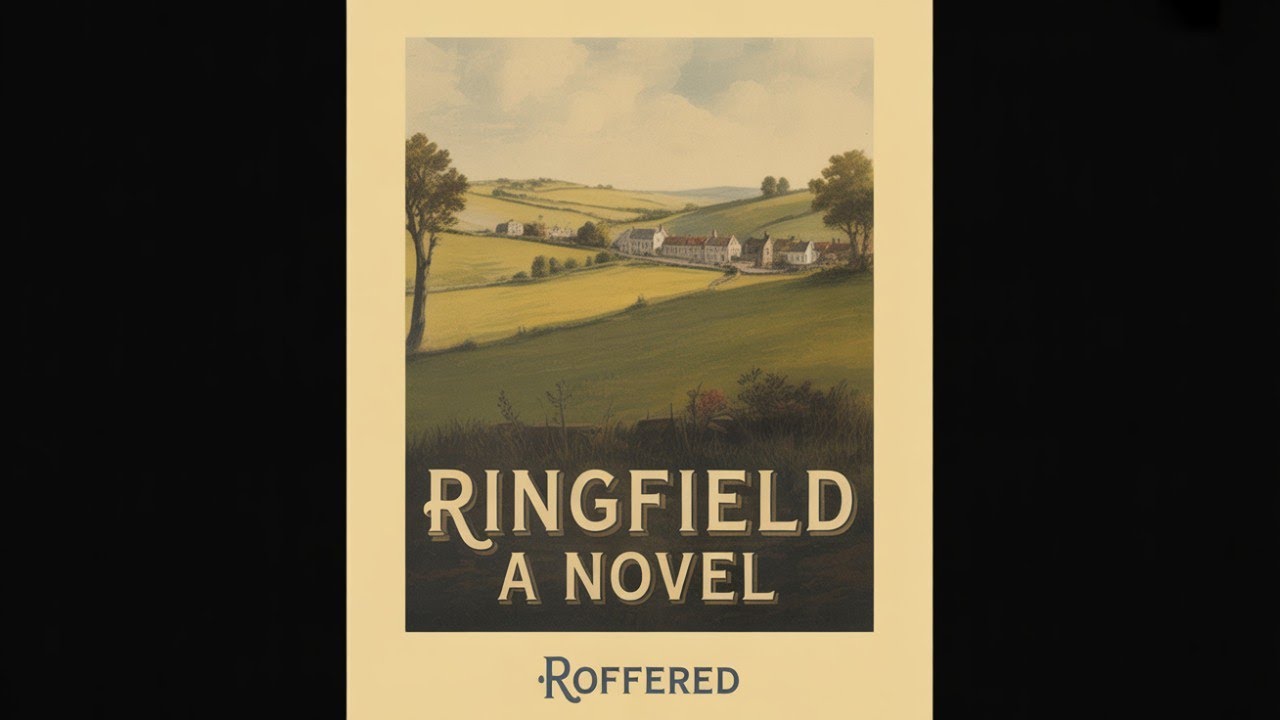
Step into a moment of observation, a quiet pause amidst the accelerating pace of life, with S. Frances Harrison's Crowded Out! and Other Sketches. This collection offers a series of intimate vignettes, snapshots of humanity grappling with change, ambition, and the simple realities of existence. Far from being mere historical curiosities, these pieces resonate powerfully today, as we too navigate worlds that feel increasingly compressed, noisy, and demanding. Harrison’s keen eye and sympathetic voice draw us into the everyday lives of people wrestling with the fundamental questions of belonging, purpose, and the relentless march of progress. Her sketches are not grand narratives but rather focused beams of light, illuminating the small, often overlooked dramas that shape our characters and define our communities. The titular sketch, "Crowded Out!", plunges us into the bustling heart of a burgeoning city, where the very act of living feels like a constant competition for space and recognition. We meet Mr. Pembry, a gentle and perhaps overly compliant individual, whose modest dreams and quiet contributions are slowly but surely overshadowed by the more aggressive, more visible figures around him. His struggle is not one of overt conflict, but a subtle, pervasive sense of being marginalized—a quiet erosion of his presence as others occupy the very ground he stands upon. Through his perspective, Harrison captures the subtle anxieties of the modern urbanite, the feeling of being a small cog in an ever-growing machine, and the difficulty of maintaining one's unique identity when surrounded by a sea of similar aspirations. The other sketches in the collection offer a range of domestic scenes, character studies, and reflective pieces, moving from the quiet corners of drawing rooms to the contemplative landscapes of the Canadian countryside. Each piece is a window into a specific human condition, from the hopeful artist struggling for recognition, to the stoic farmer facing the whims of nature, or the introspective individual pondering the passage of time. These brief yet potent narratives present characters who, though distinct in their circumstances, are united by their search for meaning and a place in a world that is always in flux. Susie Frances Harrison, born in Toronto in 1859, was a formidable literary and musical figure in late 19th and early 20th-century Canada. Daughter of a prominent judge, she received an extensive education, including musical training in Montreal, which would inform much of her later work. In 1880, she married J.W.F. Harrison, an organist and composer, and their home became a significant cultural hub, attracting artists, musicians, and writers from across Canada and beyond. Harrison's career was remarkably diverse; she was a poet, a novelist, a music critic, and an essayist. Her first book of poetry, Songs of Love and Labor, appeared in 1894, followed by other collections like Pine, Rose and Fleur de Lis (1891), which often explored themes of Canadian identity and landscape. Beyond her poetry, Harrison gained recognition for her novels, particularly The Forest of Bourg-Marie (1898), a romantic historical novel set in French Canada, and Ringfield (1914), which delved into contemporary Canadian society. Her work as a music critic for publications like The Week and The Globe made her one of Canada's earliest and most influential voices in musical commentary, advocating for Canadian artistic development. Harrison's contributions were instrumental in shaping the nascent Canadian literary and artistic canon, providing perceptive observations of her society and environment. She passed away in 1935, leaving behind a legacy of pioneering literary and cultural criticism. One central theme running through Crowded Out! and Other Sketches is the struggle for individual significance in an increasingly impersonal world. In "Crowded Out!", Mr. Pembry’s experience of being metaphorically pushed aside by more assertive personalities exemplifies this. His quiet nature and reluctance to assert himself lead to his ideas being overlooked, his contributions diminished, and his very presence fading into the background of a busy office or community. Harrison masterfully uses subtle gestures and internal monologues to convey the profound loneliness of feeling inconsequential. Another prominent theme is the beauty and challenge of adaptation. Many of Harrison's characters find themselves in new or changing circumstances—whether it is the shift from rural tranquility to urban sprawl, or the evolution of social expectations. We see figures trying to make sense of their altered surroundings, sometimes with quiet dignity, sometimes with a touch of resignation. The collection also touches on the enduring power of observation and empathy; Harrison frequently invites us to look beyond the surface, to understand the unspoken anxieties and hopes that motivate her characters. These sketches emerged at a pivotal moment in history, roughly corresponding to the late Victorian and early Edwardian eras, a period characterized by profound social, technological, and cultural shifts. The late 19th century saw rapid industrialization and urbanization transforming landscapes and livelihoods across North America. Cities grew at an unprecedented rate, bringing with them new opportunities but also new pressures: overcrowding, social stratification, and a feeling of alienation for many individuals. It was a time when traditional community structures were giving way to more anonymous urban environments, and the pace of life was noticeably quickening. The literary world, in response, began to move away from purely romantic ideals, embracing realism and naturalism, seeking to depict life as it truly was, in all its gritty detail and psychological complexity. Harrison’s sketches fit perfectly into this burgeoning literary movement, offering immediate, unvarnished insights into the human condition as experienced in her own time and place. They were a direct response to the era's changes, capturing the anxieties, hopes, and quiet resilience of people navigating a world in flux. Listening to Crowded Out! and Other Sketches as an audiobook offers a singular opportunity to immerse oneself in Harrison’s nuanced observations. The narrator's voice becomes our guide, drawing us into the intimate spaces and contemplative moments of each piece. With several hours of content, this collection is perfect for dedicated listening sessions, allowing the listener to fully absorb the distinct atmospheres and character voices Harrison creates, or for shorter, reflective pauses throughout the day. A skilled narrator can bring out the subtle humor, the underlying pathos, and the quiet dignity of characters like Mr. Pembry, giving texture to the delicate emotional landscapes. Pay attention to the pacing, which can shift from the hurried rhythms of city life to the more contemplative cadences of introspection. The spoken word can underscore the descriptive clarity of Harrison’s prose and illuminate the nuances of dialogue, allowing the listener to truly inhabit the world of these compelling sketches.
Enjoyed Crowded Out! and Other Sketches? A few ways to support us
Audible & Amazon links are affiliate; we may earn a small commission at no extra cost.
About this production
Human narration by a volunteer reader from LibriVox.org, the public-domain audiobook project. LibriVox volunteers record literary works whose copyright has expired in the United States, releasing the resulting recordings into the public domain.
Crowded Out! and Other Sketches by S Frances (Susie Frances) Harrison. The underlying text is in the U.S. public domain. We do not republish any modern copyrighted edition, translation, or commentary.
The 4K cinematic visuals accompanying this audiobook are generated by an AI image model from prompts derived from the source text. No copyrighted photos, paintings, or stock footage are used. AI generation is disclosed on every video on our YouTube channel as required by YouTube's altered/synthetic content policy.
English subtitles are transcribed from the LibriVox recording with OpenAI Whisper. Translations into the 11 other supported languages are produced by Meta's NLLB-200 neural translation model. No human translator's copyrighted translation is used.
Questions about sourcing or rights? See our DMCA & Sourcing policy or contact us.
Enjoyed this audiobook?
If you'd like to own a copy of Crowded Out! and Other Sketches or hear a professionally produced edition, the links below help support free audiobook production at no extra cost to you.
As an Amazon Associate we earn from qualifying purchases. Audible / print links are affiliate.