The Relation of Literature to Life
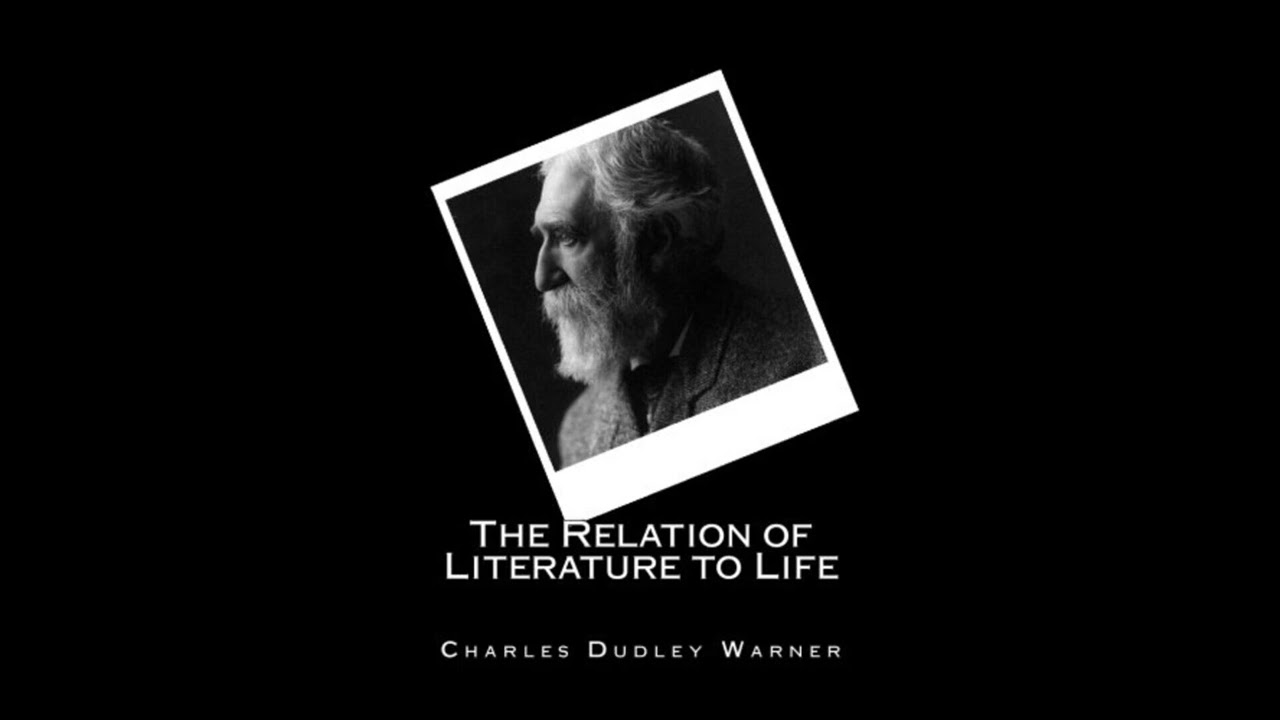
Charles Dudley Warner’s The Relation of Literature to Life is more than a mere collection of essays; it is an eloquent and thoughtful examination of the deep, often overlooked connections between the books we read and the lives we lead. In an age where digital distractions constantly vie for our attention, and the very concept of "truth" sometimes feels elusive, Warner's clear-eyed contemplation of literature's purpose offers a refreshing clarity. He asks, with an appealing blend of intellectual rigor and gentle humor, what literature truly does for us. Why do we tell stories? Why do we read them? And how does the written word shape our understanding of ourselves, our society, and the world around us? This is not an academic treatise divorced from reality, but a compelling invitation to consider how art — specifically the art of letters — profoundly mirrors and influences human existence, a consideration as vital today as it was at the close of the nineteenth century. Published in 1896, Warner’s work positions itself within a dynamic period of intellectual discourse, when the definition and purpose of literature were under intense scrutiny. His setting is not a physical place but an intellectual landscape where ideas about realism, idealism, and the moral responsibilities of the artist contended for prominence. The "characters" are less individuals and more the prevailing philosophical currents and literary traditions of his time, along with Warner’s own steadfast belief in literature’s capacity for truth and enlightenment. He navigates the persistent "conflict" of whether literature should primarily entertain, instruct, provide moral guidance, or simply exist as an aesthetic object, independent of worldly concerns. The arc of Warner's discussion unfolds across a series of interconnected essays, each shining a light on a different facet of literature’s interaction with life. He begins by establishing the fundamental premise that genuine literature cannot exist in a vacuum; it must be rooted in authentic human experience and accurate observation. He then systematically addresses how writing influences individual character, shapes societal values, and provides a unique record of history and culture. Warner advocates for a literature that possesses moral courage and sincerity, one that dares to look honestly at the world and portray it with integrity, pushing back against artificiality, excessive sentimentality, or overly didactic tones. His arguments build not toward a single, definitive pronouncement, but rather toward a broader, more nuanced understanding of literature as an essential, organic component of human consciousness and collective identity. He invites readers to appreciate the power of words not just for their beauty, but for their ability to broaden sympathy, illuminate truth, and connect us across time and experience. Charles Dudley Warner (1829-1900) was a prominent American essayist, journalist, and humorist, whose literary career spanned much of the latter half of the nineteenth century. Born in Plainfield, Massachusetts, he spent his formative years in upstate New York before attending Hamilton College and then Yale, where he graduated in 1851. After a brief period studying law, Warner turned to journalism, ultimately becoming editor of the Hartford Courant, a position he held for many years. It was during this time that he cultivated his distinctive prose style—a blend of sharp observation, gentle wit, and reflective wisdom. Warner is perhaps best known for his collaboration with his friend Mark Twain, with whom he co-authored the influential satirical novel The Gilded Age: A Tale of Today (1873), a work that gave an entire historical era its name. His individual works, however, established him as a significant voice in American letters. Books such as My Summer in a Garden (1871), Backlog Studies (1873), and Being a Boy (1878) showcased his talent for blending personal anecdotes with insightful social commentary, often delivered with a subtle, disarming humor. Warner was a writer who embraced the burgeoning American realism movement, though his particular brand of realism often favored a more contemplative and less stark approach than some of his contemporaries. His place in the literary canon rests on his ability to find the profound in the mundane, and to articulate enduring truths about human nature with grace and intelligence. A primary theme running through The Relation of Literature to Life is the paramount importance of authenticity and realism in writing. Warner vigorously argues against artificiality, championing a literature that truly mirrors life as it is lived, rather than presenting idealized or distorted versions. For example, he might illustrate this by contrasting a saccharine romance, detached from human foibles, with a narrative like George Eliot's, which, though perhaps less overtly "pleasant," offers a more profound and recognizable picture of human psychology and circumstance. Another key theme is the moral and ethical purpose of art. While Warner avoids preaching, he implicitly argues that literature, by broadening our understanding and cultivating empathy, plays a crucial role in the moral development of both individuals and society. He believes that stories can illuminate complex ethical dilemmas, subtly guide our judgments, and foster a deeper sympathy for others' experiences, thereby enriching the collective human spirit. He also frequently returns to the idea of the power of careful observation. Warner insists that writers must be diligent students of the world, attentive to its details and nuances, if they are to produce works that resonate with truth. His own essays often exemplify this, drawing rich meaning from seemingly simple observations of nature or daily life. Finally, the work speaks to the enduring nature of human experience across generations. Warner sees literature as a continuous conversation, where fundamental human emotions—love, loss, aspiration, struggle—are revisited and reinterpreted, forming an unbroken chain that connects past and present. He finds in the literary heritage a testament to the constancy of certain human truths, regardless of changing historical circumstances. When Charles Dudley Warner penned The Relation of Literature to Life in 1896, America was deeply entrenched in what historians would later term the Gilded Age. This was a period of rapid industrialization, massive economic expansion, and significant social upheaval following the Civil War. Cities swelled with new immigrants, wealth accumulated in unprecedented ways, and profound questions arose about social justice, economic inequality, and the future direction of the nation. In the literary world, American Realism, championed by figures like William Dean Howells and Henry James, was at its height, advocating for an honest depiction of contemporary American life, often as a direct response to the lingering sentimentalism of earlier Victorian literature. Simultaneously, the nascent stirrings of Naturalism, with its more deterministic and often starker view of humanity, were beginning to emerge through writers such as Stephen Crane and Theodore Dreiser. Amidst these shifting currents and debates about "art for art's sake" versus literature with a social conscience, Warner's collection of essays served as a voice for reasoned reflection. It emerged as a thoughtful counterpoint to the extremes of both uncritical sentimentality and cynical detachment, urging a balanced perspective that honored both literature's aesthetic qualities and its profound human responsibilities. His work offered a stabilizing influence, reminding readers and writers alike that the value of literature ultimately lay in its sincere and meaningful engagement with the realities of human existence. Listening to The Relation of Literature to Life as an audiobook offers a unique opportunity to immerse oneself in Warner’s thoughtful arguments without the distractions of print. With a runtime of several hours, it's ideally suited for focused listening sessions—perhaps during a quiet evening, a long commute, or while engaged in contemplative activities like walking or gardening. A skilled narrator brings Warner's nuanced prose to life, allowing his precise word choices and the gentle rhythm of his sentences to truly resonate. Listeners will notice how the narrator’s pacing can underscore the deliberative nature of Warner’s thought, providing ample space to absorb his often-profound insights. The clarity of the voice chosen to interpret these essays enhances the atmosphere of calm reflection, creating an experience akin to having a wise, articulate friend explain how books shape our world. The audio format emphasizes the conversational quality of Warner’s writing, transforming his intellectual explorations into an engaging, intimate dialogue that feels directly addressed to you.
Enjoyed The Relation of Literature to Life? A few ways to support us
Audible & Amazon links are affiliate; we may earn a small commission at no extra cost.
About this production
Human narration by a volunteer reader from LibriVox.org, the public-domain audiobook project. LibriVox volunteers record literary works whose copyright has expired in the United States, releasing the resulting recordings into the public domain.
The Relation of Literature to Life by Charles Dudley Warner. The underlying text is in the U.S. public domain. We do not republish any modern copyrighted edition, translation, or commentary.
The 4K cinematic visuals accompanying this audiobook are generated by an AI image model from prompts derived from the source text. No copyrighted photos, paintings, or stock footage are used. AI generation is disclosed on every video on our YouTube channel as required by YouTube's altered/synthetic content policy.
English subtitles are transcribed from the LibriVox recording with OpenAI Whisper. Translations into the 11 other supported languages are produced by Meta's NLLB-200 neural translation model. No human translator's copyrighted translation is used.
Questions about sourcing or rights? See our DMCA & Sourcing policy or contact us.
Enjoyed this audiobook?
If you'd like to own a copy of The Relation of Literature to Life or hear a professionally produced edition, the links below help support free audiobook production at no extra cost to you.
As an Amazon Associate we earn from qualifying purchases. Audible / print links are affiliate.