Excursions
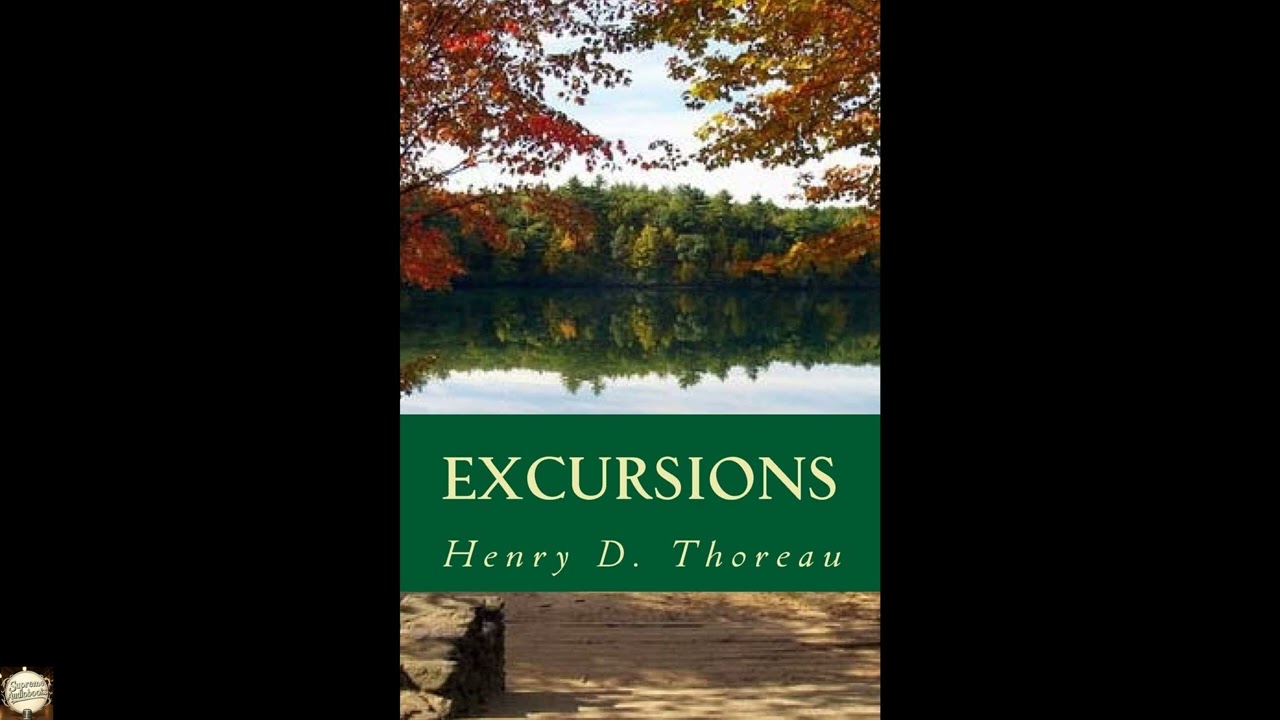
Step into the rustling leaves and sun-dappled paths of Henry D. Thoreau's Excursions, a collection that invites listeners to reconsider their connection to the natural world and the rhythms of a life lived with intention. Far from a mere nature guide, these essays offer a profound philosophical companion, a call to quiet observation and a vigorous defense of the wildness that resides both outside and within us. In an age of ceaseless digital noise and hurried schedules, Thoreau's clear-eyed prose and steadfast dedication to the immediate moment resonate with surprising power, offering not just a respite, but a challenge: to truly see, to truly listen, and to truly live. This is more than a book; it is an invitation to reclaim a deeper sense of presence in the world. The core "story" woven through Excursions is that of the contemplative wanderer, Henry David Thoreau himself, as he moves through the familiar yet endlessly revealing landscapes surrounding Concord, Massachusetts. His main pursuit is not a destination, but a deeper understanding of the processes of nature and the human spirit's place within them. Imagine walking alongside him through a New England autumn, as he meticulously catalogs the "Autumnal Tints" of leaves, not as a scientist, but as a poet and philosopher discerning a deeper language in their hues. The "setting" is therefore less a fixed location and more a dynamic interaction between the observer and the observed, whether it be the shifting light over a field, the intricate life within a swamp, or the simple endurance of a "Wild Apple" tree. There are no conventional characters in these essays beyond the author's discerning consciousness, yet his voice becomes a constant, guiding presence, urging us to shed the conventions of society and embrace the untamed. The central "conflict" might be seen as the struggle to resist the encroaching forces of conformity and materialism, to assert the inherent value of idleness, observation, and wildness against a burgeoning industrial society focused on utility and progress. From his spirited defense of "Walking"—the very act of sauntering—as a legitimate and profound pursuit, to his impassioned "Plea for Captain John Brown," Thoreau champions individual conscience and the untamed spirit, whether in human action or natural landscape. The arc of these pieces is not a linear narrative, but a spiraling outward and inward, deepening our appreciation for the specifics of the world while simultaneously expanding our philosophical horizons, always returning to the bedrock principle that true freedom and insight often reside in the unassuming details of our surroundings. Henry David Thoreau, born in Concord, Massachusetts, in 1817, carved a singular path through American letters and life. After graduating from Harvard University, he spent time as a teacher, a pencil maker, and a surveyor, but it was his vocation as a philosopher and naturalist that defined him. Famously, from 1845 to 1847, he conducted his celebrated experiment in simple living at a cabin he built by Walden Pond, meticulously documenting his experiences and reflections in his seminal work, Walden; or, Life in the Woods. This period, along with his friendship and intellectual sparring with Ralph Waldo Emerson, solidified his place as a leading figure of the Transcendentalist movement, which emphasized intuition, individualism, and the inherent goodness of people and nature. Beyond Walden, Thoreau authored the influential essay "Civil Disobedience" (originally "Resistance to Civil Government"), which arose from his refusal to pay a poll tax in protest of slavery and the Mexican-American War, a work that has since inspired countless activists worldwide, from Mahatma Gandhi to Martin Luther King Jr. Though many of his works, including Excursions, were published posthumously after his death in 1862, his ideas continued to resonate, marking him as a pivotal voice in American literature. His unwavering commitment to living according to his principles, his keen observational skills, and his profound respect for the natural world have enshrined him as an enduring icon of American thought and an early pioneer of environmental consciousness. The essays collected in Excursions enact several powerful and enduring themes that continue to provoke thought. Foremost among them is nature as a spiritual teacher and source of truth. Thoreau doesn't just describe a landscape; he interprets it, seeing in the growth of a pine tree or the flow of a river a lesson in patience, resilience, or the cyclical nature of existence. For instance, in "Walking," he advocates for a deep immersion in wilderness, asserting that "in Wildness is the preservation of the World," suggesting that our spiritual health is inextricably linked to our connection with untamed places, that these spaces offer a moral compass that civilization often obscures. Another prominent theme is individualism and nonconformity, a cornerstone of Transcendentalism. Thoreau consistently champions the right and necessity of each person to think and live authentically, unburdened by societal pressures. His own life, including his time at Walden Pond and his refusal to pay taxes, stands as a testament to this ideal. Within Excursions, his very act of dedicating himself to the seemingly unproductive pursuit of "sauntering" and observing nature – rather than engaging in conventional commerce or ambition – serves as a powerful argument for valuing inner conviction over outward success, inviting us to question who defines what constitutes a meaningful life. The work also strongly advocates for conservation and environmentalism, long before these terms entered common parlance. Thoreau's detailed lament for the destruction of natural habitats and his argument for preserving specific wild spaces, such as swamps, highlights an early recognition of humanity's impact on the environment and the intrinsic value of every part of the ecosystem, urging us to protect these places not just for utility, but for their inherent beauty and spiritual significance. When the essays of Excursions were published in 1863, America was grappling with the profound upheaval of the Civil War, though the content itself largely reflects the antebellum period from which it sprang. This was a time of rapid industrialization and westward expansion, moments when the "wildness" Thoreau cherished seemed increasingly threatened by human progress. Culturally, the Transcendentalist movement, centered in Concord, was challenging prevailing religious and philosophical norms, advocating for a direct, intuitive experience of truth and a focus on individual conscience rather than institutional authority. The literary world of the mid-nineteenth century was witnessing the emergence of a distinctly American literary voice, moving beyond European influences. Thoreau's contemporaries included Ralph Waldo Emerson, Nathaniel Hawthorne, Herman Melville, and Walt Whitman, all grappling in their own ways with the identity of a young nation. Excursions emerged from this fertile intellectual ground as a counterpoint to the rush towards material gain and conformity. It provided a powerful voice for the preservation of natural spaces and the cultivation of inner life at a time when society seemed intent on transforming both, making it a vital document reflecting the tensions and aspirations of a nation in flux, seeking to define itself against the backdrop of its vast landscapes. Listening to Excursions as an audiobook offers a singular opportunity to engage with Thoreau's precise yet expansive prose in a way that resonates with his original intent. The spoken word allows the listener to settle into the unhurried rhythm of his observations, mirroring the pace of a walk in the woods or a quiet afternoon spent contemplating a pond. A thoughtful narration can illuminate the subtle wit and profound earnestness in Thoreau's voice, highlighting the poetic cadences of his descriptions of wild apples or the changing colors of leaves. The several-hour run length makes it an ideal companion for a long ramble of your own, a mindful moment during a commute, or as a backdrop for quiet reflection, allowing his ideas about observation, nature, and self-reliance to truly unfold and sink in, inviting a deeper, more personal connection to the natural world he so passionately celebrated.
Enjoyed Excursions? A few ways to support us
Audible & Amazon links are affiliate; we may earn a small commission at no extra cost.
About this production
Human narration by a volunteer reader from LibriVox.org, the public-domain audiobook project. LibriVox volunteers record literary works whose copyright has expired in the United States, releasing the resulting recordings into the public domain.
Excursions by Henry David Thoreau. The underlying text is in the U.S. public domain. We do not republish any modern copyrighted edition, translation, or commentary.
The 4K cinematic visuals accompanying this audiobook are generated by an AI image model from prompts derived from the source text. No copyrighted photos, paintings, or stock footage are used. AI generation is disclosed on every video on our YouTube channel as required by YouTube's altered/synthetic content policy.
English subtitles are transcribed from the LibriVox recording with OpenAI Whisper. Translations into the 11 other supported languages are produced by Meta's NLLB-200 neural translation model. No human translator's copyrighted translation is used.
Questions about sourcing or rights? See our DMCA & Sourcing policy or contact us.
Enjoyed this audiobook?
If you'd like to own a copy of Excursions or hear a professionally produced edition, the links below help support free audiobook production at no extra cost to you.
As an Amazon Associate we earn from qualifying purchases. Audible / print links are affiliate.