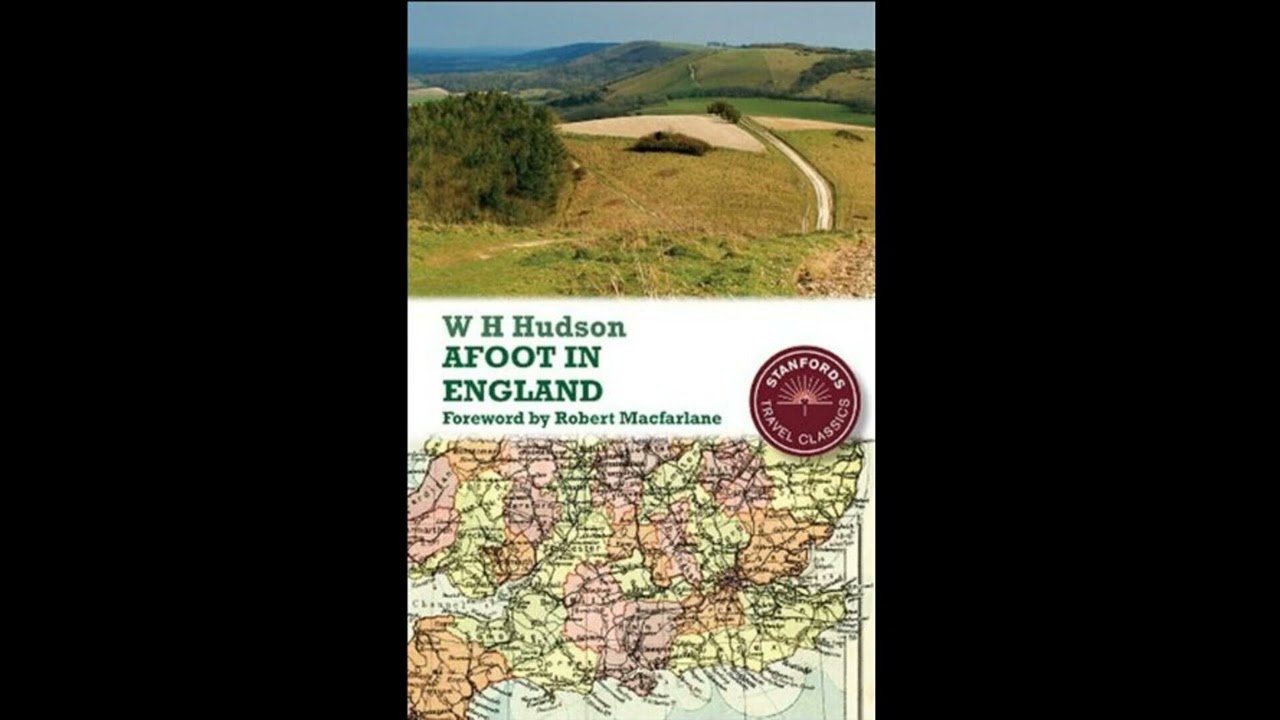
Afoot in England (Stanfords Travel Classics)
Step into a quieter, more observant world with W. H. Hudson's Afoot in England, a beloved collection of essays that invites listeners to slow down and rediscover the profound beauty of the everyday. Published in 1905, this volume isn't a thrilling adventure or a dramatic romance, but rather a series of intimate encounters with the English countryside and its people. It offers a balm for the hurried pace of modern life, reminding us of the simple pleasures found in nature's rhythms, the wisdom of quiet observation, and the enduring human connection to the land. Through Hudson's keen eye and reflective spirit, we gain a fresh perspective on the familiar, an appreciation for the overlooked, and a renewed sense of wonder that resonates just as strongly today as it did over a century ago. The book unfurls as a series of gentle peregrinations across various English counties, including Wiltshire, Sussex, and parts of the South Downs, extending even to the quiet corners of London's outlying areas. The central figure is Hudson himself, the solitary walker and meticulous observer, whose unhurried pace dictates the narrative. There's no conventional plot or overarching storyline; instead, each chapter presents a distinct ramble, a particular encounter, or a focused contemplation. We join Hudson as he watches birds, perhaps a rare curlew or a familiar robin, describing their habits and songs with scientific precision and poetic grace. He might stop to share a conversation with a local villager or a shepherd, absorbing their stories, their dialects, and their deep-rooted connection to the land. His "story" is one of episodic revelation, where the world reveals itself in small, significant moments. One might find him musing on the ancient history etched into a country lane, or captivated by the quality of light falling on a distant hill. He details the subtle shifts in flora through the seasons, the character of an old farmhouse, or the simple joy of a child at play in a meadow. The encounters are rarely dramatic but consistently insightful, building a cumulative portrait of a landscape on the cusp of change, seen through the eyes of a deeply empathetic and intelligent mind. It is a slow revelation, a patient unfolding of beauty found in the quietest corners. William Henry Hudson, born in 1841 on the vast pampas of Argentina to American parents, carried the spirit of the wild plains within him throughout his life. This formative experience instilled a profound connection to nature, shaping his entire literary output. Self-educated and suffering from ill health in his youth, he eventually moved to England in 1874, aged thirty-three, struggling financially for many years in London's poorer districts. Despite his hardships, his literary career blossomed, and he became a British citizen in 1900. Hudson is recognized as a significant figure in nature writing and an early advocate for conservation. His other notable works include the novel The Purple Land, set in Uruguay, and the widely acclaimed Green Mansions: A Romance of the Tropical Forest, a fantastical romance set in Venezuela. He also produced celebrated volumes of essays and observations like Birds and Man, Hampshire Days, and A Shepherd's Life. Praised by contemporaries such as Joseph Conrad and Edward Thomas, Hudson forged a unique path in literature, bridging the detailed natural history writing of the Victorian era with a more emotionally resonant, ecologically aware perspective. His prose is marked by its clarity, evocative imagery, and a singular passion for the wild world. One of the central themes running through Afoot in England is the profound connection to nature and an ecocentric viewpoint. Hudson consistently positions human beings as an integral, rather than dominant, part of the natural world. He illustrates this by dedicating pages to the intricate lives of birds and insects, observing them with an almost spiritual reverence, as when he watches a family of swallows nesting under eaves, describing their delicate engineering and tireless industry. He finds a spiritual solace and deep meaning in these interactions, suggesting that nature offers a primary source of renewal and understanding for humanity, often gently criticizing the human tendency to isolate itself from the wild. Another significant thread is a pervasive sense of nostalgia and a quiet lament for the vanishing rural world. Hudson writes with an awareness that the England he walks is undergoing rapid transformation, with ancient traditions and wild spaces gradually giving way to progress and urbanization. This sentiment emerges in his descriptions of old villagers clinging to their unique dialects and customs, or his observations of common lands being enclosed. He feels the weight of history and the impending loss of a way of life, imbues his recollections with a tender melancholy for what is passing, making his observations a valuable record of a moment in time. Afoot in England emerged at a pivotal moment in British history, the early years of the twentieth century, during the Edwardian era. Britain stood at the zenith of its imperial power, yet internally, the nation was experiencing profound shifts driven by continued industrialization and expanding urbanization. While leisure time became more accessible for some, there was also a growing awareness of the environmental costs of progress and a burgeoning interest in natural history and early conservation movements. Societies like the Royal Society for the Protection of Birds, for example, had already been established, reflecting a nascent public concern for wildlife. Culturally, the period saw a romantic yearning for a simpler, pre-industrial past, a desire to reconnect with the countryside as an antidote to the perceived stresses of modern life. Hudson’s work resonated deeply with this mood, offering a meditative retreat and a celebration of a natural world that many felt was under threat. Listening to Afoot in England as an audiobook offers a uniquely immersive and comforting experience. Hudson’s prose, rich in descriptive detail and often meditative in tone, lends itself perfectly to being spoken aloud. A skilled narrator can bring out the quiet wonder in his observations, allowing listeners to truly "walk" alongside Hudson as he describes a dew-kissed meadow or the distant call of a bird. The several hours of run length make it an ideal companion for unhurried moments – a long walk of your own, a drive through the countryside, or a quiet evening at home. The gentle pacing and conversational voice allow for deep engagement with the material, fostering an atmosphere of peace and gentle contemplation. It is an invitation to pause, observe, and find beauty in the unhurried rhythms of both nature and thought.
Enjoyed Afoot in England (Stanfords Travel Classics)? A few ways to support us
Audible & Amazon links are affiliate; we may earn a small commission at no extra cost.
About this production
Human narration by a volunteer reader from LibriVox.org, the public-domain audiobook project. LibriVox volunteers record literary works whose copyright has expired in the United States, releasing the resulting recordings into the public domain.
Afoot in England (Stanfords Travel Classics) by W. H. Hudson. The underlying text is in the U.S. public domain. We do not republish any modern copyrighted edition, translation, or commentary.
The 4K cinematic visuals accompanying this audiobook are generated by an AI image model from prompts derived from the source text. No copyrighted photos, paintings, or stock footage are used. AI generation is disclosed on every video on our YouTube channel as required by YouTube's altered/synthetic content policy.
English subtitles are transcribed from the LibriVox recording with OpenAI Whisper. Translations into the 11 other supported languages are produced by Meta's NLLB-200 neural translation model. No human translator's copyrighted translation is used.
Questions about sourcing or rights? See our DMCA & Sourcing policy or contact us.
Enjoyed this audiobook?
If you'd like to own a copy of Afoot in England (Stanfords Travel Classics) or hear a professionally produced edition, the links below help support free audiobook production at no extra cost to you.
As an Amazon Associate we earn from qualifying purchases. Audible / print links are affiliate.