Impressions and Comments
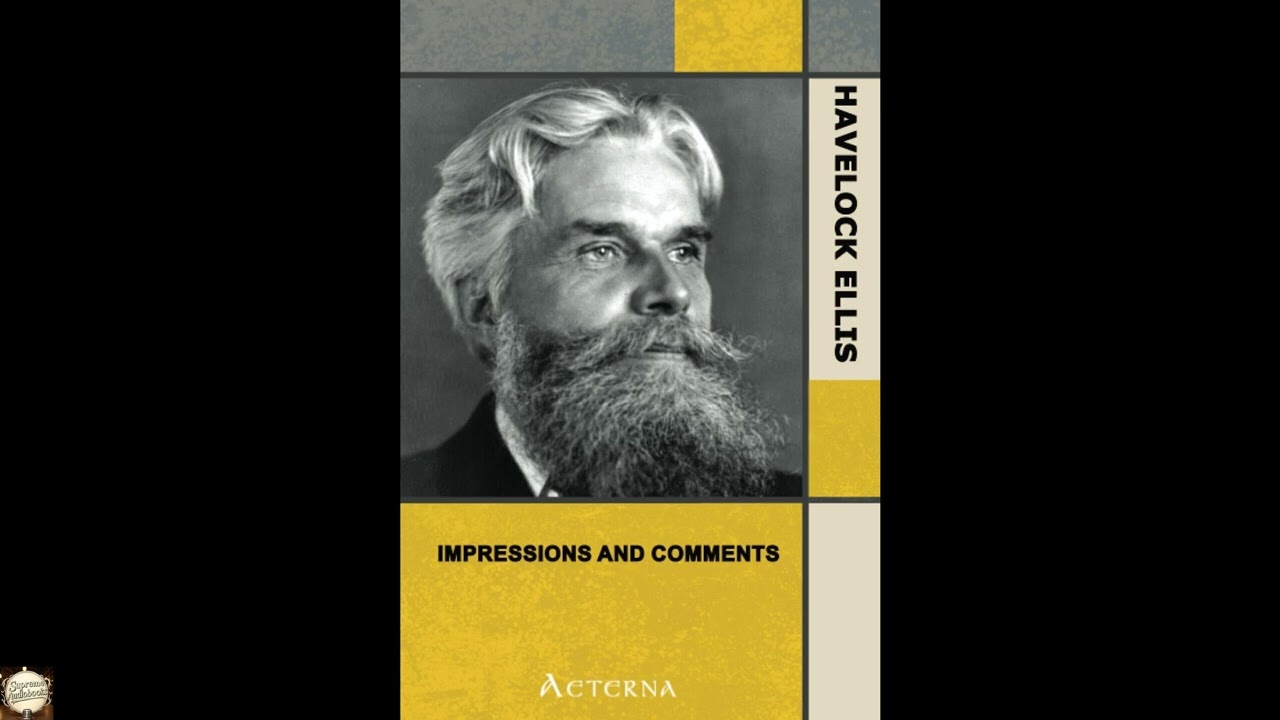
Havelock Ellis’s Impressions and Comments stands as a testament to the power of observation and reflection, a collection not of grand narratives but of keenly perceived moments and the profound thoughts they spark. This audiobook offers listeners a direct encounter with one of the late nineteenth and early twentieth centuries’ most significant intellectual figures, a mind whose curiosity spanned science, art, psychology, and the fabric of human experience. Far from being a mere historical curiosity, Ellis’s insights into human nature, societal shifts, and the pursuit of understanding still resonate with startling clarity. They invite us to see our own modern world through the lens of a visionary who grappled with foundational questions of human existence in a rapidly changing era. This provides a rare opportunity to eavesdrop on the private reflections of a public intellectual, revealing the gestation of ideas that profoundly influenced modern thought and continues to challenge conventional wisdom today. Instead of a conventional story, Impressions and Comments presents the unfolding narrative of a singular intellect engaging with the world. The "setting" is less a geographical location and more the vast, shifting intellectual landscape of Ellis’s era, filtered through his personal lens. Listeners will move through a mosaic of observations, often starting with a mundane detail—a flight of a bird, an overheard conversation—and then witnessing Ellis’s mind unfurl a deeper meaning or philosophical implication. There is an arc, not of external events, but of consciousness: the gradual revealing of Ellis’s worldview as he connects seemingly disparate phenomena, always seeking patterns, underlying principles, and the nuances of human behavior. The "main character" is Ellis himself, serving as our guide. Through his carefully chosen words, we encounter the implicit "conflict" between superficial appearances and profound realities, between societal convention and genuine insight. He grapples with tensions inherent in a society poised between Victorian tradition and burgeoning modernity, often questioning assumptions about morality, art, and the self. These collected pieces—some no more than a few sentences, others extending to short essays—do not build towards a single dramatic climax. Instead, they accumulate, piece by piece, to form a comprehensive portrait of a mind constantly at work, processing, synthesising, and offering illumination. Listeners will find a subtle yet persistent questioning of the status quo, a gentle subversion of received wisdom, making the experience akin to a quiet, extended conversation with a deeply thoughtful friend. Havelock Ellis, born Henry Havelock Ellis in Surrey, England, in 1859, was a physician, writer, and social reformer. He passed away in 1939, leaving a legacy that profoundly reshaped the understanding of human sexuality and psychology. Initially training as a medical doctor in London, Ellis soon dedicated himself to writing and scholarship, becoming a prominent figure in the burgeoning field of sexology. His pioneering Studies in the Psychology of Sex, published in multiple volumes between 1897 and 1928, challenged prevailing Victorian prudery, advocating a more scientific and compassionate approach to sexual matters. Ellis’s interests were far broader than sexology. He engaged deeply with literature, philosophy, and art, his perspectives shaped by wide reading and a keen interest in evolutionary biology and comparative anthropology. His thinking was influenced by figures such as Karl Marx, John Stuart Mill, and Walter Pater, all of whom challenged established norms. He advocated for women's rights and was a proponent of birth control, positions considered radical. His personal life, including his marriage to writer Edith Lees and their openly negotiated, unconventional relationship, reflected his commitment to questioning societal constraints. Other notable works include The New Spirit, which examined intellectual currents, and The Dance of Life, a philosophical treatise on the art of living. Ellis occupies a crucial place in the literary and intellectual canon as a transitional figure. He bridged the rigid moral framework of the Victorian era and the more open, scientifically informed perspectives of the twentieth century. His writings, including these collected observations, represent a sustained effort to bring scientific rigor and humanistic understanding to areas of life previously shrouded in taboo or prejudice. He helped pave the way for modern psychology and sociology, pushing the boundaries of what could be openly discussed and rationally examined. Within Impressions and Comments, several potent themes surface, offering listeners profound points of engagement. One central theme is the power of observation and reflective thought. Ellis demonstrates a profound capacity to extract meaning from the seemingly mundane. For instance, a passing comment on the changing light of an evening sky might prompt a meditation on the fleeting nature of beauty and existence, transforming a simple sensory experience into a philosophical touchstone. He shows how conscious attention to the details of life—from human interaction patterns to natural phenomena—can yield deep insights into universal truths. Another prominent thread is the interconnectedness of knowledge and experience. Ellis often draws parallels between disparate fields, revealing how insights from biology can illuminate art, or how psychological understanding informs our appreciation of literature. A musical composition might segue into an astute comment on human emotion or the evolution of aesthetic taste, illustrating his belief that all forms of human inquiry ultimately coalesce. His writings also frequently touch upon modernity and the evolving human condition, grappling with the rapid social and technological changes of his time. He considers the impact of urbanisation, shifting individual roles, and the constant tension between tradition and innovation, offering a nuanced perspective on the challenges and promises of the emerging modern world. This collection of observations emerged from a crucial period in intellectual history, spanning the late nineteenth and early twentieth centuries, a time marked by seismic shifts across cultural, political, and scientific landscapes. It was an era when the rigid certainties of Victorian society were giving way to new modes of thought. Darwin’s theories of evolution had fundamentally reshaped humanity’s understanding of its place in the natural world, challenging traditional religious doctrines and sparking new inquiries into human behavior. Simultaneously, pioneering figures like Sigmund Freud were laying the groundwork for modern psychology, bringing the subconscious mind into scientific focus. Culturally, art and literature were also undergoing transformations, moving away from grand romantic narratives towards a more introspective, psychologically informed realism and then towards modernism. There was a burgeoning interest in social reform, with movements advocating for women’s suffrage, labor rights, and a re-evaluation of public health and morality. Ellis, with his background in medicine and wide intellectual curiosity, was perfectly positioned to articulate the anxieties and aspirations of this transitional age. His commentaries reflect this intellectual ferment, often serving as a bridge between established scientific principles and the burgeoning fields of psychology and sociology. He was part of a generation that sought to apply a rational, scientific lens to every aspect of human existence, including those previously relegated to faith or unquestioned tradition. Listening to Impressions and Comments as an audiobook transforms Ellis’s collected thoughts into an intimate, conversational experience. The pieces—often concise, reflective, and designed to provoke thought rather than demand sustained narrative attention—are perfectly suited for the auditory format. Listeners can engage with individual observations during short breaks, allowing each comment to settle and resonate, or they can be carried along through longer sessions, appreciating the subtle progression of Ellis’s mind across various topics. The narrator’s voice becomes a vital component, conveying the thoughtful, often gently provocative tone that characterises Ellis’s writing. Pacing should invite contemplation, offering space between the ideas, allowing listeners to absorb the depth of his insights without feeling rushed. This format creates an atmosphere of intellectual companionship, as if Ellis himself is sharing his profound observations directly, making his enduring wisdom accessible and engaging across its several hours of runtime.
Enjoyed Impressions and Comments? A few ways to support us
Audible & Amazon links are affiliate; we may earn a small commission at no extra cost.
About this production
Human narration by a volunteer reader from LibriVox.org, the public-domain audiobook project. LibriVox volunteers record literary works whose copyright has expired in the United States, releasing the resulting recordings into the public domain.
Impressions and Comments by Havelock Ellis. The underlying text is in the U.S. public domain. We do not republish any modern copyrighted edition, translation, or commentary.
The 4K cinematic visuals accompanying this audiobook are generated by an AI image model from prompts derived from the source text. No copyrighted photos, paintings, or stock footage are used. AI generation is disclosed on every video on our YouTube channel as required by YouTube's altered/synthetic content policy.
English subtitles are transcribed from the LibriVox recording with OpenAI Whisper. Translations into the 11 other supported languages are produced by Meta's NLLB-200 neural translation model. No human translator's copyrighted translation is used.
Questions about sourcing or rights? See our DMCA & Sourcing policy or contact us.
Enjoyed this audiobook?
If you'd like to own a copy of Impressions and Comments or hear a professionally produced edition, the links below help support free audiobook production at no extra cost to you.
As an Amazon Associate we earn from qualifying purchases. Audible / print links are affiliate.