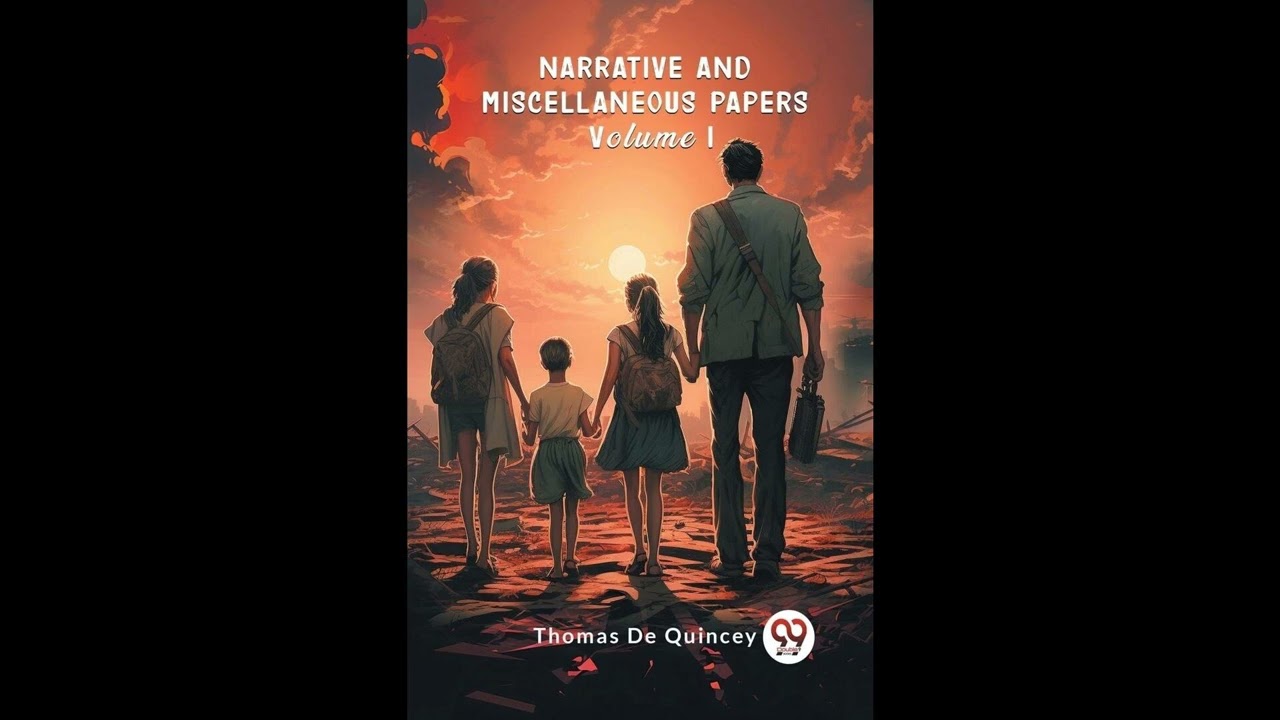
Narrative and Miscellaneous Papers Volume I
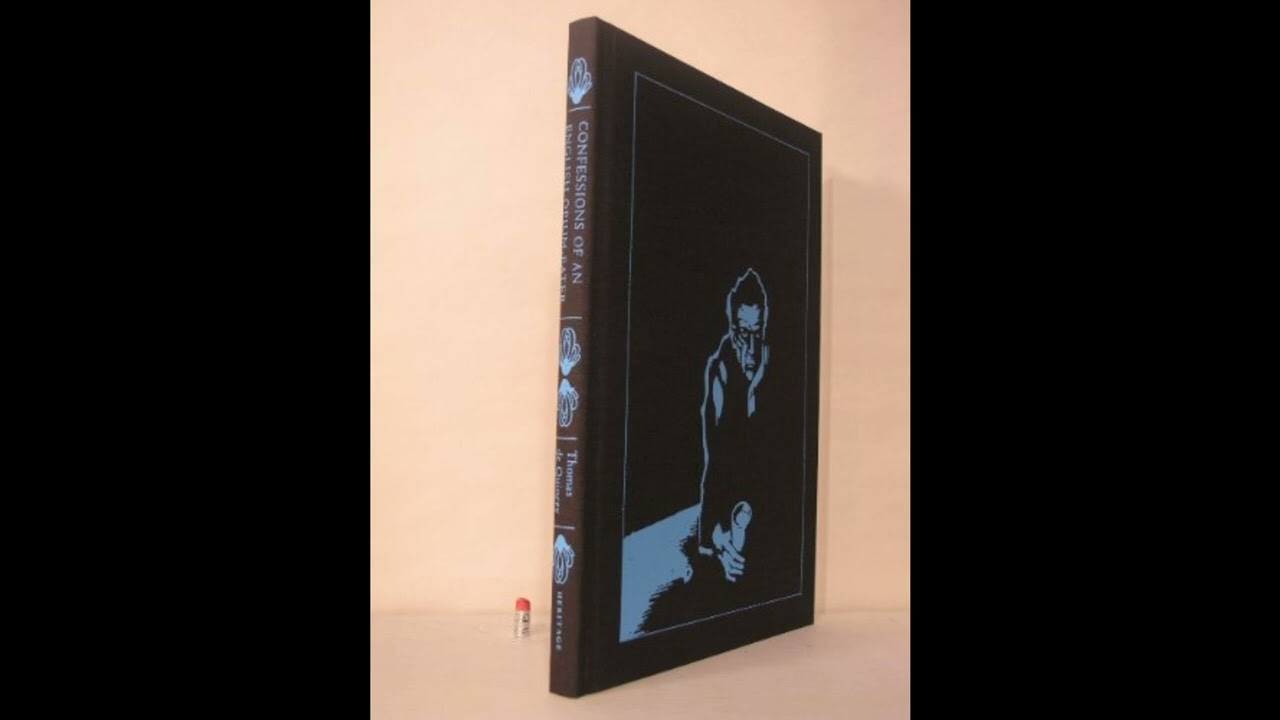
Prepare to enter the expansive, often dreamlike, and profoundly articulate mind of Thomas de Quincey with "Narrative and Miscellaneous Papers Volume I." This collection offers a rare opportunity to experience the singular brilliance of one of English literature's most distinctive prose stylists. Far from a dry academic exercise, these papers plunge listeners into a rich psychological and intellectual landscape, demonstrating de Quincey's unparalleled capacity for introspective analysis, vivid description, and a keen engagement with the world around him. His writings invite us to reconsider the boundaries between autobiography, criticism, and philosophical reflection, proving that the human intellect, when coupled with a vivid imagination, can find profound meaning in both the grand sweep of history and the most intimate corners of personal memory. This collection stands as a testament to the enduring power of the essay as a form, reminding us why a personal, deeply considered perspective on diverse subjects remains compelling today. This volume gathers a selection of de Quincey's shorter prose, presenting a panorama of his intellectual preoccupations and his unique narrative voice. Across these papers, the primary "character" is de Quincey himself, or rather, the persona he constructs through his meticulous observations and deeply personal recollections. Listeners will find themselves transported to various settings—from the bustling streets of nineteenth-century London to the quiet contemplative spaces of his own mind, or even to ancient civilizations reanimated by his scholarly gaze. There isn't a singular overarching plot in the traditional sense; instead, the collection functions as a series of interconnected thought-experiments and personal anecdotes, all filtered through de Quincey's distinctive sensibility. The "arc" of this collection unfolds as a demonstration of de Quincey's intellectual range and his distinctive approach to writing. He moves fluidly between recounting episodes from his own youth, offering sharp critiques of contemporary literature, and dissecting complex historical events with forensic precision. The central unifying element is the author's own consciousness, presenting its observations, struggles, and insights. Through his varied subjects, de Quincey consistently wrestles with themes of memory's reliability, the impact of significant personal experiences, and the ongoing human quest for understanding the self and the world. Each paper, whether a biographical sketch or a literary analysis, serves as a window into a mind that saw connections and implications where others saw only isolated facts. Thomas de Quincey, born in Manchester in 1785, led a life as unconventional and mentally stimulating as his writings suggest. A brilliant but often troubled youth, he famously ran away from grammar school, wandering through Wales before finding his way to London. His early studies at Oxford were cut short, but his formidable intellect was already evident, particularly his command of classical languages and German philosophy. De Quincey is perhaps best known for "Confessions of an English Opium-Eater," a groundbreaking work that introduced the public to the psychological effects of opium addiction and established him as a pioneer of autobiographical prose. He spent much of his later life in Scotland, contributing prolifically to leading literary magazines such as Blackwood's Edinburgh Magazine and Tait's Edinburgh Magazine, where many of these collected papers first appeared. De Quincey stands as a bridge figure in English literature, positioned between the high Romanticism of Wordsworth and Coleridge, whom he knew personally, and the burgeoning Victorian age. He was not a poet, but a prose stylist of the highest order, often described as having a "gorgeous" or "orchestral" style. His unique blend of the personal and the intellectual, his innovative narrative techniques, and his psychological realism secured his place in the literary canon as a profound essayist and a precursor to later forms of confessional writing and stream-of-consciousness narratives. He demonstrated that prose could achieve the same emotional intensity and rhetorical power traditionally associated with poetry, making him an enduring influence on subsequent writers. The papers gathered here enact several profound themes, often subtly interwoven into de Quincey's narratives and critical observations. One prominent theme is the nature of memory and its reconstruction of the past. De Quincey frequently revisits childhood scenes or historical events, not merely to recount them, but to scrutinize how they are perceived and altered over time. For example, in a recollection of a youthful experience, he might linger on the sensory details—the light, a sound, a particular scent—to show how these fragments coalesce into a subjective reality, often more potent than the objective facts. Another crucial theme is the power of imagination and dream-states in shaping human experience. While often associated with his opium use, this theme reflects a broader philosophical interest in how the mind constructs its own realities. He creates passages that mimic the logic and vividness of dreams, where disparate elements combine to form a new, often symbolic, truth, suggesting that the interior world holds as much significance as the exterior. Further, de Quincey frequently engages with intellectual inquiry and the weight of scholarship. His writings often demonstrate a deep engagement with classical literature, German philosophy, and the intellectual currents of his time, applying rigorous analysis to diverse subjects. He might dissect the arguments of an ancient philosopher or the stylistic choices of a contemporary writer, always demonstrating a formidable command of his chosen topic. Finally, a pervasive sense of the solitude and intensity of individual consciousness runs through his work. His focus consistently rests on internal states, perceptions, and emotions, presenting a world viewed through the unique lens of his own subjective experience. Whether describing a walk through the city or a complex thought process, the emphasis is always on the interior landscape, illustrating how profoundly personal experience shapes understanding. De Quincey's work emerged during a fascinating transitional period in British history and literature. The early to mid-nineteenth century, stretching from the aftermath of the Napoleonic Wars into the burgeoning Industrial Revolution, was a time of immense social and political change. Culturally, the Romantic movement, with its emphasis on emotion, individualism, and nature, was still a powerful force, but it was gradually giving way to the more moralistic and socially conscious concerns of the Victorian era. The literary landscape was dominated by the great poets and the rise of the novel, but the essay form was also gaining immense popularity, especially through the proliferation of literary magazines and periodicals. These journals provided a crucial platform for writers like de Quincey, allowing them to publish extensively on a wide array of subjects, from literary criticism to personal narratives. His highly individual, psychologically oriented prose was perfectly suited for a readership increasingly interested in introspective thought and the nuanced exploration of subjective experience. Listening to "Narrative and Miscellaneous Papers Volume I" as an audiobook offers a singular experience, perfectly suited to de Quincey's elaborate and often musical prose. His sentences are frequently long and complex, weaving together clauses with a cadenced rhythm that begs to be spoken aloud. A skilled narrator can illuminate the intricate structure of his arguments, bringing clarity to his philosophical digressions and amplifying the emotional resonance of his personal anecdotes. The several hours of listening time provide ample opportunity to become immersed in his unique world, allowing de Quincey's voice, as interpreted by the reader, to guide you through his intellectual labyrinth. Listen for the pacing—how the narrator manages the flow of his often-dense ideas, ensuring that his careful distinctions and subtle ironic touches are fully appreciated. The vocal performance can truly elevate the atmosphere, transforming scholarly musings into engaging narratives and drawing out the profound humanity at the heart of de Quincey's celebrated style.
Enjoyed Narrative and Miscellaneous Papers Volume I? A few ways to support us
Audible & Amazon links are affiliate; we may earn a small commission at no extra cost.
About this production
Human narration by a volunteer reader from LibriVox.org, the public-domain audiobook project. LibriVox volunteers record literary works whose copyright has expired in the United States, releasing the resulting recordings into the public domain.
Narrative and Miscellaneous Papers Volume I by Thomas de Quincey. The underlying text is in the U.S. public domain. We do not republish any modern copyrighted edition, translation, or commentary.
The 4K cinematic visuals accompanying this audiobook are generated by an AI image model from prompts derived from the source text. No copyrighted photos, paintings, or stock footage are used. AI generation is disclosed on every video on our YouTube channel as required by YouTube's altered/synthetic content policy.
English subtitles are transcribed from the LibriVox recording with OpenAI Whisper. Translations into the 11 other supported languages are produced by Meta's NLLB-200 neural translation model. No human translator's copyrighted translation is used.
Questions about sourcing or rights? See our DMCA & Sourcing policy or contact us.
Enjoyed this audiobook?
If you'd like to own a copy of Narrative and Miscellaneous Papers Volume I or hear a professionally produced edition, the links below help support free audiobook production at no extra cost to you.
As an Amazon Associate we earn from qualifying purchases. Audible / print links are affiliate.