Sketches
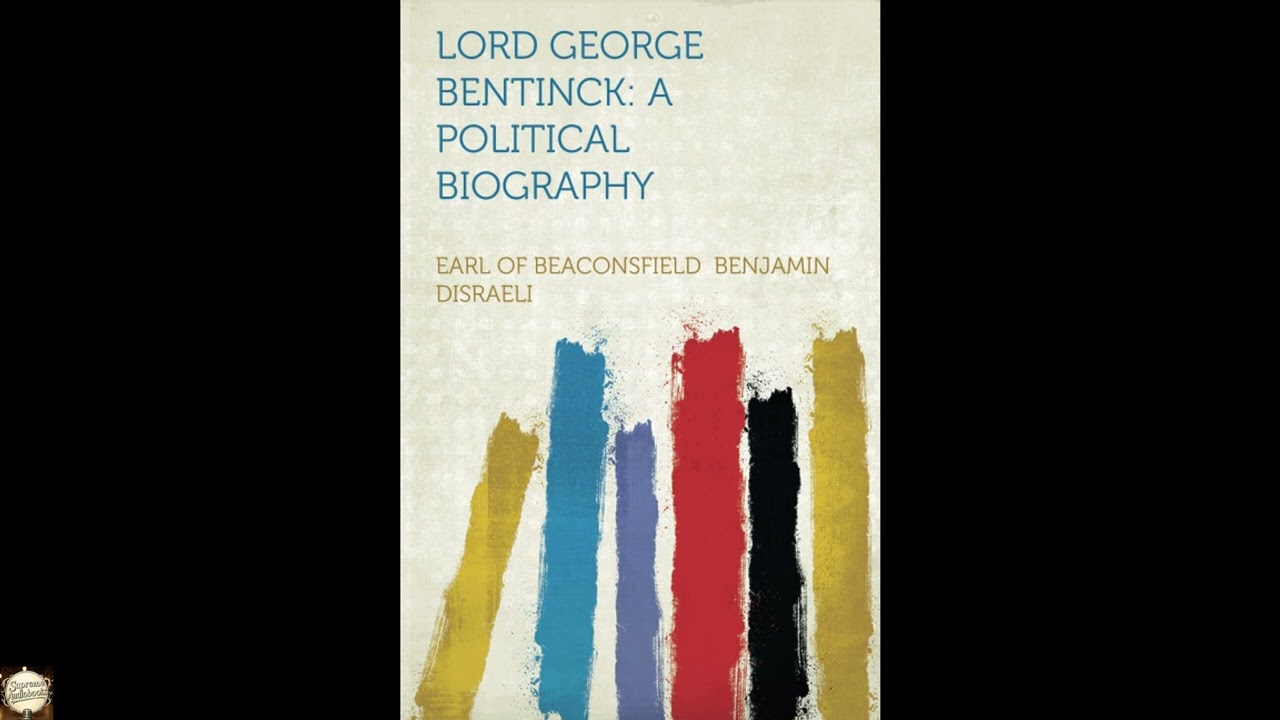
Step into the world of Benjamin Disraeli, the towering Victorian statesman and novelist, through his collection, Sketches. This remarkable assembly of short pieces, observations, and character studies offers an intimate window into the mind of one of history's most fascinating figures. Far from a mere historical curio, these sketches resonate today with their sharp wit, incisive social commentary, and timeless observations on human nature, ambition, and the shifting tides of society. To encounter these fragments of insight is to gain not only a deeper understanding of the Victorian era but also a surprising reflection of our own contemporary struggles with identity, class, and political maneuvering, all filtered through the unique, often ironic gaze of a man who both shaped and critiqued his age. Within the pages of Sketches, listeners will find themselves transported to the drawing rooms, political salons, and bustling streets of nineteenth-century England. Disraeli, with his keen eye for detail and a talent for capturing the essence of personality, presents a gallery of types rather than a single overarching narrative. We meet the ambitious social climber, navigating the perilous waters of aristocratic society with a mixture of calculated charm and veiled desperation. There are the self-important politicians, whose public pronouncements often mask private vanities and petty rivalries. We observe the subtle power dynamics between different classes, the unspoken rules governing social interactions, and the elaborate facades people construct to maintain their positions or achieve their desires. Each sketch acts as a miniature drama, revealing a particular facet of human behavior or a specific social convention, often with a subtle twist of irony. While there isn't a continuous plotline in the traditional sense, a thematic coherence binds these disparate pieces. Disraeli frequently returns to the idea of appearance versus reality, probing the gap between what people present to the world and what lies beneath. Characters often operate within complex social structures, their motivations driven by a desire for acceptance, influence, or simply to belong. The arc within each individual sketch typically moves from an initial presentation of a character or situation to a revealing moment that exposes their true nature or the underlying absurdity of their circumstances. The collection functions as a series of illuminating vignettes, each contributing to a broader mosaic of Victorian life and thought, inviting the listener to piece together Disraeli’s larger vision of the society he inhabited. Benjamin Disraeli, born in London in 1804, lived a life as dramatic and unconventional as any of his fictional creations. Though of Jewish heritage, his family converted to Anglicanism, a step that removed certain societal barriers but never fully erased the sense of being an outsider that fueled much of his ambition and intellect. His early career saw him attempting to establish himself as a novelist, publishing works such as Vivian Grey (1826) and Contarini Fleming (1832), which often reflected his own youthful struggles and observations. It was in the political arena, however, that Disraeli truly ascended. Entering Parliament in 1837 as a Conservative, he rose through the ranks, becoming Chancellor of the Exchequer and eventually serving twice as Prime Minister of the United Kingdom (1868 and 1874-1880). Disraeli’s political legacy is profound, marked by social reforms like the Public Health Act and improvements in workers' rights, as well as his imperial vision, including the acquisition of the Suez Canal shares. Simultaneously, he continued to write, producing some of his most significant novels during his political career, notably Coningsby (1844) and Sybil (1845), which are considered key texts of the Young England movement and offer piercing critiques of Victorian industrial society. His unique blend of dandyism, intellectual prowess, and political acumen made him a captivating and often controversial figure until his death in 1881. His place in the literary canon is secured not just by his novels but by his distinctive voice, which fused romanticism with a cynical realism, providing an unparalleled perspective on Victorian power and society. One of the central themes woven through Sketches is the relentless pursuit of social advancement and the compromises it demands. Disraeli frequently depicts characters who are acutely aware of their station and desperate to ascend, often at the expense of their integrity. For instance, a sketch might introduce a young man from the provinces, newly arrived in London, whose every gesture and conversation is meticulously calculated to impress his social superiors. We see him mimic fashionable accents, feign interest in dull conversations, and subtly flatter those in power, all while inwardly scoffing at their superficiality. This interplay between external performance and internal calculation lays bare the often-stifling nature of Victorian class structures. Another prevalent theme is the power of appearances and the artifice inherent in public life. Disraeli, a master of self-invention himself, understood how essential presentation was in the competitive spheres of politics and society. A sketch might focus on a prominent public figure, perhaps a renowned orator or a celebrated hostess, initially portrayed through the adoring eyes of society. However, as the sketch unfolds, subtle details—a nervous twitch, a carefully rehearsed anecdote, a calculated sigh—reveal the sheer effort behind their polished façade, suggesting that much of what is admired is merely an elaborate performance. This emphasis on illusion over reality offers a commentary on the performative aspects of human interaction, a concept that remains deeply relevant. The period in which Benjamin Disraeli wrote and rose to prominence was one of immense change and often stark contradictions. The Victorian era, roughly spanning from the 1830s to the turn of the twentieth century, witnessed the zenith of the British Empire, vast industrial expansion, and unprecedented scientific and technological advancements. Yet, it was also a time of profound social inequality, rigid class distinctions, and fervent political reform movements. Disraeli's early literary output, including these sketches, emerged from a society grappling with the consequences of rapid modernization, questioning traditional hierarchies, and debating the future direction of the nation. His background as an outsider allowed him a unique vantage point from which to observe and satirize the foibles and ambitions of the English establishment, making his critiques particularly sharp and insightful. This body of work offered Disraeli a flexible format to comment on these developments, providing immediate observations rather than the grand scope of his later novels. It was a time when periodicals and collections of short pieces were popular, allowing authors to engage with current events and social types more directly. The inherent brevity and focus of sketches made them an ideal vehicle for a writer like Disraeli, who possessed a prodigious wit and a gift for dissecting character in miniature. They provided a space for him to hone his satirical edge and his ability to render complex social dynamics in concise, memorable prose, reflecting the rapid pace and diverse character of the world he saw around him. Listening to Sketches as an audiobook offers a unique opportunity to experience Disraeli's distinctive voice as if he were recounting these observations to you directly. The run length of several hours makes it an ideal companion for commutes, long walks, or simply focused listening sessions, allowing you to immerse yourself fully in his world. A skilled narrator will bring to life the nuanced characterizations, the subtle humor, and the often-acerbic wit that define Disraeli’s prose. Listen for the careful pacing that allows each insight to land, the distinct voices given to different characters—from the pompous politician to the cunning socialite—and the overall atmosphere that transports you to gaslit streets and hushed drawing rooms. The spoken word adds an immediate layer of understanding to Disraeli's often sophisticated sentences and layered ironies, making his astute observations on human nature and society even more vivid and impactful.
Enjoyed Sketches? A few ways to support us
Audible & Amazon links are affiliate; we may earn a small commission at no extra cost.
About this production
Human narration by a volunteer reader from LibriVox.org, the public-domain audiobook project. LibriVox volunteers record literary works whose copyright has expired in the United States, releasing the resulting recordings into the public domain.
Sketches by Earl of Beaconsfield Benjamin Disraeli. The underlying text is in the U.S. public domain. We do not republish any modern copyrighted edition, translation, or commentary.
The 4K cinematic visuals accompanying this audiobook are generated by an AI image model from prompts derived from the source text. No copyrighted photos, paintings, or stock footage are used. AI generation is disclosed on every video on our YouTube channel as required by YouTube's altered/synthetic content policy.
English subtitles are transcribed from the LibriVox recording with OpenAI Whisper. Translations into the 11 other supported languages are produced by Meta's NLLB-200 neural translation model. No human translator's copyrighted translation is used.
Questions about sourcing or rights? See our DMCA & Sourcing policy or contact us.
Enjoyed this audiobook?
If you'd like to own a copy of Sketches or hear a professionally produced edition, the links below help support free audiobook production at no extra cost to you.
As an Amazon Associate we earn from qualifying purchases. Audible / print links are affiliate.