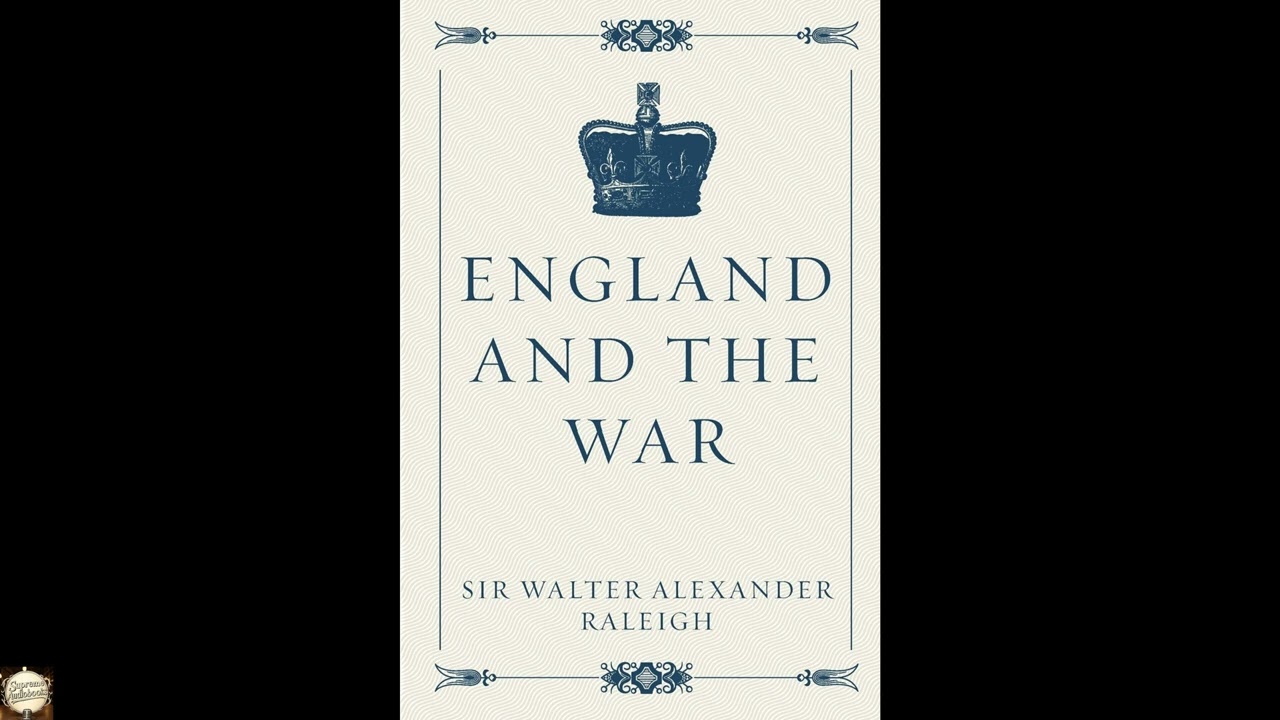
England and the War
Step into a crucial moment of modern history with Sir Walter Alexander Raleigh’s England and the War, a collection of powerful and thoughtful essays that stand as a testament to intellectual resilience during times of immense global conflict. Published during World War I, this work offers more than just a historical snapshot; it delivers a profound reflection on national character, duty, and the enduring spirit of a people facing an unprecedented challenge. Listeners today will find in Raleigh’s prose not only a window into the past but also a striking mirror for understanding how societies articulate their values and find their collective voice when confronting overwhelming odds. It is a work that speaks to the very heart of what it means for a nation to find its resolve, making it especially resonant in any era marked by uncertainty. Instead of a traditional narrative with characters and a fictional setting, England and the War presents a series of meditations and addresses delivered by a distinguished scholar during a period of grave national emergency. The book serves as a literary anchor for English identity as the nation grappled with the devastations of the Great War. Raleigh sets the scene not with battlefields, but with the intellectual and moral landscape of England itself, examining the historical currents and literary traditions that he believed shaped the national soul. His central aim is to articulate and affirm the qualities that defined England in its moment of crisis: its historical precedents, its cultural heritage, and the moral fiber of its people. The collection moves through various facets of English life and thought, from the legacy of its literature to the particularities of its landscape and the quiet heroism of its citizens. Raleigh does not shy away from the gravity of the conflict, but rather channels his formidable knowledge of English letters and history to construct arguments for endurance and purpose. Listeners will hear essays that celebrate the unique spirit of the English language, reflections on the navy’s pivotal role, and observations on the understated courage of the ordinary person. Each piece builds upon the last, collectively creating a robust and deeply felt intellectual defense of English identity and its enduring values in the face of wartime pressures. Sir Walter Alexander Raleigh, born in 1861, was an eminent English literary scholar and critic whose career spanned the late Victorian and early Edwardian periods. He established himself as a leading figure in English academic life, holding chairs at several universities before becoming the first Professor of English Literature at the University of Oxford in 1904, a position he retained until his death in 1922. Raleigh was known for his elegant prose, his deep understanding of literary history, and his ability to convey complex ideas with clarity and grace. His scholarship helped shape the emerging discipline of English literature as a serious field of academic study, moving it beyond mere philology to a broader engagement with aesthetic and cultural concerns. Throughout his distinguished career, Raleigh produced a considerable body of work, including significant critical studies such as The English Novel (1911) and biographies of Shakespeare and Milton, which remain highly regarded for their insight and stylistic merit. His approach to literary criticism was marked by a commitment to historical understanding combined with a keen sensitivity to the aesthetic qualities of texts. When the First World War broke out, Raleigh, like many intellectuals of his time, felt compelled to contribute to the national effort. England and the War represents his direct intellectual response to the conflict, demonstrating how a literary scholar could bring his unique expertise to bear on pressing national concerns, inspiring morale through a reaffirmation of cultural heritage and national character. One of the prominent themes running through England and the War is the expression of national identity and patriotism. Raleigh consistently draws upon England’s long history and literary traditions to define what it means to be English, especially under duress. For instance, he might invoke Shakespeare’s historical plays or the steadfastness of figures from earlier naval conflicts, using these examples not as mere historical footnotes but as living embodiments of a continuity of spirit. He presents patriotism not as blind jingoism, but as a reasoned and deeply felt connection to a shared cultural heritage and a collective purpose, reminding his audience of the deep roots of their collective identity. Another central theme is the profound role of literature and language in shaping a nation’s spirit and resilience. Raleigh, as a literary critic, naturally highlights how stories, poems, and the very structure of the English language have formed the national character and provided solace and strength through the ages. He argues that the precise and vivid nature of English prose, the lyrical power of its poetry, and the narrative force of its historical accounts are not mere ornaments but fundamental tools for understanding, preserving, and indeed fighting for the nation’s soul. He might reference the quiet strength found in Wordsworth’s descriptions of the English countryside, illustrating how landscape and literature become intertwined in the national psyche. England and the War emerged from the crucible of World War I, a period of unprecedented global conflict from 1914 to 1918. When Raleigh wrote these essays, England was facing immense casualties, social upheaval, and the daily anxieties of a protracted war. This was a time when traditional certainties were being questioned, and the need for national unity and a clear sense of purpose was paramount. Intellectually, the war prompted a wave of writing, from the visceral poetry of the trenches by figures like Wilfred Owen and Siegfried Sassoon, to more academic or propagandistic works intended to bolster morale and articulate the nation's cause. Raleigh's contribution stands firmly within this tradition of intellectual engagement with the war, providing a voice of reasoned patriotism grounded in historical and literary scholarship. His work was part of a larger effort by writers and thinkers to help the public process the trauma and meaning of the conflict. Listening to England and the War as an audiobook allows Raleigh’s carefully constructed arguments and eloquent prose to truly resonate. The several hours of narration provide ample space for his considered reflections, allowing listeners to absorb his insights at a thoughtful pace. A skilled narrator will bring out the gravitas and intellectual authority inherent in Raleigh’s writing, rendering his historical allusions and rhetorical flourishes with precision and respect. The auditory experience emphasizes the stately rhythm of his sentences and the depth of his conviction, transforming what might be seen as historical academic texts into compelling spoken addresses. This format highlights the original intent behind many of these pieces, which were likely delivered orally, recreating an atmosphere of learned contemplation and national reflection that feels immediate and engaging even a century later.
Enjoyed England and the War? A few ways to support us
Audible & Amazon links are affiliate; we may earn a small commission at no extra cost.
About this production
Human narration by a volunteer reader from LibriVox.org, the public-domain audiobook project. LibriVox volunteers record literary works whose copyright has expired in the United States, releasing the resulting recordings into the public domain.
England and the War by Sir Walter Alexander Raleigh. The underlying text is in the U.S. public domain. We do not republish any modern copyrighted edition, translation, or commentary.
The 4K cinematic visuals accompanying this audiobook are generated by an AI image model from prompts derived from the source text. No copyrighted photos, paintings, or stock footage are used. AI generation is disclosed on every video on our YouTube channel as required by YouTube's altered/synthetic content policy.
English subtitles are transcribed from the LibriVox recording with OpenAI Whisper. Translations into the 11 other supported languages are produced by Meta's NLLB-200 neural translation model. No human translator's copyrighted translation is used.
Questions about sourcing or rights? See our DMCA & Sourcing policy or contact us.
Enjoyed this audiobook?
If you'd like to own a copy of England and the War or hear a professionally produced edition, the links below help support free audiobook production at no extra cost to you.
As an Amazon Associate we earn from qualifying purchases. Audible / print links are affiliate.