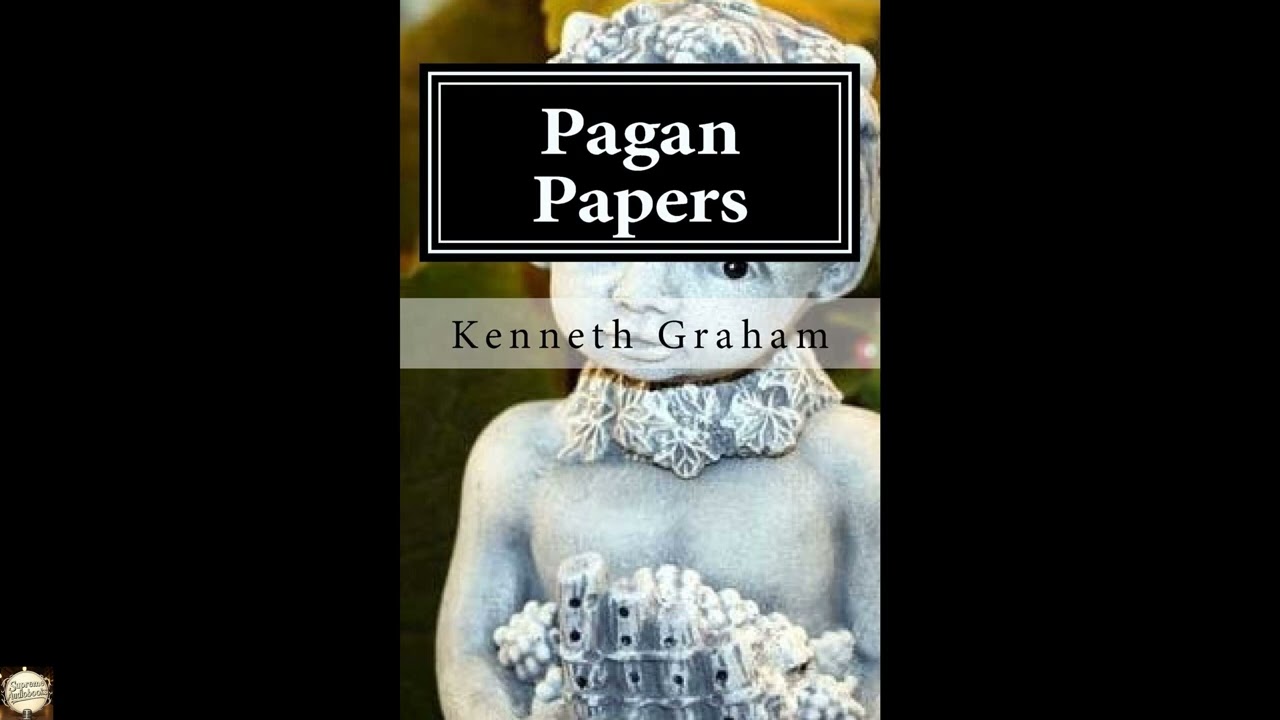
Pagan Papers
Step into a quiet corner of the late nineteenth century, where the world spun at a gentler pace, and the whispers of ancient myths still echoed in the rustling leaves of the English countryside. Kenneth Grahame’s Pagan Papers offers precisely that sanctuary: a collection of essays and sketches that function less as a story and more as an invitation to contemplation. This isn't a narrative to rush through, but a series of reflections on childhood, nature, and the persistent magic that lingers just beyond the veil of everyday life. For listeners today, facing a relentless digital stream and constant demands, these papers provide a soothing counterpoint – a chance to reconnect with a sense of wonder, a forgotten innocence, and the enduring beauty of the natural world, all delivered with Grahame’s characteristic warmth and understated wit. Pagan Papers doesn’t present a conventional plot with heroes and villains, but rather a sequence of introspective moments, vignettes, and philosophical observations. The setting is invariably the English landscape, often the sun-drenched gardens, placid riverbanks, or sleepy villages that formed Grahame’s own cherished memories. The central voice is a thoughtful, often wistful narrator – a grown man looking back, sometimes at his own boyhood, sometimes observing the seemingly untouched world of children around him. There are no dramatic conflicts in the usual sense; instead, the tension arises from the gentle push and pull between the structured, often tedious demands of adult life and the unbounded imagination of youth, or between the encroachment of modernity and the enduring spirit of an older, more pagan world. Each paper functions as a standalone experience, yet they cumulatively build a coherent mood and sensibility. We encounter the narrator musing on the whimsical seriousness of children at play, finding profound meaning in a simple afternoon spent idling by the water, or pondering the half-forgotten deities who might still reside in the woods and fields. The collection follows an arc not of outward events, but of internal thought, tracing the changing seasons of both nature and the human spirit, always returning to the bedrock themes of memory, escapism, and the search for authentic joy in a world that often seems intent on stifling it. It is a slow unfolding of a particular worldview, where the ordinary is imbued with the extraordinary, and the past is never truly past. Kenneth Grahame, born in Edinburgh, Scotland, in 1859, developed a deep affinity for the English countryside during his formative years. After the early loss of his mother and the departure of his father, young Kenneth and his siblings were sent to live with their maternal grandmother in Berkshire. It was here, amidst the verdant landscapes and flowing rivers, that the imaginative seed for his later works was firmly planted. Despite his literary leanings, Grahame pursued a career in finance, joining the Bank of England in 1879, where he would eventually rise to the position of Secretary. This respectable, if somewhat restrictive, professional life often formed a stark contrast to the vivid inner world he cultivated and shared through his writing. His literary output, though not voluminous, holds a revered place in English letters. Before the worldwide phenomenon of The Wind in the Willows, Grahame first charmed readers with collections such as The Golden Age (1895) and Dream Days (1898), both of which featured the same semi-autobiographical sketches of childhood that populated Pagan Papers. These earlier works established his unique voice: gentle, observant, slightly melancholic, and deeply sympathetic to the interior lives of children. Grahame belongs to a specific moment in British literature, often associated with Edwardian pastoralism and a particular brand of sophisticated children's literature that seamlessly appealed to adults, too. His genius lay in translating the universal yearning for a simpler existence into prose that was both accessible and profound. One of the central themes woven throughout Pagan Papers is the idyllic nature of childhood. Grahame portrays children as intuitive philosophers, possessing an unfiltered clarity and an unshakeable connection to the world around them, often seeing the mythic where adults see only the mundane. In several sketches, the narrator observes children creating elaborate worlds from humble materials, or engaging in serious, self-contained play that he, as an adult, can only wistfully admire. This isn't mere sentimentality; it's a profound recognition of childhood as a complete and resonant state of being. Another key theme is nostalgia and the longing for a lost golden age. A palpable sense of yearning permeates many of the essays, a quiet elegy for a perceived simpler past, for the untamed wildness of nature being tamed, or for the fading memory of youth itself. The narrator often looks back at specific moments or general atmospheres with a tender, melancholic affection, suggesting that true beauty and joy are often found in what has slipped away. The titular "pagan" aspect of the collection speaks to the enduring presence of the mythic in the mundane. Grahame consistently evokes the ancient spirits and deities of nature – a sly reference to Pan, a suggestion of nymphs by the river, or the deep, abiding presence of the earth itself. He makes a compelling argument that these ancient forces are not merely historical relics but an active, if subtle, part of the English landscape and the human imagination. This intertwines with a broader theme of escape from modernity and bureaucracy. Grahame's own profession as a bank clerk in a burgeoning industrial era undoubtedly fueled his yearning for the freedom of rural wandering and imaginative thought, a desire often subtly contrasted with the implied constraints of urban life. Pagan Papers emerged from the literary and cultural milieu of the late nineteenth century, a period often characterized by rapid industrialization and urbanization in Britain. As cities swelled and machinery transformed the landscape, there was a growing cultural anxiety about the loss of rural traditions and the perceived innocence of the past. This era saw a significant rise in sentimental and pastoral literature, as well as a burgeoning interest in children's literature as a distinct genre. Authors like Robert Louis Stevenson, J.M. Barrie, and Rudyard Kipling were active, often crafting tales for or about children that resonated deeply with adult readers seeking solace or escape. Grahame's work stands firmly within this tradition, offering a gentle resistance to the relentless march of progress by celebrating the enduring power of nature, imagination, and memory. It was a time when folklore and mythology were being revisited, and Grahame tapped into this undercurrent, suggesting that ancient spirits continued to breathe life into the modern world. Listening to Pagan Papers as an audiobook transforms Grahame’s quiet reflections into an immersive, personal experience. The run length, several hours, is ideal for extended periods of relaxation, whether you are enjoying a quiet afternoon at home, taking a contemplative walk, or seeking a peaceful companion during a commute. The pacing of the narration is crucial for this collection; it must be unhurried, allowing listeners to fully absorb the lyrical descriptions and subtle shifts in mood. A skilled narrator brings Grahame’s conversational yet literate prose to life, capturing the gentle humor, the touch of melancholy, and the deep observational wisdom that permeates every essay. The very voice of the narration becomes a character, inviting you into a world of serene beauty and thoughtful introspection, creating an atmosphere that is both calming and deeply enriching.
Enjoyed Pagan Papers? A few ways to support us
Audible & Amazon links are affiliate; we may earn a small commission at no extra cost.
About this production
Human narration by a volunteer reader from LibriVox.org, the public-domain audiobook project. LibriVox volunteers record literary works whose copyright has expired in the United States, releasing the resulting recordings into the public domain.
Pagan Papers by Kenneth Graham. The underlying text is in the U.S. public domain. We do not republish any modern copyrighted edition, translation, or commentary.
The 4K cinematic visuals accompanying this audiobook are generated by an AI image model from prompts derived from the source text. No copyrighted photos, paintings, or stock footage are used. AI generation is disclosed on every video on our YouTube channel as required by YouTube's altered/synthetic content policy.
English subtitles are transcribed from the LibriVox recording with OpenAI Whisper. Translations into the 11 other supported languages are produced by Meta's NLLB-200 neural translation model. No human translator's copyrighted translation is used.
Questions about sourcing or rights? See our DMCA & Sourcing policy or contact us.
Enjoyed this audiobook?
If you'd like to own a copy of Pagan Papers or hear a professionally produced edition, the links below help support free audiobook production at no extra cost to you.
As an Amazon Associate we earn from qualifying purchases. Audible / print links are affiliate.