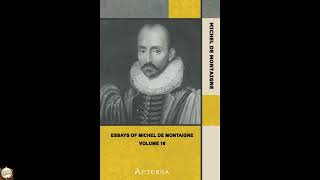
The Essays of Montaigne - Volume 04
In an age brimming with grand pronouncements and definitive answers, Michel de Montaigne offered something radically different: an honest account of one man's shifting thoughts. The Essays of Montaigne - Volume 04 continues this extraordinary project, inviting listeners into the mind of a thinker who embraced doubt, celebrated contradiction, and sought understanding not in external doctrines but within the complex landscape of his own consciousness. This is not a book that dictates; it is a profound conversation, a series of intimate meditations on what it means to be human, as relevant to our often chaotic and uncertain world today as it was centuries ago. The 'story' within Montaigne's essays is the most personal and universal narrative: the ongoing attempt to understand oneself and the world. From the solitude of his tower study, Montaigne turns his gaze inward, making himself both subject and object. He writes with a peculiar, meandering grace, allowing his thoughts to drift from ancient anecdotes to personal observations, probing the core questions of existence. The setting is less a physical place and more a state of mind, where classical learning meets candid self-examination of human nature. Montaigne's 'characters' are the many facets of human experience he observes in himself and others. He presents himself not as a philosopher delivering doctrine, but as an ordinary man grappling with dilemmas: the fear of death, the variability of judgment, the limits of reason. The central 'conflict' is the age-old tension between human aspiration and fallibility, between the desire for certainty and the reality of perpetual change, always returning to 'Que sais-je?' – 'What do I know?' The 'arc' is not a linear progression, but a spiraling expansion of awareness. Each essay, though self-contained, contributes to a lifetime of thought in progress, inviting the listener into the very act of thinking. Michel de Montaigne, born in 1533 at the Château de Montaigne in the Périgord region of France, lived a life marked by both privilege and profound upheaval. His unusual, progressive early education saw him speaking Latin as his first language, steeped in classical literature from infancy. After studying law, he served in the Parlement of Bordeaux, forming a deep friendship with the humanist writer Étienne de La Boétie, whose premature death in 1563 profoundly affected Montaigne, inspiring early reflections on loss. In 1571, on his 38th birthday, Montaigne famously retired from public life, withdrawing to his family estate. He dedicated himself to reading, meditating, and writing in his tower library. This decision was a conscious turning away from the tumult of the French Wars of Religion, which tore France apart during his adult life. Though he briefly returned to public service as mayor of Bordeaux, his true vocation became the cultivation of his mind and the articulation of his unique perspective. His Essays, constantly revised and expanded until his death in 1592, were his singular life project. He effectively invented a new literary form, giving birth to the essay as we know it—a prose composition from a personal point of view. His work stands as a foundational text of humanism, skepticism, and the French Renaissance, cementing his place as an original and influential voice in Western literature. The recurring themes within Montaigne's reflections are both universal and deeply personal. One central thread is his profound skepticism, often summarized by his personal motto, 'Que sais-je?' – 'What do I know?' He consistently questioned the absolute certainty of human knowledge, observing how customs, beliefs, and moral codes differed wildly across cultures. He might reflect on the arbitrary nature of laws, noting how what is considered vice in one society is virtue in another, leading him to argue for humility in judgment. This skepticism was an invitation to intellectual freedom and tolerance, urging constant re-evaluation of one's own assumptions. Another significant theme is self-knowledge, the relentless pursuit of understanding his own ever-changing self. Montaigne famously declared, 'I am myself the matter of my book.' He turns the lens of his intellect upon his own habits, prejudices, and fears, analyzing his reactions to everything from physical illness to the act of writing itself. This honest introspection suggests that genuine wisdom begins with understanding one's limitations. He also grapples extensively with the acceptance of mortality. Rather than fearing death, he viewed it as an integral and natural part of life, proposing that by contemplating death, one might learn to live more fully and without undue anxiety. Montaigne’s Essays were a direct and profoundly personal response to a tumultuous historical era. The sixteenth century in France was dominated by the devastating French Wars of Religion, a brutal series of civil conflicts between Catholics and Huguenots. This period of intense sectarian violence and moral chaos deeply informed Montaigne's skepticism regarding human certitude and his fervent plea for tolerance. Witnessing atrocities committed in the name of absolute truth led him to distrust dogmatism and advocate for a nuanced, individualized approach to moral questions. Beyond the political strife, Montaigne was also writing at the height of the Renaissance, a period of renewed interest in classical antiquity and a flourishing of humanism – an intellectual movement emphasizing human values. Montaigne was steeped in the writings of ancient Greek and Roman philosophers like Seneca and Plutarch. He brought these classical insights into dialogue with his own contemporary experiences, creating a unique synthesis that influenced subsequent generations of writers and thinkers across Europe. Listening to Montaigne's Essays in audiobook form offers a uniquely intimate experience. His prose, with its famously meandering and conversational style, feels less like a formal treatise and more like an overheard conversation with a brilliant, thoughtful friend. The spoken word allows the listener to better appreciate the subtle shifts in his arguments, the playful tangents, and the sudden moments of profound insight. A skilled narrator can bring out the intellectual curiosity, the gentle irony, and the underlying warmth of Montaigne's voice, transforming the act of reading into an act of shared reflection. The flow of his thought, which can sometimes feel complex on the page, often reveals its natural rhythm and intuitive logic when articulated aloud, making his observations feel fresh and immediately relevant during a contemplative walk or a quiet afternoon.
Enjoyed The Essays of Montaigne - Volume 04? A few ways to support us
Audible & Amazon links are affiliate; we may earn a small commission at no extra cost.
About this production
Human narration by a volunteer reader from LibriVox.org, the public-domain audiobook project. LibriVox volunteers record literary works whose copyright has expired in the United States, releasing the resulting recordings into the public domain.
The Essays of Montaigne - Volume 04 by Michel de Montaigne. The underlying text is in the U.S. public domain. We do not republish any modern copyrighted edition, translation, or commentary.
The 4K cinematic visuals accompanying this audiobook are generated by an AI image model from prompts derived from the source text. No copyrighted photos, paintings, or stock footage are used. AI generation is disclosed on every video on our YouTube channel as required by YouTube's altered/synthetic content policy.
English subtitles are transcribed from the LibriVox recording with OpenAI Whisper. Translations into the 11 other supported languages are produced by Meta's NLLB-200 neural translation model. No human translator's copyrighted translation is used.
Questions about sourcing or rights? See our DMCA & Sourcing policy or contact us.
Enjoyed this audiobook?
If you'd like to own a copy of The Essays of Montaigne - Volume 04 or hear a professionally produced edition, the links below help support free audiobook production at no extra cost to you.
As an Amazon Associate we earn from qualifying purchases. Audible / print links are affiliate.