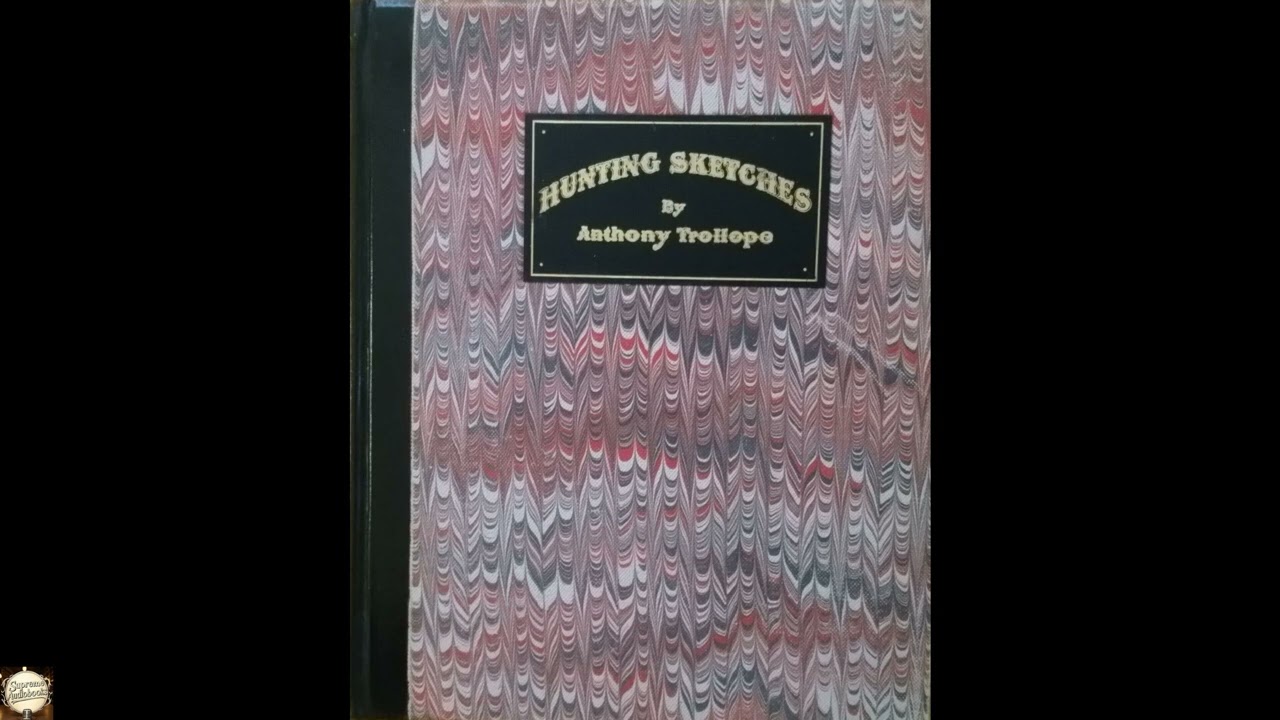
Hunting sketches
Step into the brisk, often muddy, and wonderfully eccentric world of Victorian fox hunting with Anthony Trollope's Hunting Sketches. More than just a collection of observations about a sport, this gathering of tales and essays offers a witty, shrewd, and surprisingly intimate glimpse into the rituals, passions, and human follies surrounding one of England’s most enduring aristocratic pastimes. For listeners today, it provides a unique keyhole into a bygone era, revealing not only the mechanics of the chase but also the complex social hierarchies, unspoken rules, and deeply ingrained character types that defined a specific segment of nineteenth-century British society. This is Trollope at his most genial and discerning, inviting you to understand what made these people tick, why they dedicated so much to the hunt, and how their pursuits reflected the very fabric of their lives. Across these several hours of listening, the setting firmly plants us in the undulating fields and well-kept country estates of rural England, usually on a crisp autumn or winter day. We meet a varied cast of characters, not in the traditional sense of a novel’s protagonists, but as recurring archetypes and vivid portraits observed with Trollope’s keen eye. There are the Masters of the Hounds, men of immense authority and often considerable eccentricity, whose word is law in the hunting field. We encounter the eager young riders, full of ambition and sometimes lacking in skill; the veteran sportsmen, whose knowledge of the country and the chase is unsurpassed; and the long-suffering horses, whose personalities and endurance are given as much attention as their riders’. The collection also introduces us to the surrounding figures: the sharp-eyed farmers whose land is trespassed upon, the local parsons who occasionally join the hunt, and the ladies who observe from the sidelines or participate with varying degrees of decorum. The central activity, of course, is the fox hunt itself, detailed from the anticipation of the meet, through the strategic challenges of the chase, to the often-muddy and exhausted conclusion. Each sketch focuses on a different facet of this elaborate social and physical event, whether it's the specific traits of an ideal hunter, the etiquette of the field, the practicalities of maintaining a pack of hounds, or the sheer joy and frustration of the ride. There’s no overarching narrative with a single protagonist’s ultimate goal; instead, we are presented with a series of vignettes that, together, paint a comprehensive picture of a way of life. These pieces are less about a dramatic conflict and more about the ongoing ebb and flow of a beloved tradition, punctuated by moments of excitement, humor, and occasional exasperation at human nature. Anthony Trollope, born in London in 1815, weathered a difficult childhood marked by financial hardship and a lack of academic success before finding his footing later in life. His transformation from a seemingly unremarkable young man into one of Victorian England’s most prolific and cherished novelists began after he joined the Post Office in 1834. His career as a postal surveyor, which took him across Ireland and England, afforded him invaluable insights into the diverse landscapes, social strata, and unique characters that would populate his novels. Trollope famously disciplined himself to write a certain number of words each day before heading off to his official duties, a habit that allowed him to produce an astonishing body of work, including 47 novels, numerous short stories, and travel books, before his death in 1882. He is perhaps best known for his "Barsetshire Chronicles," a series of six novels—beginning with The Warden and continuing through Barchester Towers—which chronicle the lives of the clergy and gentry in a fictional English county. Later, his "Palliser novels," such as Can You Forgive Her? and Phineas Finn, delved into the world of parliamentary politics and aristocratic society. Trollope's work is a cornerstone of Victorian realism, celebrated for its keen psychological portraits, meticulous social observations, and his ability to portray the moral complexities of everyday life without heavy-handed didacticism. He holds a unique place in the canon, beloved for his accessible prose, his creation of utterly believable characters, and his ability to hold a mirror up to the social anxieties and customs of his age. Hunting Sketches acts as a fascinating lens through which to examine several enduring themes. One prominent theme is the social ritual and hierarchy that pervaded Victorian life. The hunt, with its strict rules of conduct, its defined roles for master, whipper-in, and various classes of riders, serves as a microcosm of English society. Trollope illustrates this through the subtle importance given to the Master of the Hounds, whose decisions are rarely questioned, or the quiet disdain shown towards a rider who breaks etiquette. Another significant theme is human folly and obsession, demonstrated by the singular devotion some individuals display towards the pursuit, often at great personal inconvenience or expense. We see characters whose entire lives seem to revolve around the hunting season, comically committed despite bad weather, difficult horses, or a complete lack of success. The book also touches upon man's relationship with nature and animals, portraying the raw exhilaration of the chase and the often-complex bond between rider and horse. Trollope details the intelligence and stubbornness of the horses, their shared experience with their riders, and the inevitable dominance of the natural world over human plans. Furthermore, a thread of authenticity versus performance runs through the sketches. Trollope often distinguishes between the "true sportsman," who genuinely loves the sport for its own sake, and those who participate primarily for social standing or to be seen among the right company. He gently satirizes the latter, while reserving a respectful admiration for those who understand and honor the traditions of the field. These sketches were published in 1865, squarely in the middle of Queen Victoria's reign, a period of immense change and solidification in British society. Culturally, fox hunting remained a powerful symbol of the aristocracy and gentry, an activity deeply intertwined with land ownership, social status, and tradition. It was a time when the British Empire was at its zenith, yet internally, the nation was grappling with the profound shifts brought about by industrialization, urban growth, and nascent social reforms. In the literary world, realism was the dominant mode, with authors like Dickens, George Eliot, and Thackeray also scrutinizing and depicting the intricacies of English life. Trollope’s decision to focus on such a specific, long-standing institution as fox hunting reflects his ongoing interest in the mechanisms of society, the enduring customs that bound people together, and the human element within established traditions. The book emerges from a desire to both celebrate and gently dissect a venerable pastime, perhaps recognizing its gradual transformation even as he chronicled its heyday. Listening to Hunting Sketches as an audiobook brings Trollope’s observant, conversational prose to vivid life. The author's direct address to the reader—or in this case, the listener—shines in the spoken word, making you feel as though a thoughtful, witty friend is recounting these tales. A skilled narrator can perfectly capture the humor, the subtle irony, and the underlying affection Trollope held for his subjects, whether it be a blustery Master of Hounds or a steadfast hunting dog. The pacing of the sketches, moving from leisurely exposition to the thundering excitement of the chase, translates beautifully through varied vocal delivery, allowing the listener to truly inhabit the scene. You can almost hear the hooves, the baying of the hounds, and the crisp English air as the narrator’s voice paints the landscape. The collection's run length makes it ideal for dipping in and out, or for a sustained, pleasurable period of immersion in a world both distant and surprisingly familiar in its human elements.
Enjoyed Hunting sketches? A few ways to support us
Audible & Amazon links are affiliate; we may earn a small commission at no extra cost.
About this production
Human narration by a volunteer reader from LibriVox.org, the public-domain audiobook project. LibriVox volunteers record literary works whose copyright has expired in the United States, releasing the resulting recordings into the public domain.
Hunting sketches by Anthony Trollope. The underlying text is in the U.S. public domain. We do not republish any modern copyrighted edition, translation, or commentary.
The 4K cinematic visuals accompanying this audiobook are generated by an AI image model from prompts derived from the source text. No copyrighted photos, paintings, or stock footage are used. AI generation is disclosed on every video on our YouTube channel as required by YouTube's altered/synthetic content policy.
English subtitles are transcribed from the LibriVox recording with OpenAI Whisper. Translations into the 11 other supported languages are produced by Meta's NLLB-200 neural translation model. No human translator's copyrighted translation is used.
Questions about sourcing or rights? See our DMCA & Sourcing policy or contact us.
Enjoyed this audiobook?
If you'd like to own a copy of Hunting sketches or hear a professionally produced edition, the links below help support free audiobook production at no extra cost to you.
As an Amazon Associate we earn from qualifying purchases. Audible / print links are affiliate.