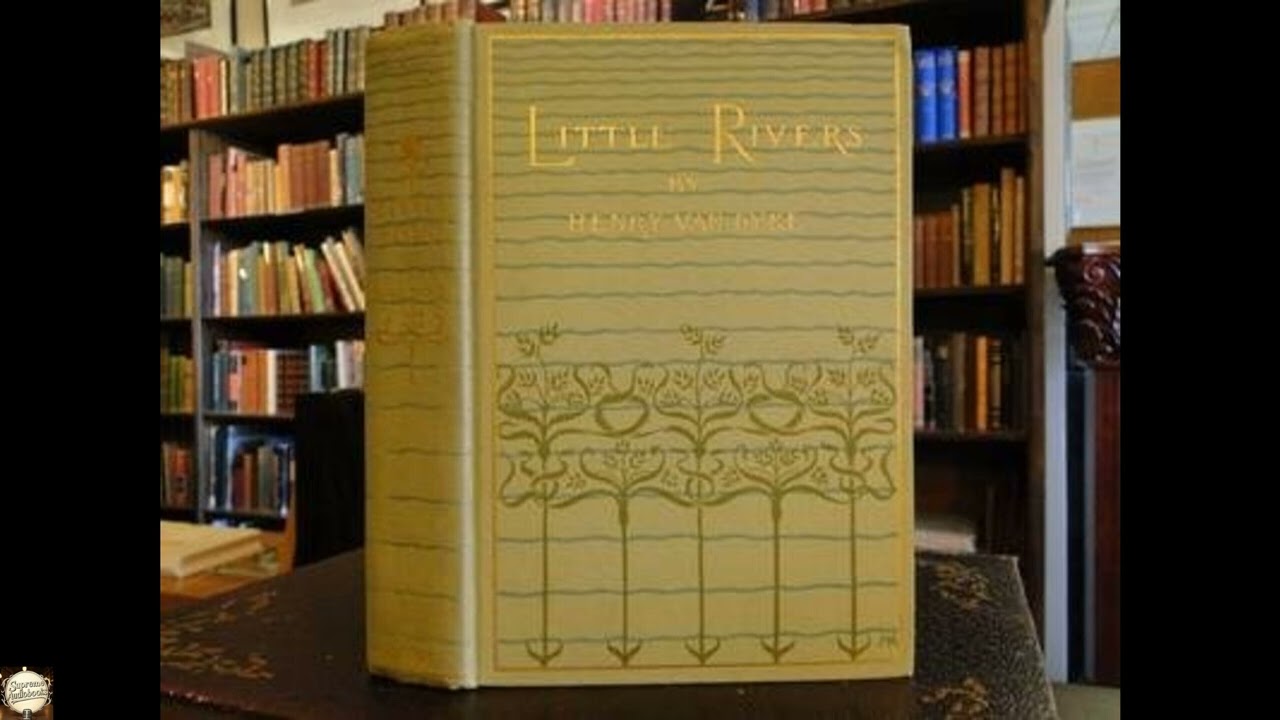
Little rivers;: A book of essays in profitable idleness
Imagine a world where "idleness" isn't a vice but a pathway to profound insight, a purposeful engagement with the quiet rhythms of existence. Henry Van Dyke’s Little Rivers: A Book of Essays in Profitable Idleness offers precisely this invitation – a restorative plunge into the natural world, particularly the serene beauty of flowing waters and the contemplative pursuit of fishing. First published at the close of the nineteenth century, this collection serves as a balm for the modern soul, a gentle antidote to our constantly connected, fast-paced lives. It reminds us that slowing down, observing closely, and allowing our minds to wander in harmony with nature can yield the richest rewards, making it a surprisingly urgent and relevant companion for anyone seeking peace and clarity today. This distinctive collection is not a novel with a linear narrative or a cast of developing characters, but rather an assemblage of personal reflections and anecdotes, each essay acting as a separate excursion into the wilder corners of the world and the mind. The settings are diverse and vividly drawn, ranging from the sun-dappled streams of the Adirondack Mountains to the rugged, salmon-filled rivers of Norway, and even the quieter brooks of his native Pennsylvania. The central "character" is arguably Van Dyke himself, presented as a thoughtful angler and keen observer, accompanied at times by trusted guides, spirited friends, or simply the murmuring current of a river. There is no single overarching "plot" in the traditional sense, but rather a recurring theme: the author’s persistent quest to escape the clamor of professional life and rediscover a deeper self amidst unspoiled nature. Each essay within Little Rivers functions as a miniature sojourn, detailing specific fishing expeditions or walks through the woods. Readers will encounter accounts of challenging catches, the camaraderie of a riverside camp, or the quiet solitude of waiting for a trout to rise. The "arc" of the book is thus not one of dramatic confrontation and resolution, but a cumulative experience – a steady immersion into a philosophy of life that values simplicity, patience, and direct experience. Van Dyke guides us through his discoveries, sharing not just the tactics of fly-fishing but the deeper lessons learned from the patient observation of a wild duck, the resilience of a sapling, or the tireless rush of a river. The overall effect is less a story told and more a shared meditative experience, where the listener is encouraged to embrace the same spirit of "profitable idleness" as the author. Henry Van Dyke, born in 1852 in Germantown, Pennsylvania, led a life of remarkable breadth, seamlessly blending the roles of clergyman, educator, author, and diplomat. The son of a prominent Presbyterian minister, Van Dyke followed in his father's footsteps, graduating from Princeton University and Princeton Theological Seminary before being ordained in 1877. He served with distinction as a pastor in New York City for many years, his eloquence and moral conviction making him a respected voice in the burgeoning metropolis. Later, in 1900, he returned to his alma mater, Princeton, as a professor of English literature, where he influenced generations of students with his love for letters and his thoughtful humanism. Beyond his pastoral and academic duties, Van Dyke was a prolific and beloved writer. His literary output included poetry, hymns, short stories, and particularly, his reflective essays and novellas, which often carried a gentle moral message. He is perhaps best known for his popular Christmas novella, The Story of the Other Wise Man, and works like The First Christmas Tree and The Blue Flower. His appointment by President Woodrow Wilson as the U.S. Ambassador to the Netherlands and Luxembourg from 1913 to 1917 further cemented his standing as a significant public figure. Van Dyke, who passed away in 1933, occupied a unique space in American letters, bridging the sentimentalism of the late Victorian era with a clear-eyed appreciation for nature, all infused with a distinctive Christian humanism, positioning him as an important voice in the tradition of American nature writing. Little Rivers beautifully enacts several profound themes that resonate as strongly today as they did at its publication. Foremost among these is the central concept of "profitable idleness" itself. Van Dyke illustrates that true leisure is not mere inactivity, but a conscious choice to disengage from obligation and engage with the self and the natural world. He might, for instance, describe an afternoon spent by a stream, not focused solely on catching fish, but on observing the play of light on water, the intricate patterns of a dragonfly’s wings, or the subtle shift of currents. These moments, seemingly unproductive, become fertile ground for mental renewal and spiritual clarity, demonstrating how patient observation leads to deeper understanding. Another crucial theme is the profound spiritual and restorative power of nature. Van Dyke portrays the wilderness, especially its flowing waters, as a sanctuary and a source of instruction. He frequently details the specific beauty of a forest grove, the cleansing sound of a rapids, or the simple joy of a campfire under the stars. For him, nature is not just a backdrop but a living entity that offers solace from societal pressures and teaches humility and resilience. Through his specific descriptions of trout streams and the life they support, he also subtly advocates for a form of early environmental consciousness, a reverence for the purity and wildness of untouched places, a concept becoming increasingly important in his era. Published in 1895, Little Rivers emerged during a period of immense change in America, often referred to as the Gilded Age. This era saw rapid industrialization, widespread urbanization, and a dramatic acceleration in the pace of life, driven by new technologies like the railroad and the telegraph. Many felt a growing disconnection from the natural world and traditional communal bonds. Culturally, there was a rising interest in outdoor pursuits and conservation, partly as a response to the perceived excesses and artificiality of urban existence. The establishment of national parks and the writings of figures like John Muir reflected a burgeoning desire to preserve America's wild spaces. In the literary world, the late nineteenth century was a transitional period. Romanticism was giving way to the starker realities of literary Naturalism and Realism. Van Dyke, while observing nature with a realist's eye for detail, retained an optimistic and morally centered perspective that offered a comforting voice amidst the complexities of modernity. His work provided an appealing contrast to the social commentary and psychological introspection popular among some of his contemporaries. He offered readers a gentle escape, a reaffirmation of enduring values found in simplicity and the natural world, speaking to a yearning for peace and authenticity that many felt slipping away in an increasingly industrialized nation. Listening to Little Rivers: A Book of Essays in Profitable Idleness as an audiobook transforms it into an intimate, immersive experience. The unhurried pace of Van Dyke’s prose, his reflective tone, and his vivid descriptions of natural soundscapes – the rustle of leaves, the gurgle of a stream, the splash of a fish – are ideally suited to spoken word. A skilled narrator can amplify the author's contemplative spirit, allowing the listener to truly settle into the moments of quiet observation. The "several hours" run length is perfect for extended periods of focused listening, perhaps during a solitary walk in a park, a quiet afternoon commute, or as a calming companion during an evening at home. The rich, intelligent voice of the narrator, free of rush, allows each gentle wisdom and descriptive passage to unfold with grace, creating an atmosphere of deep tranquility and thoughtful engagement that invites reflection long after the final words are spoken.
Enjoyed Little rivers;: A book of essays in profitable idleness? A few ways to support us
Audible & Amazon links are affiliate; we may earn a small commission at no extra cost.
About this production
Human narration by a volunteer reader from LibriVox.org, the public-domain audiobook project. LibriVox volunteers record literary works whose copyright has expired in the United States, releasing the resulting recordings into the public domain.
Little rivers;: A book of essays in profitable idleness by Henry Van Dyke. The underlying text is in the U.S. public domain. We do not republish any modern copyrighted edition, translation, or commentary.
The 4K cinematic visuals accompanying this audiobook are generated by an AI image model from prompts derived from the source text. No copyrighted photos, paintings, or stock footage are used. AI generation is disclosed on every video on our YouTube channel as required by YouTube's altered/synthetic content policy.
English subtitles are transcribed from the LibriVox recording with OpenAI Whisper. Translations into the 11 other supported languages are produced by Meta's NLLB-200 neural translation model. No human translator's copyrighted translation is used.
Questions about sourcing or rights? See our DMCA & Sourcing policy or contact us.
Enjoyed this audiobook?
If you'd like to own a copy of Little rivers;: A book of essays in profitable idleness or hear a professionally produced edition, the links below help support free audiobook production at no extra cost to you.
As an Amazon Associate we earn from qualifying purchases. Audible / print links are affiliate.