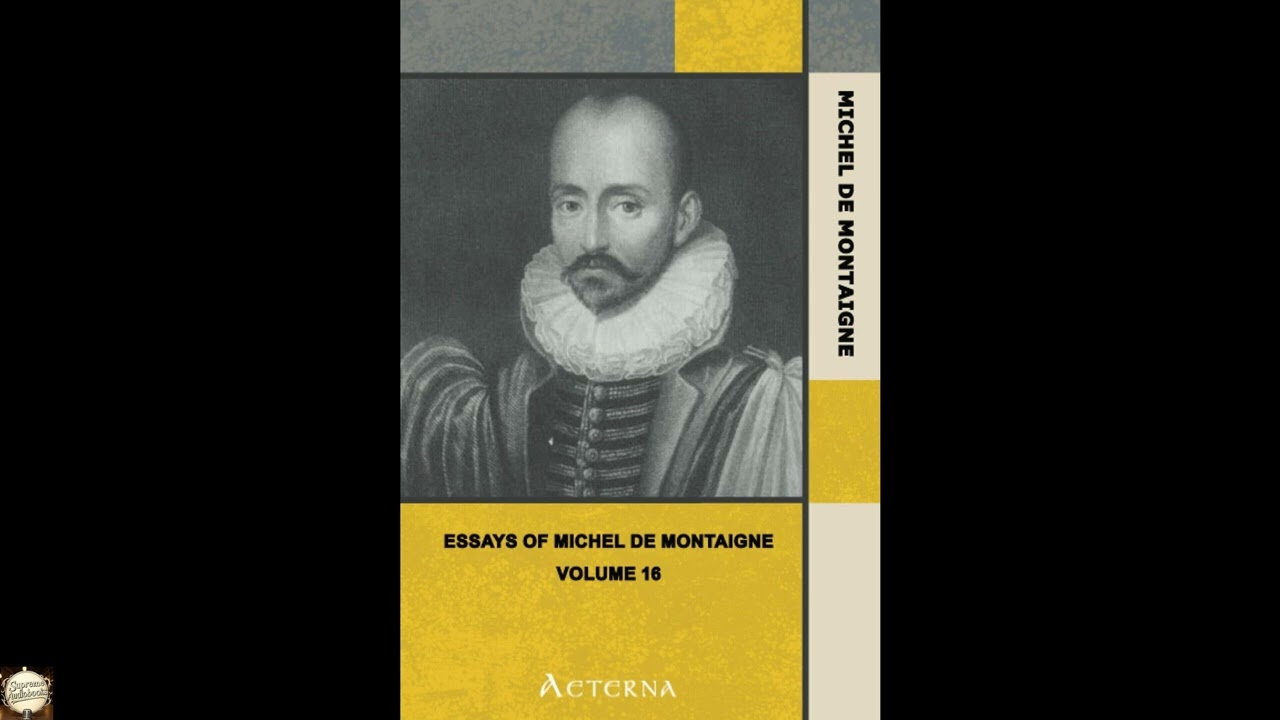
The Essays of Montaigne - Volume 12
Michel de Montaigne’s Essays, presented here as Volume 12, stands as a monument to radical self-inquiry, a groundbreaking act of intellectual honesty that continues to resonate with astonishing clarity hundreds of years after its inception. Rather than presenting a grand philosophical system or recounting epic deeds, Montaigne turned his gaze inward, offering a collection of thoughts, observations, and reflections on virtually every aspect of human experience. This is not a book to be passively consumed; it is an invitation to conversation, a challenge to examine one's own assumptions, and a profound statement on what it means to be human in all its messy, contradictory glory. For anyone seeking to understand the origins of modern self-awareness or simply desiring a companion for quiet contemplation, Montaigne offers a voice that feels remarkably present and relevant, asking questions that echo in every era. The Essays do not unfold like a traditional narrative with characters moving through a world driven by external events. Instead, the central figure is Michel de Montaigne himself, who invites the listener into the innermost chambers of his mind. His "setting" is not a geographical locale but the expansive library of his family chateau in rural Périgord, a sanctuary he deliberately constructed after retiring from public life. Here, surrounded by his beloved books, he grappled with ideas drawn from antiquity, current events, and his own lived experience. The "plot" of these writings is the dynamic process of thought itself, a meandering, associative flow that circles back on ideas, re-examines previous conclusions, and embraces uncertainty as a virtue. There is no single "conflict" in the usual sense; rather, it is an internal, ceaseless, good-humored wrestling with the very nature of human understanding, custom, and belief. The arc of this intellectual story is one of continuous growth and self-discovery, where Montaigne begins with a topic – say, friendship, idleness, or fear – and allows his mind to wander, drawing connections, citing classical authors, recounting anecdotes, and always returning to his personal perspective. Through this method, he reveals not just a catalogue of opinions, but the very act of forming them, demonstrating how prejudice, education, and circumstance shape our inner lives. The listener observes him grappling with his own fallibility, his changing moods, and the limitations of human reason, creating a powerful sense of intimacy and authenticity that was revolutionary for its time and remains compelling to this day. There is no predetermined destination in these mental wanderings, only the continuous act of looking, questioning, and recording. Michel Eyquem de Montaigne was born in 1533 at the family chateau in the Périgord region of France, descending from a wealthy merchant family that had recently acquired noble status. His early education was progressive for the era; his father, a humanist, ensured he was tutored entirely in Latin during his formative years, treating it as his native tongue. Montaigne pursued a career in law, eventually serving as a counselor in the Parlement of Bordeaux, a high judicial court. This period saw him engage with public life, where he formed a profound intellectual and personal friendship with the writer Étienne de La Boétie, whose early death profoundly affected Montaigne and is often referenced in his writings. At the age of 38, in 1571, Montaigne retired from his public duties, famously inscribing his library tower with the date and dedicating himself to leisure and reflection. It was here, surrounded by his thousands of books, that he began the unusual project that would consume the remainder of his life: writing about himself, or rather, writing about the human condition by starting with the example closest at hand—his own. He was not a prolific author of other works, dedicating almost all his literary energy to the Essays, which he continued to revise and expand until his death in 1592. His singular achievement solidified his place as a foundational figure in French literature and Western philosophy, influencing countless writers and thinkers who followed. Montaigne's writings enact several profound themes, perhaps most notably that of self-examination and introspection. He famously declared, "I am myself the matter of my book," a radical departure from the philosophical and literary norms of his time. He details his habits, his opinions on everything from diet to death, his physical ailments, and his intellectual meanderings. For example, he considers his own struggles with memory, describing how he often forgets names and faces, yet through this personal failing, he invites a universal reflection on the imperfection of human faculties. This relentless focus on his own inner landscape serves as a mirror, prompting the reader to look inward and understand their own motivations and contradictions. Another significant theme is skepticism, particularly a form rooted in ancient Pyrrhonism, epitomized by his motto, "Que sais-je?" (What do I know?). Montaigne consistently questions dogma, conventional wisdom, and the limits of human knowledge. He frequently compares customs and laws from different cultures and historical periods, demonstrating the arbitrary nature of what is often considered "natural" or "right." In an essay discussing the customs of newly discovered peoples in the Americas, he challenges the European assumption of cultural superiority, showing how what seems barbarous to one society might be perfectly rational to another, thereby undermining absolute claims to truth. This intellectual humility fosters an appreciation for diverse perspectives and a distrust of rigid certainty. The world in which Montaigne conceived and wrote his Essays was one of intense upheaval and intellectual ferment. The French Renaissance was in full swing, bringing with it a rediscovery of classical texts and a renewed interest in human potential, art, and learning. However, this era was also marked by the brutal French Wars of Religion, a series of civil conflicts between Catholics and Huguenots (Protestants) that ravaged France for decades. Montaigne, a Catholic married to a Protestant, was deeply affected by this violence and fanaticism. His retreat to his library was partly a response to the chaos outside, a search for intellectual peace amidst the bloodshed. Furthermore, the "discovery" of the New World and its indigenous populations had a profound impact on European thought, introducing entirely new ways of living and organizing society. Montaigne’s awareness of these distant cultures fueled his skeptical relativism, prompting him to question the inherent superiority of European customs. Against this backdrop of religious strife and expanding horizons, Montaigne's call for moderation, self-knowledge, and tolerance emerged as a calming, yet profoundly challenging, voice. He sought to understand common humanity when the world around him was tearing itself apart over differences. Listening to The Essays of Montaigne as an audiobook offers a uniquely personal and reflective experience. The very nature of Montaigne's conversational prose, his habit of thinking aloud and drifting from one thought to the next, lends itself perfectly to the spoken word. The narrator's voice becomes a stand-in for Montaigne's own, allowing the listener to settle into the rhythm of his inquiry, to ponder alongside him as he weighs various ideas. The pacing often mirrors Montaigne's own intellectual wanderings: sometimes direct, sometimes leisurely, inviting moments of pause for contemplation. Paying attention to the narrator’s tone can enhance the appreciation of Montaigne’s renowned wit, his occasional self-deprecation, and his profound insights. This extended format allows for sustained engagement with a mind that, while ancient, feels strikingly contemporary, making the act of listening itself a form of shared meditation.
Enjoyed The Essays of Montaigne - Volume 12? A few ways to support us
Audible & Amazon links are affiliate; we may earn a small commission at no extra cost.
About this production
Human narration by a volunteer reader from LibriVox.org, the public-domain audiobook project. LibriVox volunteers record literary works whose copyright has expired in the United States, releasing the resulting recordings into the public domain.
The Essays of Montaigne - Volume 12 by Michel Montaigne. The underlying text is in the U.S. public domain. We do not republish any modern copyrighted edition, translation, or commentary.
The 4K cinematic visuals accompanying this audiobook are generated by an AI image model from prompts derived from the source text. No copyrighted photos, paintings, or stock footage are used. AI generation is disclosed on every video on our YouTube channel as required by YouTube's altered/synthetic content policy.
English subtitles are transcribed from the LibriVox recording with OpenAI Whisper. Translations into the 11 other supported languages are produced by Meta's NLLB-200 neural translation model. No human translator's copyrighted translation is used.
Questions about sourcing or rights? See our DMCA & Sourcing policy or contact us.
Enjoyed this audiobook?
If you'd like to own a copy of The Essays of Montaigne - Volume 12 or hear a professionally produced edition, the links below help support free audiobook production at no extra cost to you.
As an Amazon Associate we earn from qualifying purchases. Audible / print links are affiliate.