Books And Culture
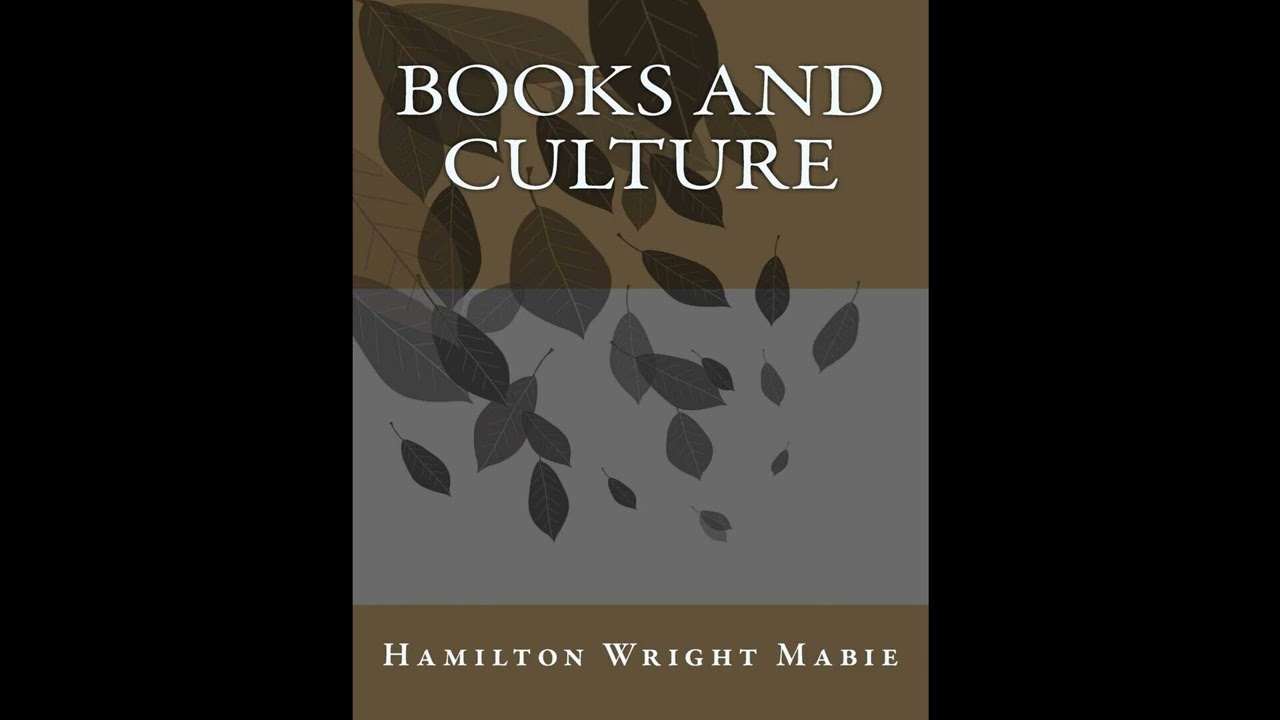
In an age where information floods us from every screen, where attention spans shrink under the relentless demand for the next digital stimulation, the quiet wisdom offered by Hamilton Wright Mabie's Books And Culture rings with a particular resonance. This profound collection of essays, first published at the close of the nineteenth century, stands not merely as a historical document but as an eloquent guide for cultivating an inner life fortified by literature. Mabie does not promise quick fixes or simple answers; instead, he offers a thoughtful philosophy of reading, urging us to approach books not as transient entertainment or a means to accumulate facts, but as companions, mentors, and the very building blocks of a truly cultivated soul. For anyone seeking to deepen their understanding, refine their sensibilities, and reclaim a more deliberate engagement with the world of ideas, Mabie's work provides a compelling invitation to look beyond the ephemeral and connect with the enduring power of the written word. Books And Culture lays out a compelling argument for the transformative role of literature in personal development and societal progress. Mabie begins by defining true culture, moving beyond the superficial accumulation of knowledge to emphasize a harmonious development of the individual's faculties—intellectual, emotional, and spiritual. He then meticulously builds his case for how books serve as the primary conduits for this growth. The "story" of this work unfolds as Mabie guides his reader through various aspects of literary engagement, from the foundational principles of active reading to the specific contributions of different literary forms. He discusses how poetry, fiction, history, and philosophy each offer unique avenues for expanding one's understanding of humanity and the cosmos. Mabie’s intellectual progression is not a linear march through dry theory but a series of reflective considerations, each essay building upon the last to construct a comprehensive vision of what it means to be a truly literate and cultured person. He addresses the importance of imagination, the discipline of critical thought, and the necessity of allowing literature to shape one's moral and ethical framework. He challenges the reader to move beyond passive consumption, advocating instead for a dynamic interaction with texts that allows them to truly penetrate and change one's perspective. The arc of Mabie’s argument culminates in a vision of a society enriched and uplifted by individuals who engage thoughtfully with the great traditions of human thought and expression. Hamilton Wright Mabie, born in 1845 in Cold Spring, New York, grew to become a prominent American essayist, literary critic, and editor during a period of significant intellectual and social change. Educated at Williams College and Columbia Law School, Mabie initially pursued a legal career but quickly found his true calling in the literary world. He joined the staff of The Christian Union (later renamed The Outlook) in 1879, where he would serve as an associate editor for over three decades, working alongside influential figures like Henry Ward Beecher and Lyman Abbott. His position at The Outlook provided him with a significant platform to shape public opinion on literature, education, and culture. Mabie was a prolific writer, known for his elegant prose and his unwavering commitment to promoting liberal education and the appreciation of classic literature. Beyond Books And Culture, his notable works include My Study Fire, a series of personal essays that invited readers into his intellectual world, Short Studies in Literature, and Essays in Literary Interpretation. He was a firm believer in the power of books to elevate and refine the individual, advocating for a broad and deep engagement with the literary heritage of the Western world. Through his essays and lectures, Mabie became a respected voice in the late 19th and early 20th centuries, influencing generations of readers and scholars with his thoughtful perspectives on the moral and intellectual dimensions of reading. He passed away in 1916, leaving behind a legacy of eloquent advocacy for the enduring value of literary culture. One of the central themes Mabie enacts is the idea of literature as a means of character formation. He argues that engaging with fictional narratives, for instance, does more than merely entertain; it cultivates empathy and moral understanding. When discussing, say, a classic novel, Mabie might illustrate how a character’s struggles and triumphs allow the reader to vicariously experience ethical dilemmas, thereby refining their own sense of justice, compassion, or resilience. He suggests that true growth comes not just from absorbing facts, but from grappling with human experience as presented through the artistry of story. Another significant theme present throughout Books And Culture is the distinction between mere erudition and genuine intellectual cultivation. Mabie frequently cautions against confusing the accumulation of facts or the superficial acquaintance with many titles for true culture. He might point to an individual who can quote passages from various authors but lacks a deeper understanding of their underlying philosophies or their connection to the human condition. For Mabie, authentic culture manifests as a harmonious integration of knowledge, imagination, and moral sensibility, all fostered by a reflective and discerning engagement with books, rather than a show of academic prowess. Hamilton Wright Mabie's Books And Culture emerged during a fascinating period in American history—the close of the nineteenth century—a time characterized by rapid industrialization, increasing urbanization, and significant social change. The nation was grappling with the implications of widespread literacy and the burgeoning availability of printed material, from dime novels to academic treatises. There was a prevailing cultural concern regarding the quality and direction of public intellectual life, alongside a strong emphasis on self-improvement and moral uplift through education. Movements like Chautauqua, which brought educational and cultural programs to rural areas, and the widespread establishment of public libraries, underscored a collective aspiration for intellectual and spiritual growth among the populace. In this environment, Mabie's work served a vital purpose: providing guidance on how to navigate the expanding literary landscape and how to derive genuine cultural enrichment from it. He stood as a proponent of a liberal arts ideal, championing the enduring value of classic literature in an era that was beginning to prioritize vocational training and scientific specialization. His essays offered a counter-narrative to the potential superficiality of mass communication, urging readers to seek depth and meaning in their intellectual pursuits. Books And Culture thus reflects both the anxieties and the aspirations of its time, providing a compass for intellectual navigation when the sheer volume of information threatened to overwhelm discerning readers. Listening to Books And Culture as an audiobook transforms Mabie's thoughtful prose into an intimate conversation. The work's several hours of length make it perfectly suited for extended periods of focused listening—perhaps during quiet reflection, a leisurely walk, or while engaging in a gentle hobby. A skilled narrator brings Mabie's elegant and often reflective writing to life, allowing the listener to absorb his arguments at a measured pace. One can truly appreciate the nuanced phrasing and the subtle shifts in tone that might be missed in a hurried reading. The absence of hurried dialogue or dramatic action means the narrator's voice becomes the primary vessel for Mabie's ideas, creating an atmosphere of quiet intellectual companionship, much like sharing a profound discussion with a wise friend. This aural presentation encourages a more contemplative engagement with the text, allowing Mabie's profound insights into reading and culture to resonate deeply with the listener.
Enjoyed Books And Culture? A few ways to support us
Audible & Amazon links are affiliate; we may earn a small commission at no extra cost.
About this production
Human narration by a volunteer reader from LibriVox.org, the public-domain audiobook project. LibriVox volunteers record literary works whose copyright has expired in the United States, releasing the resulting recordings into the public domain.
Books And Culture by Hamilton Wright Mabie. The underlying text is in the U.S. public domain. We do not republish any modern copyrighted edition, translation, or commentary.
The 4K cinematic visuals accompanying this audiobook are generated by an AI image model from prompts derived from the source text. No copyrighted photos, paintings, or stock footage are used. AI generation is disclosed on every video on our YouTube channel as required by YouTube's altered/synthetic content policy.
English subtitles are transcribed from the LibriVox recording with OpenAI Whisper. Translations into the 11 other supported languages are produced by Meta's NLLB-200 neural translation model. No human translator's copyrighted translation is used.
Questions about sourcing or rights? See our DMCA & Sourcing policy or contact us.
Enjoyed this audiobook?
If you'd like to own a copy of Books And Culture or hear a professionally produced edition, the links below help support free audiobook production at no extra cost to you.
As an Amazon Associate we earn from qualifying purchases. Audible / print links are affiliate.