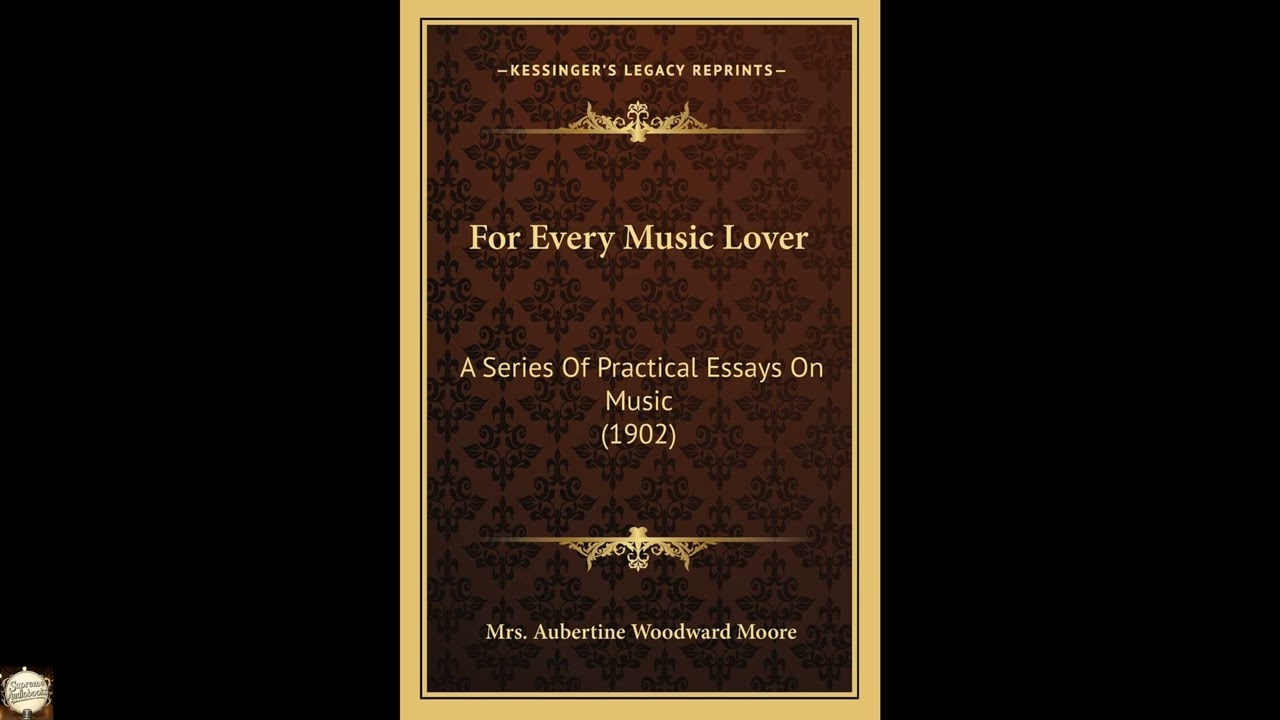
For Every Music Lover: A Series Of Practical Essays On Music
"For Every Music Lover: A Series Of Practical Essays On Music" offers exactly what its title promises: a direct, insightful companion for anyone who finds their life enriched by sound. This collection stands as an invitation, extended across time, to deepen one's understanding of an art form that speaks to the core of human experience. Whether you are a casual listener, a budding performer, or simply someone who appreciates the profound beauty and structure of melody and harmony, these essays provide a thoughtful pathway to a more engaged and meaningful relationship with music. Far from being a dry theoretical treatise, the writing here presents itself as a wise friend, sharing observations and practical guidance designed to unlock new dimensions of appreciation and technical skill. It reminds us that music is not merely background noise, but a living, breathing entity, deserving of our full attention and informed insight. The collection offers an intellectual progression rather than a conventional narrative. Its "setting" is the expansive realm of musical thought and practice, spanning from the intimacy of a lone instrument to the grand scale of an orchestral performance. The listener assumes the role of the "main character," a curious individual seeking to move beyond passive reception to an active, informed engagement with music—someone grappling with the universal desire to truly hear and understand. The central "conflict" lies in the challenge of articulating the ineffable qualities of music, or the effort required to master its intellectual and physical disciplines. The arc of this unique intellectual progression begins with fundamental principles—rhythm, pitch, timbre—inviting closer listening to music's building blocks. It then progresses through discussions of form and structure, revealing the architectural brilliance underpinning compositions. Later essays might shift towards musical interpretation, touching on the emotional impact of different keys or the historical contexts shaping particular styles. The authorial voice consistently guides, offering insights into both technical performance aspects—practice discipline, expressive nuance—and the philosophical dimensions of appreciation—how music moves us, and how to articulate that experience. This progression transforms the listener's perspective, providing tools for analysis and a deeper wellspring of enjoyment, without dictating a singular way to experience this powerful art. The precise identity of the author of "For Every Music Lover" remains an intriguing mystery, a silent testament to the enduring power of its message. This work emerges from a tradition of practical wisdom passed down through generations of musicians and thinkers, reflecting periods when knowledge was shared for its intrinsic value rather than an originator's personal renown. Anonymous works often arise not from a bid for fame, but as a genuine attempt to codify and disseminate essential truths, ensuring valuable insights on an art form are preserved and made accessible to a broader public. This anonymity imbues the essays with a certain universality; the principles discussed transcend individual personality or specific historical trends. Their wisdom feels less like the pronouncements of a single voice and more like a distillation of collective experience. We infer the original author was someone deeply immersed in the musical world, possessing both profound theoretical understanding and practical grasp of performance and pedagogy. Their dedication was to the subject itself: illuminating music's nuances for anyone willing to learn, fostering a community of informed listeners. The absence of a personal biography allows direct connection with the ideas, focusing purely on the musical concepts without the filter of an author's reputation. One core theme is the active nature of listening. The collection argues that simply hearing sounds is insufficient; true appreciation demands an engaged, informed ear. An essay might illustrate how a seemingly simple folk melody, when broken down into its constituent phrases, reveals sophisticated internal logic. This process enhances emotion through understanding, empowering listeners to move beyond passive reception and actively participate in a piece's unfolding, finding new layers of meaning and delight. Another significant theme is the discipline and craft inherent in musical creation and performance. The essays likely offer practical advice, not just abstract theory. One might encounter observations on consistent practice for a performer, emphasizing methodical repetition for fluency and expressive control. Or perhaps a piece discusses a composer's careful orchestration choices to evoke specific moods, showing how deliberate choices contribute to overall effect. This theme underscores that music, while emotional, also builds upon rigor, technique, and thoughtful construction—a powerful blend of inspiration and perspiration. Dedication to craft elevates both creator and interpreter, enriching the listener's experience. To understand the emergence of "For Every Music Lover," we consider humanity's long engagement with music and the parallel efforts to articulate its principles. Across eras, from ancient Greece's philosophical musings on harmony to the Enlightenment's systematization of aesthetic theory, a recurring impulse existed: to understand not just how music is made, but why it affects us, and how one might improve their own musicality. This collection likely arose from a period of growing desire to democratize musical knowledge, moving it beyond the exclusive domain of court musicians or academic scholars. Such a compendium suggests a time when music became increasingly accessible to a wider audience, whether through public concerts, home performance, or printed scores. This accessibility naturally spurred demand for instructional materials to guide the enthusiastic amateur or earnest student. The title itself, "For Every Music Lover," speaks to an inclusive spirit, indicating a shift towards educating a broader public. It contributes to the centuries-long dialogue about music education, performance practice, and aesthetic appreciation, reflecting a belief that deeper musical understanding is for all, not just specialists. Listening to "For Every Music Lover" in its audiobook format provides a particularly resonant way to absorb its insights. The spoken word allows the essays to unfold at a contemplative pace, much like a thoughtful conversation with an experienced mentor. A skilled narrator's voice can lend an additional layer of clarity and warmth to the instructional tone, guiding the listener gently through complex ideas without demanding the intense visual focus required for reading text. You might find yourself pausing to reflect on a specific point, perhaps even humming a melody or imagining an instrument's timbre as the narrator discusses musical form or technique. The run length, several hours in total, makes it ideal for integrating into daily routines—a segment during a commute, a reflective period during a walk, or dedicated listening sessions that allow for full immersion. The auditory nature of the presentation naturally complements the subject matter, enhancing your understanding and appreciation of music through the very medium of sound.
Enjoyed For Every Music Lover: A Series Of Practical Essays On Music? A few ways to support us
Audible & Amazon links are affiliate; we may earn a small commission at no extra cost.
About this production
Human narration by a volunteer reader from LibriVox.org, the public-domain audiobook project. LibriVox volunteers record literary works whose copyright has expired in the United States, releasing the resulting recordings into the public domain.
For Every Music Lover: A Series Of Practical Essays On Music. The underlying text is in the U.S. public domain. We do not republish any modern copyrighted edition, translation, or commentary.
The 4K cinematic visuals accompanying this audiobook are generated by an AI image model from prompts derived from the source text. No copyrighted photos, paintings, or stock footage are used. AI generation is disclosed on every video on our YouTube channel as required by YouTube's altered/synthetic content policy.
English subtitles are transcribed from the LibriVox recording with OpenAI Whisper. Translations into the 11 other supported languages are produced by Meta's NLLB-200 neural translation model. No human translator's copyrighted translation is used.
Questions about sourcing or rights? See our DMCA & Sourcing policy or contact us.
Enjoyed this audiobook?
If you'd like to own a copy of For Every Music Lover: A Series Of Practical Essays On Music or hear a professionally produced edition, the links below help support free audiobook production at no extra cost to you.
As an Amazon Associate we earn from qualifying purchases. Audible / print links are affiliate.