How to Tell a Story And Other Essays
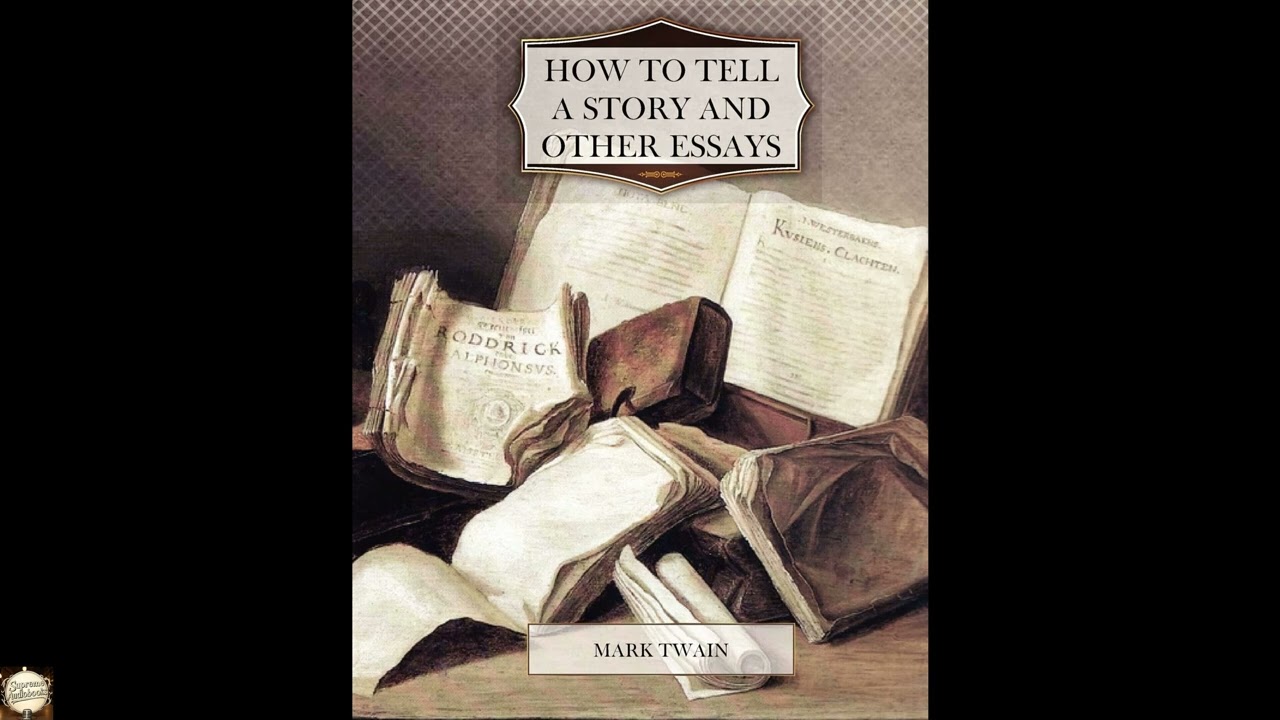
Step into the singular mind of Mark Twain with How to Tell a Story And Other Essays, an essential collection that distills the wit, wisdom, and profound observational powers of America’s most celebrated humorist. Far from being a mere historical curiosity, this volume offers a direct line to Twain’s thought processes, his sharp critiques of human folly, and his surprisingly enduring advice on communication. For anyone seeking to understand the foundational voice of American literature, or simply to enjoy the company of a master storyteller at his most reflective and performative, these essays provide an unparalleled experience, revealing how much of our modern sensibility still echoes with Twain’s distinct perspective. While this book does not present a single narrative in the traditional sense, it invites the listener on a intellectual journey through the diverse landscape of Twain's musings. The titular essay itself acts as a masterclass, with Twain serving as the benevolent but pointed instructor. He unpacks the mechanics of humor, the art of the pause, and the subtle differences in comedic delivery that separate a truly effective yarn-spinner from a mere reciter of facts. Beyond this instructional cornerstone, the collection branches out, offering glimpses into Twain's observations from his travels, his reflections on American character, and his often-acerbic commentary on the social and political currents of his day. Listeners will find themselves immersed in a series of thought experiments and anecdotal expeditions, each framed by Twain's unmistakable voice. He acts as our guide, sometimes playing the role of the innocent bystander, sometimes the world-weary cynic, always striving to uncover the hidden truths beneath the surface of everyday life. The "conflict," if one can call it that, arises from the clash between human pretension and Twain's unblinking gaze, a dynamic that plays out in various forms across the essays, culminating not in a single resolution, but in a broadened understanding of human nature and the complexities of the American experience. The author behind this incisive collection was Samuel Langhorne Clemens, better known by his pen name, Mark Twain. Born in Florida, Missouri, in 1835, and growing up in the bustling river town of Hannibal, his early life was steeped in the rich, varied culture of the Mississippi River. These formative years, marked by experiences as a steamboat pilot—a profession that gave him his famous pseudonym, a river term for safe navigable depth—and later as a prospector and journalist in the American West, furnished him with an inexhaustible wellspring of characters, dialects, and social observations. He documented his time on the river in Life on the Mississippi and his Western adventures in Roughing It, establishing his reputation as a voice uniquely attuned to the American spirit. Twain's literary output positioned him squarely within the burgeoning American Realism movement of the late 19th century. He was renowned for his use of vernacular speech, his keen eye for detail, and his willingness to tackle serious social issues through the lens of humor and satire. His monumental novels, The Adventures of Tom Sawyer and Adventures of Huckleberry Finn, cemented his place as a literary giant, with the latter often hailed as the "Great American Novel" for its profound engagement with themes of race, freedom, and the American dream. Twain's unique blend of regional color, sharp wit, and deep humanism carved out an indelible space for him in the global literary canon, influencing generations of writers with his distinctive voice and narrative style until his death in 1910. At the core of How to Tell a Story And Other Essays lies Twain's deep interest in the very act of communication and the subtle art of persuasion. The titular essay, for instance, offers practical, almost theatrical advice on how to structure a joke, how to use pauses for maximum impact, and how to build suspense not just through words, but through inflection and timing. He provides concrete illustrations, contrasting the direct, efficient style of an American humorist with the more circuitous, detail-laden approach of an English one, showing how cultural context shapes comedic delivery. This exploration of rhetoric and performance reveals Twain's understanding that storytelling is not merely recounting events, but a deliberate craft designed to evoke a specific response. Beyond the mechanics of narrative, Twain consistently uses these essays as a platform for social critique, a recurring theme throughout his oeuvre. He often skewers pretension and hypocrisy, whether it manifests in grand societal pronouncements or the petty affectations of individuals. One might find him dissecting the absurdities of human nature with a gentle, ironic hand, or exposing the illogical underpinnings of conventional wisdom with a sharper, more direct satire. Through these observations, Twain highlights the enduring foibles of humanity, demonstrating how humor can serve as a potent vehicle for truth, making uncomfortable realities palatable and thought-provoking. The late nineteenth and early twentieth centuries, the period when Twain was most active and these essays likely took shape, was a time of immense change in America. The nation was grappling with the aftermath of the Civil War, rapid industrialization, westward expansion, and the rise of the Gilded Age with its attendant inequalities and social upheavals. Twain's writings frequently reflected this volatile environment, often looking back nostalgically at a vanishing rural America while simultaneously castigating the excesses and moral compromises of the burgeoning modern era. The widespread popularity of public lectures and lyceum circuits during this era also made Twain’s insights on storytelling particularly resonant; audiences were eager for both entertainment and enlightenment, and Twain was a master of delivering both from the stage. Listening to How to Tell a Story And Other Essays as an audiobook offers a singular opportunity to connect directly with the author's intended spirit. Twain’s prose, so rich with dialect, nuance, and comedic timing, practically begs to be read aloud. A skilled narrator brings to life the subtle inflections, the perfectly placed pauses, and the shifts in tone that are integral to Twain’s humor and his serious reflections. The several hours of content allow for a leisurely immersion into his world, making it ideal for commutes, long walks, or simply unwinding. You can savor the carefully constructed sentences, appreciate the rhythm of his argument, and experience the feeling of a fireside chat with one of America's most astute and entertaining minds.
Enjoyed How to Tell a Story And Other Essays? A few ways to support us
Audible & Amazon links are affiliate; we may earn a small commission at no extra cost.
About this production
Human narration by a volunteer reader from LibriVox.org, the public-domain audiobook project. LibriVox volunteers record literary works whose copyright has expired in the United States, releasing the resulting recordings into the public domain.
How to Tell a Story And Other Essays by Mark Twain. The underlying text is in the U.S. public domain. We do not republish any modern copyrighted edition, translation, or commentary.
The 4K cinematic visuals accompanying this audiobook are generated by an AI image model from prompts derived from the source text. No copyrighted photos, paintings, or stock footage are used. AI generation is disclosed on every video on our YouTube channel as required by YouTube's altered/synthetic content policy.
English subtitles are transcribed from the LibriVox recording with OpenAI Whisper. Translations into the 11 other supported languages are produced by Meta's NLLB-200 neural translation model. No human translator's copyrighted translation is used.
Questions about sourcing or rights? See our DMCA & Sourcing policy or contact us.
Enjoyed this audiobook?
If you'd like to own a copy of How to Tell a Story And Other Essays or hear a professionally produced edition, the links below help support free audiobook production at no extra cost to you.
As an Amazon Associate we earn from qualifying purchases. Audible / print links are affiliate.
![MARK TWAIN'S [Date, 1601.] CONVERSATION As It WAS By The SOCIAL FIRESIDE In The TIME- Full Audiobook by Mark Twain — free full audiobook](https://img.youtube.com/vi/IBbX13QIif8/maxresdefault.jpg)