Mornings in Florence
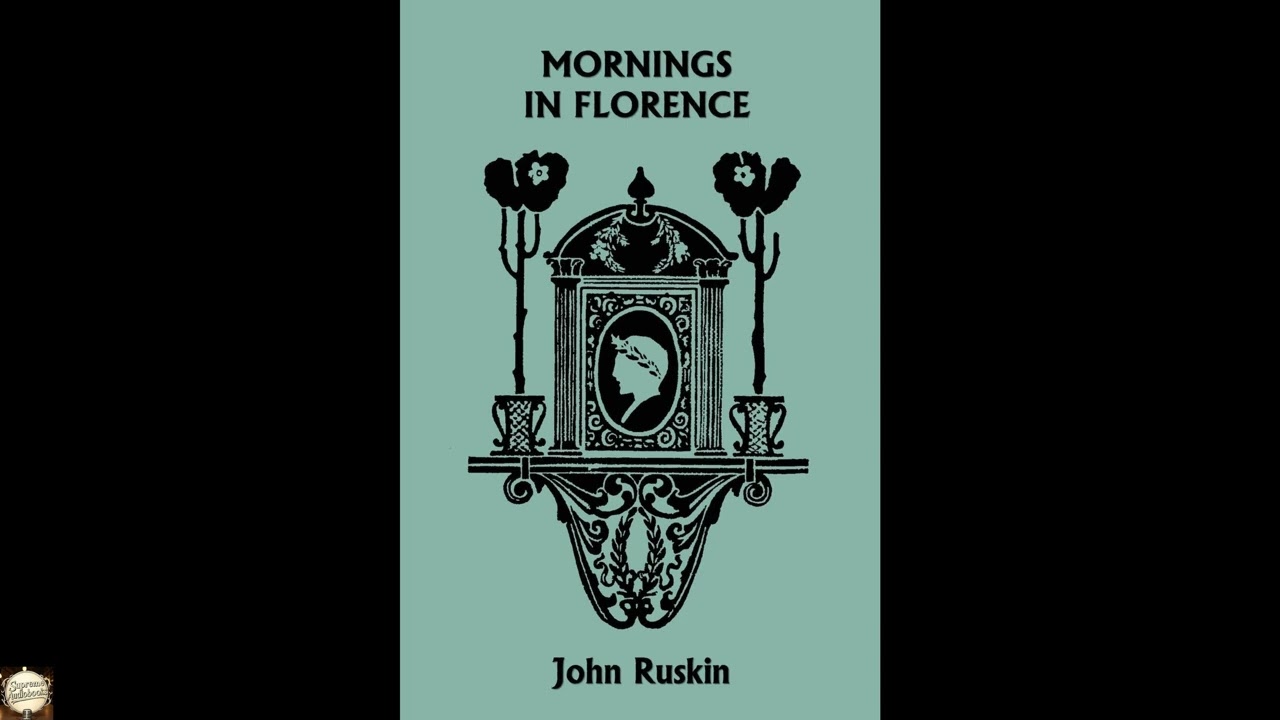
Imagine walking through the sun-drenched streets of Florence, not as a casual tourist, but with a brilliant, passionate guide by your side, a mind incandescent with conviction and an eye trained to discern beauty, truth, and moral purpose in every stone and brushstroke. That is the essence of John Ruskin’s Mornings in Florence, a literary companion that transcends a simple guidebook. This is a vital invitation to truly see – to look beyond the surface of a fresco or a sculpted figure and understand the spirit of its creation, the hands that shaped it, and the society that produced it. It's a profound call to engage with art and history as a means of understanding ourselves and the enduring questions of human existence, questions that resonate as powerfully today as they did in the late nineteenth century. Mornings in Florence unfurls not as a linear narrative, but as a series of carefully observed encounters with the city's artistic heritage, structured as six "mornings" spent in specific, iconic locations. Ruskin, in essence, leads his listener by the hand, directing their gaze towards the often-overlooked details of architectural ornamentation, the narrative power of an early Renaissance fresco, or the raw expressiveness of a sculpted saint. He begins in the hallowed ground of Santa Croce, meticulously dissecting the frescoes of Giotto and the tombs of Michelangelo, not just for their aesthetic appeal, but for their profound moral and historical lessons. The setting is always Florence, a city he regarded as a living textbook of human endeavor, its stones whispering tales of devotion, innovation, and civic strife. As the "mornings" progress, our unseen guide moves us to other significant sites: the Dominican church of Santa Maria Novella, the magnificent Duomo with its campanile, and the churches of San Lorenzo and San Marco, each presenting new opportunities for close study. The "characters" are the great Florentine artists themselves – Giotto, Orcagna, Ghiberti, Botticelli – whose works are scrutinized with an intensity rarely matched. The central intellectual tension throughout these observations is Ruskin’s persistent argument against the superficial appreciation of art and the destructive effects of thoughtless restoration, advocating instead for an appreciation rooted in understanding the craftsman's intention and the societal values that shaped the art. He challenges the listener to move beyond passive consumption to an active, almost spiritual, communion with the objects of beauty, showing how these pieces of art serve as windows into the soul of a bygone era, yet hold lessons for every generation. John Ruskin, born in London in 1819, was one of the most significant figures of Victorian prose and an immensely influential art critic, social theorist, and polymath. From his early education at Christ Church, Oxford, he showed a precocious intellect and a deep love for both art and natural science. His prodigious writing career began with Modern Painters, a multi-volume defense of the landscapes of J.M.W. Turner, which instantly established him as a formidable voice in the art world. Ruskin’s travels, particularly to Italy, were foundational to his thinking, immersing him in the art and architecture that would inspire much of his later work. Throughout his long life, which ended in 1900, Ruskin's interests broadened significantly beyond mere art criticism. He became a forceful, often controversial, social commentator, whose essays like Unto This Last critiqued the economic and moral foundations of industrial capitalism, advocating for humane labor practices and a more equitable society. Other notable works include The Stones of Venice, a monumental study of Venetian architecture and its civic life, and Sesame and Lilies, a pair of lectures on education and the roles of men and women. Ruskin's prose style, with its rhythmic cadence and impassioned rhetoric, placed him firmly among the great Victorian sages, influencing later thinkers, artists, and social reformers across Europe and beyond. His ideas helped shape the Pre-Raphaelite Brotherhood and inspired figures from William Morris to Mahatma Gandhi. One of the central themes woven through Mornings in Florence is the profound connection between art, morality, and labor. Ruskin argues that true art is the product of honest, devoted labor and a sincere moral vision, contrasting the soulful craftsmanship of medieval artisans with the often-soulless industrial production of his own time. For instance, in his discussions of Giotto’s frescoes in Santa Croce, he doesn’t just admire the composition or color; he praises the clear, unpretentious narrative and the sincere devotional spirit embedded in every figure, seeing them as direct expressions of the artists' beliefs and the collective faith of their community. He draws our attention to how these works speak not just to beauty, but to ethical purpose. Another compelling theme is the importance of active, discerning observation. Ruskin doesn't simply tell us what to think about a piece of art; he teaches us how to look. He leads the listener through a painstaking analysis of specific details – the subtle curve of a drapery, the expression on a saint's face, the choice of materials in a tomb – demonstrating how these elements contribute to the overall message and power of the work. This meticulous approach underscores his belief that superficial viewing diminishes both the art and the viewer, and that true appreciation requires intellectual effort and a willingness to engage with the object on its own terms, seeing past academic conventions to grasp the fundamental truths it conveys. The late nineteenth century was a period of immense cultural and societal flux. The Industrial Revolution had transformed Britain, bringing with it both unprecedented wealth and significant social inequalities. There was a growing interest in European travel among the burgeoning middle classes, but Ruskin felt that many travelers approached the continent's artistic treasures with a superficiality born of ignorance and a lack of moral grounding. Furthermore, rapid urban development and Victorian tastes often led to destructive "restorations" of historical buildings, which Ruskin fiercely opposed, viewing them as vandalism. Against this backdrop, Mornings in Florence emerged as a deliberate attempt to educate and elevate public taste. It was originally published as a series of letters to "the British workmen and labourers," a testament to Ruskin's democratic impulse to make profound aesthetic and ethical insights accessible to a wider audience, not just the academic elite. He sought to re-instill a sense of reverence for history, craftsmanship, and authentic beauty at a time when he perceived these values to be under threat from materialism and industrialization. It was his direct intervention into the cultural conversations of his day, guiding his contemporaries to a more thoughtful engagement with their shared heritage. Listening to Mornings in Florence as an audiobook offers a unique and particularly resonant experience, bringing Ruskin's oratorical prose to life. His style is grand, often passionate, and filled with rhetorical flourishes that truly shine when delivered by a skilled narrator. The run length, several hours in duration, allows for a generous immersion into his detailed observations and expansive philosophical arguments. Listen for the deliberate pacing of his sentences, how he builds his cases from specific visual details to sweeping pronouncements on society and art. A good narration will highlight the distinct atmosphere he conjures, making you feel as if you are indeed standing beside him in those Florentine churches, absorbing his insights directly. The interplay of his precise descriptions and broader reflections, when voiced, can create a powerful, almost meditative, encounter with both the art of Florence and the mind of one of history's great critics.
Enjoyed Mornings in Florence? A few ways to support us
Audible & Amazon links are affiliate; we may earn a small commission at no extra cost.
About this production
Human narration by a volunteer reader from LibriVox.org, the public-domain audiobook project. LibriVox volunteers record literary works whose copyright has expired in the United States, releasing the resulting recordings into the public domain.
Mornings in Florence by John Ruskin. The underlying text is in the U.S. public domain. We do not republish any modern copyrighted edition, translation, or commentary.
The 4K cinematic visuals accompanying this audiobook are generated by an AI image model from prompts derived from the source text. No copyrighted photos, paintings, or stock footage are used. AI generation is disclosed on every video on our YouTube channel as required by YouTube's altered/synthetic content policy.
English subtitles are transcribed from the LibriVox recording with OpenAI Whisper. Translations into the 11 other supported languages are produced by Meta's NLLB-200 neural translation model. No human translator's copyrighted translation is used.
Questions about sourcing or rights? See our DMCA & Sourcing policy or contact us.
Enjoyed this audiobook?
If you'd like to own a copy of Mornings in Florence or hear a professionally produced edition, the links below help support free audiobook production at no extra cost to you.
As an Amazon Associate we earn from qualifying purchases. Audible / print links are affiliate.