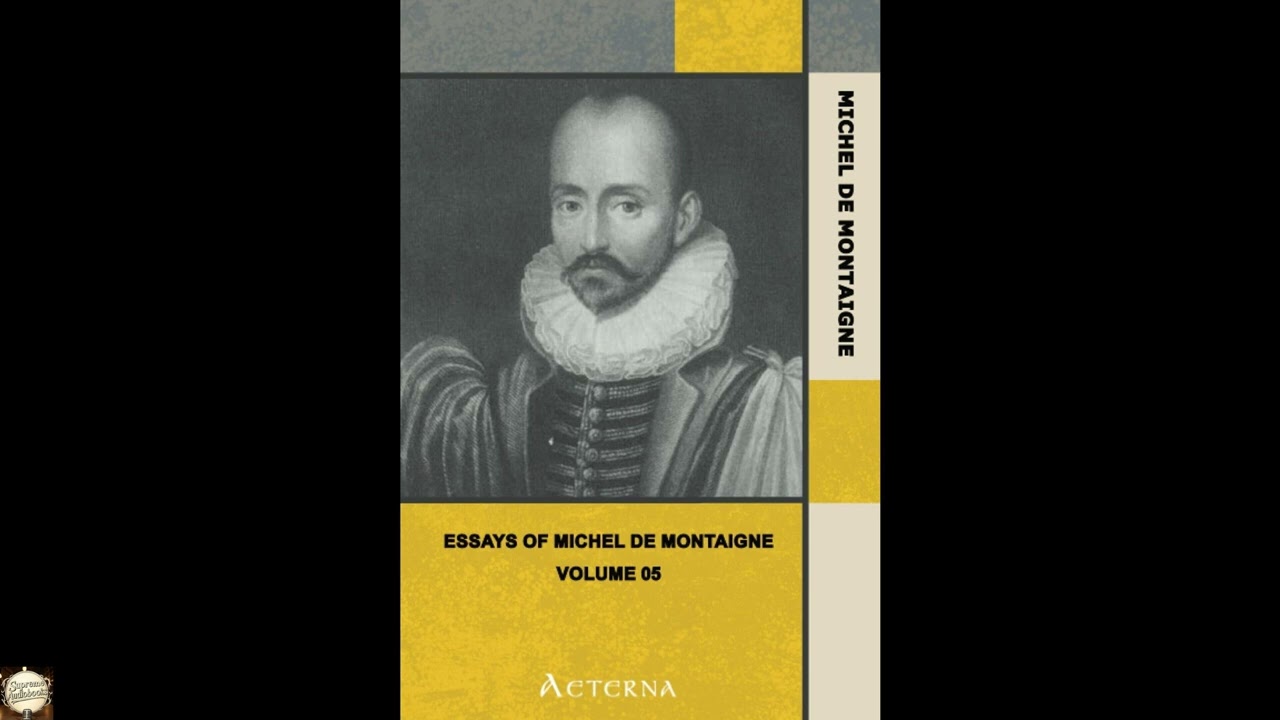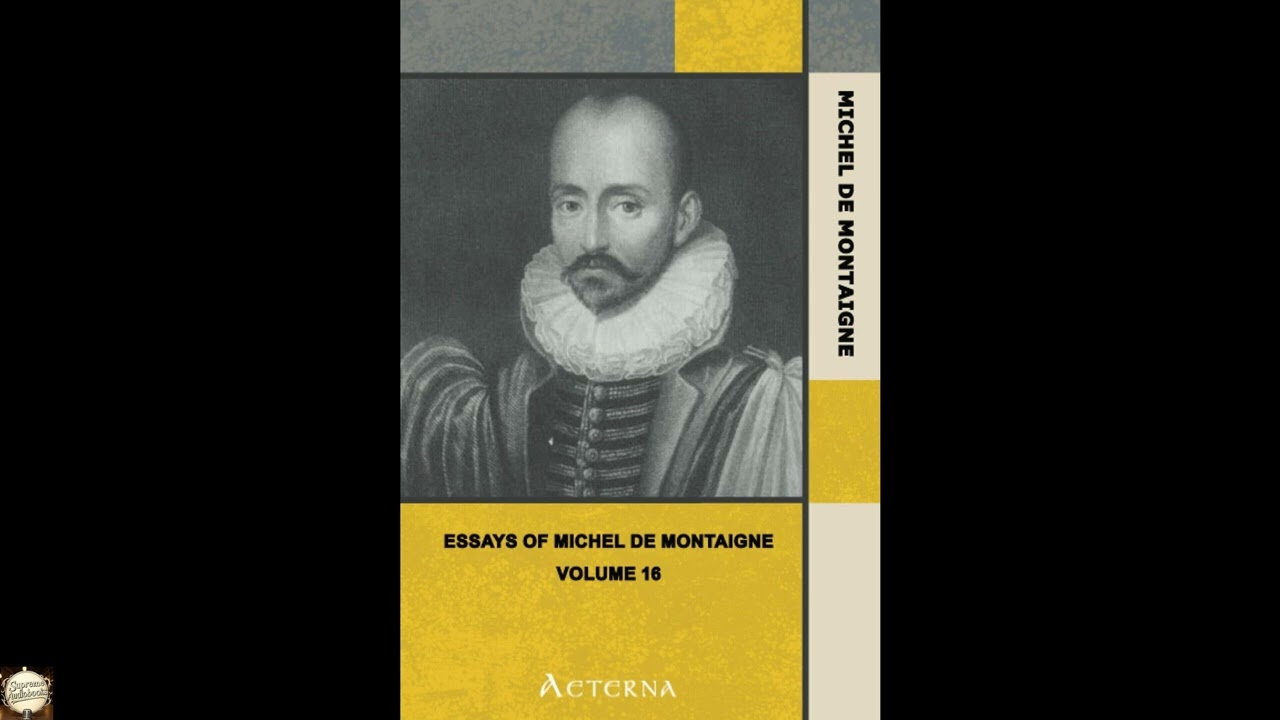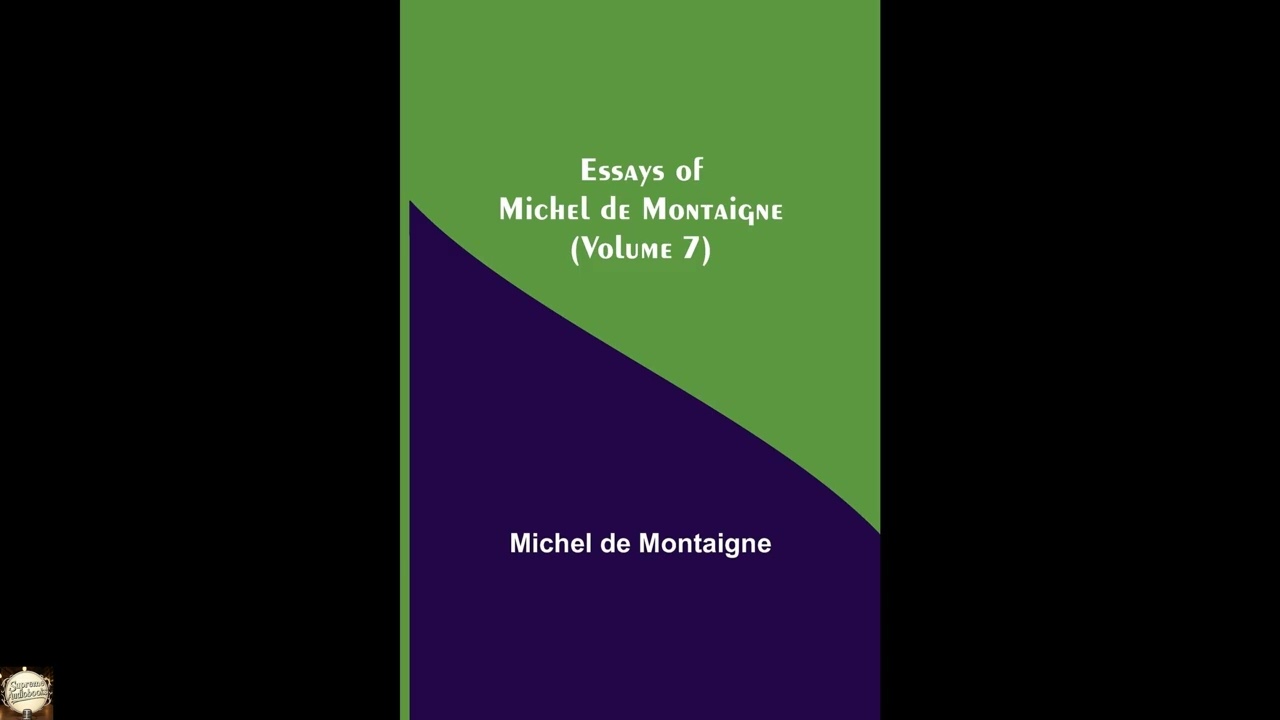
Essays of Michel de Montaigne (Volume 7)
For listeners seeking a profound engagement with the very act of thinking, Michel de Montaigne's Essays (Volume 7) offers a unique and enduring invitation. This is not a story with a beginning, middle, and end, but rather an ongoing, intimate conversation with one of history's most compelling minds. Montaigne, a sixteenth-century French nobleman, retreats into his personal library to scrutinize himself and the world around him, pioneering a literary form that makes the meandering process of thought its central subject. Each essay, whether pondering cannibalism, the nature of friendship, or the proper way to educate a child, becomes a window into a singular consciousness grappling with universal questions. The appeal for a modern audience lies in this raw honesty: Montaigne’s doubts, his observations, his ceaseless questioning of received wisdom resonate deeply in any era marked by uncertainty and a hunger for authentic understanding. He teaches us not what to think, but how to think for ourselves, making this volume a potent antidote to dogmatism and a celebration of human curiosity. Within the pages of this volume, as in all his writings, Montaigne establishes his singular "plot" through an unconventional method. His setting is primarily his tower study, a sanctuary adorned with classical inscriptions, where he withdraws from the tumultuous French political landscape. From this vantage point, his "main character" is unequivocally himself—Michel de Montaigne—presented not as a hero or a villain, but as a fallible, evolving human being. He examines his habits, his preferences, his physical sensations, his intellectual inconsistencies with an unflinching gaze. The central "conflict" isnates from the ceaseless human struggle to understand the self and the world, to find a stable ground of truth amidst the shifting sands of opinion and experience. He grapples with the unreliability of sense perception, the vanity of human ambition, and the stark reality of mortality. The "arc of the story" in Montaigne’s work is less a linear progression and more a spiraling ascent, where themes are revisited from different angles, and self-knowledge is accumulated through a process of accretion. He constructs a self-portrait not in broad strokes, but through countless minute details, observations on his digestion, his fear of thunder, his preference for certain wines, or his reflections on the changing seasons. He freely intersperses personal anecdotes with citations from Greek and Roman authors like Plutarch and Seneca, using ancient wisdom to illuminate contemporary dilemmas, and vice-versa. There is no traditional resolution or climactic reveal here, but rather a persistent commitment to the project of self-discovery, leaving the listener with an appreciation for the ongoing, never-ending nature of introspection. Michel de Montaigne was born in 1533 at the Château de Montaigne, near Bordeaux, France, into a wealthy merchant family that had recently acquired nobility. His father, a progressive thinker, ensured Montaigne received an exceptional education, including being woken daily by music and conversing in Latin from an early age, making him fluent before he learned French. He served for a period as a counselor in the Parlement of Bordeaux, a judicial body, and later as Mayor of Bordeaux. These public roles placed him squarely in the midst of the violent religious conflicts that plagued France in the latter half of the 16th century, the Wars of Religion between Catholics and Huguenots. The profound disillusionment born from observing human cruelty and political instability deeply influenced his decision to retreat from public life at the age of 38. In 1571, Montaigne retired to his estate, specifically to his third-story library, intending to dedicate himself to study and reflection. It was here, surrounded by over a thousand books, that he began to write his Essays, inventing the literary form itself—a "trial" or "attempt" to put his thoughts on paper. He aimed to "paint himself," warts and all, believing that by accurately depicting his own particular human experience, he might reveal universal truths about humanity. His work stands as a monumental achievement of humanism, blending classical erudition with radical self-scrutiny. Though he wrote no other major works, the Essays alone secured his place as a foundational figure in Western literature and philosophy, influencing countless thinkers from Shakespeare to Ralph Waldo Emerson. One of the central themes running through Montaigne's Essays is skepticism, particularly captured in his famous question, "Que sais-je?" (What do I know?). He consistently challenges the certainty of human knowledge and the reliability of our senses. For instance, in one essay, he might examine various cultural customs concerning marriage or burial, showing how what is considered natural or moral in one society is absurd or abhorrent in another. This relativistic stance, born from observation, undermines dogmatic claims to universal truth, encouraging a humble and questioning approach to life. Another key theme is the constant flux of human nature and opinion. Montaigne notes how he can hold one view today and a different one tomorrow, not out of hypocrisy, but because his mind is a perpetually moving stream. He often recounts how physical ailments or changes in mood can alter his perception, serving as a concrete example of how our internal state colors our understanding of reality. Furthermore, Montaigne grapples extensively with the theme of mortality and the art of living well in the face of death. Having lost his closest friend, Étienne de La Boétie, and suffering from painful kidney stones himself, he frequently turns his attention to how individuals confront their end. He considers various philosophical approaches to dying, from the stoic acceptance of ancient philosophers to the common fear and denial. He advocates not for a morbid obsession, but for a conscious awareness of death as an integral part of life, arguing that to live fully, one must acknowledge and even rehearse the process of dying. This awareness, he suggests, can free one from anxieties and lead to a more authentic existence. His precise descriptions of his own physical discomforts and his mental preparations for death illustrate this theme powerfully, demonstrating how philosophical reflection can be deeply intertwined with the lived experience. Montaigne wrote and revised his Essays during a period of intense upheaval in France—the late 16th century. This was the era of the French Wars of Religion, a series of brutal civil conflicts between Catholic and Protestant factions that ravaged the nation for decades. Cities were besieged, massacres were common, and political allegiances shifted constantly. Against this backdrop of fanaticism and violence, Montaigne’s retreat into his library and his dedication to skeptical self-examination make profound sense. His search for an inner stability, a personal truth, emerged as a direct response to the external chaos and the dangerous certainties espoused by both sides of the religious divide. He observed how human beings, convinced of their own righteousness, were capable of unspeakable cruelty. His humanist education, steeped in classical authors who valued reason and moderation, provided him with a framework to question the prevailing dogmatism and to advocate for tolerance and individual judgment in a world tearing itself apart. Listening to Essays of Michel de Montaigne (Volume 7) as an audiobook provides an exceptionally intimate experience. Montaigne’s prose is inherently conversational; he addresses the reader directly, sharing his thoughts as if in a dialogue. Hearing his words spoken aloud transforms this intellectual exchange into an even more personal encounter, as if Montaigne himself were musing aloud in your presence. The several hours of running time allow the listener to settle into the leisurely, reflective pace of his thought, absorbing his arguments and anecdotes without haste. A skilled narrator can bring out the wit, the occasional melancholia, and the underlying warmth of Montaigne's voice, highlighting the precise rhythms and nuanced inflections in his sentences. Without the visual distraction of print, one can truly focus on the substance of his arguments, letting his observations about human nature and the art of living resonate more deeply. It is an ideal companion for moments of quiet contemplation, whether on a long walk or simply sitting in a favorite chair.
Enjoyed Essays of Michel de Montaigne (Volume 7)? A few ways to support us
Audible & Amazon links are affiliate; we may earn a small commission at no extra cost.
About this production
Human narration by a volunteer reader from LibriVox.org, the public-domain audiobook project. LibriVox volunteers record literary works whose copyright has expired in the United States, releasing the resulting recordings into the public domain.
Essays of Michel de Montaigne (Volume 7) by Michel de Montaigne. The underlying text is in the U.S. public domain. We do not republish any modern copyrighted edition, translation, or commentary.
The 4K cinematic visuals accompanying this audiobook are generated by an AI image model from prompts derived from the source text. No copyrighted photos, paintings, or stock footage are used. AI generation is disclosed on every video on our YouTube channel as required by YouTube's altered/synthetic content policy.
English subtitles are transcribed from the LibriVox recording with OpenAI Whisper. Translations into the 11 other supported languages are produced by Meta's NLLB-200 neural translation model. No human translator's copyrighted translation is used.
Questions about sourcing or rights? See our DMCA & Sourcing policy or contact us.
Enjoyed this audiobook?
If you'd like to own a copy of Essays of Michel de Montaigne (Volume 7) or hear a professionally produced edition, the links below help support free audiobook production at no extra cost to you.
As an Amazon Associate we earn from qualifying purchases. Audible / print links are affiliate.