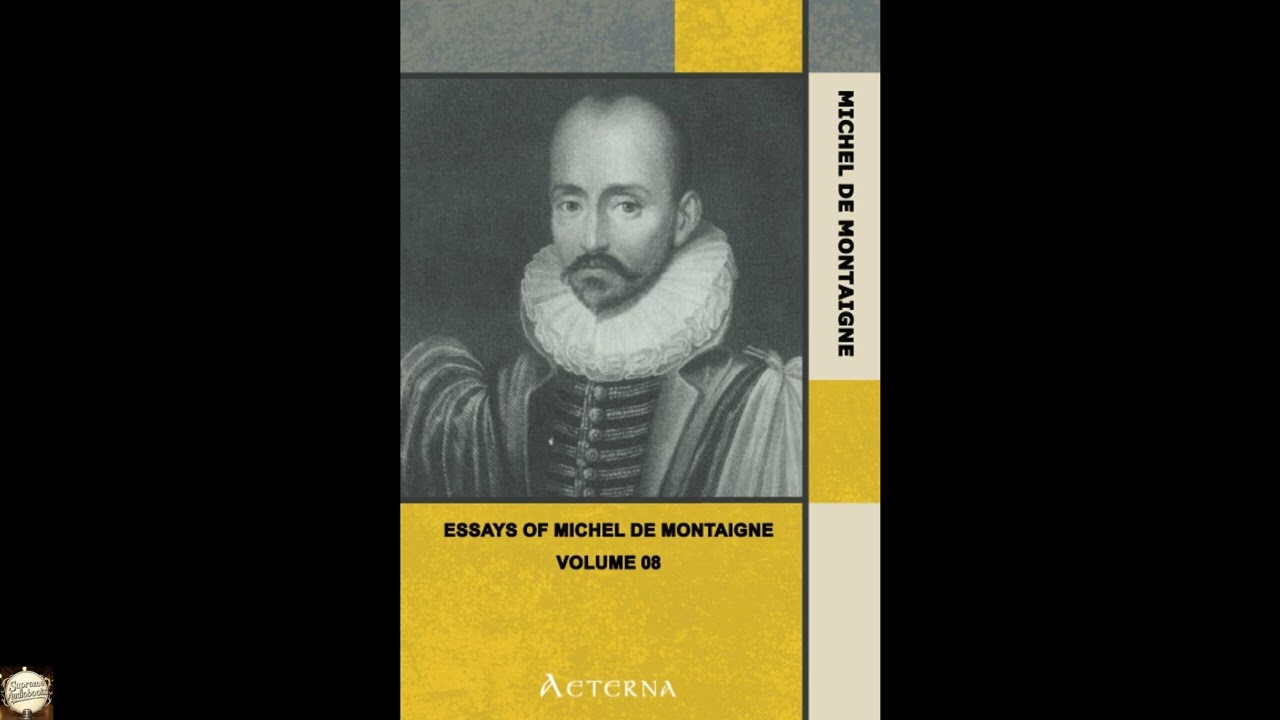
Essays of Michel de Montaigne (Volume 10)
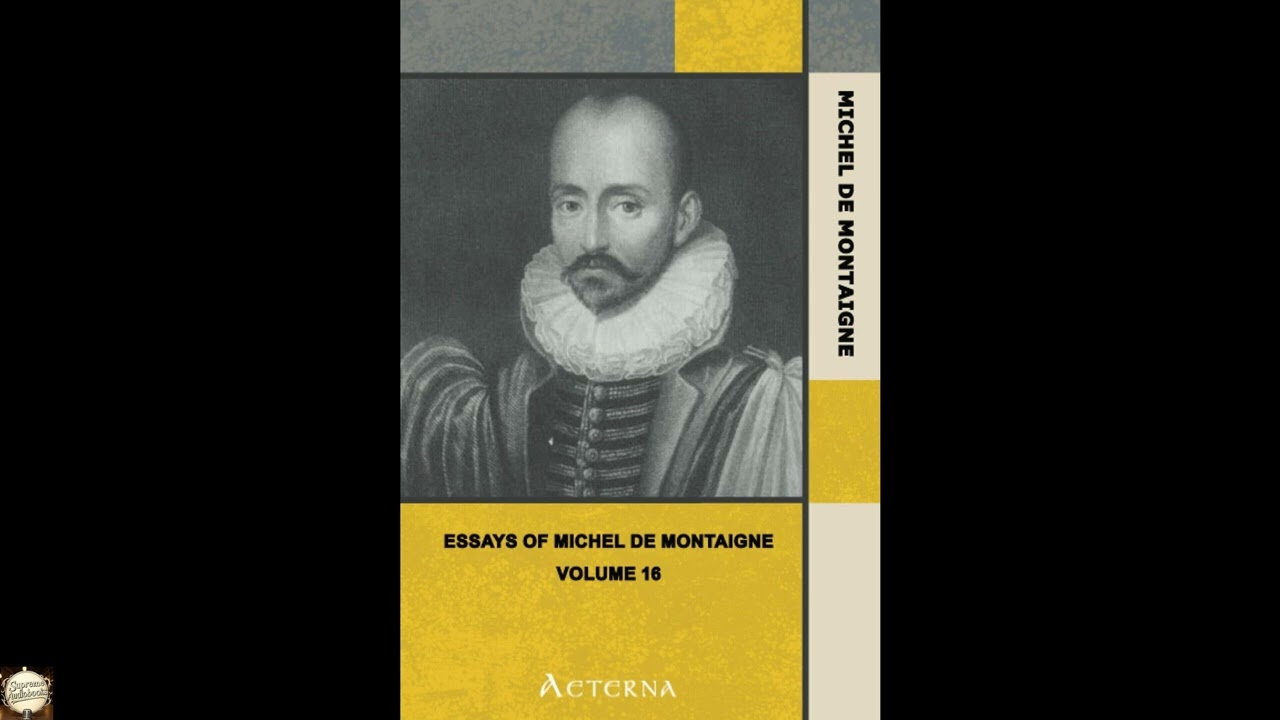
Imagine stepping into the mind of one of history's most original thinkers, a man who essentially invented the essay form as a way to understand himself and the world around him. "Essays of Michel de Montaigne (Volume 10)" offers just such an opportunity, presenting a later collection from a work that has shaped philosophy, literature, and the very concept of personal reflection for centuries. This is not merely a historical document; it is a conversation across time, a profound and often witty meditation on what it means to be human, to live, to doubt, and to learn. Montaigne’s voice, direct and intimate, cuts through the noise of centuries, offering a companionship of thought that feels as vital and necessary today as it did during the tumultuous period in which he wrote. It is a testament to the enduring power of honest self-inquiry and intellectual curiosity. The "story" within Montaigne's essays is a unique one, unfolding not through a conventional narrative but through the meandering thought process of its sole, central character: Michel de Montaigne himself. The setting is primarily his private library in the tower of his château in rural France, a sanctuary from the political and religious turmoil of the late 16th century. Here, surrounded by his beloved books and the quiet contemplation of his own existence, Montaigne undertakes an extraordinary project. He becomes both author and subject, a philosopher-experimenter observing his own mind, body, and habits with an unprecedented degree of candor. There are no dramatic external events driving a plot in the traditional sense; instead, the action occurs almost entirely within the chambers of Montaigne’s intellect. The central conflict animating these pages is Montaigne's struggle with certainty and the human condition. He grapples with the instability of knowledge, the contradictions within human nature, the inevitability of death, and the often arbitrary nature of custom and law. His "arc" is not one of rising action and resolution, but rather an evolving intellectual and personal journey. Through each essay, Montaigne revisits topics, contradicts himself, and refines his understanding, creating a constantly shifting portrait of a mind in motion. This tenth volume represents a mature phase of his thought, likely showcasing the depth of his skepticism and the profound intimacy of his self-portrayal, making it a particularly revealing glimpse into the culmination of his life’s work. The narrative tension comes from the sustained effort of a brilliant mind to make sense of a perplexing world, and the sheer delight is in accompanying him on that quest. Michel Eyquem de Montaigne, born in 1533 at the family estate near Bordeaux, France, came from a wealthy merchant family newly elevated to the nobility. His early education was unusual and progressive; his father arranged for him to be raised speaking only Latin for his first years, ensuring a deep immersion in classical antiquity. Montaigne later studied law and served for many years as a magistrate in the Bordeaux parliament, a role that exposed him to the complexities of law, justice, and human folly. It was there that he formed a deep and formative friendship with fellow magistrate Étienne de La Boétie, whose early death profoundly impacted Montaigne and served as one of the catalysts for his retreat from public life. In 1571, Montaigne formally retired to his library, dedicating himself to reading and writing. He began to compile his Essays, a revolutionary work that defied easy categorization, blending personal anecdote, philosophical speculation, classical quotation, and historical observation. He served a term as Mayor of Bordeaux during a period of intense religious strife, demonstrating his capacity for practical governance and moderation amidst civil war, before returning to his literary pursuits. Montaigne continued to revise and expand his Essays until his death in 1592, leaving behind a work that would establish him as a towering figure of the French Renaissance and a foundational voice in Western thought. His influence can be seen in writers as diverse as Shakespeare, Pascal, Rousseau, Emerson, and Nietzsche, all of whom recognized the originality and depth of his self-scrutiny. Among the fundamental themes woven through Montaigne's essays is a radical skepticism, famously encapsulated by his question, "Que sais-je?" (What do I know?). He consistently challenges received wisdom, societal norms, and even the certainty of sensory experience. In essays such as "Of Cannibals," for instance, he questions the European assumption of cultural superiority by presenting a nuanced, even sympathetic, view of Indigenous peoples, suggesting that their "barbaric" customs might be more virtuous than the cruelties of so-called civilized societies. This relentless questioning serves as a bulwark against dogmatism and intolerance, a deeply relevant stance in any age. Another profound theme is the project of self-examination and introspection. Montaigne declares, "I am myself the matter of my book," and he meticulously records his own thoughts, feelings, physical ailments, habits, and changing opinions with startling honesty. In sections where he discusses memory, for example, he details his own struggles with recollection, transforming a personal failing into a universal reflection on the nature of the mind. He reveals the inner life in all its contradictions and particularities, establishing a literary precedent for the direct observation of consciousness that would echo through subsequent centuries of literature and psychology. This fearless presentation of the self is what makes his work so uniquely personal and universally resonant. Montaigne wrote during a period of intense upheaval in France—the French Wars of Religion, a brutal and protracted series of civil conflicts between Catholics and Huguenots (Protestants). This era was marked by profound political instability, social fragmentation, and widespread violence, challenging the very fabric of society and belief. Against this backdrop of fanaticism and ideological certainty, Montaigne's moderate, skeptical, and introspective voice emerged as a powerful counterpoint. His essays offered a refuge of doubt and reasoned inquiry, advocating for tolerance, individual judgment, and a recognition of the limits of human knowledge in a world torn apart by absolute convictions. Culturally, Montaigne stood at the tail end of the European Renaissance, a period characterized by the rediscovery of classical antiquity and a burgeoning humanism. He drew heavily on classical authors like Seneca and Plutarch, integrating their wisdom with his own observations. However, the intellectual landscape was also being reshaped by new scientific discoveries, the exploration of the New World, and the shattering of religious unity by the Reformation. These forces combined to create a sense of intellectual crisis, questioning traditional authorities and expanding the horizons of human experience. Montaigne’s work responded to this crisis by pivoting inward, making the individual, rather than external dogma, the primary locus of inquiry and meaning. Listening to Montaigne’s "Essays (Volume 10)" as an audiobook provides an exceptionally intimate experience, aligning perfectly with the author's conversational and introspective style. The narrator becomes the voice of Montaigne himself, breathing life into his digressions, his moments of humor, his profound skepticism, and his quiet wisdom. The several hours of listening time allow for a sustained companionship with Montaigne's mind, making his meandering thoughts and anecdotes feel like an ongoing dialogue with a sagacious friend. One can truly appreciate the nuanced pacing of his arguments and the particular tone of his voice, which shifts between erudite discussion and humble self-confession. The audiobook format allows the listener to absorb the subtle shifts in his argumentation and the rich atmosphere of thoughtful contemplation without the visual distraction of the page, truly bringing the inner world of this great thinker into sharp, aural focus.
Enjoyed Essays of Michel de Montaigne (Volume 10)? A few ways to support us
Audible & Amazon links are affiliate; we may earn a small commission at no extra cost.
About this production
Human narration by a volunteer reader from LibriVox.org, the public-domain audiobook project. LibriVox volunteers record literary works whose copyright has expired in the United States, releasing the resulting recordings into the public domain.
Essays of Michel de Montaigne (Volume 10) by Michel de Montaigne. The underlying text is in the U.S. public domain. We do not republish any modern copyrighted edition, translation, or commentary.
The 4K cinematic visuals accompanying this audiobook are generated by an AI image model from prompts derived from the source text. No copyrighted photos, paintings, or stock footage are used. AI generation is disclosed on every video on our YouTube channel as required by YouTube's altered/synthetic content policy.
English subtitles are transcribed from the LibriVox recording with OpenAI Whisper. Translations into the 11 other supported languages are produced by Meta's NLLB-200 neural translation model. No human translator's copyrighted translation is used.
Questions about sourcing or rights? See our DMCA & Sourcing policy or contact us.
Enjoyed this audiobook?
If you'd like to own a copy of Essays of Michel de Montaigne (Volume 10) or hear a professionally produced edition, the links below help support free audiobook production at no extra cost to you.
As an Amazon Associate we earn from qualifying purchases. Audible / print links are affiliate.