No Refuge But in Truth
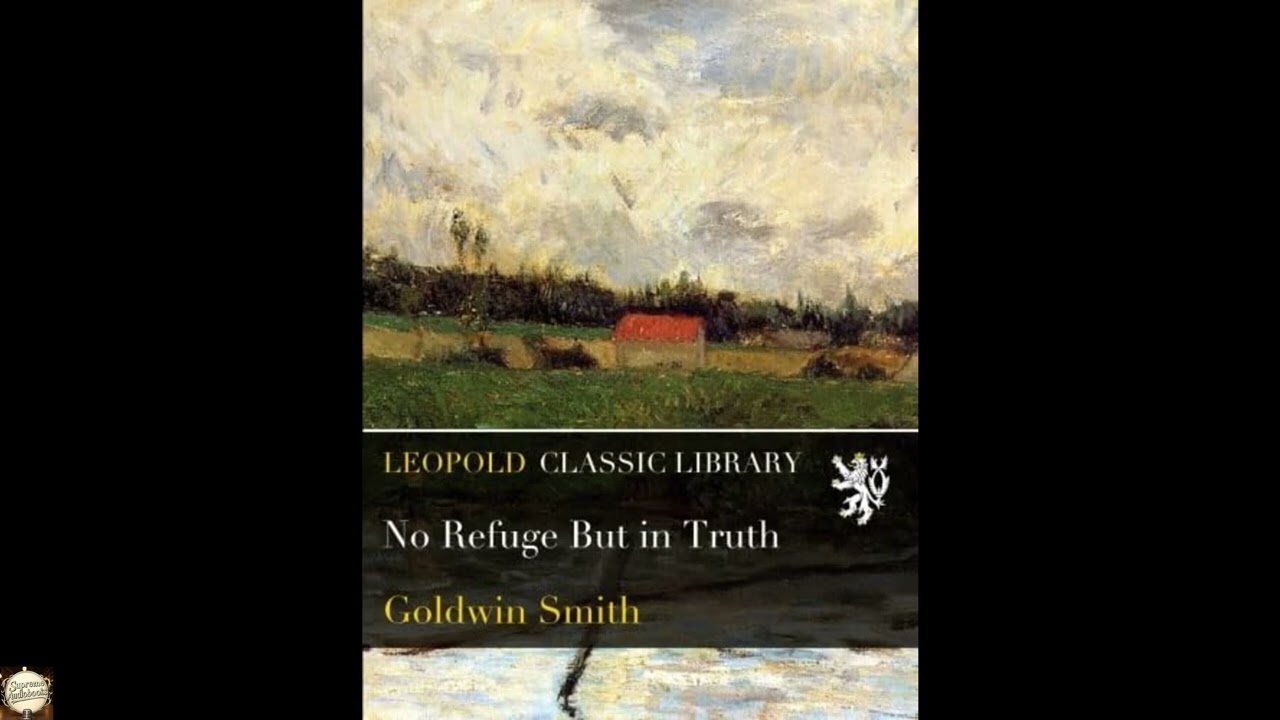
"No Refuge But in Truth" is more than a title; it stands as a bracing clarion call, as pertinent now as when Goldwin Smith first penned these potent reflections. In an age saturated with information, often clouded by misinformation and convictions masquerading as fact, Smith’s work offers a profound intellectual anchor. It challenges listeners to shed the comfort of inherited dogma, to question the loudest voices, and to seek an unvarnished understanding of the world. This collection of essays, or a singular, extended argument, urges a courageous embrace of verifiable reality, positioning intellectual honesty as the ultimate safeguard against folly and societal decay. To listen to Smith is to engage with a mind wrestling with foundational questions of belief, evidence, and moral imperative – a wrestling match whose stakes have only intensified in our own tumultuous era. Goldwin Smith's legacy rests upon his historical and political commentary, so "No Refuge But in Truth" is not a conventional narrative. Its drama resides in an intellectual quest, an argument as deliberate and compelling as any well-crafted story. The "setting" is the late Victorian era's shifting intellectual landscape, a period of scientific progress yet resistance to new ideas. Here, the "main characters" are not individuals, but competing philosophies, interpretations, and dogmas vying for human allegiance. Smith introduces us to the prevailing orthodoxies—from religious doctrines to nationalistic fervor—each presenting itself as a secure "refuge." The central conflict emerges from the tension between convenience and conviction: accepting ready-made answers versus the rigorous discipline of genuine understanding. Smith systematically dismantles false comforts offered by tradition, sentiment, or political expediency, exposing their weaknesses. He moves through domains like history, ethics, and public discourse, demonstrating how uncritical acceptance of narratives obscures truths and impedes progress. The book's arc is intellectual liberation, guiding listeners through comforting fictions toward the bracing clarity of truth. It argues for the individual's sacred duty to question, verify, and build understanding on evidence, even when it challenges cherished beliefs. Smith’s voice urges a shedding of intellectual pretense, asserting that only through unwavering commitment to truth can lasting security or progress be found. Goldwin Smith, born in Reading, England, in 1823, emerged from an era of profound intellectual and social transformation. Educated at Eton College and Oxford, he quickly distinguished himself as a brilliant scholar and polemicist. He rose as Regius Professor of Modern History at Oxford (1858-1866), becoming a leading voice in public discourse. Smith was known for his eloquent advocacy of liberal reforms and incisive critiques, often challenging conventional wisdom on issues like parliamentary reform and the Church. In 1868, Smith emigrated to the United States, lecturing at Cornell before settling in Toronto, Canada, in 1871, where he lived until his passing in 1910. This transatlantic migration profoundly shaped his perspective, granting him a unique vantage point for analyzing British imperial policy and North American development. His prolific output spanned historical studies like The Empire (1863) and History of the United States (1893), alongside essays on political theory and social ethics. Smith was a leading figure in "Victorian Liberalism," believing in progress, reason, individual liberty, skepticism towards dogma, and moral integrity. His place in the literary canon is that of a formidable public intellectual whose clear prose and passionate arguments resonate with those seeking an honest assessment of history and society. "No Refuge But in Truth" addresses several profound themes. Central is intellectual courage. Smith demonstrates that pursuing truth is an active, arduous endeavor, requiring individuals to confront uncomfortable realities and abandon ingrained prejudices. He illustrates this by dissecting historical accounts, showing how biases—patriotic or religious—skew interpretations, demanding listeners look beyond comforting fictions for verifiable facts. This involves not just logic, but the moral fortitude to uphold veracity. Another theme is the peril of dogma and uncritical acceptance. Smith details how societies fall prey to ready-made ideologies—religious, political, or social—which promise security but stifle genuine understanding. He might show how historical actions are excused or condemned based on unexamined frameworks, rather than thorough analysis. Through such examples, the text advocates for rigorous skepticism and constant interrogation of assumed knowledge. Finally, the work champions individual responsibility in shaping collective understanding. Smith suggests a healthy public sphere relies on each person's commitment to independent thought and honest inquiry, showing how collective surrender to "convenient" truths leads to stagnation or harm. His insistence on individual intellectual accountability provides a powerful counter-narrative to conformity, reinforcing that genuine progress stems from minds willing to seek and speak the truth. "No Refuge But in Truth" emerged from the intellectual crucible of the late nineteenth century, a period marked by a dramatic clash between tradition and modernity. Scientific discovery, from Darwin's theories to geological advances, profoundly challenged long-held religious beliefs and social hierarchies. Smith, a prominent Victorian intellectual, was keenly aware of these shifts. Politically, the UK grappled with expanding democracy and its vast empire; the US navigated post-Civil War reconstruction and industrialization. Literarily, realism and naturalism gained ground, moving towards unvarnished examinations of society. Smith’s non-fiction work mirrors this current, applying a rigorous, unsentimental gaze to historical interpretation, political analysis, and philosophy. He contributed to a vigorous public debate about the nature of truth itself—whether revealed, empirically derived, or culturally constructed. His arguments for intellectual integrity and evidence directly addressed the anxieties and opportunities of a world questioning its foundations, serving as an impassioned plea for clear thinking in an age of profound uncertainty. Listening to Goldwin Smith’s "No Refuge But in Truth" as an audiobook offers a unique immersion in his meticulously constructed arguments. The several hours of narration allow Smith's measured, authoritative voice to unfold his ideas at a pace conducive to contemplation. A skilled narrator brings clarity to Smith's precise prose, distinguishing critiques from propositions, allowing the listener to absorb complex reasoning without visual distraction. Listen for the careful cadences of his logical development and subtle shifts in tone as he moves from diagnosis to prescription. This auditory format transforms an intellectual exercise into a focused, personal dialogue, making the search for truth an intimately shared experience that truly resonates.
Enjoyed No Refuge But in Truth? A few ways to support us
Audible & Amazon links are affiliate; we may earn a small commission at no extra cost.
About this production
Human narration by a volunteer reader from LibriVox.org, the public-domain audiobook project. LibriVox volunteers record literary works whose copyright has expired in the United States, releasing the resulting recordings into the public domain.
No Refuge But in Truth by Goldwin Smith. The underlying text is in the U.S. public domain. We do not republish any modern copyrighted edition, translation, or commentary.
The 4K cinematic visuals accompanying this audiobook are generated by an AI image model from prompts derived from the source text. No copyrighted photos, paintings, or stock footage are used. AI generation is disclosed on every video on our YouTube channel as required by YouTube's altered/synthetic content policy.
English subtitles are transcribed from the LibriVox recording with OpenAI Whisper. Translations into the 11 other supported languages are produced by Meta's NLLB-200 neural translation model. No human translator's copyrighted translation is used.
Questions about sourcing or rights? See our DMCA & Sourcing policy or contact us.
Enjoyed this audiobook?
If you'd like to own a copy of No Refuge But in Truth or hear a professionally produced edition, the links below help support free audiobook production at no extra cost to you.
As an Amazon Associate we earn from qualifying purchases. Audible / print links are affiliate.