How It Feels to Be Fifty
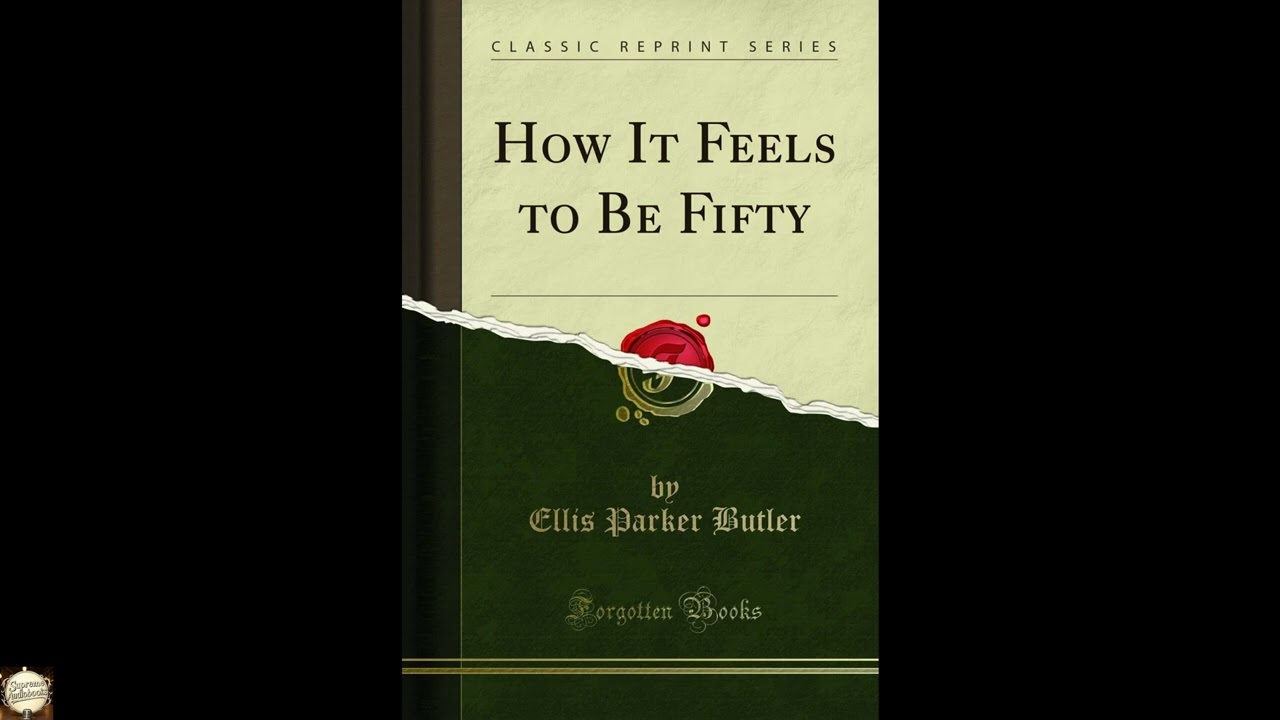
To reach a half-century mark is to stand at a peculiar crossroads, a moment for introspection, a looking glass reflecting both the miles traveled and the uncharted paths ahead. Ellis Parker Butler’s "How It Feels to Be Fifty" doesn't just chronicle this milestone; it invites us into the mind of a man navigating the internal and external realities of this significant age with a blend of wit, wisdom, and a generous dose of self-deprecating humor. Originally published over a century ago, Butler’s observations about growing older resonate with surprising clarity today, speaking to universal anxieties and triumphs that transcend the specific era in which they were written. Listeners in the modern world, facing similar pressures and personal reckonings, will find in Butler a kindred spirit, a comforting voice that reminds us that the human experience of aging, with all its foibles and insights, is a shared and enduring one. The narrative of "How It Feels to Be Fifty" unfolds as a series of intimate, often laugh-out-loud musings from a gentleman who has just crossed the threshold into his sixth decade. Rather than a traditional plot with external conflicts and dramatic resolutions, the book presents a stream of consciousness, a thoughtful ramble through the landscape of middle age. Our unnamed narrator becomes an everyman figure, whose personal reflections on his physical changes – the unexpected gray hairs, the little aches, the shift in energy levels – serve as relatable touchstones for anyone who has watched their own body subtly transform over time. He contemplates the generational gap, observing younger individuals with a mixture of amusement and a hint of wistful nostalgia, while also considering those older than himself with a new understanding. The central conceit is the narrator's internal struggle with the idea of being fifty versus the reality of it. He grapples with societal perceptions, the expectations placed upon someone of his age, and the constant internal dialogue about whether he truly feels as "old" as the number suggests. We witness his humorous attempts to reconcile his still-youthful spirit with the increasingly apparent signs of advancing years. He recounts anecdotes, offers philosophical tidbits, and poses rhetorical questions that invite the listener to join him in his ponderings. The story, if it can be called such, is the gradual, gentle arc of acceptance and re-evaluation, as the narrator slowly comes to terms with this new chapter, finding humor and even grace in the inevitable march of time, without ever reaching a definitive or dramatic conclusion. Ellis Parker Butler, born in 1869 in Muscatine, Iowa, carved out a distinguished place for himself as one of America's most beloved humorists of the early 20th century. His literary career was prolific, spanning nearly five decades and resulting in over 30 books and more than 2,000 short stories and essays, many of which appeared in popular magazines like The Saturday Evening Post and Collier's. Butler’s upbringing in a small Midwestern town imbued his writing with an accessible, folksy charm, though he later moved to New York and became a prominent figure in the city’s literary circles. His most famous creation, "Pigs Is Pigs," a wildly popular short story first published in 1905, cemented his reputation for combining shrewd social commentary with genuinely funny situations. This tale, concerning a railway agent's quandary over classifying two guinea pigs and the exponential chaos that ensues, perfectly exemplifies Butler’s talent for taking a simple premise and extracting maximum comedic effect. Throughout his career, which continued until his death in 1937, Butler consistently applied his keen observational skills and gentle satire to the everyday absurdities of American life, earning him comparisons to other great American humorists like Mark Twain and O. Henry. He stood as a pillar of a particular strain of American letters, one that found profundity and mirth in the domestic and the commonplace. The enduring appeal of "How It Feels to Be Fifty" lies in its clever distillation of several universal themes. First among these is the theme of aging and identity. Butler’s narrator grapples with the discrepancy between how he feels internally—often still youthful and energetic—and how societal markers, like his age, or physical changes, suggest he should be perceived. He observes with a wry grin how others treat him differently, or how his own self-image struggles to keep pace with the calendar. This conflict speaks to the heart of how we construct and maintain our sense of self in the face of inevitable bodily and temporal transformations. Another prominent theme is the use of humor as a coping mechanism and a lens for understanding. Butler employs irony and exaggeration to lighten the anxieties associated with growing older, demonstrating how laughter can diffuse discomfort and offer a fresh perspective on life’s inevitable changes. For instance, when the narrator recounts his increasingly selective memory, he does so with such a delightful self-deprecation that the listener is invited to chuckle along rather than lament the loss. Furthermore, the work touches on the nature of memory and nostalgia. The narrator often looks back at his youth, comparing his past self to his present one, not with bitter regret but with a thoughtful, often comedic, assessment of how time alters perspective. He muses on the fleeting nature of certain fads or technologies, tying his personal memories to broader cultural shifts. This rumination on memory and the passage of time underscores the book’s literary significance, showing how a seemingly lighthearted essay can offer profound insights into the human condition, inviting readers to reflect on their own lives and the stories they carry. "How It Feels to Be Fifty" emerged at a fascinating juncture in American history, published in 1920, precisely when the country was transitioning from the post-World War I era into the burgeoning "Roaring Twenties." This period was characterized by rapid social change, technological advancements, and a sense of both liberation and disorientation. Culturally, there was a growing emphasis on youth, modernity, and breaking from Victorian traditions. Against this backdrop, Butler’s musings on reaching fifty take on an additional layer of meaning. His narrator, representing an older generation, stands as a humorous observer of a world that is quickly evolving, often contrasting his settled existence with the dynamic shifts around him. The work therefore serves not only as a personal rumination on age but also as a subtle social commentary on the changing fabric of early 20th-century American society, reflecting anxieties about progress, tradition, and the individual's place within a rapidly modernizing nation. Listening to "How It Feels to Be Fifty" as an audiobook offers a uniquely intimate experience. The entire piece is essentially an extended monologue, a gentle conversation directly with the listener. The skill of the narrator becomes paramount, capable of conveying Butler’s subtle wit and the protagonist’s underlying warmth and thoughtfulness. The several hours of run time allow ample opportunity for the listener to settle into the narrator's rhythms, absorbing the humor and wisdom at a comfortable, reflective pace. A good vocal performance will highlight the carefully chosen turns of phrase and the understated humor embedded in the dialogue—or rather, the interior monologue—allowing the listener to truly hear the character’s personality emerge through tone and inflection. This format encourages a deeper connection with the material, turning what might be a quick read into a prolonged moment of shared introspection and good-natured amusement.
Enjoyed How It Feels to Be Fifty? A few ways to support us
Audible & Amazon links are affiliate; we may earn a small commission at no extra cost.
About this production
Human narration by a volunteer reader from LibriVox.org, the public-domain audiobook project. LibriVox volunteers record literary works whose copyright has expired in the United States, releasing the resulting recordings into the public domain.
How It Feels to Be Fifty by Ellis Parker Butler. The underlying text is in the U.S. public domain. We do not republish any modern copyrighted edition, translation, or commentary.
The 4K cinematic visuals accompanying this audiobook are generated by an AI image model from prompts derived from the source text. No copyrighted photos, paintings, or stock footage are used. AI generation is disclosed on every video on our YouTube channel as required by YouTube's altered/synthetic content policy.
English subtitles are transcribed from the LibriVox recording with OpenAI Whisper. Translations into the 11 other supported languages are produced by Meta's NLLB-200 neural translation model. No human translator's copyrighted translation is used.
Questions about sourcing or rights? See our DMCA & Sourcing policy or contact us.
Enjoyed this audiobook?
If you'd like to own a copy of How It Feels to Be Fifty or hear a professionally produced edition, the links below help support free audiobook production at no extra cost to you.
As an Amazon Associate we earn from qualifying purchases. Audible / print links are affiliate.