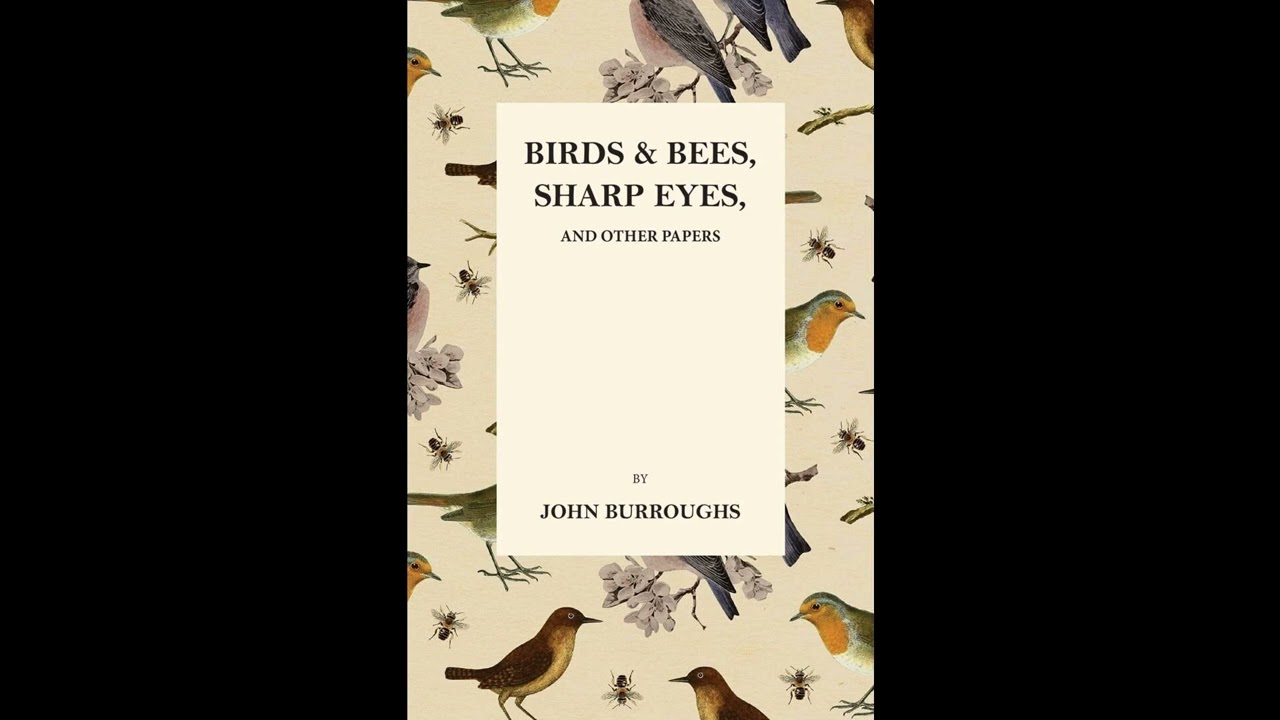
Birds and Bees, Sharp Eyes, and Other Papers
"Birds and Bees, Sharp Eyes, and Other Papers" by John Burroughs invites us not merely to read about the natural world, but to truly see it. In an age of relentless digital distraction, where our attention is constantly fragmented and our connection to the fundamental rhythms of life often feels tenuous, Burroughs offers a potent antidote: the profound clarity and restorative power of observation. This collection of essays, first published at the turn of the twentieth century, stands as a quiet yet powerful argument for slowing down, tuning in, and rediscovering the wonder that unfolds just beyond our immediate gaze. It's a call to re-engage with the breathing world around us, a timeless instruction manual for finding peace and insight in the simplest movements of a bird or the industry of a bee. Instead of a single unfolding narrative, this collection presents a series of intimate encounters with the natural world, guided by Burroughs's attentive presence. The setting for these papers is primarily the rural American landscape of the late nineteenth and early twentieth centuries—the quiet fields, sun-dappled woods, and flowing streams of upstate New York where Burroughs made his home. Each essay acts as a brief expedition, with Burroughs himself serving as our keen-eyed protagonist. He walks the lanes, sits by the creek, and watches from his cabin window, always seeking to understand the lives of the creatures and plants that share his space. The collection's arc follows the turning year, from spring's tentative stirrings to winter's stark beauty. Listeners become immersed in detailed descriptions: birdsong, the ingenious architecture of a wasp's nest, the delicate mechanisms of pollination, and subtle shifts in light. There is no grand human drama here, but rather the quiet drama of life itself—a chickadee's resilience, a fox's cunning, the ceaseless work of ants. Burroughs’s central pursuit is cultivating a truly "sharp eye"—an ability to look beyond the superficial and perceive deeper truths in plain sight, uncovering daily miracles. His writing gently challenges the reader to adopt this same patient, inquisitive mindset. John Burroughs was born on April 3, 1837, on a farm in Roxbury, New York, the seventh of ten children. His early life deeply connected him to the land, shaping his entire literary career. After working as a teacher and spending a decade as a Treasury Department clerk in Washington, D.C.—where he befriended Walt Whitman—Burroughs returned to the countryside. He settled near Esopus, New York, on the Hudson River, building his rustic cabin, Slabsides. This sanctuary became a popular gathering spot for luminaries and a haven for observation and writing. Burroughs published his first collection, "Wake-Robin," in 1871, establishing his distinct voice. Over five decades, he produced more than two dozen books, including "Winter Sunshine," "Pepacton," "Signs and Seasons," and "Leaf and Tendril." He was a prolific writer and a prominent figure in the burgeoning conservation movement, advocating for natural spaces and public appreciation for the outdoors. Burroughs forged close friendships with John Muir, Henry Ford, Thomas Edison, and President Theodore Roosevelt, even camping with the latter in Yosemite. He passed away on March 29, 1921, leaving a legacy as one of America's most beloved and influential naturalists. A core theme running through "Birds and Bees, Sharp Eyes, and Other Papers" is the profound value of attentive observation. Burroughs consistently demonstrates how merely looking is not enough; one must learn to see with purpose and patience. For example, in his essay "Sharp Eyes," he meticulously details the intricate architecture of a bird's nest or the seemingly insignificant movements of an insect, revealing a world of complexity most people overlook. He shows how this deliberate focusing of one's gaze transforms the mundane into the extraordinary, connecting us with life's subtle patterns. This practice of close attention is not just about identifying species, but understanding their behaviors, roles, and intrinsic beauty. A significant thread woven throughout these essays is the interconnectedness of nature's systems. Burroughs rarely presents a single creature in isolation. Instead, he illustrates how each element—a flower, a bee, soil, weather—is part of a larger, interdependent web. He might describe a specific bird's reliance on certain berries, which in turn depend on particular insects for pollination, all affected by seasonal rainfall. This holistic perspective underscores ecosystem balance and quietly makes a case for respecting every component. His writings also carry an underlying message about the spiritual solace and wisdom found in the natural world, suggesting that by aligning ourselves with nature's rhythms, we find greater peace and understanding. John Burroughs's literary output coincided with a period of immense change in the United States. The late nineteenth and early twentieth centuries saw rapid industrialization, the growth of sprawling cities, and a perceived alienation from the natural world for many Americans. As factories hummed and urban populations swelled, a counter-movement emerged: a growing appreciation for wilderness and calls for its preservation. Figures like John Muir were instrumental in establishing national parks, and President Theodore Roosevelt championed conservation efforts. In this cultural landscape, Burroughs’s gentle, accessible nature writing offered a vital connection to the outdoor life many felt they were losing. His essays provided a window into a simpler, rustic existence, reminding readers of the beauty and tranquility available in even a small patch of woods. He was part of a lineage of American writers—following transcendentalists like Ralph Waldo Emerson and Henry David Thoreau—who saw nature as a source of moral instruction and spiritual renewal. Burroughs's approachable style made the natural world intelligible and appealing to a broad audience, cultivating a national consciousness about appreciating and protecting America's natural heritage during a pivotal era. Listening to "Birds and Bees, Sharp Eyes, and Other Papers" as an audiobook offers a unique and particularly fitting way to experience Burroughs's observations. His prose, often characterized by its clear, unadorned beauty, lends itself perfectly to the spoken word. The narrator's pacing can truly bring out the contemplative quality of Burroughs's writing, allowing listeners to absorb the delicate details of a bird's flight or the whisper of the wind through trees with a heightened sense of presence. This format makes the collection an ideal companion for moments of quiet reflection: a morning walk in a park, a drive through the countryside, or simply a peaceful afternoon at home. The duration, several hours in length, provides ample opportunity to settle into Burroughs's world, letting his tranquil descriptions and thoughtful insights wash over you. It's an invitation to slow down, to listen closely, and to rediscover the profound joy and peace that come from truly paying attention to the world around us.
Enjoyed Birds and Bees, Sharp Eyes, and Other Papers? A few ways to support us
Audible & Amazon links are affiliate; we may earn a small commission at no extra cost.
About this production
Human narration by a volunteer reader from LibriVox.org, the public-domain audiobook project. LibriVox volunteers record literary works whose copyright has expired in the United States, releasing the resulting recordings into the public domain.
Birds and Bees, Sharp Eyes, and Other Papers by John Burroughs. The underlying text is in the U.S. public domain. We do not republish any modern copyrighted edition, translation, or commentary.
The 4K cinematic visuals accompanying this audiobook are generated by an AI image model from prompts derived from the source text. No copyrighted photos, paintings, or stock footage are used. AI generation is disclosed on every video on our YouTube channel as required by YouTube's altered/synthetic content policy.
English subtitles are transcribed from the LibriVox recording with OpenAI Whisper. Translations into the 11 other supported languages are produced by Meta's NLLB-200 neural translation model. No human translator's copyrighted translation is used.
Questions about sourcing or rights? See our DMCA & Sourcing policy or contact us.
Enjoyed this audiobook?
If you'd like to own a copy of Birds and Bees, Sharp Eyes, and Other Papers or hear a professionally produced edition, the links below help support free audiobook production at no extra cost to you.
As an Amazon Associate we earn from qualifying purchases. Audible / print links are affiliate.