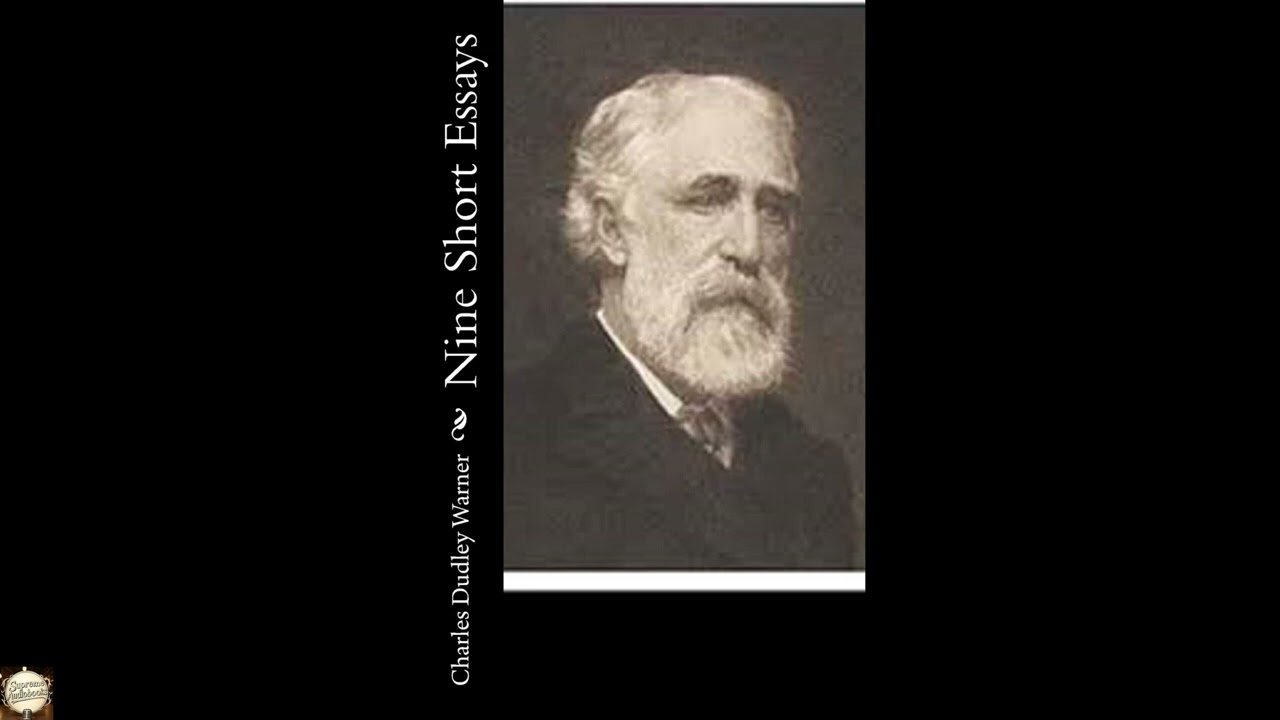
Nine Short Essays
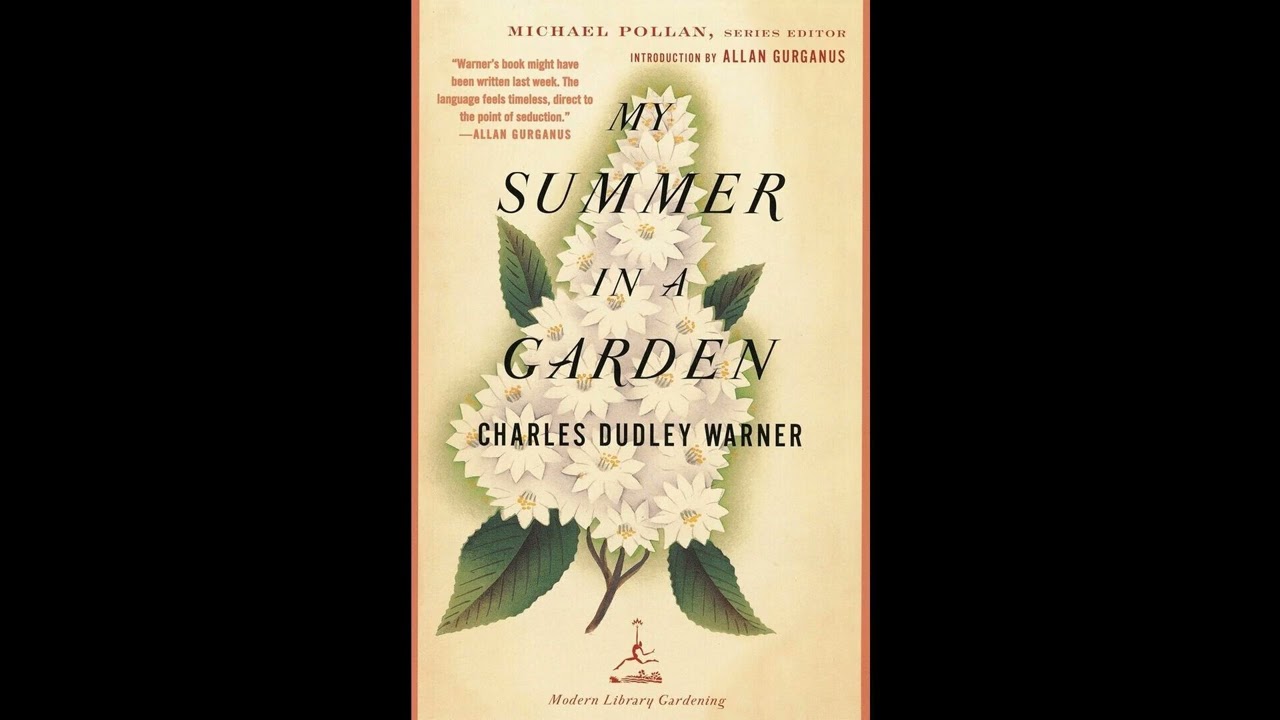
In a world that seems perpetually to accelerate, where immediate gratification often eclipses quiet contemplation, the voice of Charles Dudley Warner emerges like a welcome, gentle breeze from a more thoughtful era. Nine Short Essays offers a collection of his most cherished observations, a literary balm for the harried modern soul. This isn't merely a series of historical curiosities; it's a direct invitation to slow down, to notice the beauty and absurdity in everyday life, and to rediscover the profound humor inherent in human nature. Warner, with his characteristic geniality and understated wit, guides listeners through landscapes both domestic and intellectual, revealing insights that resonate as strongly today as they did when first penned. It is a work that reminds us of the enduring value of reflection, the joy of a well-turned phrase, and the quiet dignity of simply observing the world around us. While Nine Short Essays does not unfold with a traditional narrative plot, it presents a coherent and delightful progression of thought, led by Warner's amiable persona. The setting for these pieces is broadly late 19th-century America, yet the scenes he paints and the situations he ponders transcend their immediate context. Listeners will find themselves transported to bustling city streets and serene garden plots, to fireside musings and lively social gatherings. The central guiding figure is, of course, Warner himself—a keen observer, a gentle satirist, and a man deeply appreciative of both nature's grand designs and humanity's often comical foibles. He acts as our genial host, drawing us into his personal reflections and allowing us to see the world through his uniquely intelligent and good-humored gaze. The "arc" of this collection is less about a single dramatic progression and more about a cumulative experience of Warner's worldview. Each essay stands as a complete miniature world, offering a fresh perspective on topics ranging from the trials of gardening to the quirks of travel, from the pleasures of reading to the peculiar habits of neighbors. While there isn't a singular overarching conflict, Warner consistently engages with the subtle tension between human ideals and everyday realities, between the simplicity of the natural world and the complexities of social convention. His "battles" are often against pretension, haste, or a lack of appreciation for the moment. The delightful effect is that, as the listener moves from one essay to the next, a comprehensive and comforting portrait of a thoughtful mind emerges, offering both laughter and quiet introspection without ever resorting to a predetermined dramatic climax. Charles Dudley Warner, born in Plainfield, Massachusetts, in 1829, lived a life that mirrored the intellectual and social currents of his time, before his passing in 1900. A graduate of Hamilton College and later Yale Law School, his early career saw him practicing law in Missouri, but it was in journalism and literature that he found his true calling. He began contributing to the Hartford Courant in 1860, eventually becoming its editor and using the newspaper as a platform for his insightful and often humorous writings. His literary reputation was firmly established with the publication of My Summer in a Garden in 1870, a book that charmed readers with its blend of horticultural musings and droll observations on human nature. Warner's output extended beyond the familiar confines of his garden. He produced several other popular collections of essays, including Backlog Studies (1872) and A-Hunting of the Deer (1878), each showcasing his distinctive voice—a blend of genial wit, philosophical reflection, and a deep affection for the natural world. Perhaps his most enduring claim to fame, however, is his collaboration with his friend Mark Twain on the satirical novel The Gilded Age: A Tale of Today, published in 1873. This novel not only coined the term for an entire American era but also solidified Warner's place as a significant commentator on the post-Civil War landscape. He was a prominent figure within American literary realism, though his approach was often gentler and more focused on personal observation than the grittier depictions of some of his contemporaries. His writings bridge the gap between pure journalism and enduring literature, providing accessible yet profound insights into the human condition. Several key themes resonate throughout Nine Short Essays, revealing Warner's consistent areas of interest and concern. One prominent theme is the appreciation of nature and the simple life, often depicted through his experiences with gardening or rural excursions. For instance, an essay might playfully recount the triumphs and tribulations of cultivating a specific plant, or the unexpected wisdom gleaned from observing the behavior of birds in a meadow. These detailed accounts serve not just as pleasant descriptions, but as gentle reminders that profound lessons can be found in the most unassuming corners of the natural world, far removed from the clamor of human affairs. Another significant theme is human folly and social commentary, which Warner often delivers with a light touch rather than biting satire. He keenly observes the peculiar habits, pretensions, and minor absurdities that characterize human interaction. An essay might offer a droll analysis of fashionable trends, or a humorous reflection on the challenges of neighborly etiquette, illustrating how often people complicate life through their own self-importance or adherence to trivial customs. Underlying these humorous observations is a subtle encouragement for sincerity and a measured approach to daily existence. Finally, the collection consistently champions the value of leisure and contemplation. Warner implicitly argues for the importance of pausing, reflecting, and allowing one's mind to wander, suggesting that true understanding and happiness often arise not from frantic activity, but from quiet introspection. The essays themselves serve as models for this kind of thoughtful engagement with the world. These essays emerged during a pivotal time in American history—the decades following the Civil War, often referred to as the Gilded Age. This was an era of immense change, characterized by rapid industrialization, burgeoning cities, westward expansion, and a growing sense of national identity. Alongside this progress came social upheaval, economic disparity, and a pervasive materialism that Warner and his contemporaries often critiqued. The literary landscape was also shifting, with a move away from Romanticism towards Realism, which sought to depict life as it truly was, often focusing on ordinary people and everyday situations. Warner's essays provided a distinctive voice within this evolving context. While many writers focused on the grittier aspects of industrial life or the complexities of urban development, Warner often turned his gaze towards the more domestic, personal, and natural realms. His work offered a refreshing counterpoint to the era's relentless pursuit of wealth and status, reminding readers of the enduring value of nature, humor, and quiet reflection. Published in popular magazines and collections, his writings were widely accessible, fostering a connection with a broad readership eager for both entertainment and thoughtful commentary on the rapidly changing world around them. His gentle humor and keen observations helped readers navigate the bewildering pace of modern life, offering a sense of stability and common sense amidst the societal flux. Listening to Nine Short Essays as an audiobook offers a particularly intimate and rewarding experience. The conversational style of Warner's prose, with its rhythmic sentences and carefully crafted wit, translates beautifully to the spoken word. The run length of several hours makes this collection ideal for extended listening—whether accompanying a leisurely drive, a contemplative walk, or simply providing a backdrop for an evening of quiet relaxation. Listeners should pay close attention to the narrator's interpretation, as the delivery of Warner's subtle humor and gentle irony is key to unlocking the full charm of these pieces. The unhurried pacing allows time for the listener to absorb each observation, each clever turn of phrase, creating an atmosphere of pleasant companionship. It is like being invited to sit by a warm hearth with a thoughtful, witty friend, whose insights into life's perennial questions provide both amusement and comfort.
Enjoyed Nine Short Essays? A few ways to support us
Audible & Amazon links are affiliate; we may earn a small commission at no extra cost.
About this production
Human narration by a volunteer reader from LibriVox.org, the public-domain audiobook project. LibriVox volunteers record literary works whose copyright has expired in the United States, releasing the resulting recordings into the public domain.
Nine Short Essays by Charles Dudley Warner. The underlying text is in the U.S. public domain. We do not republish any modern copyrighted edition, translation, or commentary.
The 4K cinematic visuals accompanying this audiobook are generated by an AI image model from prompts derived from the source text. No copyrighted photos, paintings, or stock footage are used. AI generation is disclosed on every video on our YouTube channel as required by YouTube's altered/synthetic content policy.
English subtitles are transcribed from the LibriVox recording with OpenAI Whisper. Translations into the 11 other supported languages are produced by Meta's NLLB-200 neural translation model. No human translator's copyrighted translation is used.
Questions about sourcing or rights? See our DMCA & Sourcing policy or contact us.
Enjoyed this audiobook?
If you'd like to own a copy of Nine Short Essays or hear a professionally produced edition, the links below help support free audiobook production at no extra cost to you.
As an Amazon Associate we earn from qualifying purchases. Audible / print links are affiliate.