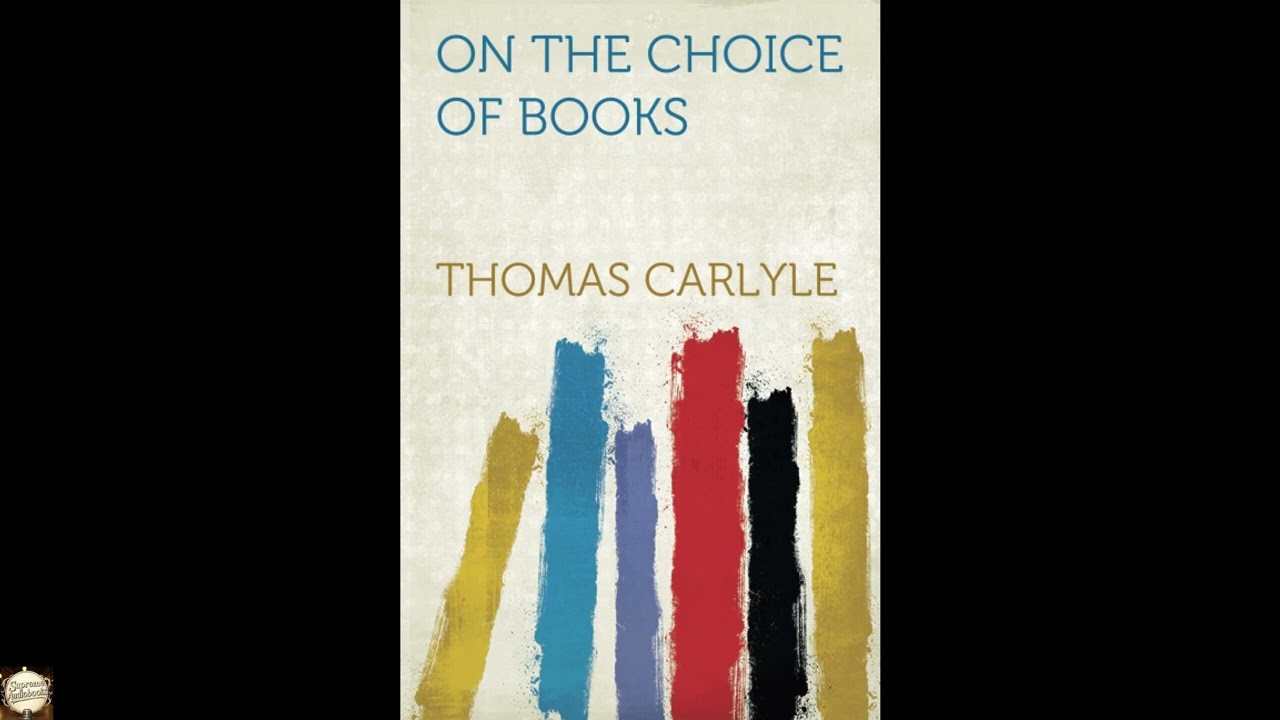
On the Choice of Books
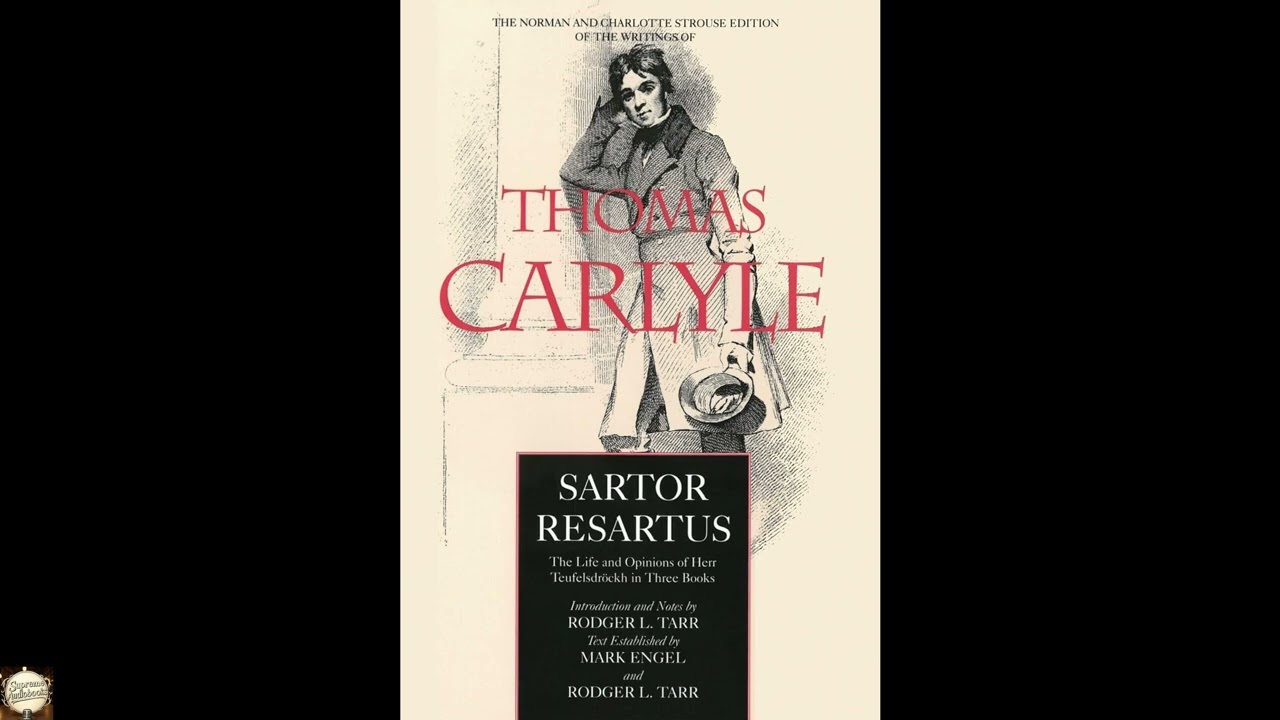
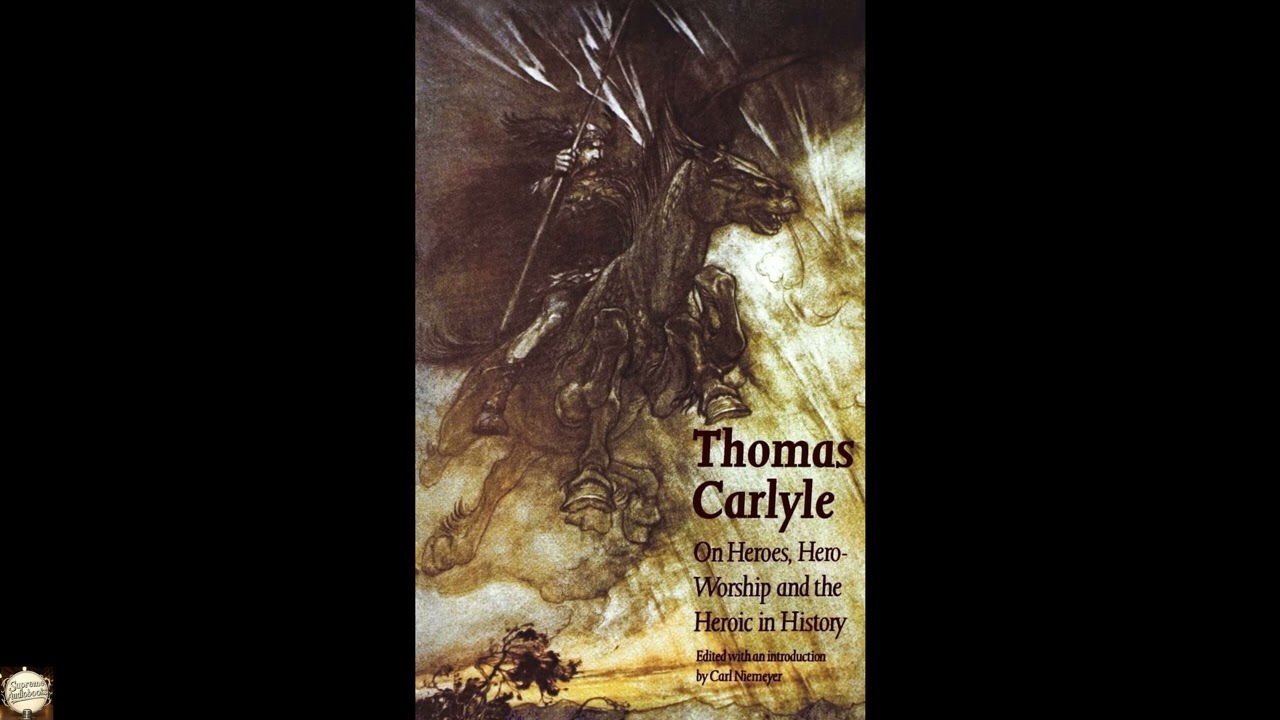
In an age inundated with information, where countless voices clamor for attention from screens and pages, the simple act of choosing a book can feel overwhelming. What guidance can we find when every click promises enlightenment, and every algorithm suggests a new read? Thomas Carlyle’s enduring essay, "On the Choice of Books," originally delivered as a lecture to students in Edinburgh, offers not just an answer, but a profound philosophy on the very purpose of reading. This isn't merely a guide to literary taste; it is a powerful summons to intellectual responsibility, a passionate argument for discerning the truly nourishing from the merely diverting. Carlyle’s words, penned in the mid-nineteenth century, resonate with remarkable clarity in our own data-saturated present, making his insights more vital than ever for anyone seeking genuine wisdom amidst the noise. Carlyle sets the scene by addressing young men on the cusp of their intellectual lives, faced with a burgeoning world of printed material. He implicitly paints a portrait of a society grappling with the proliferation of books—a situation quite analogous to our contemporary media landscape. The central conflict Carlyle presents is not between good and evil, but between profound, soul-shaping literature and the vast ocean of ephemeral, unexamined writing that merely occupies time without elevating the spirit. He implores his audience to recognize books not as inert objects, but as living voices—the distilled thoughts and experiences of humanity's greatest minds, spanning centuries and civilizations. The "main characters" in this philosophical drama are thus the earnest seeker of truth and the "true book" itself, which Carlyle elevates to the status of a mentor or a heroic figure. The arc of Carlyle’s argument begins with a cautionary note against indiscriminate reading, which he equates to intellectual gluttony. He warns that simply consuming many books without proper selection is a waste of precious time and mental energy, akin to filling one's stomach with empty calories. From this initial caution, he transitions into articulating his criteria for what constitutes a truly valuable book. Such a book, he posits, must spring from a sincere heart, possess genuine wisdom, and be crafted with an earnest purpose to communicate truth. He celebrates authors who grappled with the fundamental questions of existence and left behind not just information, but the very essence of their struggles and triumphs. The essay culminates in a stirring testament to the transformative potential of engaging deeply with such works, suggesting that a properly chosen library can become a university in itself, shaping character, guiding conduct, and illuminating the path to a meaningful life. Thomas Carlyle, born in 1795 in Ecclefechan, Scotland, was the son of a stonemason and grew up in a Calvinist household that instilled in him a strong work ethic and a deep moral seriousness. His early education at the University of Edinburgh prepared him for a career in the church, but he ultimately turned to literature, grappling with personal crises of faith and health that deeply informed his later writings. After years of struggle as a teacher and translator, living in relative obscurity with his brilliant wife, Jane Welsh Carlyle, he achieved recognition with works that challenged the prevailing intellectual currents of his time. His move to London in 1834, settling in Chelsea, marked the beginning of his most productive period. Carlyle became one of the most prominent "Victorian sages"—public intellectuals who offered moral and social commentary in an era of rapid industrialization and profound social change. His distinctive, often fiery prose style, characterized by its rhetorical power and moral earnestness, made him a commanding voice. Among his many influential works are Sartor Resartus, a philosophical novel that satirizes contemporary society while grappling with issues of identity and spiritual renewal; The French Revolution: A History, a vivid and dramatic account that cemented his reputation; and On Heroes, Hero-Worship, and The Heroic in History, which presented his controversial but influential theory of the role of great individuals in shaping human events. Carlyle's lasting place in the literary canon stems from his unflinching critiques of materialism and his impassioned calls for a return to sincerity, duty, and spiritual values, making him a formidable figure whose insights continue to provoke thought and discussion. "On the Choice of Books" enacts several core themes, foremost among them the transformative power of sincere reading. Carlyle regards books as more than mere repositories of facts; they are "living men and women," "spiritual food," capable of nourishing the soul and reshaping one's entire outlook. He illustrates this by suggesting that true books allow us to converse directly with the "best thoughts of the best minds," granting access to the wisdom of ages and building a personal connection with humanity’s greatest thinkers. A second prominent theme is the absolute necessity of discernment and intellectual integrity. In an era where books were becoming more accessible, Carlyle warns against the pitfalls of superficiality, urging readers to choose works born of genuine thought and honest intention. He contrasts the "printer's ink" that merely covers paper with the "soul" that a truly great author pours into their work, making it clear that the value lies not in quantity but in depth and authenticity. A third major theme, deeply connected to Carlyle’s broader philosophy, is the admiration of greatness and the heroic ideal. For Carlyle, the authors of profound books are heroes in their own right, individuals who have wrestled with truth and articulated it for the benefit of humankind. By choosing such books, readers align themselves with these heroic figures, drawing strength and inspiration from their insights. This ties into a fourth theme: the promotion of earnestness and work as fundamental virtues. Carlyle implicitly suggests that both the act of writing a truly meaningful book and the act of reading it with proper attention require genuine effort and sincere engagement. He sees the dedication involved in thoughtful reading as a form of "work," contributing to the development of character and intellect, far removed from the passive consumption of entertainment. Carlyle delivered "On the Choice of Books" in 1866, a pivotal moment in Victorian Britain. The Industrial Revolution had irrevocably changed the social fabric, leading to unprecedented economic growth but also to widespread poverty, social unrest, and a sense of spiritual dislocation. The mid-nineteenth century also saw the rise of mass literacy and the expansion of the publishing industry, making books more accessible to a broader public than ever before. This era, often characterized by a crisis of faith and an increasing emphasis on scientific materialism, left many searching for moral and intellectual anchors. Carlyle's essay emerged as a direct response to this cultural milieu. He lamented what he perceived as the spiritual emptiness of his age, a society increasingly driven by commercial interests and superficial distractions. His call for a judicious and earnest approach to reading was part of his larger effort to counter the corrosive effects of materialism and utilitarianism. He sought to remind his contemporaries that true value lay not in wealth or fleeting pleasure, but in wisdom, character, and a profound engagement with the enduring truths contained in great literature. The work resonated deeply because it offered a clear moral compass at a time when many felt adrift, providing guidance on how to cultivate inner strength and purpose in a rapidly changing world. Listening to "On the Choice of Books" as an audiobook offers a unique opportunity to absorb Carlyle's potent rhetoric and carefully constructed arguments. A skilled narrator brings to life the oratorical quality of Carlyle's prose, allowing his insights to unfold with a natural rhythm and emphasis that might be missed on the page. The several hours of its run length provide ample time for focused listening, enabling listeners to truly grapple with Carlyle's profound ideas about the purpose of education and the spiritual significance of literature. The pacing of the narration can underscore the gravity of his warnings and the uplifting power of his pronouncements, transforming a text into a direct, intimate conversation with one of history's most compelling intellectual voices. Hearing his words spoken aloud allows their weight and wisdom to settle more deeply, inviting contemplation and reflection on our own reading habits and their impact on our lives.
Enjoyed On the Choice of Books? A few ways to support us
Audible & Amazon links are affiliate; we may earn a small commission at no extra cost.
About this production
Human narration by a volunteer reader from LibriVox.org, the public-domain audiobook project. LibriVox volunteers record literary works whose copyright has expired in the United States, releasing the resulting recordings into the public domain.
On the Choice of Books by Thomas Carlyle. The underlying text is in the U.S. public domain. We do not republish any modern copyrighted edition, translation, or commentary.
The 4K cinematic visuals accompanying this audiobook are generated by an AI image model from prompts derived from the source text. No copyrighted photos, paintings, or stock footage are used. AI generation is disclosed on every video on our YouTube channel as required by YouTube's altered/synthetic content policy.
English subtitles are transcribed from the LibriVox recording with OpenAI Whisper. Translations into the 11 other supported languages are produced by Meta's NLLB-200 neural translation model. No human translator's copyrighted translation is used.
Questions about sourcing or rights? See our DMCA & Sourcing policy or contact us.
Enjoyed this audiobook?
If you'd like to own a copy of On the Choice of Books or hear a professionally produced edition, the links below help support free audiobook production at no extra cost to you.
As an Amazon Associate we earn from qualifying purchases. Audible / print links are affiliate.