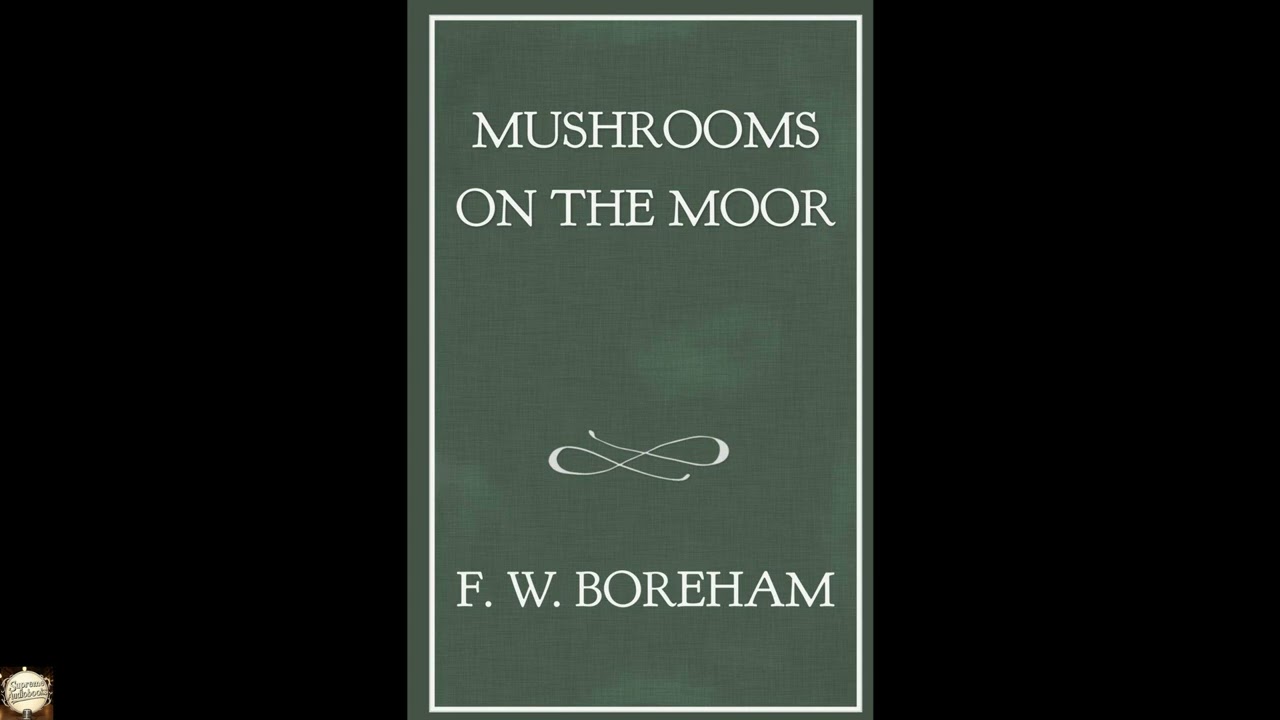
Mushrooms on the Moor
"Mushrooms on the Moor" is not a novel of sweeping adventure or dramatic conflict, but rather a quiet revelation, an invitation to see the extraordinary in the seemingly ordinary. Frank W. Boreham, a beloved essayist and preacher, offers listeners a collection of observations, anecdotes, and reflections that challenge perceptions and nourish the spirit. Picture yourself walking across a vast, unassuming moorland. Most people might see only grass and heather, perhaps a few rocks. But for the discerning eye, or the patient seeker, there are always mushrooms—small, unexpected growths that, upon closer inspection, reveal unique forms, colors, and even sustenance. This book functions in much the same way, prompting us to pause, to look closer at the everyday world, and to unearth profound insights that speak to the enduring human condition. In an age of constant noise and distraction, Boreham's gentle wisdom provides a necessary antidote, reminding us that truth and beauty often reside in the unassuming corners of life, waiting to be discovered. Instead of a linear plot, "Mushrooms on the Moor" unfolds as a series of interconnected meditations, each piece a window into Boreham’s distinctive way of seeing the world. The setting is less a geographical location and more a state of mind—a reflective space where nature, memory, history, and literature converge. Listeners will find themselves transported to the author's study, to a quiet walk through the countryside, or to a moment of contemplation inspired by a simple incident. Each essay, like a unique mushroom, possesses its own flavor and form, yet all grow from the same fertile ground of Boreham’s compassionate intellect and spiritual sensibility. The "main character" here is perhaps the observant mind itself, the author's gentle consciousness guiding us through these varied landscapes of thought. Boreham acts as a kindly mentor, drawing our attention to forgotten details, illuminating common experiences with uncommon clarity. He might recount a brief conversation with a stranger, recall a childhood memory, or draw a lesson from the behavior of birds or the changing seasons. The central "conflict," if one can call it that, is the universal human struggle to find meaning and purpose amidst the everyday ebb and flow, to connect the particular to the universal, and to cultivate a sense of wonder in a world too often taken for granted. The arc of the book is not one of rising action and climax, but rather an accumulation of small revelations, a gradual broadening of perspective. As one moves through the collection, a holistic philosophy emerges—a gentle encouragement to live thoughtfully, to appreciate the overlooked, and to find spiritual sustenance in the most unexpected places. There is no dramatic conclusion to be spoiled, but rather a lingering sense of peace and an enriched appreciation for the subtle workings of life and spirit, leaving the listener with a renewed capacity for observation and inner reflection. Frank W. Boreham, born in Tunbridge Wells, England, in 1871, possessed a remarkable life story that deeply informed his prolific writing career. After initially working as a bank clerk, he felt a call to ministry and subsequently emigrated to New Zealand in 1895, serving in various churches there before moving to Australia in 1906. He ministered in prominent Baptist churches in Tasmania and Melbourne, becoming known not only for his preaching but also for his extraordinary ability to craft engaging, insightful essays. His output was prodigious; he published over 100 books during his lifetime, a staggering accomplishment that attests to his dedication and enduring popular appeal. Boreham's essays often blended personal anecdote, natural observation, and extensive literary allusions with a profound yet accessible spiritual message. He drew inspiration from a vast range of sources, from classic poets and philosophers to everyday occurrences, demonstrating an impressive breadth of knowledge and a genuine human curiosity. He was not associated with any particular literary movement in the academic sense, but rather forged his own distinctive path, creating a genre of reflective, moral, and spiritual essays that resonated with a wide readership across the English-speaking world. His work often appeared in magazines and journals, reaching an audience eager for thoughtful prose that uplifted and instructed without being didactic. Among his many works, titles like "The Luggage of Life," "The Golden Milestone," and "A Casket of Cameos" exemplify his unique style—each book a collection of short, self-contained pieces designed to offer comfort, challenge, and inspiration. Boreham's place in the literary canon is perhaps best understood as a beloved, widely read essayist whose gentle wisdom and evocative prose provided solace and perspective to millions. He passed away in 1959, leaving behind a legacy of work that continues to speak to new generations seeking meaning and beauty in the world. Several enduring themes run through "Mushrooms on the Moor," providing its lasting resonance. One central idea is the discovery of meaning in the ordinary. Boreham consistently highlights how profound truths can be gleaned from the most commonplace observations. For example, he might devote an entire essay to the quiet tenacity of a wildflower pushing through pavement, using this simple image to illustrate resilience in the face of adversity, or the unexpected beauty that emerges in difficult circumstances. He teaches us to view a bustling street corner, a garden patch, or a remembered childhood game not just as transient moments, but as potential sources of deeper understanding and spiritual insight. Another significant theme is the power of anecdote and storytelling as a vehicle for truth. Boreham was a master of the short, illustrative narrative. He frequently begins an essay with a personal memory—perhaps a conversation overheard on a train, a historical vignette from a forgotten book, or a humorous family story—which then serves as a springboard for a broader reflection. He might recount the brief, unexpected kindness of a stranger, transforming it into an example of universal human connection and the quiet grace present in everyday interactions. This method allows his philosophical and spiritual points to be absorbed not as abstract concepts, but as relatable experiences, making his wisdom feel accessible and personal. While "Mushrooms on the Moor" doesn't have a specific publication year provided, Frank W. Boreham's most active writing period spanned the early to mid-20th century, an era marked by immense social and cultural shifts. The period witnessed two World Wars, rapid industrialization, and significant advancements in science and technology that fundamentally altered daily life and challenged traditional belief systems. This was a time when many individuals grappled with existential questions, seeking stable ground amidst rapid change and uncertainty. Boreham's writing emerged into this complex landscape, offering a thoughtful counterpoint to the anxieties and accelerating pace of modernity. His essays, with their emphasis on quiet contemplation, the beauty of the natural world, and a gentle, abiding faith, provided a sanctuary for readers. They offered a space for reflection and a reassurance that enduring truths could still be found, even when the world outside seemed chaotic. His popularity speaks to a widespread hunger for moral and spiritual guidance presented in an engaging, literary style, appealing to those who valued both intellectual stimulation and spiritual nourishment in a changing world. Listening to "Mushrooms on the Moor" as an audiobook offers a uniquely intimate and immersive experience. The "several hours" run length makes it perfect for focused listening—whether during a daily commute, on a leisurely walk, or during quiet evenings at home. A skilled narrator brings Boreham's warm, conversational prose to life, imbuing each observation and anecdote with the gentle wisdom it deserves. Listeners will appreciate the deliberate, unhurried pacing, which encourages pauses for personal contemplation, allowing the author's insights to truly settle. The narration becomes like an attentive friend sharing profound thoughts, making Boreham's distinctive voice and the atmosphere of quiet reflection truly shine through. It is an invitation to slow down, to listen closely, and to discover the many hidden wonders that lie just beneath the surface of everyday existence.
Enjoyed Mushrooms on the Moor? A few ways to support us
Audible & Amazon links are affiliate; we may earn a small commission at no extra cost.
About this production
Human narration by a volunteer reader from LibriVox.org, the public-domain audiobook project. LibriVox volunteers record literary works whose copyright has expired in the United States, releasing the resulting recordings into the public domain.
Mushrooms on the Moor by Frank W. Boreham. The underlying text is in the U.S. public domain. We do not republish any modern copyrighted edition, translation, or commentary.
The 4K cinematic visuals accompanying this audiobook are generated by an AI image model from prompts derived from the source text. No copyrighted photos, paintings, or stock footage are used. AI generation is disclosed on every video on our YouTube channel as required by YouTube's altered/synthetic content policy.
English subtitles are transcribed from the LibriVox recording with OpenAI Whisper. Translations into the 11 other supported languages are produced by Meta's NLLB-200 neural translation model. No human translator's copyrighted translation is used.
Questions about sourcing or rights? See our DMCA & Sourcing policy or contact us.
Enjoyed this audiobook?
If you'd like to own a copy of Mushrooms on the Moor or hear a professionally produced edition, the links below help support free audiobook production at no extra cost to you.
As an Amazon Associate we earn from qualifying purchases. Audible / print links are affiliate.