Essays on Political Economy
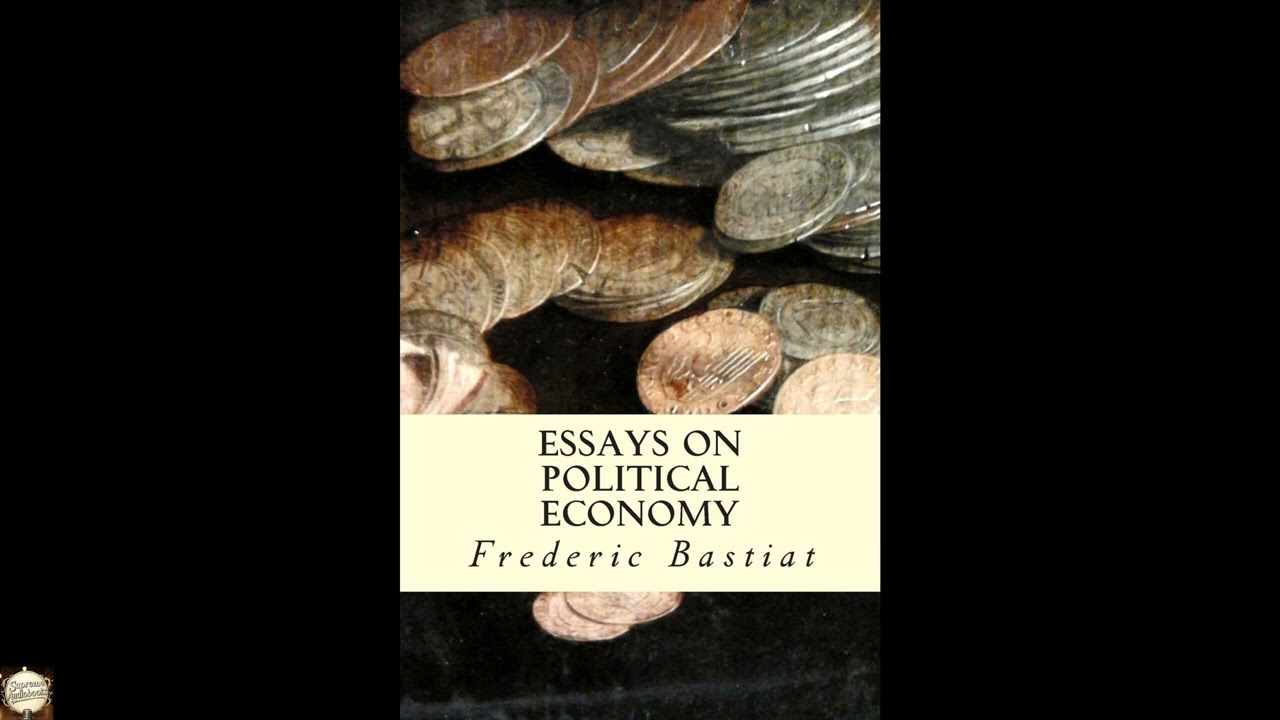
Some voices resonate with such clarity and insight that they cut through the noise of centuries, offering profound relevance to every generation. Frederic Bastiat’s Essays on Political Economy represents one such voice—a collection of piercing analyses that illuminate fundamental economic principles with startling precision. For listeners today, Bastiat's work serves as an indispensable guide through the complexities of public policy and economic debate, revealing the often-unseen consequences of government actions and popular fallacies. His methods for distinguishing between superficial appearances and underlying realities are as crucial now, amidst our own economic uncertainties and political divisions, as they were in his tumultuous 19th-century France. This collection is not merely an artifact of classical thought; it is a toolkit for critical thinking, inviting the listener to observe the world with a sharper, more discerning eye. In these essays, Bastiat invites the listener into an intellectual arena where logic confronts illusion. The setting is the dynamic, often confused, economic and political landscape of mid-19th century Europe, a world grappling with the implications of industrial growth, burgeoning social movements, and entrenched protectionist policies. Bastiat himself serves as our eloquent guide, a keen observer and passionate advocate for human liberty and economic truth. The central conflict that runs through these diverse pieces is the perpetual struggle between genuine human prosperity, nurtured by freedom and voluntary exchange, and the seductive, often well-intentioned, but ultimately destructive interference of the state and special interests. His "main characters" are less individuals than the prevailing economic theories and policies of his day, which he meticulously examines and often satirizes—the protectionist demanding tariffs, the bureaucrat proposing subsidies, the socialist promising a planned utopia. The arc of this collection is not a linear narrative of events, but a progression of arguments designed to dismantle economic fallacies one by one. Bastiat systematically builds his case, often beginning with deceptively simple scenarios, like the famous broken window, to illustrate complex ideas. He moves from critiquing specific policies, such as tariffs on goods or taxes on labor, to addressing broader philosophical questions about the legitimate role of government and the nature of social order. Through wit, logic, and often ironic fables, he illuminates the hidden costs and unintended consequences of policies that appear beneficial on the surface. His persistent plea is for a clear-eyed understanding of economic reality, urging a shift from focusing solely on the immediate, visible effects of an action to considering its broader, often unseen, impact on society as a whole. Frederic Bastiat, born in Bayonne, France, in 1801, lived a life marked by intellectual fervor and a brief but intense period of public service, cut tragically short by his death in 1850. Orphaned at a young age, he was raised by his grandparents and received a solid education at Benedictine schools, though much of his profound economic and philosophical understanding came from self-study during his years managing the family estate in Mugron. His initial foray into public life was as a justice of the peace and later a member of the General Council of Landes, but he truly burst onto the national scene in the 1840s. Inspired by the British Anti-Corn Law League, he began publishing articles that vigorously criticized protectionism, quickly gaining recognition for his sharp intellect and persuasive prose. His public influence grew significantly when he was elected to the French National Assembly in 1848, a period of immense political and social upheaval. During his time in Paris, he continued to write prolifically, contributing to newspapers and journals, and publishing several significant books. His most celebrated works include Economic Sophisms, from which many of the essays in this collection are drawn, The Law, and Economic Harmonies. Bastiat was a pivotal figure in the development of classical liberalism, a passionate advocate for free markets, limited government, and individual rights. His writing style was distinct for its clarity, logical rigor, and often biting satire, designed to make complex economic ideas accessible to the common person. He remains a profound influence on later generations of economists and libertarians, a unique voice in the intellectual landscape of his time. A central theme woven through Bastiat's essays is his celebrated concept of "That Which Is Seen and That Which Is Not Seen." He masterfully illustrates how economic actions often have immediate, visible benefits for some, while their broader, hidden costs or missed opportunities for others go unnoticed by the casual observer. His famous example of the broken window vividly demonstrates this principle. When a boy breaks a shop window, the glazier gets work, seemingly stimulating the local economy as he earns money and then spends it. But Bastiat meticulously reveals the unseen: the shopkeeper now cannot buy a new pair of shoes or another item he would have purchased, meaning that economic activity in that potential sector is lost. The community is not made richer; rather, resources are merely diverted to repair damage instead of generating new value. This powerful analytical tool underlies many of his critiques of government intervention. Another core theme is his unwavering championship of individual liberty and free exchange. Bastiat passionately argues for the idea that individuals, operating freely within a framework of justice and private property, naturally create a harmonious and prosperous society. He views the state's legitimate role as protecting these fundamental rights, not dictating economic activity. He critiques policies that restrict free exchange, showing how tariffs, subsidies, and regulations—often presented as beneficial—ultimately hinder innovation, raise prices, and reduce overall wealth for the entire community. His celebrated "Petition of the Candlemakers," where candlemakers ironically demand protection from the unfair competition of the sun, serves as a brilliant, satirical exposition of protectionist fallacies, arguing with compelling wit for the universal benefit of free trade. The mid-19th century in Europe was a crucible of intellectual and political change, a period when the Industrial Revolution was reshaping societies and challenging old economic orthodoxies. France, in particular, was grappling with the aftermath of its own revolutions and the rise of new ideologies. Protectionism was the dominant economic policy across much of the continent, with nations imposing tariffs to guard domestic industries—a practice Bastiat vehemently opposed. Simultaneously, the early seeds of socialism and communism were taking root, offering grand visions of state-managed economies and social welfare programs that Bastiat saw as dangerous encroachments on individual liberty. His writings emerged directly from these intense debates, a passionate response to what he perceived as widespread economic ignorance and the increasing willingness of governments to interfere with the natural order of human action and exchange. He sought to provide a clear, rational alternative to both the entrenched protectionist mindset and the utopian promises of nascent socialist movements, advocating instead for the profound power of individual freedom and voluntary cooperation. Listening to Bastiat’s Essays on Political Economy as an audiobook brings his incisive arguments to life with a directness that textual reading can sometimes obscure. The spoken word allows the listener to better appreciate the subtle wit and rhetorical force of his prose, making his logical progressions even more compelling. The several hours of narration offer an ideal duration for absorbing these vital discussions, whether during daily commutes, focused study sessions, or while engaging in household tasks. The pacing of the narration should be deliberate, allowing time for his often profound points to resonate, but also conveying the lively spirit of his critiques. A skilled narrator can emphasize the clear, unadorned language Bastiat employed, drawing attention to his use of parables and hypothetical situations that illuminate complex concepts with striking simplicity. It’s an opportunity to engage directly with ideas that remain startlingly relevant, presented by a voice that still speaks with compelling clarity across the centuries.
Enjoyed Essays on Political Economy? A few ways to support us
Audible & Amazon links are affiliate; we may earn a small commission at no extra cost.
About this production
Human narration by a volunteer reader from LibriVox.org, the public-domain audiobook project. LibriVox volunteers record literary works whose copyright has expired in the United States, releasing the resulting recordings into the public domain.
Essays on Political Economy by Frédéric Bastiat. The underlying text is in the U.S. public domain. We do not republish any modern copyrighted edition, translation, or commentary.
The 4K cinematic visuals accompanying this audiobook are generated by an AI image model from prompts derived from the source text. No copyrighted photos, paintings, or stock footage are used. AI generation is disclosed on every video on our YouTube channel as required by YouTube's altered/synthetic content policy.
English subtitles are transcribed from the LibriVox recording with OpenAI Whisper. Translations into the 11 other supported languages are produced by Meta's NLLB-200 neural translation model. No human translator's copyrighted translation is used.
Questions about sourcing or rights? See our DMCA & Sourcing policy or contact us.
Enjoyed this audiobook?
If you'd like to own a copy of Essays on Political Economy or hear a professionally produced edition, the links below help support free audiobook production at no extra cost to you.
As an Amazon Associate we earn from qualifying purchases. Audible / print links are affiliate.