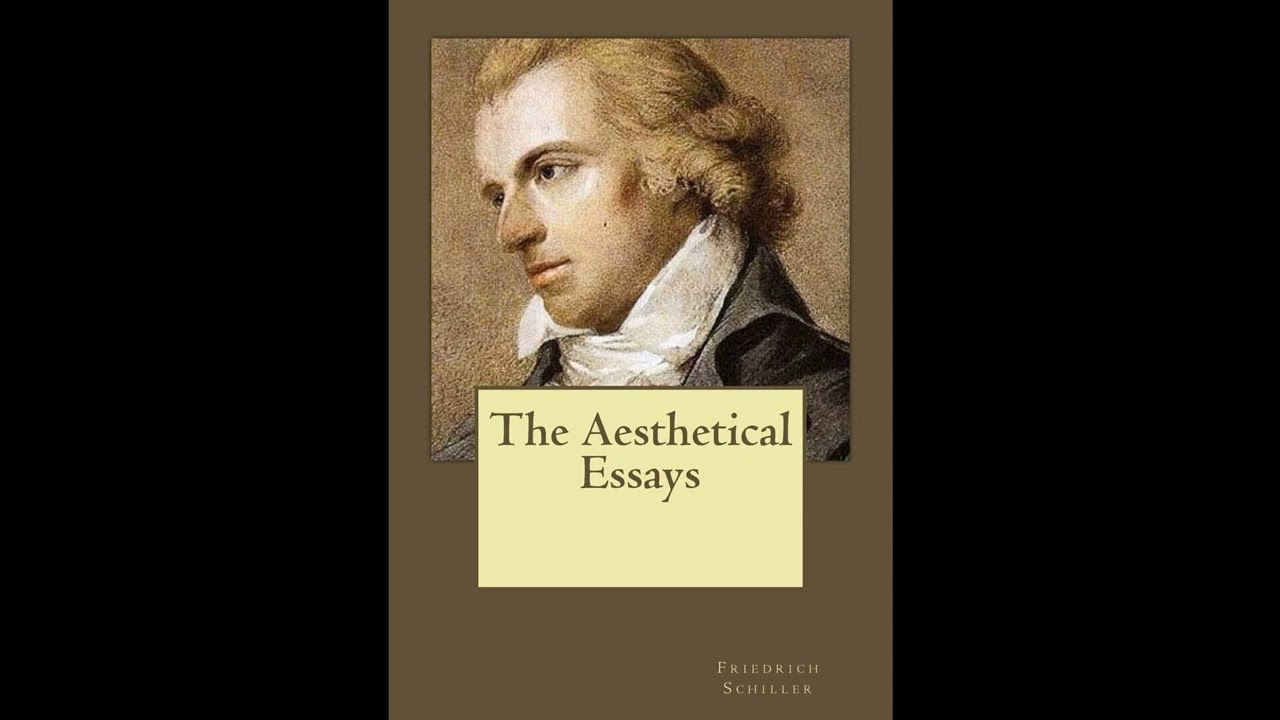
The Aesthetical Essays
What if the path to true human freedom, to a society built not on coercion but on grace, lay not in political upheaval or rigid philosophy, but in the realm of beauty? Friedrich Schiller’s The Aesthetical Essays invites listeners to confront precisely this question, arguing with fervent conviction that aesthetic education is the missing link in humanity’s quest for wholeness. Far from a mere intellectual curiosity, this collection offers a profound meditation on the very essence of human nature, making a powerful case for how art shapes our inner lives, reconciling our fractured selves, and ultimately laying the groundwork for a more humane and equitable world. Its insights into human potential and the social function of art resonate with striking relevance in a modern age often grappling with its own discontents, specialization, and the perennial search for meaning beyond the material. Schiller’s essays begin by diagnosing a profound crisis in human experience, a condition brought to the fore by the rapid changes of his era. He perceives a fundamental disunion in the individual: the human being stands divided between the demands of abstract Reason, which seeks universal laws and moral order, and the powerful impulses of Sensibility, tied to the immediate experience of the world, to feeling, and to the body. This split, he suggests, is further exacerbated by the rise of specialized knowledge and labor in modern society. Individuals become fragments, experts in one narrow field, losing touch with the comprehensive humanity that once characterized the ideal of the ancient Greeks. Society, mirroring this internal fragmentation, struggles to find a common ground where both the intellect and the emotions can find harmonious expression. The initial intellectual setting is thus one of critical analysis, pointing out the shortcomings of both purely rationalistic and purely sensuous approaches to life, neither of which can adequately foster a complete human being or a truly free society. As the essays unfold, Schiller presents his radical solution: the cultivation of the aesthetic. He posits the existence of a third, foundational drive within human nature, the "Play Drive" (Spieltrieb), which acts as the mediating force between the "Form Drive" (Formtrieb, aligned with reason) and the "Sense Drive" (Stofftrieb, aligned with sensibility). This Play Drive is not about idle amusement, but about the profound human impulse to shape and perceive form, to engage freely with appearances, and to find delight in the harmony between inner and outer worlds. It is in this realm of play, in the experience of beauty, that the human being achieves a momentary, yet crucial, state of wholeness—a condition Schiller terms the "aesthetic state." Here, the individual is neither overwhelmed by raw sensation nor constrained by rigid reason, but is rather poised in a delicate balance, free to contemplate, appreciate, and experience a profound sense of inner liberation. This progressive argument guides the listener from diagnosis to proposed remedy, establishing a framework for understanding how beauty functions as a necessary school for freedom, preparing individuals for both moral action and social harmony without dictating specific behaviors or beliefs. Friedrich Schiller, born in Marbach, Germany in 1759, was a towering figure in German literature and philosophy, whose relatively short life was marked by prolific creation and intellectual ferment. Initially studying medicine under duress, he later found his true calling in dramatic writing, philosophy, and poetry. His early work, The Robbers (Die Räuber), a powerful play expressing a rebellious spirit against tyranny and social injustice, established him as a leading voice of the Sturm und Drang movement. This early success, however, also led to conflict with authorities and a period of restless movement. After fleeing his native Württemberg, he found sanctuary and patronage, eventually securing a professorship of history and philosophy at the University of Jena. This period was pivotal, bringing him into contact with Immanuel Kant's philosophy, which profoundly influenced his own development, and later cementing a legendary friendship and collaboration with Johann Wolfgang von Goethe in Weimar, a partnership that defined the era of Weimar Classicism. Schiller's literary output was astonishing in its breadth and depth. Beyond his early rebellious drama, he crafted historical plays of immense scope and psychological insight, such as the Wallenstein trilogy, Mary Stuart, and William Tell. His poetry, including the famous "Ode to Joy" (An die Freude), later set to music by Beethoven in his Ninth Symphony, championed universal brotherhood and the elevation of humanity. Through his essays, like those collected here, he engaged deeply with philosophical questions of aesthetics, ethics, and political theory, placing him firmly within the tradition of German Idealism. He passed away in 1805, leaving behind a legacy that shaped not only German letters but also European thought on the intersection of art, morality, and freedom, securing his place as one of the most significant dramatists and thinkers of his time. A central theme woven through The Aesthetical Essays is the concept of human freedom, not merely as political liberty, but as an internal state of self-determination. Schiller argues that true freedom arises when the human being transcends the compulsion of both sensory appetites and abstract moral laws, finding a space of spontaneous, uncoerced action. The aesthetic experience, in his view, provides the perfect training ground for this. When we apprehend beauty, we are not forced to act, nor are we merely indulging a base desire; instead, we freely engage with form, our faculties playing in harmony. Consider how the balance of a classical statue or the rhythm of a musical composition does not command our will but invites our appreciation, expanding our capacity for disinterested contemplation and, by extension, our inner freedom. This cultivation of a free spirit, Schiller contends, is a prerequisite for a truly free and just society. Another significant theme is the reconciliation of reason and sensibility, a persistent tension in Western thought. Schiller proposes that art acts as the crucial bridge between these two often-opposing aspects of human nature. Before we can unite our rational and emotional selves in practical life, we must first learn to do so in the realm of aesthetic experience. For instance, in witnessing a tragedy, our reason might understand the moral implications, while our emotions respond to the suffering of the characters. Art allows these two faculties to work in concert, rather than pulling us in different directions. The "play drive" is the mechanism through which this happens, allowing us to simultaneously shape and be shaped, to impose form upon matter and receive its impression, leading to a profound sense of inner unity and balance – the "beautiful soul." This integration is essential, as only a unified human being can act ethically and contribute constructively to society. These essays emerged from a period of intense historical and intellectual upheaval. The French Revolution, initially hailed as a beacon of freedom and reason, had devolved into the Reign of Terror, exposing the frightening potential for brutality even in the pursuit of ideals. This disillusionment prompted thinkers like Schiller to question whether political change alone could truly transform humanity. He wrote On the Aesthetic Education of Man (the core of this collection) during the 1790s, directly in response to the revolutionary events and the perceived failure of pure reason to guide society toward harmony. Furthermore, the philosophical landscape was dominated by Immanuel Kant's critical philosophy, which had firmly separated the realms of moral duty, scientific understanding, and aesthetic judgment. Schiller, while deeply admiring Kant, sought to bridge these divisions, particularly to re-establish the relevance of aesthetics not just as a matter of taste, but as a vital force for moral and social transformation. He felt that humanity needed a preparatory school for freedom, a space where grace and dignity could be cultivated before they could manifest in the messy realities of politics and ethics. Listening to The Aesthetical Essays as an audiobook offers a distinct and enriching way to engage with Schiller's profound intellectual contributions. The sustained argument, unfolding over several hours, benefits immensely from the clarity and pacing of skilled narration. Complex philosophical concepts, such as the interplay between the "sense drive" and the "form drive," or the nuanced definition of the "aesthetic state," become more accessible when conveyed through a human voice, allowing listeners to absorb the arguments at a contemplative pace. The spoken word naturally encourages a meditative approach, giving one time to reflect on Schiller's diagnosis of human fragmentation and his audacious proposal for beauty as a path to wholeness. Hearing these ideas articulated allows for a deeper appreciation of the author's passionate advocacy for art's pivotal role in shaping both individual character and the trajectory of society itself, making the intellectual arc of his arguments a truly immersive experience.
Enjoyed The Aesthetical Essays? A few ways to support us
Audible & Amazon links are affiliate; we may earn a small commission at no extra cost.
About this production
Human narration by a volunteer reader from LibriVox.org, the public-domain audiobook project. LibriVox volunteers record literary works whose copyright has expired in the United States, releasing the resulting recordings into the public domain.
The Aesthetical Essays by Friedrich Schiller. The underlying text is in the U.S. public domain. We do not republish any modern copyrighted edition, translation, or commentary.
The 4K cinematic visuals accompanying this audiobook are generated by an AI image model from prompts derived from the source text. No copyrighted photos, paintings, or stock footage are used. AI generation is disclosed on every video on our YouTube channel as required by YouTube's altered/synthetic content policy.
English subtitles are transcribed from the LibriVox recording with OpenAI Whisper. Translations into the 11 other supported languages are produced by Meta's NLLB-200 neural translation model. No human translator's copyrighted translation is used.
Questions about sourcing or rights? See our DMCA & Sourcing policy or contact us.
View 10 famous quotes from this book →
Enjoyed this audiobook?
If you'd like to own a copy of The Aesthetical Essays or hear a professionally produced edition, the links below help support free audiobook production at no extra cost to you.
As an Amazon Associate we earn from qualifying purchases. Audible / print links are affiliate.