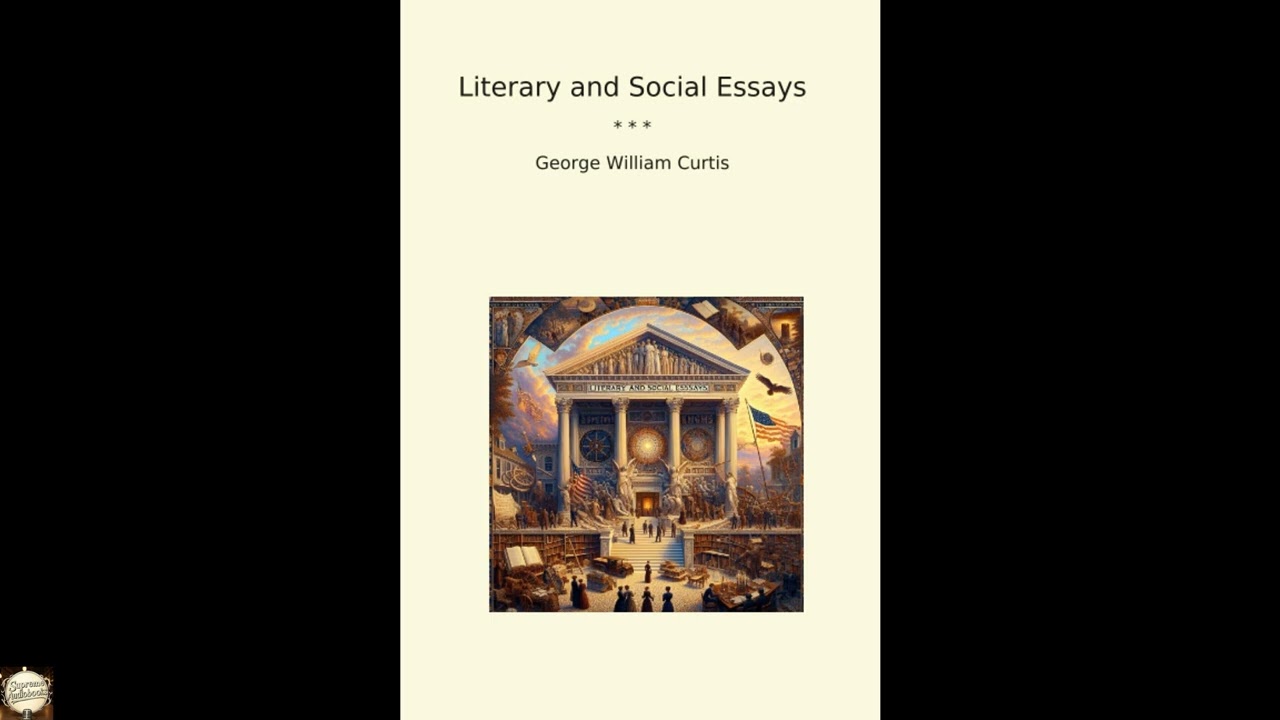
Literary and Social Essays
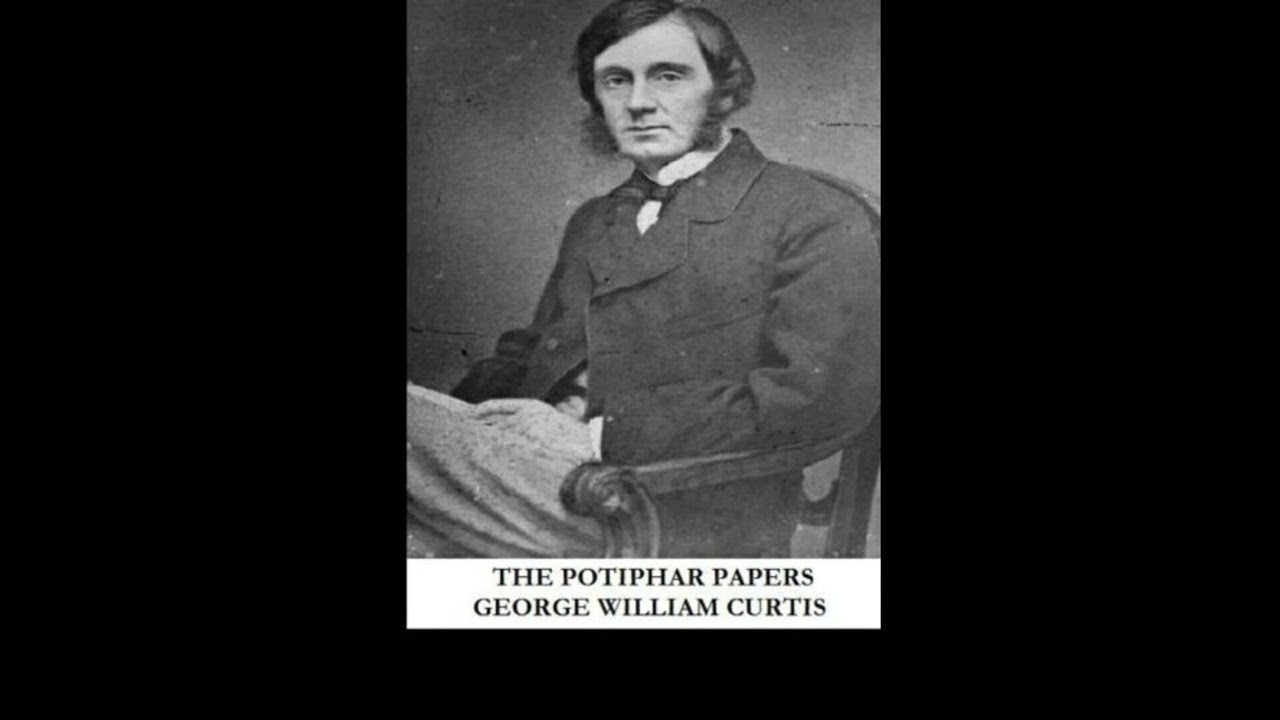
When the cacophony of modern discourse feels overwhelming, and fleeting trends obscure enduring principles, the voice of George William Curtis offers a clear, resonant counterpoint. His Literary and Social Essays serves not as a mere relic of a bygone era, but as a living conversation on topics that remain acutely relevant today: the responsibilities of citizenship, the profound influence of literature, the quest for justice, and the delicate balance between individual freedom and societal obligation. Within these pages, listeners encounter a keen observer of human nature and a steadfast advocate for moral clarity, a writer whose reflections on politics, art, and public life speak directly to the challenges we continue to grapple with in our own complex times. This collection invites us to slow down, to engage with thoughtful prose, and to rediscover the power of an informed, ethical perspective in shaping a better world. Instead of a single, unfolding narrative, Curtis presents a mosaic of reflections, each essay a distinct window into the intellectual landscape of his time and the workings of a brilliant mind. The setting for these pieces is vast, encompassing the bustling lecture halls of America, the quiet corners of a reader's study, and the grand stages of political debate. The central "character" is Curtis himself, appearing as a genial yet firm guide, a public intellectual unafraid to champion unpopular causes or challenge prevailing sentiments. He moves effortlessly from appreciating the subtleties of a poet's verse to dissecting the flaws in governmental policy, always maintaining a spirit of earnest inquiry and a commitment to high ideals. The "conflict" within these essays is often the tension between the lofty aspirations of a democratic society and the practical imperfections of its implementation, or the struggle to preserve aesthetic and moral values amidst rapid social change. Listeners are led through a progression of ideas, witnessing Curtis's consistent application of ethical reasoning to diverse subjects. There is no traditional plot arc, but rather a thematic coherence forged by the author's consistent worldview. He examines the role of the press, the importance of historical memory, the virtues of sincerity, and the perils of demagoguery, building a cumulative argument for thoughtful engagement and civic integrity. Each piece stands alone, yet together they form a powerful testament to the power of the essay form to illuminate, persuade, and inspire. This collection is a stimulating engagement with a truly significant public voice, a gathering of meditations that collectively illuminate the enduring questions of human existence and social organization. George William Curtis was born in Providence, Rhode Island, in 1824, into a family of substantial means and intellectual curiosity. His early life was marked by a broad, unconventional education, including a period spent living and working at the Transcendentalist communal experiment, Brook Farm, alongside figures like Nathaniel Hawthorne and Margaret Fuller. This experience, though brief, deeply influenced his lifelong commitment to social ideals and individual growth. Following his time at Brook Farm, Curtis embarked on an extensive European tour from 1846 to 1850, an experience that formed the basis of his early, celebrated travel writings, Nile Notes of a Howadji and The Howadji in Syria. These works established his reputation as an elegant prose stylist with a keen eye for cultural observation. Upon his return to America, Curtis quickly established himself as a prominent man of letters and a powerful public speaker. He became a fixture in the literary world, serving as editor for Putnam's Monthly and contributing prolifically to Harper's Magazine. Most significantly, he became the political editor for Harper's Weekly in 1863, a position he held for the remainder of his life. From this influential platform, he tirelessly championed causes such as civil service reform, women's suffrage, and the rights of formerly enslaved people. Curtis was not merely a commentator; he was an active participant in the moral and political struggles of his era, known for his unwavering integrity and his clear, persuasive voice. He passed away in Staten Island, New York, in 1892, leaving behind a legacy as one of America's most respected public intellectuals and a leading figure in the post-Civil War literary and political landscape. Among the central concerns expressed in these essays is the theme of civic virtue and social responsibility. Curtis consistently emphasized the moral obligation of citizens to participate actively and ethically in public life. For instance, in essays addressing political corruption, he would not merely bemoan the state of affairs but articulate a clear vision for honest governance, arguing that the health of a democracy depended on the integrity of its individual members and their willingness to hold leaders accountable. Another significant theme is the power and purpose of literature and art. Curtis, a literary critic himself, believed deeply in the capacity of creative expression to elevate the human spirit, refine moral sensibilities, and foster empathy. He might discuss the enduring appeal of a classical poet or the impact of a contemporary novel, demonstrating how art serves as both a mirror to society and a guide for individual conduct, shaping character and enriching the national consciousness. He also returned frequently to the idea of American identity and the democratic ideal. In a nation grappling with the aftermath of civil war and rapid industrialization, Curtis pondered what it truly meant to be an American, celebrating the nation's founding principles while critically assessing its failures to live up to them. His reflections often called for a renewed commitment to equality and justice, viewing the American experiment as an ongoing pursuit rather than a finished project. Finally, the essays frequently touch upon the tension between individualism and collective good. While he respected personal liberty, Curtis also recognized the need for individuals to contribute to the common welfare, often illustrating how unchecked self-interest could undermine the very foundations of a just society. He balanced advocacy for personal conscience with a strong belief in the necessity of collective action for social improvement, reflecting the dynamic intellectual currents of his period. The period in which George William Curtis wrote his most impactful essays was a time of immense transition and upheaval in the United States, roughly spanning the latter half of the nineteenth century. Following the traumatic years of the Civil War, the nation entered the Reconstruction era and then the Gilded Age, characterized by rapid industrial growth, increasing urbanization, and significant social inequalities. Politically, it was a time marked by both grand aspirations and widespread corruption, with movements for civil service reform, women's suffrage, and labor rights gaining momentum amidst the consolidation of corporate power. Culturally, America was wrestling with its national identity, seeking to reconcile its ideals with the harsh realities of poverty, racial injustice, and political patronage. In the literary world, Romanticism was giving way to Realism, and the rise of popular magazines and lecture circuits made public intellectuals like Curtis immensely influential. His essays emerged precisely because there was a pressing need for clear, principled voices to interpret these complex changes for the public and to advocate for a more just and ethical society. As an editor for widely read periodicals and a celebrated orator, Curtis used his platforms to address the most urgent moral and political questions of the day, acting as a conscience for his generation. His writings offered both critique and hope, urging Americans to live up to the promise of their democratic institutions during a foundational period of national redefinition. Listening to Literary and Social Essays as an audiobook offers a singular opportunity to engage with Curtis's distinct oratorical style, bringing the persuasive power of his prose directly to the ear. A skilled narrator can emphasize the rhythmic flow of his arguments and the nuanced turns of his thought, transforming the experience of reading into one of attentive listening. The several hours of content are ideally suited for focused engagement during a commute, a reflective walk, or while simply seeking a thoughtful companion during daily activities. Listen for the deliberate pacing of his sentences, how he builds a case with elegance and precision, and the underlying warmth and conviction in his voice. The narration allows the listener to absorb the essays as they were perhaps first received by many of Curtis's contemporaries — as spoken words, imbued with the immediacy and personal conviction of a speaker addressing pressing issues. It creates an atmosphere of intellectual communion, inviting deeper reflection on the enduring questions that Curtis so eloquently addressed.
Enjoyed Literary and Social Essays? A few ways to support us
Audible & Amazon links are affiliate; we may earn a small commission at no extra cost.
About this production
Human narration by a volunteer reader from LibriVox.org, the public-domain audiobook project. LibriVox volunteers record literary works whose copyright has expired in the United States, releasing the resulting recordings into the public domain.
Literary and Social Essays by George William Curtis. The underlying text is in the U.S. public domain. We do not republish any modern copyrighted edition, translation, or commentary.
The 4K cinematic visuals accompanying this audiobook are generated by an AI image model from prompts derived from the source text. No copyrighted photos, paintings, or stock footage are used. AI generation is disclosed on every video on our YouTube channel as required by YouTube's altered/synthetic content policy.
English subtitles are transcribed from the LibriVox recording with OpenAI Whisper. Translations into the 11 other supported languages are produced by Meta's NLLB-200 neural translation model. No human translator's copyrighted translation is used.
Questions about sourcing or rights? See our DMCA & Sourcing policy or contact us.
View 10 famous quotes from this book →
Enjoyed this audiobook?
If you'd like to own a copy of Literary and Social Essays or hear a professionally produced edition, the links below help support free audiobook production at no extra cost to you.
As an Amazon Associate we earn from qualifying purchases. Audible / print links are affiliate.