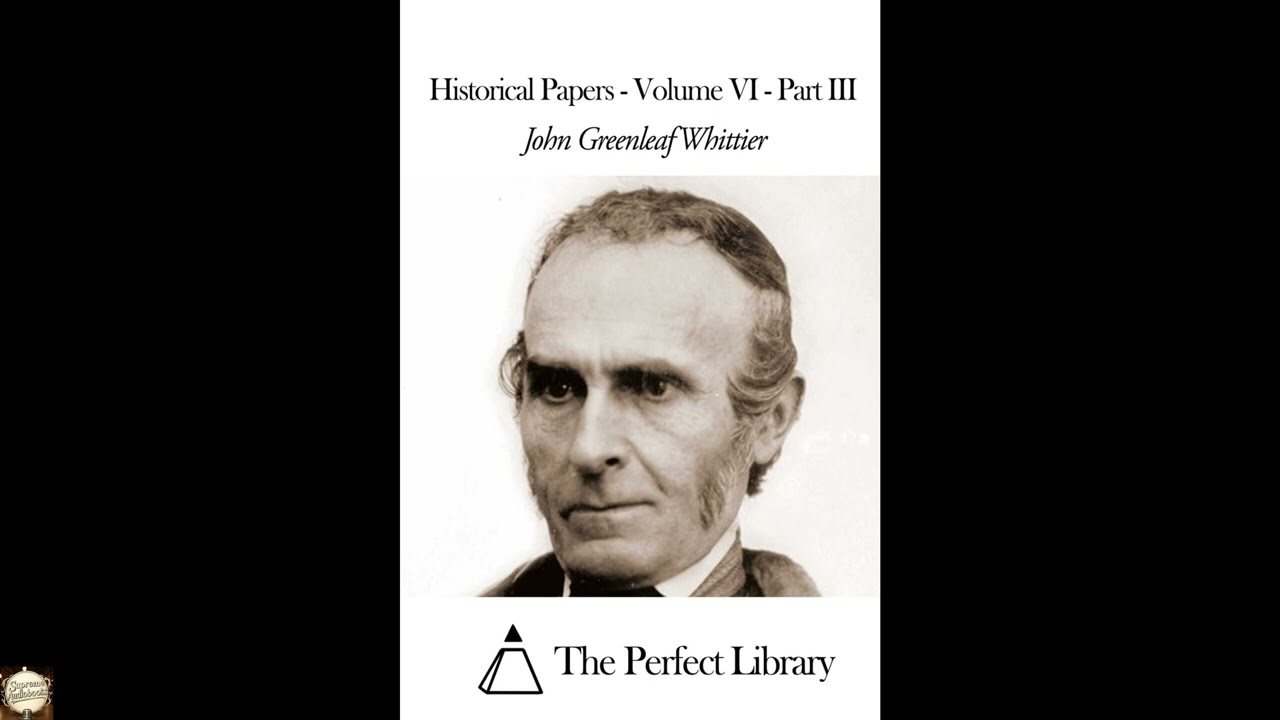
Historical Papers - Volume VI - Part III
Step into the intellectual currents of a bygone era with Historical Papers - Volume VI - Part III, a compelling collection that offers insight into the American past through the discerning gaze of John Greenleaf Whittier. This isn't merely a dusty academic tome; it is a thoughtful assembly of observations and reflections from a mind deeply engaged with the moral and social fabric of his nation. Listeners today will find themselves drawn into debates that, while rooted in specific historical moments, resonate with uncanny relevance, forcing us to consider the echoes of history in our own contemporary struggles for justice, identity, and national purpose. It is a work that invites not just passive consumption, but active contemplation, connecting us directly to the earnest spirit of a crucial American voice. This particular volume brings together a range of Whittier's prose contributions, focusing on various facets of American history and public life. While not a narrative in the traditional sense, the collection provides a sequential uncovering of historical truths and ethical dilemmas, orchestrated by Whittier's unique perspective. Listeners encounter a succession of analyses, biographical sketches, and socio-political commentaries, each carefully crafted to illuminate a specific aspect of the nation’s evolution. The "setting" for these papers shifts across different periods—from the foundational struggles of early America to the tumultuous changes of the nineteenth century—all viewed through the lens of a committed social reformer and Quaker conscience. The "characters" within this collection are the figures who shaped the American experience: the unsung heroes and the celebrated leaders, the victims of injustice and the architects of reform. Whittier often focuses on individuals whose lives exemplified courage, moral fortitude, or, conversely, profound human failing, using their stories to illustrate broader societal trends. The "central conflict" often lies in the clash between ideals and realities, between the nation's stated principles and its often-troubled practices. Whittier frequently examines the struggles for human rights, the growth of democratic institutions, and the persistent challenge of living up to the promise of liberty for all citizens. The "arc of the story" within these papers is not a single plot, but rather the unfolding intellectual development of a public figure grappling with complex historical legacies, seeking to draw lessons from the past to inform the present and future. John Greenleaf Whittier, born in 1807 in Haverhill, Massachusetts, emerged from a humble Quaker farming background to become one of America’s most beloved and influential poets and social commentators. His early life was marked by limited formal education, yet he possessed a voracious appetite for learning, largely satisfied through self-study. Whittier's Quaker faith profoundly shaped his worldview, instilling in him a deep commitment to peace, equality, and social justice, values that would define both his literary output and his public activism. He began his career as a journalist and editor, leveraging his platform to advocate tirelessly for the abolition of slavery, a cause he championed from his youth until its eventual triumph. Throughout his long life, which concluded in 1892, Whittier remained an unwavering voice for human dignity and moral responsibility. He authored numerous poems, essays, and polemics that passionately argued against social injustices. Beyond his abolitionist writings, which include powerful pieces like "Ichabod" and "Massachusetts to Virginia," he is perhaps best known for his evocative depictions of rural New England life, exemplified by his widely popular narrative poem "Snow-Bound: A Winter Idyl." Whittier belonged to the "Fireside Poets," a group of nineteenth-century American poets whose work was widely read and memorized, often at home by the fireplace, and who aimed to use poetry to instruct and inspire a broad audience. His plainspoken language, clear moral vision, and ability to connect with common experience secured his lasting place in the American literary canon. Within these Historical Papers, several key themes consistently emerge, showing the breadth and depth of Whittier’s intellectual concerns. One prominent theme is the enduring struggle for social justice, particularly the fight against oppression. Whittier frequently revisits moments in American history where the rights of marginalized groups were denied or defended, drawing a clear moral line. For instance, his keen analysis of colonial-era Quaker persecutions or his examination of the early anti-slavery movement serve as pointed examples, underscoring his belief that true national character is measured by its treatment of the vulnerable. Another central theme is the importance of moral integrity in public life. Whittier often profiles historical figures, whether prominent statesmen or ordinary citizens, who demonstrated unwavering principles even in the face of adversity, using their examples to underscore the necessity of ethical leadership and individual courage. A third significant theme is the power of historical memory and its role in shaping national identity. Whittier understood that how a nation remembers its past profoundly affects its present and future. His papers often revisit foundational American myths and events, scrutinizing them to ensure an honest accounting of both triumphs and failures. He demonstrates how lessons from past mistakes, if genuinely confronted, can guide future progress, while forgotten injustices can fester. This commitment to an honest appraisal of history is interwoven with a fourth theme: the spiritual dimension of human experience and the quiet strength of faith. Whittier, as a devout Quaker, often finds spiritual resonance in historical events, portraying moments of great human endurance or moral clarity as testaments to an underlying spiritual truth, suggesting that even in secular history, there are divine currents at work. Whittier’s writings emerged from a period of intense social and political upheaval in the United States. Spanning the antebellum era, the Civil War, and the early years of Reconstruction, his lifetime witnessed the nation grappling with its most fundamental contradictions. The heated debates over slavery, states' rights, and the very meaning of American liberty provided fertile ground for his impassioned critiques and historical reflections. Culturally, it was a time when literature was increasingly seen as a powerful tool for social commentary and reform, with writers like Whittier often doubling as activists and public intellectuals. His particular blend of moral fervor, historical consciousness, and literary skill made him an indispensable voice during a period when the nation was defining, and redefining, its core values and identity in a rapidly changing industrializing landscape. Listening to Historical Papers - Volume VI - Part III as an audiobook offers a singular opportunity to engage with Whittier’s prose in a sustained and reflective manner. The "several hours" of runtime are ideal for extended listening sessions, whether during a commute, on a long walk, or during quiet moments of contemplation at home. A thoughtful narration, carefully paced, allows the listener to absorb the nuances of Whittier’s arguments and appreciate the deliberate cadence of his language. The spoken word brings a new dimension to his historical examinations, inviting listeners to truly hear the conviction and sincerity in his reflections. Without the visual distraction of the printed page, one can focus entirely on the intellectual and emotional currents flowing through these papers, gaining a deeper appreciation for Whittier's enduring commitment to justice and his profound understanding of the American past.
Enjoyed Historical Papers - Volume VI - Part III? A few ways to support us
Audible & Amazon links are affiliate; we may earn a small commission at no extra cost.
About this production
Human narration by a volunteer reader from LibriVox.org, the public-domain audiobook project. LibriVox volunteers record literary works whose copyright has expired in the United States, releasing the resulting recordings into the public domain.
Historical Papers - Volume VI - Part III by John Greenleaf Whittier. The underlying text is in the U.S. public domain. We do not republish any modern copyrighted edition, translation, or commentary.
The 4K cinematic visuals accompanying this audiobook are generated by an AI image model from prompts derived from the source text. No copyrighted photos, paintings, or stock footage are used. AI generation is disclosed on every video on our YouTube channel as required by YouTube's altered/synthetic content policy.
English subtitles are transcribed from the LibriVox recording with OpenAI Whisper. Translations into the 11 other supported languages are produced by Meta's NLLB-200 neural translation model. No human translator's copyrighted translation is used.
Questions about sourcing or rights? See our DMCA & Sourcing policy or contact us.
Enjoyed this audiobook?
If you'd like to own a copy of Historical Papers - Volume VI - Part III or hear a professionally produced edition, the links below help support free audiobook production at no extra cost to you.
As an Amazon Associate we earn from qualifying purchases. Audible / print links are affiliate.
More by John Greenleaf Whittier
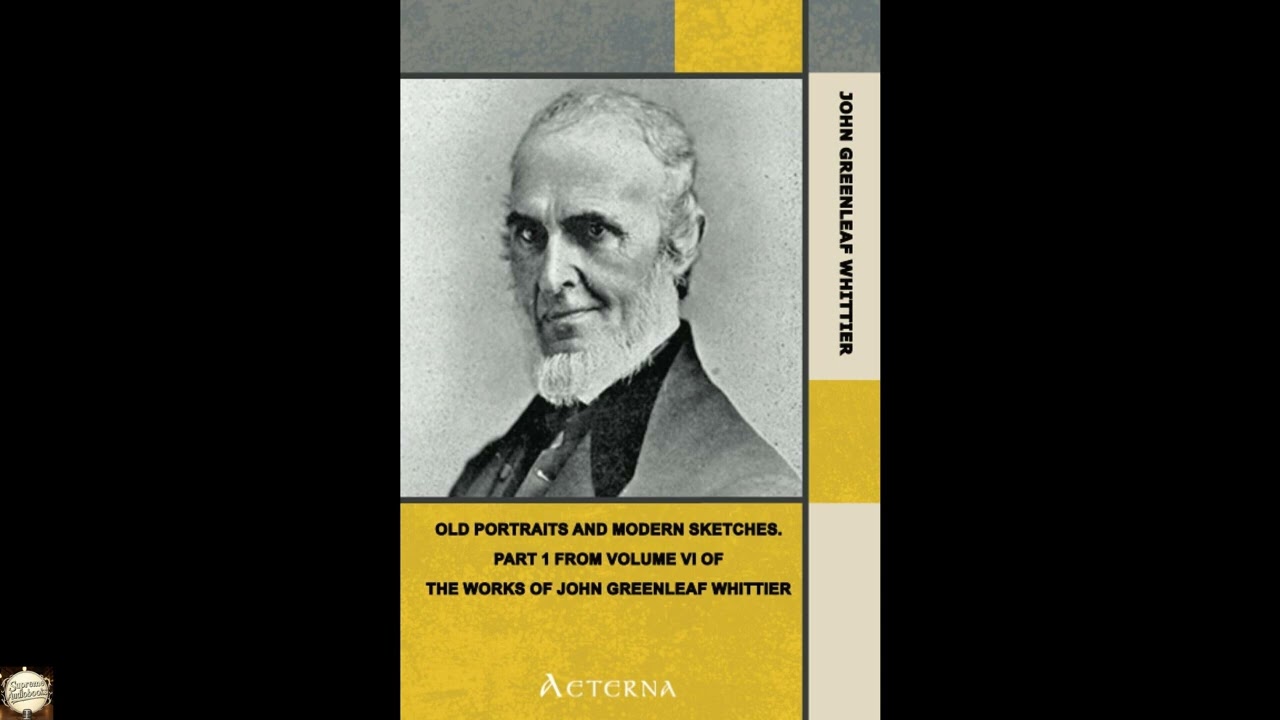
Old Portraits and Modern Sketches. Part 1 from Volume VI of The Works of John Green
Religious Poems, Part 1. : Part 5 From Volume II of The Works of John Greenleaf Whi
Anti-Slavery Poems 2.. Part 2 From Volume III of The Works of John Greenleaf Whittie- Full Audiobook
Songs of Labor and Reform. Part 5 From Volume III of The Works of John Greenleaf Wh
More Audiobooks
Old Portraits and Modern Sketches. Part 1 from Volume VI of The Works of John Green
Personal Sketches and Tributes. Part 2 from Volume VI of The Works of John Greenlea

Pages From an Old Volume of Life: A Collection of Essays, 1857-1881
Occasional Poems. Part 3 from Volume IV of The Works of John Greenleaf Whittier