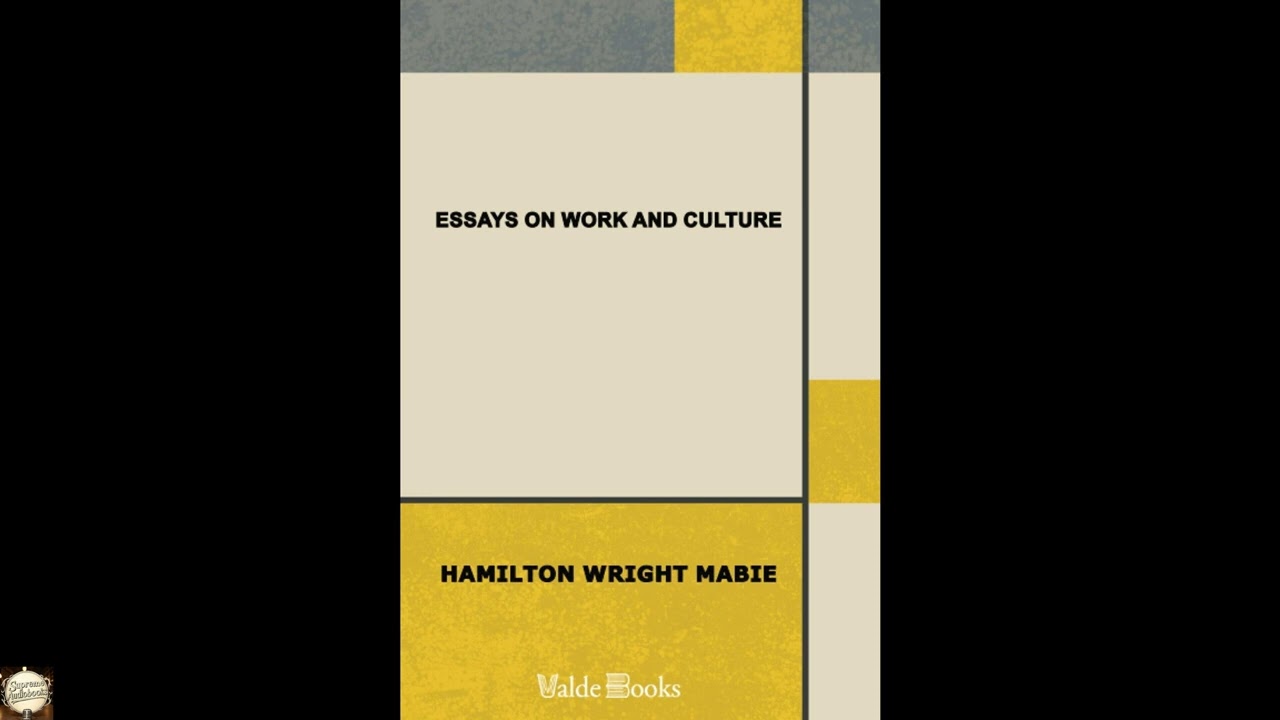
Essays on Work and Culture
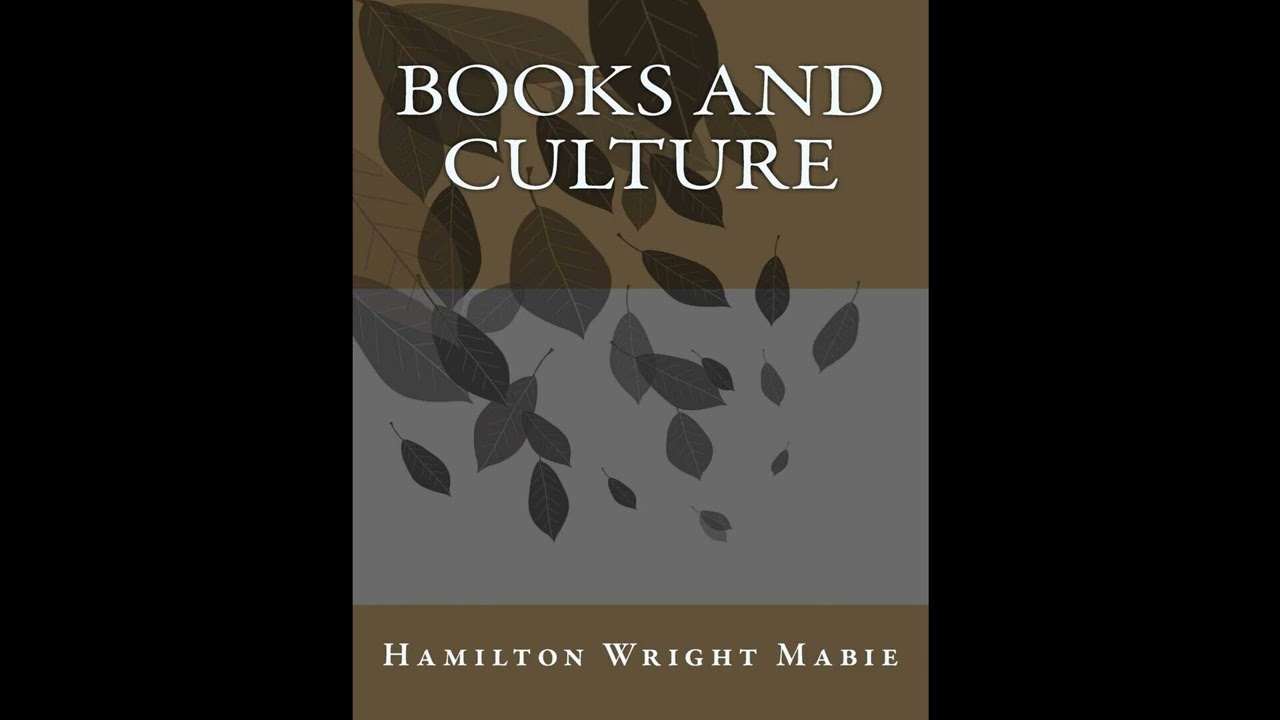
The insistent clamor of modern life often leaves us wondering where true fulfillment lies. We measure success by deadlines met and financial gain, yet a persistent yearning for something more substantial remains. Hamilton Wright Mabie's Essays on Work and Culture, a forgotten gem from the turn of the twentieth century, offers a profound antidote. Far from being a dry historical relic, Mabie's wisdom directly addresses the struggle to reconcile professional demands with the deep human need for intellectual and spiritual nourishment. He presents a compelling case that work, properly understood and balanced with culture, is not merely a means to an end but a vital component of a well-lived, meaningful life. For anyone seeking purpose beyond the daily grind, or to cultivate a richer inner world, Mabie's gentle yet insistent guidance resonates powerfully today. Rather than a conventional narrative, Mabie’s collection unfolds as a meticulously reasoned argument, guiding the listener through an intellectual landscape focused on human flourishing. The setting for these reflections is the individual mind, confronted with practical necessities and higher aspirations. The central figure is the author himself, serving as a wise mentor, addressing the reader directly as a fellow traveler on the path to self-improvement. The primary tension Mabie addresses is the perceived dichotomy between the world of labor—often seen as utilitarian and separate—and the realm of culture—frequently viewed as an aesthetic pursuit or luxury. Mabie systematically dismantles this artificial division. He begins by examining the inherent dignity of work, framing it not as a curse but as a fundamental human activity through which we shape the world and ourselves. He progresses to consider various forms of culture—literature, art, nature, and human thought—demonstrating their capacity to refine perception, deepen understanding, and expand the spirit. The argumentative arc builds towards a powerful synthesis: the assertion that these two vital aspects of life are not mutually exclusive but interdependent. A life truly lived, Mabie suggests, harmonizes the active engagement of work with the contemplative enrichment of culture, allowing each to elevate and inform the other, leading to a robust and complete individual existence. Hamilton Wright Mabie, born in Cold Spring, New York, in 1846, emerged as a prominent American essayist, editor, and literary critic during a pivotal era. After graduating from Williams College and attending Columbia Law School, he dedicated his intellectual energies to publishing rather than legal practice. For over three decades, Mabie served as the associate editor of The Outlook, a highly influential weekly journal covering politics, religion, and literature, working alongside the notable clergyman and author Lyman Abbott. This long tenure provided him a significant platform from which to articulate his ideas on education, literature, and the art of living. Mabie was a prolific writer, publishing numerous essay collections that advocated for the cultivation of character and a refined appreciation for intellectual and aesthetic pursuits. His celebrated works include My Study Fire and Short Studies in Literature. He was a significant voice within what came to be known as the "genteel tradition" in American letters, a movement that emphasized idealism, moral uplift, and the pursuit of beauty and truth. During his lifetime, Mabie’s contributions were widely respected, earning him recognition both domestically and internationally, including a notable lecture tour in Japan. He passed away in 1916, leaving behind a body of work that eloquently champions a balanced, thoughtful approach to life. A central theme woven throughout these essays is the inherent dignity of honest labor. Mabie challenges the notion that work is merely a necessary chore, instead positing it as a fundamental expression of human creativity and purpose. For instance, he might illustrate how a skilled craftsperson, dedicating meticulous attention to their trade, not only produces a tangible good but also cultivates discipline, patience, and pride. This perspective elevates the ordinary activities of daily work into acts of self-formation. Another significant theme is the indispensable role of culture in human development. Mabie consistently argues that intellectual and artistic engagement—whether through literature, fine art, music, or an appreciation for the natural world—is a universal necessity for the full unfolding of the human spirit. He might describe how reading classic poetry or contemplating a landscape painting can expand one’s imagination and empathy, preventing a narrow, utilitarian outlook on life. Furthermore, Mabie eloquently presents the profound interconnectedness of work and culture. He does not see them as separate realms but as mutually enriching forces. Productive work provides the stability and perspective necessary to fully appreciate culture, while engagement with culture refines one's approach to labor, infusing it with greater meaning. A person nourished by art and literature, Mabie suggests, will bring a richer, more thoughtful perspective to their professional endeavors. This leads naturally to a fourth overarching idea: the concept of self-culture. Mabie champions a continuous, conscious effort toward personal growth—not for external reward, but for the inherent satisfaction of becoming a more complete and well-rounded individual. He encourages active intellectual curiosity, thoughtful reflection, and a lifelong commitment to learning as pathways to a fulfilling existence. The publication of Essays on Work and Culture occurred during a dynamic period in American history—the late nineteenth and early twentieth centuries. Following the tremendous upheaval of the Civil War, the United States was undergoing rapid industrialization and urbanization. This era saw immense economic growth, technological advancements, and a dramatic shift from an agrarian society to one dominated by factories and specialized labor. These changes introduced new social complexities and anxieties. There was a palpable concern among intellectuals and moral leaders about the potential for materialism to overshadow spiritual and intellectual pursuits, and for purely economic definitions of success to displace older, more humanistic values. In the literary world, this was a time when realism and naturalism were gaining prominence, often depicting the grittier realities of American life. Mabie's essays, while grounded in an understanding of contemporary society, offered a counterpoint to these trends. He provided a voice that reaffirmed the importance of idealism, aesthetic appreciation, and moral philosophy amidst the practicalities of the industrial age. His work emerged as a direct response to the need for a framework that could help individuals navigate these rapidly changing times, offering guidance on how to maintain one's humanity and cultivate a meaningful inner life in an increasingly industrialized and commercially focused world. Listening to Essays on Work and Culture as an audiobook offers a distinct and enriching experience, particularly well-suited to the thoughtful nature of Mabie’s prose. The "several hours" run length is perfectly measured, allowing listeners to absorb these profound reflections without feeling overwhelmed, whether during daily commutes, on a contemplative walk, or in moments of quiet respite. A skilled narrator's clear, measured pacing can truly bring Mabie’s arguments to life, allowing his insightful observations to sink in and resonate. A calm, authoritative voice, perhaps with a touch of formal elegance, transforms the listening experience into a personal conversation with a wise and encouraging mentor. Without traditional dialogue, the narrator’s delivery of Mabie's own voice—his tone, his persuasive rhythm—becomes paramount, fostering an atmosphere of intellectual engagement and serene introspection that invites listeners to pause, reflect, and integrate these enduring ideas into their own understanding of work and culture.
Enjoyed Essays on Work and Culture? A few ways to support us
Audible & Amazon links are affiliate; we may earn a small commission at no extra cost.
About this production
Human narration by a volunteer reader from LibriVox.org, the public-domain audiobook project. LibriVox volunteers record literary works whose copyright has expired in the United States, releasing the resulting recordings into the public domain.
Essays on Work and Culture by Hamilton Wright Mabie. The underlying text is in the U.S. public domain. We do not republish any modern copyrighted edition, translation, or commentary.
The 4K cinematic visuals accompanying this audiobook are generated by an AI image model from prompts derived from the source text. No copyrighted photos, paintings, or stock footage are used. AI generation is disclosed on every video on our YouTube channel as required by YouTube's altered/synthetic content policy.
English subtitles are transcribed from the LibriVox recording with OpenAI Whisper. Translations into the 11 other supported languages are produced by Meta's NLLB-200 neural translation model. No human translator's copyrighted translation is used.
Questions about sourcing or rights? See our DMCA & Sourcing policy or contact us.
Enjoyed this audiobook?
If you'd like to own a copy of Essays on Work and Culture or hear a professionally produced edition, the links below help support free audiobook production at no extra cost to you.
As an Amazon Associate we earn from qualifying purchases. Audible / print links are affiliate.