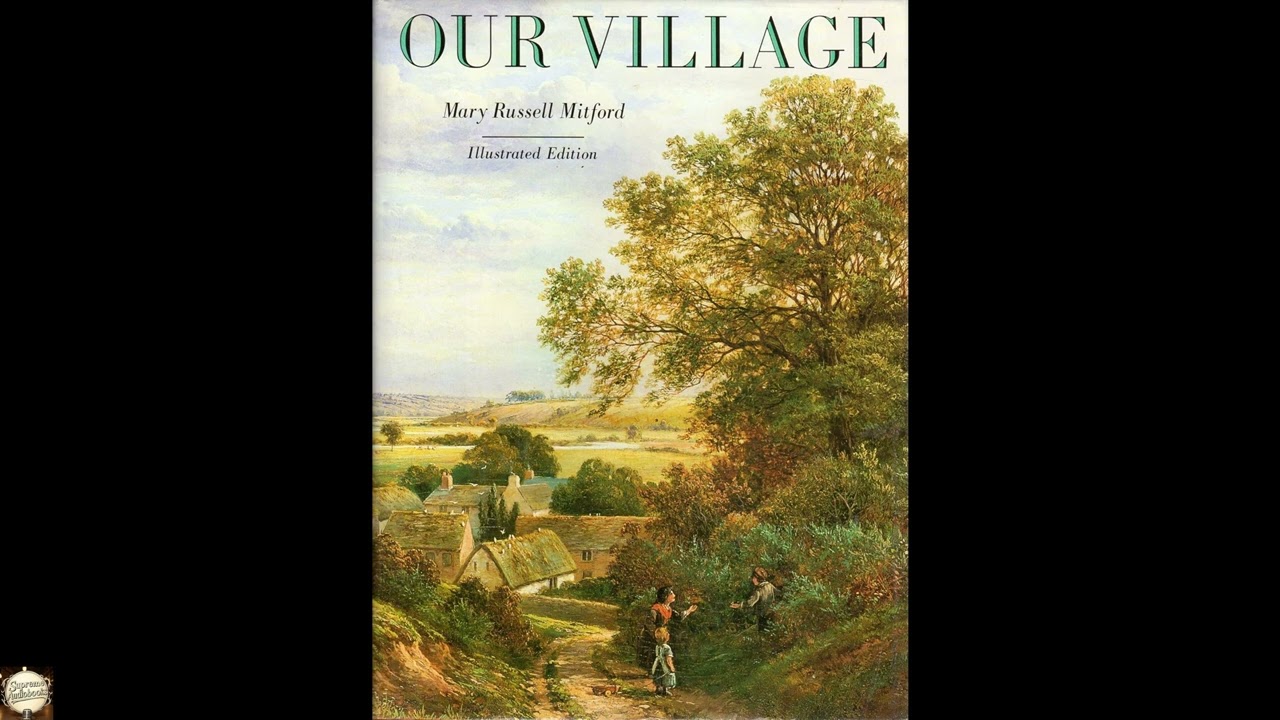
Our Village
Imagine stepping into a world where time unfolds at the pace of the seasons, where the grand dramas of life play out in the smallest gestures, and where the keen eye of a gentle observer captures every detail of a passing era. Mary Russell Mitford's "Our Village" offers precisely this kind of transporting experience, a collection of vividly drawn sketches that bring the rhythms and personalities of early 19th-century English rural life into sparkling focus. Why should a listener care about this quiet corner of Berkshire two centuries later? Because Mitford’s insightful observations on human nature, the enduring beauty of the natural world, and the subtle interplay of community remain as fresh and relevant as ever. Her work is not merely a historical document; it is an invitation to slow down, to notice, and to rediscover the profound in the ordinary, a lesson many find deeply appealing in our hurried modern world. "Our Village" invites listeners into the picturesque hamlet of Three Mile Cross in Berkshire, England, a place brought to life with such affection and precision that it feels as real as any setting in fiction. The narrator, a stand-in for Mitford herself, acts as our convivial guide, leading us through winding country lanes, into bustling village shops, and to the lively scenes of local festivals. There isn't a singular main character in the traditional sense, but rather an ensemble cast of memorable villagers: the jovial blacksmith, the gossiping elderly women, the stoic farmers, the spirited children, and a host of idiosyncratic figures, each rendered with a warmth and wit that makes them instantly recognizable. The book doesn't present a conventional plot with a rising action and a climactic resolution. Instead, it unfolds as a series of interconnected vignettes, each a miniature story or a character study, arranged to reflect the passage of a year through the changing seasons. We witness the boisterous energy of a cricket match on the village green, the quiet determination of a gardener tending her prize-winning flowers, the hushed reverence of Sunday church, and the simple joys of a harvest festival. The central thread weaving through these disparate scenes is the gentle but persistent observation of life itself – the small triumphs and tragedies, the everyday kindnesses and minor disagreements, all forming the rich fabric of a close-knit community. Mitford's genius lies in her ability to find profound meaning and universal truths within these seemingly small-scale occurrences, drawing the listener ever deeper into the heart of Three Mile Cross without the need for grand gestures or dramatic twists. Mary Russell Mitford, born in Alresford, Hampshire, in 1787, led a life marked by both literary success and significant personal challenges. Her family's fortunes were perpetually undermined by her charming but financially irresponsible father, whose gambling habits often plunged them into debt. This instability meant a childhood spent moving frequently, though she received a good education, fostering an early love for books and nature. In 1820, after years of financial struggle, the Mitfords settled in a small cottage in Three Mile Cross, a humble dwelling where Mary would live and write for the remainder of her long life. Initially gaining recognition as a poet and dramatist, with several plays staged in London, Mitford eventually found her truest artistic voice in the prose sketches that would become "Our Village." These pieces first appeared in The Lady's Magazine in 1822, garnering immense popularity before being collected into five volumes between 1824 and 1832. Her other notable works include the novel Belford Regis and the collection Country Stories. Mitford is often categorized within the tradition of English Romanticism, particularly its strain of nature writing and an appreciation for the common person, yet her grounded, realistic depictions and keen eye for social detail also mark her as a significant precursor to the Victorian realists and regional authors who would follow. Her work secures her a distinct place in the literary canon as a master of the observational sketch and a loving chronicler of a specific time and place. A key theme running through "Our Village" is the beauty of the everyday and the cyclical nature of existence. Mitford possesses an almost unparalleled ability to render the minutiae of the natural world and ordinary human activities with exquisite detail and affectionate regard. Consider her descriptions of a simple walk through the meadows, where she notes every wildflower, every bird's song, and the subtle shifts in light and shadow; these are not mere scenic backdrops but integral parts of the living, breathing village. Her observations of a cottage garden, with its practical herbs alongside its cheerful blooms, beautifully illustrate how she finds wonder in the commonplace, transforming a familiar scene into something vibrant and new through the clarity of her perception. Another compelling theme is the nuanced portrayal of community and social observation. Mitford’s village is a microcosm of human society, where diverse characters interact in ways both humorous and poignant. She shows us the intricate social dynamics of Three Mile Cross through scenes like the bustling activity of the annual village fair, where different social strata rub shoulders, or the intimate conversations over a garden fence. Her sketches of local characters, like the kindly doctor or the eccentric spinster, are not caricatures but fully realized individuals, revealing their strengths, foibles, and the quiet dignity of their lives. These interactions highlight the interdependencies and unspoken rules that bind a small community, reflecting universal truths about human connection and the collective spirit. "Our Village" emerged in the early decades of the 19th century, a period of profound transition in England. While Mitford's focus remained firmly on rural life, the wider world was experiencing the accelerating impact of the Industrial Revolution. This era saw rapid urbanization, the decline of traditional agrarian lifestyles, and the emergence of new social classes. Mitford's work, therefore, serves as a poignant record of a way of life that was already beginning to fade, offering a nostalgic yet unsentimental glimpse into a pre-industrial landscape and its communities. Literarily, she stood between the grander, more imaginative scope of High Romanticism and the burgeoning realism of the Victorian age, demonstrating an appreciation for nature shared by Romantics like Wordsworth, but grounding her observations in a precise, almost journalistic fidelity to everyday experience, paving the way for later regional fiction. Listening to "Our Village" as an audiobook offers a uniquely intimate and rewarding experience. The gentle, observational nature of Mitford's prose is perfectly suited to the spoken word, allowing the narrator's voice to become your personal guide through the charming landscapes and lively scenes of Three Mile Cross. With its run length of several hours, this collection makes for ideal listening during leisurely walks, quiet evenings at home, or during moments of peaceful contemplation, allowing the listener to truly settle into the unhurried pacing of village life. A skilled narrator can bring out the subtle humor and warmth in Mitford's descriptions, giving distinct voices to the various villagers and enhancing the atmospheric quality of the text. It's an opportunity to truly immerse yourself in the author's world, hearing the rustle of leaves, the distant sounds of the village, and the authentic cadences of conversation, as if Mitford herself is whispering her delightful observations directly into your ear.
Enjoyed Our Village? A few ways to support us
Audible & Amazon links are affiliate; we may earn a small commission at no extra cost.
About this production
Human narration by a volunteer reader from LibriVox.org, the public-domain audiobook project. LibriVox volunteers record literary works whose copyright has expired in the United States, releasing the resulting recordings into the public domain.
Our Village by Mary Russell Mitford. The underlying text is in the U.S. public domain. We do not republish any modern copyrighted edition, translation, or commentary.
The 4K cinematic visuals accompanying this audiobook are generated by an AI image model from prompts derived from the source text. No copyrighted photos, paintings, or stock footage are used. AI generation is disclosed on every video on our YouTube channel as required by YouTube's altered/synthetic content policy.
English subtitles are transcribed from the LibriVox recording with OpenAI Whisper. Translations into the 11 other supported languages are produced by Meta's NLLB-200 neural translation model. No human translator's copyrighted translation is used.
Questions about sourcing or rights? See our DMCA & Sourcing policy or contact us.
Enjoyed this audiobook?
If you'd like to own a copy of Our Village or hear a professionally produced edition, the links below help support free audiobook production at no extra cost to you.
As an Amazon Associate we earn from qualifying purchases. Audible / print links are affiliate.