About Rudyard Kipling
Born into the heart of British India on December 30, 1865, in Bombay, Rudyard Kipling’s early years were spent amidst the distinctive sounds and sights of a land that would profoundly shape his imagination. At the tender age of five, he was sent to England for schooling, a period he later recalled with bitterness, experiencing a harsh foster home before attending the United Services College in Devon. This boarding school, designed to prepare boys for military careers, provided him with material for his future tales of boyish adventure and camaraderie. At sixteen, he returned to Lahore, India, where he began his professional life as a journalist, a demanding role that honed his observational skills and his ability to craft concise, compelling prose.
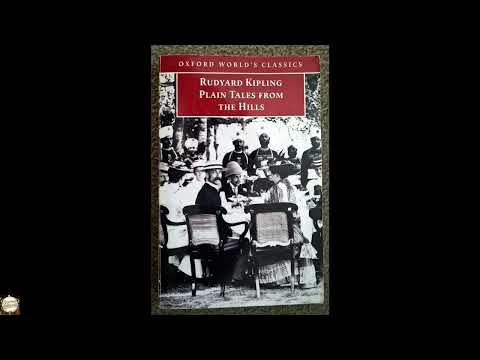
His journalistic assignments for the *Civil and Military Gazette* and *The Pioneer* saw him travel widely across the subcontinent, collecting the stories, dialects, and experiences that would soon make him famous. It was in India that he found his literary voice, first publishing collections of verse and short fiction. His breakthrough came with *Plain Tales from the Hills* in 1888, a collection of keen observations and humorous, sometimes poignant, narratives about Anglo-Indian life. These tales, with their vivid characters and sharp wit, quickly garnered attention in both India and Britain. Relocating to London, Kipling entered the bustling late-Victorian literary world as a fresh, powerful voice, injecting a sense of imperial adventure and a direct, unvarnished style into English letters.
Kipling's prolific output spanned novels, short stories, and poetry, often bringing the distant corners of the British Empire directly to his readers. *The Jungle Book*, published in 1894, introduced the enduring character of Mowgli, a human boy raised by wolves, and articulated the universal "Law of the Jungle." Two years later, *Captains Courageous* told the story of a spoiled American heir washed overboard and rescued by a fishing schooner, forcing him to learn the values of hard work and self-reliance. His novel *Kim*, from 1901, follows an orphaned Irish boy in India who becomes involved in espionage for the British during the "Great Game." For younger readers, the *Just So Stories*, released in 1902, offered whimsical explanations for animal characteristics and natural phenomena. His poetic collections, such as *Barrack-Room Ballads*, provided a raw, rhythmic voice for the common British soldier.
Kipling’s writing distinguishes itself through its vigorous narrative pace, precise detail, and a remarkable facility for capturing various speech patterns and dialects, whether the clipped tones of British officers or the lilting accents of Indian villagers. Recurring themes in his work often grappled with the responsibilities of empire, the codes of conduct—both human and animal—and the stark realities of life on the fringes of civilization. He frequently presented idealized notions of duty, service, and sacrifice. For instance, in *The Jungle Book*, the "Law of the Jungle" provides a strict moral and social framework, governing every creature’s actions and survival, reflecting Kipling's belief in the necessity of order and adherence to established rules, even in the wild. His keen eye for the technical details of ships, machinery, or military life lent his stories an authenticity that captivated audiences.
Recognized for his powerful prose and verse, Kipling was awarded the Nobel Prize in Literature in 1907, becoming the first English-language recipient of the honor. His immense popularity during his lifetime, however, was later complicated by shifting attitudes towards imperialism, with his fervent support for the British Empire drawing considerable criticism. Despite these controversies, his influence on subsequent generations of writers, particularly in the genres of adventure, children's literature, and the short story, remains undeniable. He carved out a unique space in literary history, serving as both a chronicler and a moralist of the imperial age, and his ability to tell a compelling story, whether for adults or children, ensured his enduring presence.
Rudyard Kipling’s distinctive voice, whether recounting fables or the stark realities of empire, continues to resonate, waiting to be rediscovered as a free audiobook today.
More on Wikipedia →