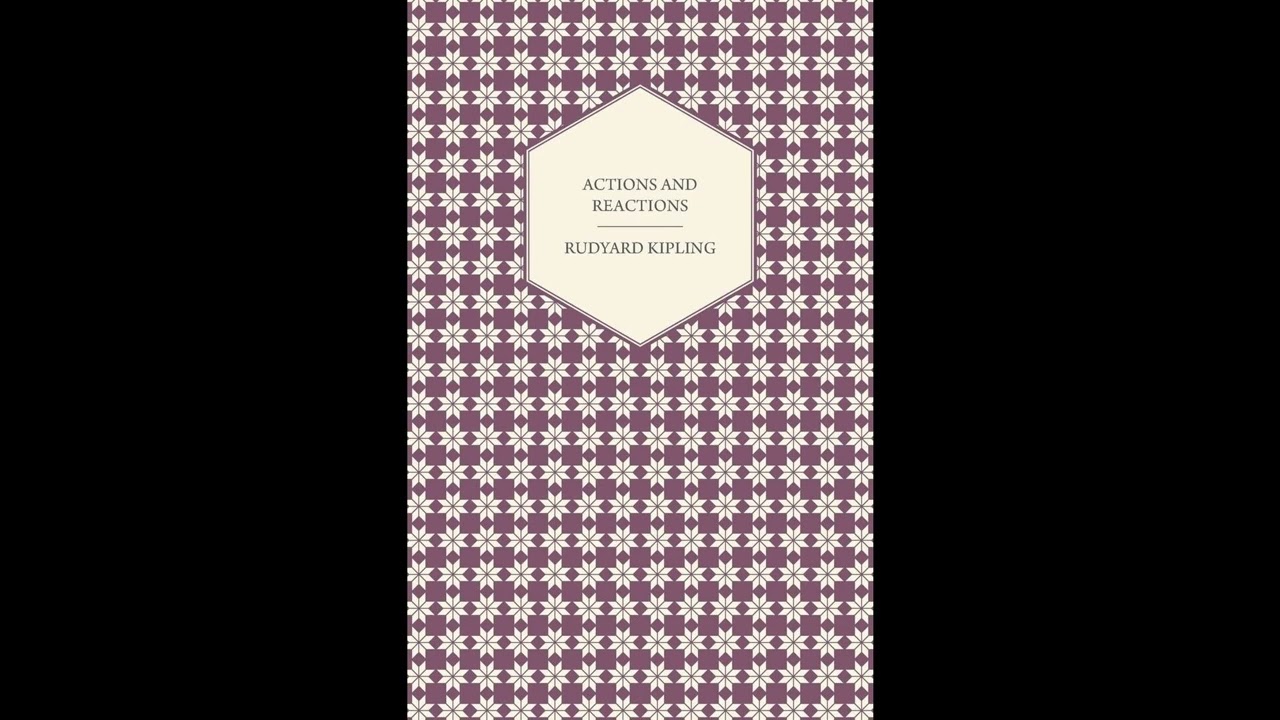
Actions and Reactions
Rudyard Kipling's "Actions and Reactions" stands as a testament to the enduring human fascination with cause and effect, a collection that probes the inevitable consequences of our choices, both grand and minute. Far from being a mere relic of its era, this assembly of stories and poems delves into the very fabric of human behavior, presenting scenarios where individual motivations ripple outward, altering lives and circumstances in unexpected ways. It is a work that challenges us to consider our own accountability and the unseen forces at play in our daily existence, inviting reflection on the perpetual interplay between what we do and what returns to us. This varied collection transports the listener across a wide canvas of settings and experiences, from the sun-drenched plains of colonial India to the quiet, rolling hills of rural England, and even into the bustling, innovative laboratories of early 20th-century science. We encounter a diverse cast of characters: the steadfast engineer wrestling with a moral dilemma, the seasoned soldier grappling with the psychological scars of conflict, the determined inventor pushing the boundaries of technology, and the everyday people whose lives are subtly but fundamentally altered by events beyond their immediate control. Kipling masterfully crafts vignettes where human ingenuity often collides with unforeseen natural forces or the limitations of human understanding. Within these pages, a story might feature a dedicated medical professional uncovering a bizarre, almost supernatural ailment, or a group of engineers striving to master a challenging landscape, only to find their carefully laid plans met with unexpected resistance. Another tale might involve animals acting with uncanny wisdom, subtly commenting on the follies of their human counterparts, or a seemingly simple invention leading to complex social and personal ramifications. Each narrative, whether prose or poetry, functions as a distinct exploration of the central idea: that every action sets in motion a chain of reactions, often beyond the initial intent, shaping destinies in unforeseen ways and reminding us of the interconnectedness of all things. Rudyard Kipling, born Joseph Rudyard Kipling on December 30, 1865, in Bombay (now Mumbai), British India, was an author whose life was as rich and varied as his fiction. He spent his early childhood immersed in Indian culture and language before being sent to England for schooling, an experience that left a lasting impact on his sensibilities. He returned to India in 1882 to work as a journalist, and it was during this period that he began to produce the short stories and poems that would first bring him widespread acclaim, particularly the popular Plain Tales from the Hills. After marrying Caroline Balestier in 1892, Kipling moved to her family's estate in Vermont, USA, where he penned some of his most beloved works, including The Jungle Book and Captains Courageous. The tragic loss of his eldest daughter, Josephine, in 1899 led him and his family to return to England, eventually settling in Sussex. Kipling became the first English-language writer to be awarded the Nobel Prize in Literature in 1907, an acknowledgment of his exceptional narrative gifts and his innovative use of language. His literary legacy also includes the epic novel Kim and the whimsical Just So Stories, cementing his position as a prolific and influential figure whose work spanned adventure, children's literature, and deep psychological studies. One prominent theme threading through "Actions and Reactions" is the inescapable law of consequences, often presented with an almost karmic precision. A tale might illustrate how a character’s small act of kindness, perhaps a brief moment of compassion shown to a stranger, returns years later in an entirely unexpected form, subtly altering their fate. Conversely, a story could show how a deliberate deception or a calculated act of cruelty, regardless of its immediate success, ultimately unravels, bringing about a fitting, if often ironic, retribution. This collection consistently underscores the notion that the universe has a way of balancing the scales, demonstrating that intent and outcome are often less connected than we might assume. Another recurring idea is the complex relationship between humanity and the natural world, along with the burgeoning impact of technology. Kipling often shows how human endeavors, whether they be grand engineering projects or scientific breakthroughs, are subject to the caprices of nature, or how animals, in their instinctual wisdom, sometimes understand the rhythms of life more profoundly than their human counterparts. In several narratives, the introduction of a new invention or a scientific discovery serves as a catalyst, revealing unforeseen ethical dilemmas or disrupting established social orders, forcing characters to confront the broader implications of progress. "Actions and Reactions" was published in 1909, a period known as the Edwardian era in Britain, marking the twilight years of the vast British Empire. It was a time of immense social change, rapid industrial expansion, and burgeoning scientific innovation, yet also one tinged with growing international anxieties that would soon erupt into the First World War. Kipling, as a voice of his time, often reflected the prevailing attitudes towards empire—its perceived duties, its moral complexities, and the burdens it placed on those who served it. His writing emerged from a world grappling with the implications of globalization, technological advancement, and the shifting dynamics of power, making his observations on human nature and the forces of change particularly resonant. Listening to this collection as an audiobook offers a unique gateway into Kipling’s meticulously constructed worlds. A skilled narrator breathes life into the diverse range of characters, from the gruff, world-weary soldier to the precise, intellectual scientist, rendering each voice with a distinct authenticity. The run length, several hours in total, makes it an ideal companion for extended commutes, quiet afternoons, or focused listening sessions, allowing the listener to fully immerse themselves in the unfolding narratives. Pay attention to the nuanced pacing, which shifts effortlessly from moments of intense action and urgent dialogue to more reflective, descriptive passages, building a rich atmosphere that transports you directly into the heart of Kipling’s vividly imagined settings.
Enjoyed Actions and Reactions? A few ways to support us
Audible & Amazon links are affiliate; we may earn a small commission at no extra cost.
About this production
Human narration by a volunteer reader from LibriVox.org, the public-domain audiobook project. LibriVox volunteers record literary works whose copyright has expired in the United States, releasing the resulting recordings into the public domain.
Actions and Reactions by Rudyard Kipling. The underlying text is in the U.S. public domain. We do not republish any modern copyrighted edition, translation, or commentary.
The 4K cinematic visuals accompanying this audiobook are generated by an AI image model from prompts derived from the source text. No copyrighted photos, paintings, or stock footage are used. AI generation is disclosed on every video on our YouTube channel as required by YouTube's altered/synthetic content policy.
English subtitles are transcribed from the LibriVox recording with OpenAI Whisper. Translations into the 11 other supported languages are produced by Meta's NLLB-200 neural translation model. No human translator's copyrighted translation is used.
Questions about sourcing or rights? See our DMCA & Sourcing policy or contact us.
Enjoyed this audiobook?
If you'd like to own a copy of Actions and Reactions or hear a professionally produced edition, the links below help support free audiobook production at no extra cost to you.
As an Amazon Associate we earn from qualifying purchases. Audible / print links are affiliate.