Kim
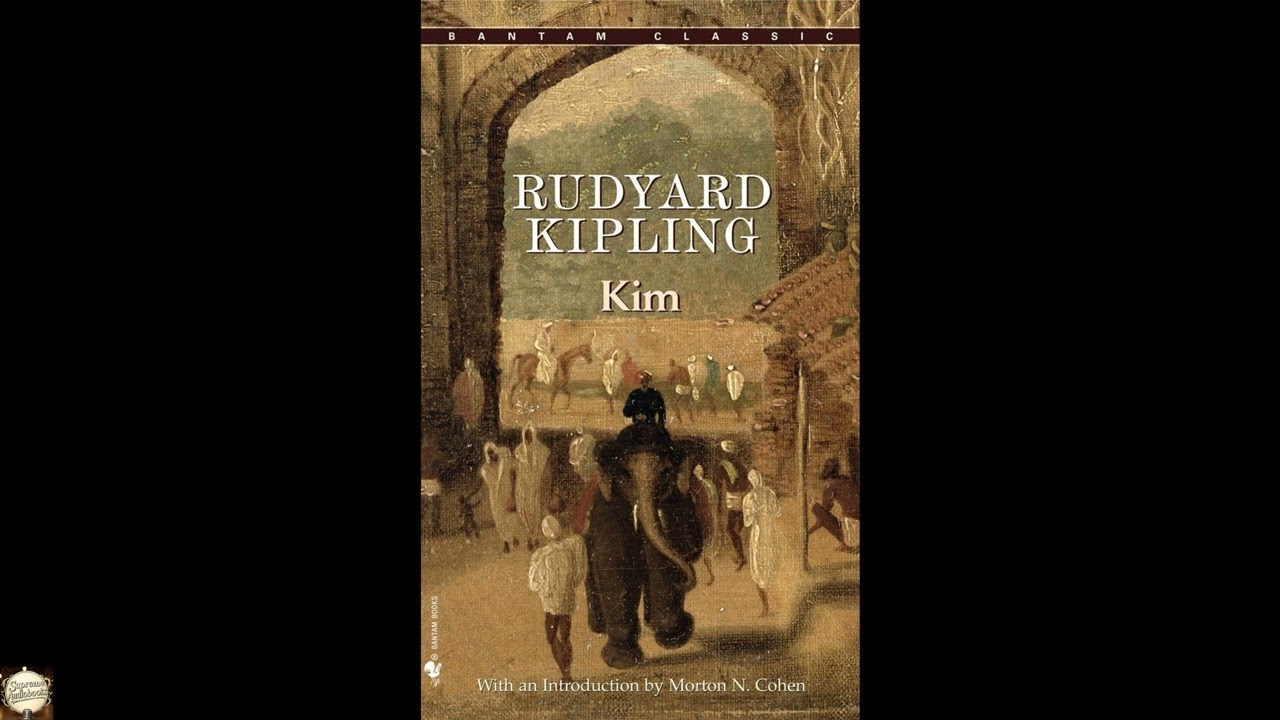
Rudyard Kipling’s Kim unfurls as a grand, sweeping narrative, a coming-of-age story set against the magnificent, bewildering canvas of British India at the turn of the twentieth century. It’s an adventure novel, a spy thriller, and a profound meditation on identity, belonging, and the spiritual quest, all wrapped into the saga of a young boy navigating a complex, ever-shifting world. For today’s listener, the novel offers a vivid, often unsettling, look at a clash of cultures, a youthful search for self amidst geopolitical machinations, and the enduring human desire for purpose, making its themes resonate long after the final chapter. The story introduces Kimball O’Hara, known simply as Kim, a homeless Irish orphan who has grown up on the streets and in the bazaars of Lahore, speaking the local dialects, fluent in the customs of India, and passing almost entirely as a native boy. His early life is a testament to his quick wit, his adaptability, and an almost preternatural ability to observe and blend in. One day, while begging near the Lahore Museum, Kim encounters an elderly Tibetan lama, a holy man on a spiritual search for a mythical River of the Arrow, believed to wash away sin. Drawn by the lama’s serene presence and a sense of destiny, Kim becomes his chela, or disciple, and they begin a seemingly aimless pilgrimage along the Grand Trunk Road, the ancient artery of India. This journey forms the backbone of the narrative, taking them through a dazzling array of landscapes, peoples, and social strata, from bustling cities to remote villages. Along the way, Kim’s intelligence and uncanny abilities catch the attention of Mahbub Ali, a horse trader who is secretly a spymaster for the British intelligence service, and later, Colonel Creighton, a British officer. They recognize in Kim a natural asset for the "Great Game"—the ongoing, clandestine intelligence war between the British Empire and Imperial Russia for influence in Central Asia. Kim finds himself pulled between these two vastly different worlds: the spiritual path with the lama, which promises peace and enlightenment, and the thrilling, dangerous world of espionage, which offers purpose, belonging, and a chance to assert his keen intellect. He is sent to a prestigious English school at the expense of his new patrons, educated in the ways of his own race, yet he frequently escapes back to his Indian life and his mentor, the lama. The story follows his training, his first assignments, and his growing understanding of the stakes involved in the Great Game, all while wrestling with his dual heritage. As he matures, Kim’s role in the intelligence network deepens, requiring him to employ his unique skills in observation, disguise, and language to gather information, deliver messages, and counteract enemy agents, without ever betraying the trust of his beloved lama. The author, Rudyard Kipling, was born in Bombay (now Mumbai), India, in 1865, to English parents. His early years, steeped in the sights, sounds, and languages of India, profoundly shaped his worldview and his literary output. At the age of five, he was sent to England for an education, an experience he later described as harsh and isolating. He returned to India in 1882, working as a journalist for various newspapers. This period allowed him to travel widely across the subcontinent, collecting the observations and anecdotes that would populate his numerous stories, poems, and novels. His initial collections, such as Plain Tales from the Hills (1888), quickly garnered him international recognition for his vivid descriptions of colonial life and his sympathetic portrayals of both British and Indian characters. Kipling’s literary ascent was meteoric. He became one of the most popular writers in the English-speaking world, celebrated for his storytelling prowess and his ability to capture the spirit of empire. His other notable works include The Jungle Book (1894), a collection of fables about a boy raised by wolves, and poems like "Gunga Din" and "If—." In 1907, he was awarded the Nobel Prize in Literature, becoming the first English-language writer and the youngest person ever to receive the honor. Throughout his life, Kipling remained a staunch advocate of the British Empire, a stance that has made his legacy complex and often controversial in later assessments, yet his work continues to be read for its literary merit, its historical insights, and its compelling narratives. He passed away in 1936, leaving behind a body of work that continues to provoke discussion and admiration. One of the central ideas in Kim revolves around the complex nature of identity. Kim, an orphan of Irish descent raised as an Indian boy, struggles with where he truly belongs. He is "Little Friend of all the World," capable of moving between British cantonments and crowded bazaars, between English-speaking officers and local villagers, adapting his speech and mannerisms to each setting. This duality is not merely a survival mechanism; it represents a genuine tension within him, a constant negotiation of his heritage versus his lived experience. For instance, his interactions with the British military men reveal a keen intelligence that could serve the empire, while his bond with the lama speaks to a spiritual yearning rooted in the land and its traditions. Another significant idea concerns colonialism and the "Great Game." The book serves as a remarkable literary document of the British Raj and the geopolitical struggles that underpinned it. Kipling details the vast machinery of empire—its railways, its bureaucracy, its military presence—but also the subtle, shadow war being waged for control of Asia. Through Kim's eyes, we witness the mechanics of intelligence gathering, the disguises, the coded messages, and the constant vigilance required to maintain power. The story uses specific scenes, like Kim’s clever deciphering of an enemy agent’s message hidden in a necklace, to show the practical, everyday manifestations of imperial power and its defense, illustrating the precarious balance between control and resistance. When Kim was published in 1901, the British Empire was at the zenith of its power, and India was often called the "Jewel in the Crown." The Victorian era had just ended, and the Edwardian period was beginning, marked by continued imperial confidence but also nascent anxieties about rival powers and the stirrings of anti-colonial sentiment. The "Great Game," though technically unofficial, was a very real and widely understood rivalry between Britain and Russia over Central Asian territories, fueled by fears of Russian encroachment on India. Kipling, having lived and worked in India, possessed an unparalleled perspective on this world. His writings often reflected the prevailing attitudes of the time—a belief in the civilizing mission of the British, combined with a deep, if sometimes patronizing, affection for India and its people. The novel emerged as a literary reflection of this era, providing readers with both thrilling adventure and an authentic, if biased, window into the complex social and political fabric of colonial India. Listening to Kim as an audiobook offers an unparalleled entry into its world. The sheer sensory richness of Kipling's prose, his meticulous descriptions of sights, sounds, and smells—the clamor of the bazaar, the chanting of the lama, the rumble of the train, the dust and heat of the road—truly comes alive through skilled narration. The story's several hours of run time allow the listener to fully sink into the rhythm of the journey, to appreciate the gradual unfolding of Kim's character and the intricate details of the Great Game. A good narrator can distinguish the myriad voices and accents, from the earnest tones of the lama to the gruff pronouncements of Mahbub Ali, the clipped English of the officers, and the vibrant patois of the Indian populace. This acoustic experience helps to convey the book’s atmospheric density and the cultural contrasts that are so fundamental to its enduring appeal, allowing one to savor the vast, changing landscapes and the profound human connections at its heart.
Enjoyed Kim? A few ways to support us
Audible & Amazon links are affiliate; we may earn a small commission at no extra cost.
About this production
Human narration by a volunteer reader from LibriVox.org, the public-domain audiobook project. LibriVox volunteers record literary works whose copyright has expired in the United States, releasing the resulting recordings into the public domain.
Kim by Rudyard Kipling. The underlying text is in the U.S. public domain. We do not republish any modern copyrighted edition, translation, or commentary.
The 4K cinematic visuals accompanying this audiobook are generated by an AI image model from prompts derived from the source text. No copyrighted photos, paintings, or stock footage are used. AI generation is disclosed on every video on our YouTube channel as required by YouTube's altered/synthetic content policy.
English subtitles are transcribed from the LibriVox recording with OpenAI Whisper. Translations into the 11 other supported languages are produced by Meta's NLLB-200 neural translation model. No human translator's copyrighted translation is used.
Questions about sourcing or rights? See our DMCA & Sourcing policy or contact us.
Enjoyed this audiobook?
If you'd like to own a copy of Kim or hear a professionally produced edition, the links below help support free audiobook production at no extra cost to you.
As an Amazon Associate we earn from qualifying purchases. Audible / print links are affiliate.