The Light That Failed
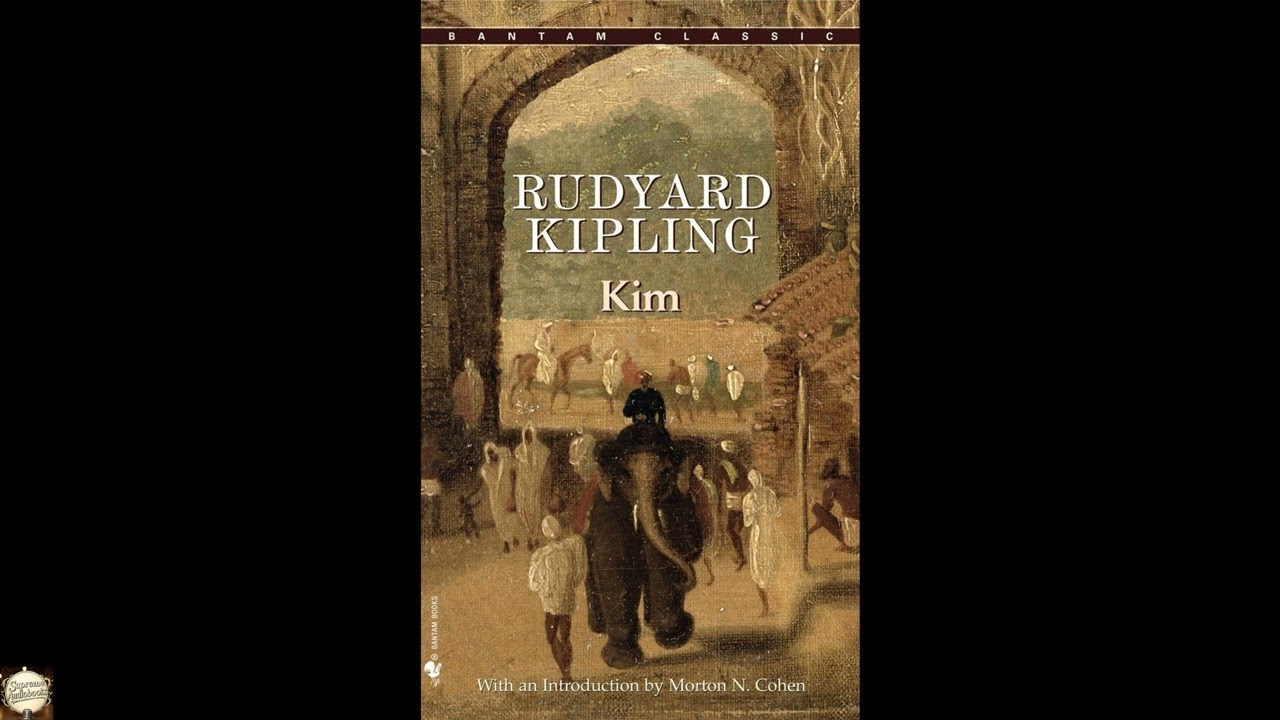
Step into the raw, unvarnished world of Rudyard Kipling’s The Light That Failed, a powerful and often unsparing early novel that peels back the layers of artistic ambition, the complexities of love, and the crushing weight of disillusionment. Published in 1891, this story stands apart from Kipling's more celebrated tales of adventure and empire, offering instead a stark psychological drama that resonates with anyone who has pursued a passion, only to face obstacles both external and deeply personal. It is a story about the creative fire that drives us, the compromises we make, and the tragic fragility of human connection, making it profoundly relevant for listeners seeking to understand the struggles inherent in forging a life of purpose amidst an indifferent world. The narrative centers on Dick Heldar, a talented war artist whose early life is marked by a shared, albeit fragile, connection with Maisie, a kindred spirit and fellow aspiring painter. Their childhood friendship, set against a backdrop of neglect and the harsh realities of orphanhood, fosters a bond that Dick mistakes for an unbreakable promise of future happiness and creative partnership. As adults, their paths diverge: Dick makes a name for himself documenting military campaigns in the scorching deserts of Sudan, capturing the grim realities of conflict with unflinching honesty, while Maisie pursues her artistic studies in London, striving for a more conventional success. Dick’s experiences in the field forge him into a man of action and keen observation, but also leave him with a restless spirit and an often-blunt manner ill-suited for polite society. Upon returning to London a celebrated figure, Dick yearns to transcend his reputation as a mere war reporter and prove himself a serious artist, capable of painting truly great works. His most ambitious project, a painting depicting a charging cavalry regiment, becomes his obsession. This period also sees a tentative rekindling of his relationship with Maisie, though it soon becomes apparent that their dreams and emotional capacities are vastly different. Maisie, driven by her own artistic aspirations, remains emotionally distant, unwilling to surrender her independence or meet Dick's fervent affection with equal intensity. Complicating Dick's personal and professional life is the unexpected and terrifying onset of blindness, a direct consequence of an old war injury, which threatens to extinguish his artistic future entirely. His closest companion through these trials is Torpenhow, a pragmatic war correspondent who offers a grounded, loyal friendship that stands in stark contrast to Maisie's wavering affections and the superficiality of the London art scene. Dick finds a different kind of solace, albeit fleeting, in Bess, a working-class woman who poses for him and offers a simple, unjudgmental companionship distinct from the intellectual and emotional demands of Maisie. Rudyard Kipling, born in Bombay, British India in 1865, possessed a remarkable and often contradictory voice that captured the spirit of his age. Sent to England for schooling at a young age, a period he later characterized as one of great hardship, he returned to India in 1882 to work as a journalist, where he began writing the short stories and poems that would first bring him recognition. His early works, such as Plain Tales from the Hills and Barrack-Room Ballads, depicted the lives of soldiers and colonial administrators with a vividness and authenticity that captivated readers. Kipling relocated to London in 1889, quickly ascending to literary stardom. He became a prolific author of novels, short stories, and verse, often championing the ideals of the British Empire while simultaneously offering nuanced observations of its inhabitants and the lands it governed. His later celebrated works include The Jungle Book, a collection of fables that reimagined ancient narratives for a new generation, and Kim, a sprawling adventure novel set in India that remains a cornerstone of English literature. In 1907, Kipling became the first English-language author to receive the Nobel Prize in Literature, an acknowledgment of his unique storytelling prowess and his powerful command of language. He passed away in 1936, leaving behind a legacy that continues to provoke discussion and admiration for its scope and artistry. The Light That Failed enacts several profound themes that resonate beyond its specific historical moment. One central theme is the consuming nature of artistic creation and its inherent perils. Dick Heldar’s drive to produce his vision, particularly his grand painting, becomes an all-encompassing force, highlighting the mental and physical sacrifices demanded by genuine artistic ambition. His declining eyesight serves as a brutal, concrete example of the vulnerability of the artist, whose very means of expression can be suddenly, tragically snatched away. The novel further illustrates the painful reality of unrequited love and the deep disillusionment it can engender. Dick's passionate devotion to Maisie is met with her detached ambition and a lack of emotional reciprocity, demonstrating how profoundly mismatched expectations can lead to personal devastation. Her inability to truly see or understand his inner world – for instance, her conventional critiques of his war paintings – underscores the chasm between them. A third significant theme is the steadfastness of true friendship against the backdrop of romantic disappointment. Torpenhow's unwavering loyalty to Dick, particularly in his darkest hours, stands as a testament to the power of platonic bonds. His willingness to offer practical assistance and emotional support, even when Dick becomes difficult and despairing, provides a powerful counterpoint to Maisie's conditional affection. The novel also touches on the psychological impact of war, albeit indirectly. While not a battlefield narrative, Dick's past as a war artist has shaped his sensibilities and physical being, with the injury that causes his blindness serving as a constant reminder of the price of his experiences, showing how the echoes of conflict can linger and manifest in unexpected ways. When The Light That Failed was published in 1891, the British Empire stood at its zenith, and Kipling himself was emerging as one of its most prominent literary voices. This was a period when themes of duty, empire, and masculinity were widely discussed and celebrated in literature, often with a romanticized view of colonial endeavor. However, Kipling, having spent his formative years in India and witnessed the realities of military life, also possessed a keen eye for the human cost and complexity beneath the grand imperial narrative. The artistic world of London was dynamic, with various movements vying for attention, from the remnants of Victorian idealism to the stirrings of realism and nascent modernism. The novel’s portrayal of the competitive London art scene, and Maisie’s struggle for recognition within it, reflects the societal constraints and burgeoning opportunities for women in the arts at the turn of the century. Kipling’s own experiences as a journalist and war correspondent provided the vivid detail for Dick’s military past, lending an authenticity to the novel's depiction of a soldier-turned-artist. The book emerged as Kipling started to broaden his scope beyond purely Indian subjects, allowing him to examine universal themes of love, loss, and artistic struggle through a more introspective lens, hinting at the psychological depth he would bring to later works. Listening to The Light That Failed as an audiobook offers an opportunity to immerse oneself deeply in Kipling's prose and the tumultuous inner life of his protagonist. A skilled narrator can bring out the searing emotion in Dick's despair, the subtle yet crucial nuances in Maisie's guarded responses, and the sturdy, anchoring presence of Torpenhow. The run length of several hours makes this an ideal companion for extended listening sessions, allowing for a sustained focus on the unfolding drama and Kipling's descriptive power. Listeners will find the pacing shifts effectively between moments of intense action—like the vivid glimpses of war—and periods of quiet, agonizing introspection, with the narrator's voice guiding these transitions. The distinct voices given to Kipling's sharp dialogue, from the boisterous exchanges between male friends to the more reserved interactions between Dick and Maisie, will enhance the characters’ personalities and the novel’s atmosphere, transporting you from the dusty fields of Sudan to the gas-lit studios of late Victorian London.
Enjoyed The Light That Failed? A few ways to support us
Audible & Amazon links are affiliate; we may earn a small commission at no extra cost.
About this production
Human narration by a volunteer reader from LibriVox.org, the public-domain audiobook project. LibriVox volunteers record literary works whose copyright has expired in the United States, releasing the resulting recordings into the public domain.
The Light That Failed by Rudyard Kipling. The underlying text is in the U.S. public domain. We do not republish any modern copyrighted edition, translation, or commentary.
The 4K cinematic visuals accompanying this audiobook are generated by an AI image model from prompts derived from the source text. No copyrighted photos, paintings, or stock footage are used. AI generation is disclosed on every video on our YouTube channel as required by YouTube's altered/synthetic content policy.
English subtitles are transcribed from the LibriVox recording with OpenAI Whisper. Translations into the 11 other supported languages are produced by Meta's NLLB-200 neural translation model. No human translator's copyrighted translation is used.
Questions about sourcing or rights? See our DMCA & Sourcing policy or contact us.
Enjoyed this audiobook?
If you'd like to own a copy of The Light That Failed or hear a professionally produced edition, the links below help support free audiobook production at no extra cost to you.
As an Amazon Associate we earn from qualifying purchases. Audible / print links are affiliate.