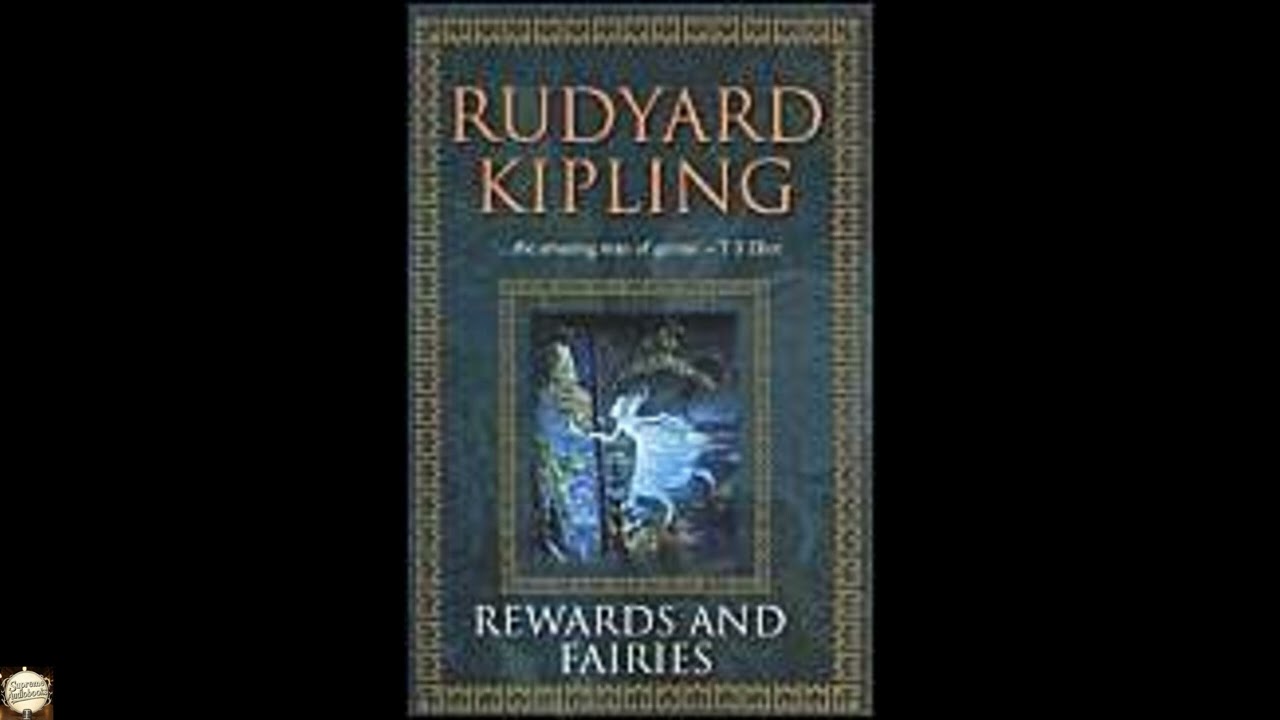
Rewards And Fairies
Rudyard Kipling’s Rewards And Fairies offers listeners a unique entry point into the enduring magic of history and folklore, presented through the innocent eyes of children. This collection of linked stories, serving as a companion to Puck of Pook’s Hill, stands as a testament to Kipling’s belief that the past is never truly gone, but merely sleeps beneath the surface of the present, ready to be awakened by a touch of magic or a willing imagination. More than a simple set of tales, it is an invitation to view the world with a sense of wonder, to understand how the strata of ages have shaped the ground we walk on and the spirit of a nation. For anyone fascinated by the intertwining of myth, legend, and historical narrative, or simply seeking prose that can transport them to another time and mindset, this book holds a special resonance even today. It reminds us that our personal narratives are often just echoes of much older, grander ones. The narratives begin in the idyllic rural landscape of early twentieth-century Sussex, England, where two children, Dan and Una, live a seemingly ordinary life. Their world shifts when they stumble upon a small, ancient mound on their property and, by chance, summon Puck, the mischievous spirit of English folklore—the very last remaining native inhabitant of the land. Puck, a whimsical and sometimes stern guardian of the English countryside, bestows upon them the gift of seeing and interacting with figures from history, provided these figures are also connected to the land. Through Puck’s unique magic, Dan and Una become privy to stories told directly by people from various eras, from Roman centurions and Norman knights to Elizabethan courtiers and Georgian smugglers. Each encounter forms a distinct story, weaving together the lives of these historical personages with the children’s contemporary observations. They meet characters such as the courageous Sir Richard Dalyngridge, a Norman knight grappling with loyalty and identity, and Kadmiel, a Jewish moneylender who shares a chilling tale of ancient revenge and the power of a hidden treasure. Later, they come face to face with the legendary Queen Elizabeth I, observing her political cunning and personal vulnerabilities, and even catch a glimpse of Napoleon Bonaparte himself as he contemplates invading England. The overarching arc isn't a single dramatic conflict, but rather the children's expanding consciousness, their gradual comprehension of the deep historical roots of their own land, and the continuity of human experience across centuries. They learn that the everyday fields and woods around their home are steeped in the events that shaped England. The author, Joseph Rudyard Kipling, was born in Bombay (now Mumbai), India, in 1865, a vivid locale that profoundly influenced his early writing. His childhood, divided between the heat and scents of India and the often-harsh realities of Victorian English boarding schools, provided him with a unique perspective on both colonial life and the heart of the British Empire. After a return to India in his late teens to work as a journalist, Kipling quickly rose to prominence as a writer of short stories, poetry, and novels, showcasing a remarkable talent for storytelling and an uncanny ability to capture diverse voices and settings. His early collections, such as Plain Tales from the Hills, established him as a significant literary voice. Kipling’s literary output was prodigious and remarkably varied, encompassing children’s literature like The Jungle Book and Just So Stories, which have enchanted generations, alongside powerful novels such as Kim, often considered one of the greatest works of imperial fiction. A recipient of the Nobel Prize in Literature in 1907—the first English-language writer to achieve this honor—Kipling was a dominant figure in literature for several decades. Though his views on the British Empire have sparked considerable discussion and criticism over time, his technical skill, his innovative use of language, and his enduring narratives secure his place in the literary canon, making him one of the most widely read and influential authors of his era, before his passing in 1936. At its core, Rewards And Fairies powerfully articulates the persistence of history and memory, illustrating how the past is not merely a collection of dusty facts but a living force woven into the very fabric of the landscape and human consciousness. Through Puck’s magic, Dan and Una don't just learn about history; they witness it, experiencing the struggles, joys, and dilemmas of people from different epochs. For instance, the story of Sir Richard Dalyngridge shows how the legacy of the Norman Conquest lingered for centuries, not just in architecture but in the social fabric and individual identities of those living in England. The book also underscores the immense power of storytelling and imagination, presenting these not just as entertainment but as essential tools for understanding our world. Puck himself is the ultimate storyteller, his magic a conduit for narratives that transcend time, while Dan and Una’s capacity for belief allows these stories to unfold around them. Furthermore, a significant theme is the formation and unique character of English identity, presented through a lens that acknowledges its layered and often contradictory origins. Kipling paints a picture of England as a land built upon successive invasions, migrations, and cultural fusions, with each historical figure contributing a piece to the national mosaic. From Roman engineers to Saxon farmers, from Norman conquerors to Elizabethan statesmen, the narratives collectively build a complex sense of belonging to a continuous, evolving history, connecting the present-day children to a vast ancestral lineage. Finally, the collection highlights the profound wisdom that can be gained from a childhood perspective. Dan and Una's innocent questions and their unburdened observations often cut through the complexities of adult history, allowing for moments of profound insight and emotional connection with figures whose lives spanned millennia before their own. When Rewards And Fairies was published in 1910, Britain stood at the zenith of its global power, yet the early years of the Edwardian era also carried undercurrents of change and uncertainty that would soon erupt into the First World War. There was a prevailing sense of national pride and an intense interest in British history and folklore, often viewed through a nostalgic or even romanticized lens, as the nation grappled with rapid industrialization and social transformation. In the literary world, Kipling, though immensely popular, was somewhat of a transitional figure. His work often harked back to Victorian traditions of expansive storytelling and moral instruction, yet he also experimented with narrative voice and structure in ways that anticipated later developments in twentieth-century literature. The book emerged as part of a wider cultural conversation about what it meant to be English, grounding this identity not just in empire but in the ancient, often pagan, spirit of the land itself, reflecting a desire to reconnect with deep-seated national myths in a rapidly modernizing world. Listening to Rewards And Fairies as an audiobook offers a particularly rewarding experience, well-suited to Kipling's evocative prose and the tales' episodic structure. The narration itself becomes a crucial element, carrying the distinct voices of Puck—sometimes whimsical, sometimes ancient—and the diverse historical figures that emerge from the past. A skilled narrator can bring out the nuances in their speech, from the bluntness of a Roman soldier to the refined cadences of an Elizabethan lady, enriching the atmosphere of each story. The several hours of content make it an ideal companion for extended periods of listening, whether on a drive, during a long walk in the countryside, or simply for quiet evenings. Listen for the gentle, yet purposeful pacing, which allows the historical details to settle and the magical realism to take hold. The dialogue, often peppered with archaic phrases or regional accents, breathes life into the characters, and the overall atmosphere is one of learned wonder, making the listener a fellow traveler with Dan and Una through the hidden annals of England.
Enjoyed Rewards And Fairies? A few ways to support us
Audible & Amazon links are affiliate; we may earn a small commission at no extra cost.
About this production
Human narration by a volunteer reader from LibriVox.org, the public-domain audiobook project. LibriVox volunteers record literary works whose copyright has expired in the United States, releasing the resulting recordings into the public domain.
Rewards And Fairies by Rudyard Kipling. The underlying text is in the U.S. public domain. We do not republish any modern copyrighted edition, translation, or commentary.
The 4K cinematic visuals accompanying this audiobook are generated by an AI image model from prompts derived from the source text. No copyrighted photos, paintings, or stock footage are used. AI generation is disclosed on every video on our YouTube channel as required by YouTube's altered/synthetic content policy.
English subtitles are transcribed from the LibriVox recording with OpenAI Whisper. Translations into the 11 other supported languages are produced by Meta's NLLB-200 neural translation model. No human translator's copyrighted translation is used.
Questions about sourcing or rights? See our DMCA & Sourcing policy or contact us.
Enjoyed this audiobook?
If you'd like to own a copy of Rewards And Fairies or hear a professionally produced edition, the links below help support free audiobook production at no extra cost to you.
As an Amazon Associate we earn from qualifying purchases. Audible / print links are affiliate.