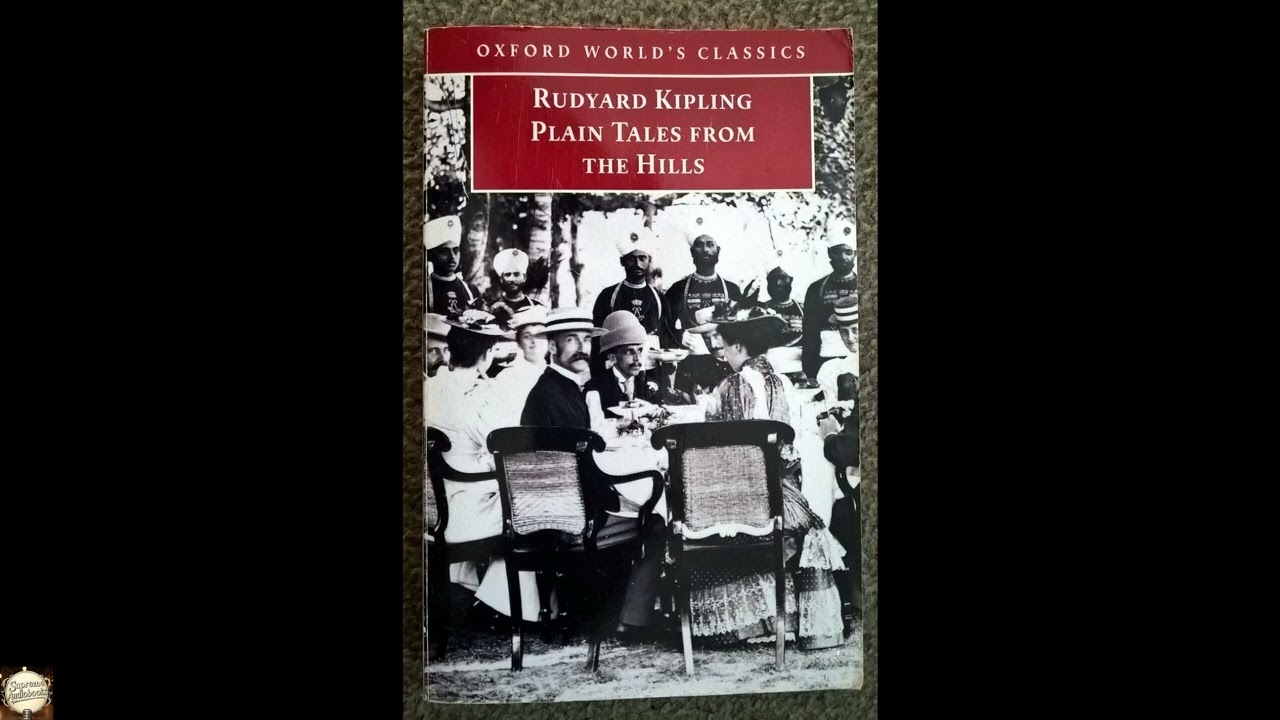
Plain Tales from the Hills
Rudyard Kipling's Plain Tales from the Hills is more than just a collection of short stories; it is a vivid, sometimes unsettling, portrait of a world long gone, yet one that still resonates with enduring questions about power, identity, and the human condition. Set against the sun-baked plains and cool hill stations of British colonial India in the late nineteenth century, these stories pull back the curtain on the lives of expatriates attempting to impose their will and culture on an ancient land. Why should a listener care today? Because Kipling, with his sharp eye and even sharper wit, captures the absurdities, the moral compromises, the hidden desires, and the sheer grit of individuals living far from home under extraordinary circumstances. It’s an essential text for understanding not only the mechanisms and mindsets of empire, but also the universal follies and strengths that reveal themselves when people are placed under pressure, whether social, political, or personal. The setting for these "plain tales" is primarily British India, a dominion known as the Raj, where a relatively small number of British administrators, soldiers, and their families governed a vast and populous subcontinent. While some stories descend to the dusty, hot plains, many unfold in Simla, the summer capital of the Raj, nestled in the Himalayan foothills. Here, in this cooler clime, the British attempted to recreate the social rituals and amusements of England, complete with gossip, dances, elaborate dinners, and often, simmering discontent. The "characters" are less a single ensemble and more a rotating cast of types: the hardened military officer, the ambitious civil servant, the bored memsahib, the new arrival fresh from England, and various Indian figures who move through the periphery or act as catalysts for the British characters' revelations. There is no singular plot arc spanning the collection, but rather a series of intensely observed vignettes. Each story presents a slice of life, a brief drama, or a revealing moment. Listeners will encounter stories of social maneuvering gone awry, of romantic entanglements and illicit affairs conducted under the ever-watchful eyes of the colonial society, and of the unique pressures faced by men and women far from their native shores. Some tales expose the quiet tragedies and profound loneliness that can accompany life in the tropics, while others offer biting satire of the pretensions and hypocrisies of the ruling class. We see the stiff upper lip failing, the rules of propriety bending, and sometimes, the raw humanity breaking through the rigid veneer of imperial duty. Without giving away any specific conclusions, these stories repeatedly demonstrate the sometimes-unintended consequences of cultural clash and the universal truths of ambition, fear, and desire. The author, Joseph Rudyard Kipling, was born in Bombay (now Mumbai), India, in 1865, a unique origin that fundamentally shaped his perspective. Sent back to England for schooling at a young age, a period he later described with considerable bitterness due to his experiences in foster care, he returned to India as a young man in 1882 to work as a journalist. It was during these formative years in Lahore and Simla, observing, reporting, and soaking in the atmosphere of the Raj, that he gathered the raw material for his early, hugely successful works. Plain Tales from the Hills was his first prose collection, published when he was still a young man working in India, and it catapulted him to literary fame. Kipling’s literary output was prodigious and varied. Beyond these early tales, he is remembered for the beloved children's stories of The Jungle Book and Just So Stories, the profound coming-of-age novel Kim, and countless poems, including "If—" and "Gunga Din." He became an ardent spokesman for the British Empire, a stance that has made his legacy complex and debated, yet his unparalleled ability to craft compelling narratives and his pioneering use of colloquial language and realism secured his place as a major literary figure. In 1907, he became the first English-language writer to be awarded the Nobel Prize in Literature, a testament to his undeniable impact on world letters. Several potent themes run through Plain Tales from the Hills, offering a lens through which to view not only colonial society but also broader human concerns. One prominent theme is the burden and moral complexities of Empire itself. Kipling frequently illustrates the immense effort and often thankless tasks undertaken by British administrators, soldiers, and engineers in maintaining order and infrastructure. In stories that touch on the justice system or public works, he shows the constant pressure of decision-making, where one man’s choice can affect thousands, often with limited understanding of local customs. Another key theme is human nature under extraordinary pressure. Removed from familiar surroundings and constrained by strict social codes, individuals often reveal unexpected facets of their personalities. We see examples of extreme loneliness manifesting in unusual ways, like a character becoming obsessed with a local superstition, or the casual cruelties born of boredom and unchecked authority among the expatriate community. Kipling's keen eye for social satire and the absurdities of human behavior also shines through. He skewers the rigid hierarchy, the endless gossip, and the pretensions of those trying to maintain a semblance of British decorum in a foreign land. A scene depicting an elaborate dinner party in Simla, where strict seating arrangements and precise social rituals are observed with almost religious fervor, despite the oppressive heat and the underlying anxieties of colonial life, exemplifies this. Finally, the theme of cultural encounter and difference is ever-present. While Kipling often presents the "Other" through the prevailing lens of his time, his stories nonetheless document the frequent misunderstandings and sometimes surprising moments of connection between British and Indian individuals, whether through a shared sense of humor, a moment of mutual respect, or the stark, unbridgeable gaps that separate their worlds. The cultural and political landscape of the late nineteenth century provides the crucial backdrop for Plain Tales from the Hills. This was the zenith of the British Empire, a period often characterized by a strong belief in the civilizing mission and the inherent superiority of Western culture. India, as the "Jewel in the Crown," represented the ultimate achievement of imperial power. Culturally, Victorian ideals of duty, morality, and progress were dominant, but underneath lay currents of social change, scientific advancement, and a growing fascination with the exotic. In the literary world, realism was gaining ground, moving away from romanticism to depict life as it truly was. Kipling, with his direct, often journalistic style and his focus on the lives of ordinary individuals living out the imperial project, emerged as a fresh and uniquely authoritative voice. His stories provided readers in England with a vivid, firsthand account of life on the edge of the empire, a perspective largely missing from more formal histories or travelogues, and satisfied a public appetite for tales of adventure and exotic lands. Listening to Plain Tales from the Hills as an audiobook offers a particularly rich and immediate experience. The episodic nature of the collection makes it ideal for listening in segments, perhaps during a commute or while pursuing other activities. Each story functions as a self-contained miniature world, allowing for deep immersion without the commitment of a continuous novel. A skilled narrator can bring to life Kipling's distinctive prose, giving voice to the myriad British and Indian characters, capturing the dry wit, the underlying pathos, and the unique rhythms of colonial speech. The subtle shifts in pacing, the dramatic build-ups, and the nuanced dialogue within these short works are perfectly suited for spoken interpretation, allowing the atmosphere of dusty garrisons, bustling bazaars, and hushed hill station drawing-rooms to truly envelop the listener. It's like having a master storyteller recount these "plain tales" directly to you, painting pictures with sound.
Enjoyed Plain Tales from the Hills? A few ways to support us
Audible & Amazon links are affiliate; we may earn a small commission at no extra cost.
About this production
Human narration by a volunteer reader from LibriVox.org, the public-domain audiobook project. LibriVox volunteers record literary works whose copyright has expired in the United States, releasing the resulting recordings into the public domain.
Plain Tales from the Hills by Rudyard Kipling. The underlying text is in the U.S. public domain. We do not republish any modern copyrighted edition, translation, or commentary.
The 4K cinematic visuals accompanying this audiobook are generated by an AI image model from prompts derived from the source text. No copyrighted photos, paintings, or stock footage are used. AI generation is disclosed on every video on our YouTube channel as required by YouTube's altered/synthetic content policy.
English subtitles are transcribed from the LibriVox recording with OpenAI Whisper. Translations into the 11 other supported languages are produced by Meta's NLLB-200 neural translation model. No human translator's copyrighted translation is used.
Questions about sourcing or rights? See our DMCA & Sourcing policy or contact us.
Enjoyed this audiobook?
If you'd like to own a copy of Plain Tales from the Hills or hear a professionally produced edition, the links below help support free audiobook production at no extra cost to you.
As an Amazon Associate we earn from qualifying purchases. Audible / print links are affiliate.