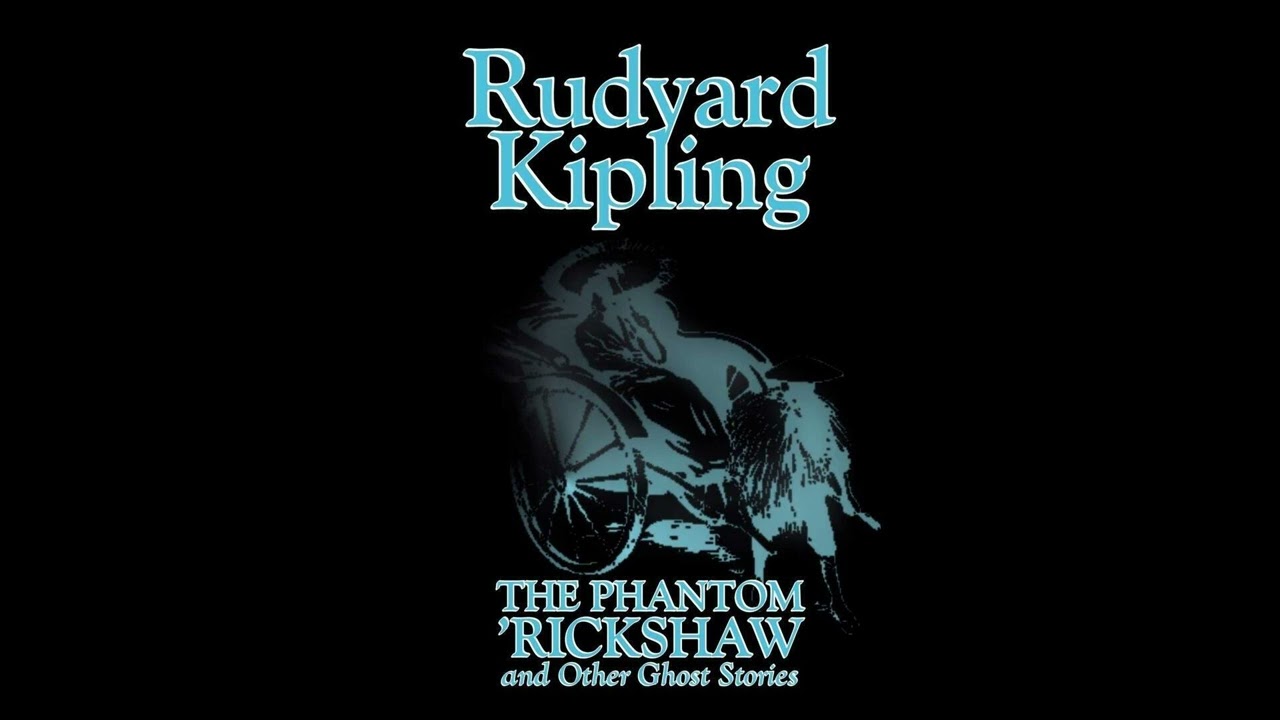
The Phantom 'rickshaw and Other Ghost Stories
Rudyard Kipling’s The Phantom 'rickshaw and Other Ghost Stories offers far more than simple tales of the supernatural; it is a chilling descent into the psychological anxieties and moral quandaries of British colonial life in late 19th-century India. This collection, a cornerstone of gothic and supernatural fiction, remains compelling today because it masterfully blends the exoticism of its setting with universal themes of guilt, justice, and the fragility of the human mind when confronted by the inexplicable. Kipling, renowned for his ability to convey the sounds, sights, and even the smells of the subcontinent, uses the spectral as a mirror, reflecting the hidden fears and unpunished transgressions lurking beneath the veneer of imperial order. Listeners will find themselves transported to a world where the rational gives way to the terrifyingly real, a world still capable of sending shivers down the spine. The collection's namesake story, "The Phantom 'rickshaw," introduces us to Jack Pansay, a British civil servant in colonial India, a man of conventional sensibilities who believes himself immune to the strange superstitions of the land. His life takes a dark turn when he cruelly breaks off an engagement with Agnes Keith-Wessington, a woman dependent on his affections and deeply wounded by his betrayal. Shortly after their separation, Agnes dies, but her presence lingers. Pansay begins to see her, dressed in a familiar white dress, being pulled in a phantom 'rickshaw by two ghostly servants, always appearing at his side, always following him. At first, he dismisses these apparitions as figments of his imagination, symptoms of stress, but their persistence and chilling reality chip away at his composure. As the story progresses, the phantom 'rickshaw becomes an inescapable feature of Pansay's life, visible only to him, yet profoundly altering his social interactions and mental stability. His attempts to confess his visions are met with disbelief or concern for his sanity, further isolating him. He struggles to maintain his professional facade and personal relationships while constantly haunted by Agnes's silent, reproachful presence. Other stories in the collection expand on this theme of the uncanny intrusion into colonial life, featuring haunted bungalows, mysterious disappearances, and the unsettling influence of ancient Indian lore on the British residents. Each narrative presents a unique confrontation between the pragmatic British worldview and the spectral forces that seem to emanate from the very soil of India, leaving characters and listeners alike questioning the boundaries of reality. Rudyard Kipling, born in Bombay (now Mumbai) in 1865, possessed a unique perspective shaped by his early years in India. Though sent to England for schooling at a young age, his return to India in 1882 as a journalist profoundly influenced his writing. He became an acute observer of both British and Indian society, developing a distinctive voice that captured the complexities of the British Raj. His experiences in Lahore and Allahabad, where he worked for local newspapers, provided him with a wealth of material and an intimate understanding of the daily lives of soldiers, administrators, and the diverse Indian populace. Kipling quickly rose to prominence, his short stories and poems gaining widespread recognition for their vividness and often controversial themes. Kipling’s prolific output during his lifetime – he died in 1936 – cemented his place as a towering figure in English literature. He was awarded the Nobel Prize in Literature in 1907, the first English-language writer to receive the honor. Beyond The Phantom 'rickshaw, his literary legacy includes enduring works such as The Jungle Book, a collection of fables with moral undertones often set in the Indian jungle; the epic novel Kim, which paints a detailed picture of India during the Great Game; and numerous poems, including "If—," which remains widely quoted. While his writings often celebrated the British Empire, his nuanced portrayals of characters and his deep appreciation for Indian culture make his work far more than mere propaganda, marking him as a complex and influential voice of his era. The stories in this collection resonate with several potent themes. Foremost is the idea of colonial guilt and its consequences. Kipling subtly suggests that the often-unseen moral transgressions committed by the British in India, particularly those involving exploitation or cultural insensitivity, can manifest in terrifying ways. Jack Pansay's callous abandonment of Agnes is not merely a personal failing but an act with broader implications, and her ghostly return represents a form of inescapable reckoning. The text frequently poses questions about the responsibility of the colonizer and the karmic retribution for misdeeds in a foreign land. Another significant theme is the clash between rationalism and the uncanny. British characters, steeped in Victorian scientific thought, initially attempt to rationalize the supernatural occurrences, attributing them to illness, delusion, or local superstition. Yet, the persistent, undeniable nature of the hauntings forces them to confront a reality that defies their logical frameworks. This conflict highlights the limits of empirical understanding and the pervasive power of ancient beliefs, especially within a land as steeped in mysticism as India. The psychological decay of characters like Pansay underscores how the human mind, even a supposedly resilient Western mind, can shatter when faced with forces it cannot comprehend or control. The stories also touch on justice and retribution, where the spectral serves as an instrument of a cosmic balance, ensuring that wrongs are not left unpunished, regardless of earthly law. When these stories were first published in 1888, the British Empire was at the zenith of its power, and India, the "Jewel in the Crown," was a vital part of its dominion. Culturally, there was a growing fascination with the supernatural, influenced by earlier gothic novels and the burgeoning spiritualism movement. However, Kipling’s tales introduced a distinct flavor to ghost stories, moving them beyond dusty European castles to the sun-baked landscapes and crowded cantonments of India. This period saw British expatriates living in a peculiar social bubble, often isolated from both home and the true pulse of Indian life, creating an environment ripe for psychological tension and the breakdown of conventional norms. The anxieties of maintaining imperial control, coupled with an underlying respect and fear of the 'native' unknown, provided fertile ground for stories where the land itself seemed to retaliate or bear witness to foreign intrusion. These tales emerged from a context where Victorian morality often clashed with the realities of life abroad, and the idea of unseen forces serving as a moral arbiter would have resonated deeply with readers grappling with the ethical implications of empire. Kipling's ability to blend the stark realism of Anglo-Indian life with genuinely chilling supernatural elements distinguished his work from his contemporaries and helped to define the genre for generations. Listening to The Phantom 'rickshaw and Other Ghost Stories as an audiobook offers an exceptionally immersive experience. The narrator's performance is crucial in conveying the precise atmosphere Kipling creates – the oppressive heat, the rustling of palm leaves, the hushed tension of the cantonment, and the growing dread in a character's voice. Over several hours, a skilled reader can modulate pacing to build suspense, allowing the listener to truly feel the slow, inevitable creep of the supernatural. The nuances of dialogue, the subtle shifts in tone that betray a character's unraveling sanity, and the distinct accents of the British officers and their Indian servants all come alive through vocal interpretation. The intimate nature of spoken narration enhances the psychological horror, making the phantom 'rickshaw's silent pursuit, or the eerie presence in a bungalow, feel incredibly immediate and personal, drawing listeners deep into Kipling's unsettling vision of colonial India.
Enjoyed The Phantom 'rickshaw and Other Ghost Stories? A few ways to support us
Audible & Amazon links are affiliate; we may earn a small commission at no extra cost.
About this production
Human narration by a volunteer reader from LibriVox.org, the public-domain audiobook project. LibriVox volunteers record literary works whose copyright has expired in the United States, releasing the resulting recordings into the public domain.
The Phantom 'rickshaw and Other Ghost Stories by Rudyard Kipling. The underlying text is in the U.S. public domain. We do not republish any modern copyrighted edition, translation, or commentary.
The 4K cinematic visuals accompanying this audiobook are generated by an AI image model from prompts derived from the source text. No copyrighted photos, paintings, or stock footage are used. AI generation is disclosed on every video on our YouTube channel as required by YouTube's altered/synthetic content policy.
English subtitles are transcribed from the LibriVox recording with OpenAI Whisper. Translations into the 11 other supported languages are produced by Meta's NLLB-200 neural translation model. No human translator's copyrighted translation is used.
Questions about sourcing or rights? See our DMCA & Sourcing policy or contact us.
Enjoyed this audiobook?
If you'd like to own a copy of The Phantom 'rickshaw and Other Ghost Stories or hear a professionally produced edition, the links below help support free audiobook production at no extra cost to you.
As an Amazon Associate we earn from qualifying purchases. Audible / print links are affiliate.