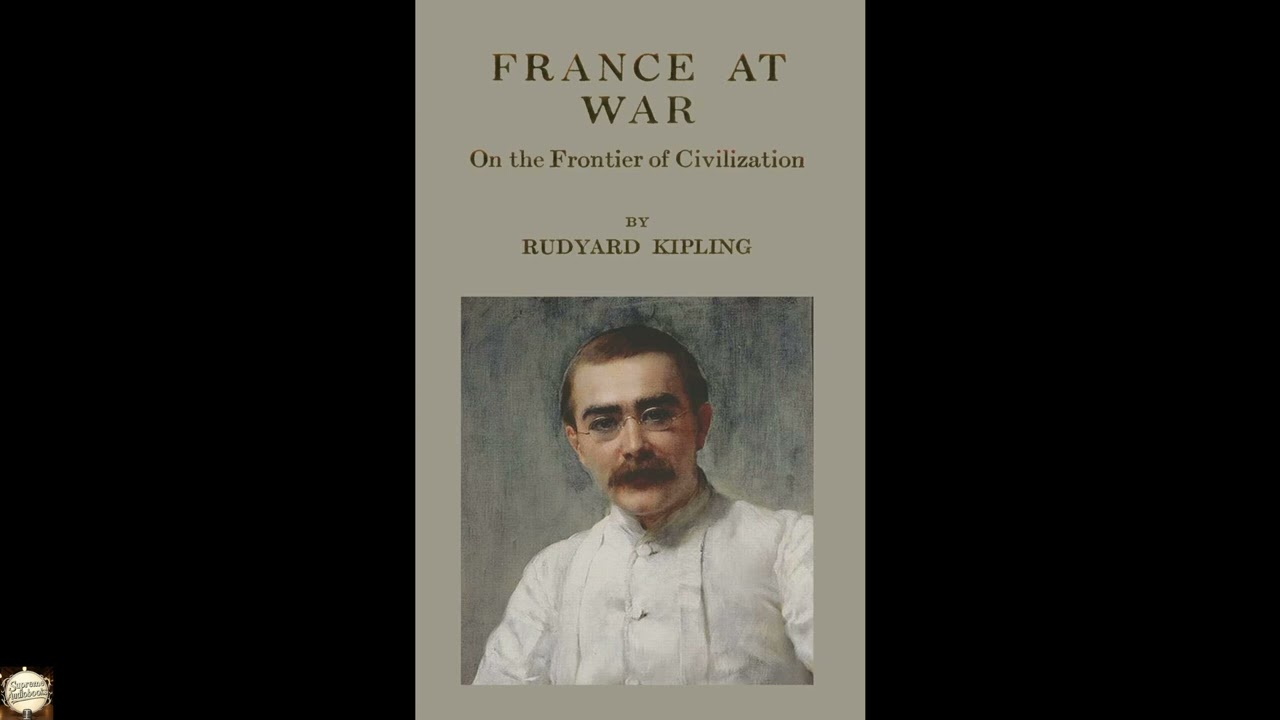
France At War: On the Frontier of Civilization
Step into a chronicle of profound national struggle, a narrative that paints France not merely as a geographic entity but as an idea forged in the crucible of conflict. "France At War: On the Frontier of Civilization" is more than a historical account; it is a foundational text, a resonant echo from a time when nations defined themselves on battlefields and through the steadfastness of their people. This compelling work, a recognized classic, reaches across centuries to speak to enduring questions of identity, survival, and the very meaning of culture when confronted by external threats. Its insights into courage, resilience, and the human cost of defending one's way of life hold powerful relevance for any age grappling with the preservation of values and sovereignty. The narrative unfolds across a panoramic canvas, transporting the listener to a France perennially engaged in the defense of its borders and its spirit. From the rugged passes of the Pyrenees to the windswept plains of the North, the story traces a nation in constant vigilance. It illustrates how the concept of "frontier" shifts and expands, encompassing not only physical boundaries but also the intellectual and moral limits against which civilization tests its resolve. The central conflict presents itself as a ceaseless tension between the forces that seek to impose their will upon France and the unyielding determination of its populace to maintain autonomy and cultural distinctiveness. We witness pivotal moments through the eyes of various figures – not necessarily named individuals, but archetypes: the stoic peasant defending ancestral lands, the resourceful general strategizing against overwhelming odds, the eloquent philosopher articulating the nation's ethos. The arc of the story details how these individual and collective struggles coalesce into the broader historical sweep of a nation repeatedly threatened but never truly broken. It depicts sieges, cavalry charges, and diplomatic maneuvers, but always with an underlying focus on the human element – the fear and resolve in a soldier's heart, the quiet suffering of families left behind, the surge of collective pride during moments of triumph. While specific campaigns and battles are recounted with vivid detail, the work largely avoids a triumphalist tone, instead emphasizing the persistent effort required to sustain a civilization against the tides of war and external pressure. It builds to a profound understanding of what it means for a people to stand united in the face of adversity, without offering a simplistic or definitive resolution to the ongoing historical challenges France has faced. The authorship of "France At War: On the Frontier of Civilization" remains a subject of considerable academic discussion. Emerging from a period when national identity was being vigorously asserted and documented, the work is often considered either a collective undertaking, reflecting the prevailing spirit of its time, or the product of an anonymous chronicler whose focus was entirely on the subject matter rather than personal recognition. This anonymity lends a singular weight to the text, allowing it to transcend individual perspective and become a voice for an entire nation. It stands as a powerful testament to the tradition of anonymous literature that shaped foundational historical narratives, where the collective memory and shared experience were paramount. The work likely circulated widely, influencing public perception and contributing to the national self-image during periods of intense geopolitical competition and internal consolidation. One of the book's compelling themes is the definition of civilization itself. Through numerous examples, it poses the question of what constitutes a "civilized" society, not merely in terms of artistic achievement or intellectual prowess, but in its capacity for ordered governance, humane conduct amidst chaos, and unwavering commitment to its foundational principles. A scene describing the meticulous preservation of a library during a siege, even as battle rages outside, powerfully illustrates this theme, showing that civilization is not just what one fights for, but also how one fights. Another prominent theme is national resilience. The narrative consistently highlights the indomitable spirit of the French people, depicting their ability to recover from devastation, adapt to new threats, and rebuild their society with unflagging determination. The repeated instances of agricultural communities quickly restoring their fields after the passage of armies, or cities swiftly re-establishing markets, stand as concrete examples of this profound resilience. The work also strongly enacts the theme of heroism and sacrifice, often presenting these not as grand, theatrical gestures, but as the quiet, persistent courage of ordinary individuals. The account of a small band of local militia holding a strategic bridge against a superior force, knowing their stand is likely futile but essential for a larger retreat, vividly shows this aspect. Finally, the narrative continually grapples with the cost of conflict, both human and material. It does not shy away from the brutal realities of war, depicting scenes of hardship, loss, and the disruption of daily life, ensuring the listener understands that the "frontier of civilization" is a place where lives are irrevocably altered and the price of defense is paid in profound ways. "France At War: On the Frontier of Civilization" emerged from an era characterized by fervent nationalism and a renewed interest in national histories and defining myths. It likely found its widest readership during the late 19th or early 20th century, a time when European powers were frequently engaged in imperial rivalries and the specter of large-scale conflict loomed. The work served a crucial purpose in such a climate: it reinforced a sense of shared heritage, validated past struggles, and articulated a vision of France as a cultural bastion worth defending at all costs. It spoke to a populace keen to understand their place in a rapidly changing world, offering a narrative that celebrated their historical legacy and inspired a unified national identity. Its genesis can be understood as a direct response to the need for a cohesive historical narrative that could bind a nation together through a shared understanding of its past challenges and triumphs. Listening to "France At War: On the Frontier of Civilization" as an audiobook offers an immersive experience that brings the sweeping narrative to life in a way reading alone cannot. The several hours of content allow for a deep engagement with the material, ideal for sustained listening during commutes, walks, or quiet evenings. A skilled narrator's voice can lend gravitas to the historical recounting, conveying the solemnity of sacrifice and the exhilaration of strategic victories. Listen for the subtle shifts in pacing – how the voice might quicken during descriptions of battle, then slow to a reflective tempo when considering the broader implications of conflict. The narration can enhance the atmospheric quality of the text, painting sonic pictures of bustling frontier towns, windswept battlefields, and hushed diplomatic chambers. The oratorical quality of certain passages, particularly those articulating national ideals, takes on a new power when delivered with practiced inflection, making the words resonate with a depth that underscores the enduring significance of this classic work.
Enjoyed France At War: On the Frontier of Civilization? A few ways to support us
Audible & Amazon links are affiliate; we may earn a small commission at no extra cost.
About this production
Human narration by a volunteer reader from LibriVox.org, the public-domain audiobook project. LibriVox volunteers record literary works whose copyright has expired in the United States, releasing the resulting recordings into the public domain.
France At War: On the Frontier of Civilization by Rudyard Kipling. The underlying text is in the U.S. public domain. We do not republish any modern copyrighted edition, translation, or commentary.
The 4K cinematic visuals accompanying this audiobook are generated by an AI image model from prompts derived from the source text. No copyrighted photos, paintings, or stock footage are used. AI generation is disclosed on every video on our YouTube channel as required by YouTube's altered/synthetic content policy.
English subtitles are transcribed from the LibriVox recording with OpenAI Whisper. Translations into the 11 other supported languages are produced by Meta's NLLB-200 neural translation model. No human translator's copyrighted translation is used.
Questions about sourcing or rights? See our DMCA & Sourcing policy or contact us.
Enjoyed this audiobook?
If you'd like to own a copy of France At War: On the Frontier of Civilization or hear a professionally produced edition, the links below help support free audiobook production at no extra cost to you.
As an Amazon Associate we earn from qualifying purchases. Audible / print links are affiliate.
More by Rudyard Kipling


More Audiobooks


Army Boys in the French Trenches: Or, Hand to Hand Fighting with the Enemy

Crusaders of New France - A Chronicle of the Fleur-de-Lis in the Wilderness - Chroni- Full Audiobook
Paris War Days (Diary of an American)
Chateau And Country Life In France