The Prisoner of Zenda
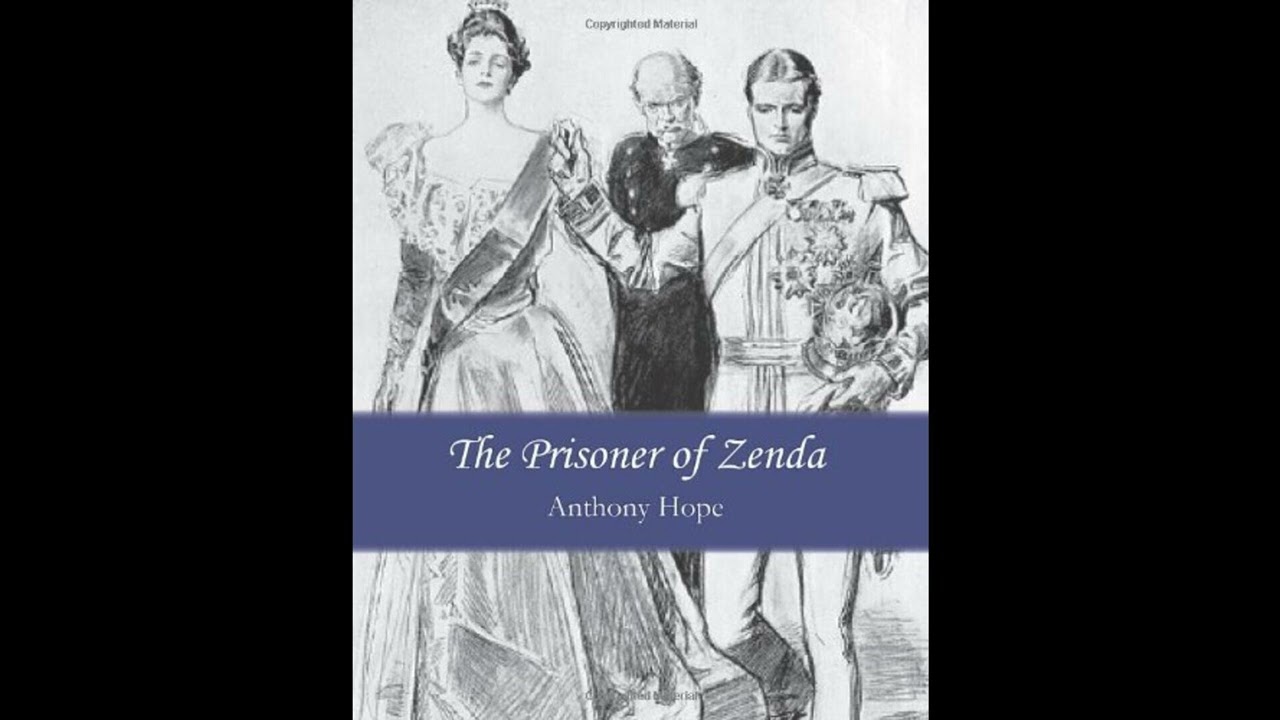
Enter a world of daring adventure, mistaken identity, and duty-bound romance with Anthony Hope's The Prisoner of Zenda. This influential novel, first published in 1894, did more than merely tell a thrilling tale; it effectively invented the "Ruritanian romance" genre, a specific brand of swashbuckling adventure set in fictional European kingdoms that has inspired countless stories in literature, film, and television ever since. At its heart, it questions the nature of leadership, the pull of personal desire against public obligation, and the very essence of what makes a man a king. Its enduring appeal lies in its sharp dialogue, its breathless pace, and a central dilemma that still resonates: what if you were suddenly thrust into a role of immense power and responsibility, a role not your own, yet one you perform better than the rightful heir? The story begins with Rudolf Rassendyll, a young, somewhat aimless English gentleman of leisure, who bears a striking and somewhat inconvenient resemblance to the royal family of Ruritania, a small, independent kingdom nestled in the heart of Europe. Drawn by a curious fascination with his distant relatives and a thirst for adventure, Rassendyll travels to Ruritania on the eve of the coronation of Rudolf V. By sheer coincidence, and a twist of fate involving a drugged supper, the true King Rudolf is incapacitated and then kidnapped by his treacherous half-brother, Duke Michael, who plots to seize the throne for himself. With the coronation hours away and chaos looming, Colonel Sapt and Fritz von Tarlenheim, loyal subjects of the king, implore Rassendyll to impersonate Rudolf V, convincing him that the stability of the kingdom rests on his shoulders. Thus, Rassendyll, a commoner, finds himself thrust into the highest office, performing the coronation rites and navigating the treacherous waters of Ruritanian court politics. He must not only fool the entire court and populace but also contend with the ambitious Duke Michael and his formidable henchmen, particularly the dashing but ruthless Rupert of Hentzau, all while maintaining the delicate deception. His most difficult challenge, however, comes in the form of Princess Flavia, the beautiful and virtuous cousin of the king, to whom Rassendyll (as the supposed king) is betrothed. As he spends more time in the role, falling deeper into the illusion and developing genuine feelings for Flavia, the lines between his true identity and his adopted persona blur, creating a poignant and perilous internal conflict. He must find a way to rescue the true king from Michael's remote castle, Zenda, without revealing the monumental deception to the people or compromising Flavia's honor, all while battling his own growing affection for her. The author, Anthony Hope Hawkins, who wrote under the pen name Anthony Hope, was born in London in 1863. Educated at Marlborough College and Balliol College, Oxford, he pursued a career as a barrister, even being called to the bar in 1887. However, the legal profession proved less compelling than the world of letters. Hope's initial literary successes came with a series of lighthearted societal sketches, The Dolly Dialogues, published in 1894. But it was in the same pivotal year that he released The Prisoner of Zenda, a novel that instantly transformed his career and cemented his place in literary history. Hope's clever blend of adventure, political intrigue, and romance struck a chord with the reading public, establishing a template for a genre that would thrive for decades. While he continued to write other works, including the successful sequel, Rupert of Hentzau (1898), and numerous other novels and plays, The Prisoner of Zenda remained his most enduring contribution, defining the "Ruritanian" archetype. Knighted in 1918 for his services to literature, Anthony Hope passed away in 1933, leaving behind a legacy as a master storyteller who perfectly captured the spirit of escapist adventure. Several compelling themes emerge from the narrative of The Prisoner of Zenda. Perhaps most central is the question of identity and impersonation. Rassendyll literally steps into another man's shoes, performing the duties of a king with more skill and honor than the true monarch. This forces us to consider what truly constitutes leadership: is it bloodline, or is it character, courage, and a sense of duty? Rassendyll's uncanny ability to fool an entire nation, his quick wit, and his inherent nobility suggest that kingship is less about birth and more about the individual embodying the role. Connected to this is the theme of appearance versus reality. The visual identicality of Rudolf Rassendyll and Rudolf V hides a profound difference in their natures, with Rassendyll proving himself a more capable and charismatic leader. Another poignant theme is the stark conflict between duty and personal desire. Rassendyll's actions are driven by an unselfish sense of duty to Ruritania and its people, even as he finds himself falling deeply in love with Princess Flavia. Their romance, idealized and pure, is tragically constrained by his temporary role and the demands of state. For example, during their initial interactions, the joy of their growing affection is always shadowed by the unspoken knowledge that his position is a lie, and that their love can never be. This gives their conversations and shared moments a bittersweet quality, embodying the high cost of honor and sacrifice. This thread of chivalry and romance, where love is intertwined with honor and selflessness, elevates the story beyond mere adventure into something more emotionally resonant. When The Prisoner of Zenda was published in 1894, Britain was in the midst of the late Victorian era, a period often characterized by imperial confidence but also by a growing fascination with European politics and the continent's more exotic, sometimes volatile, monarchies. The novel tapped into a desire for escapism from the increasingly industrialized and complex modern world, offering readers a romanticized vision of a bygone age of chivalry, political intrigue, and clear-cut heroism. While realist novels were gaining prominence, there remained a strong appetite for adventure stories, and Hope's work offered a sophisticated twist on the genre, blending thrilling action with intelligent plotting and a strong emotional core. It emerged at a time when fiction could transport readers to fantastical yet believable settings, allowing them to experience high stakes and grand romance from the comfort of their armchairs. To truly appreciate the wit, the tension, and the sweep of romance in The Prisoner of Zenda, listening to it as an audiobook is an ideal choice. The narrative's deliberate pacing, shifting between moments of quiet introspection and explosive action, lends itself perfectly to the spoken word. A skilled narrator can bring to life the distinct personalities, from Rassendyll's thoughtful heroism to Rupert of Hentzau's sardonic menace, and the dignified sorrow of Princess Flavia. The clever dialogue, often filled with subtle irony and urgent declarations, gains an extra dimension when delivered by a voice artist capable of conveying every nuance. Over several hours, you will become immersed in the atmosphere of Ruritania, feeling the urgency of the court, the danger of the castle of Zenda, and the heartfelt dilemma of a man caught between two worlds, making for a truly memorable listening experience.
Enjoyed The Prisoner of Zenda? A few ways to support us
Audible & Amazon links are affiliate; we may earn a small commission at no extra cost.
About this production
Human narration by a volunteer reader from LibriVox.org, the public-domain audiobook project. LibriVox volunteers record literary works whose copyright has expired in the United States, releasing the resulting recordings into the public domain.
The Prisoner of Zenda by Anthony Hope. The underlying text is in the U.S. public domain. We do not republish any modern copyrighted edition, translation, or commentary.
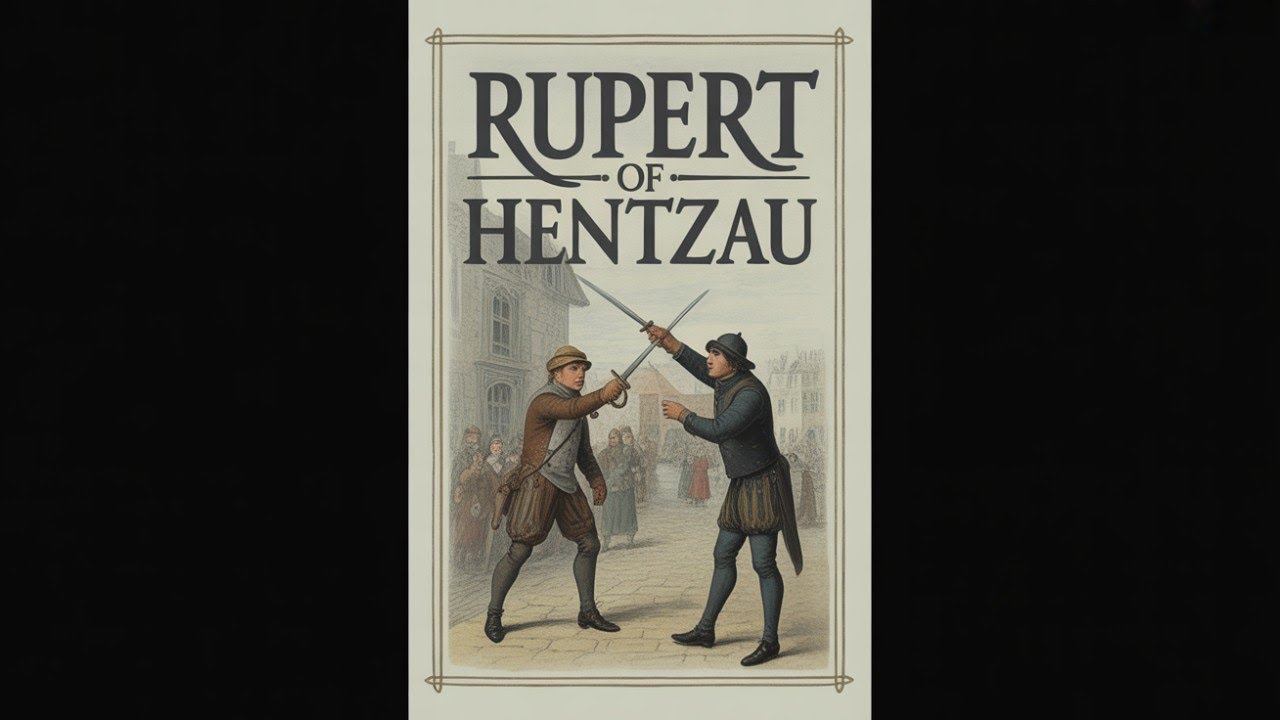
The 4K cinematic visuals accompanying this audiobook are generated by an AI image model from prompts derived from the source text. No copyrighted photos, paintings, or stock footage are used. AI generation is disclosed on every video on our YouTube channel as required by YouTube's altered/synthetic content policy.
English subtitles are transcribed from the LibriVox recording with OpenAI Whisper. Translations into the 11 other supported languages are produced by Meta's NLLB-200 neural translation model. No human translator's copyrighted translation is used.
Questions about sourcing or rights? See our DMCA & Sourcing policy or contact us.
Enjoyed this audiobook?
If you'd like to own a copy of The Prisoner of Zenda or hear a professionally produced edition, the links below help support free audiobook production at no extra cost to you.
As an Amazon Associate we earn from qualifying purchases. Audible / print links are affiliate.