About Anthony Hope
In the twilight years of the Victorian era, as the world of letters buzzed with new forms of storytelling, a particular voice emerged, blending swashbuckling adventure with social wit: that of Sir Anthony Hope Hawkins, known to readers simply as Anthony Hope. He was born in Clapton, London, on February 9, 1863, and passed away in Leatherhead, Surrey, on July 8, 1933.
Anthony Hope was the son of a clergyman, Reverend Edward Hawkins. His formative years included studies at Marlborough College and New College, Oxford, where he focused on classics, laying a foundation for his precise and elegant prose. Although he qualified as a barrister in 1887 and practiced law for a period, the call of narrative proved stronger, leading him eventually to forsake the courtroom for the writing desk.
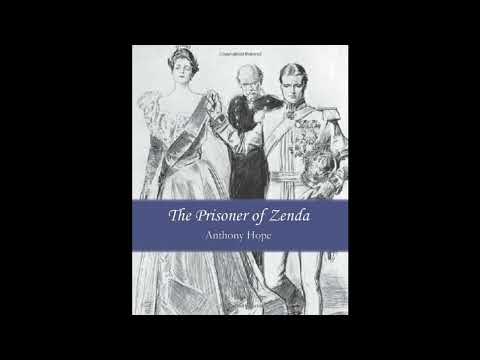
Hope’s entry into the publishing world coincided with a flourishing demand for popular fiction, from serialized stories in magazines to full-length novels across various genres. He began to write in his spare time, honing a distinctive style that mixed dramatic plotting with perceptive social commentary. His early efforts slowly gained traction, with *The Dolly Dialogues* (1894) earning him initial recognition for its clever and observant portrayal of society conversation. However, it was the publication of *The Prisoner of Zenda* in the same year that truly catapulted him to widespread fame, defining a new genre and securing his place among the era's most popular authors.
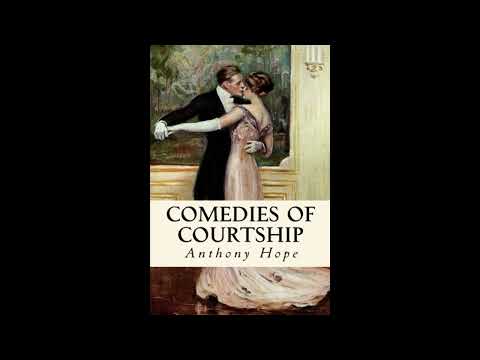
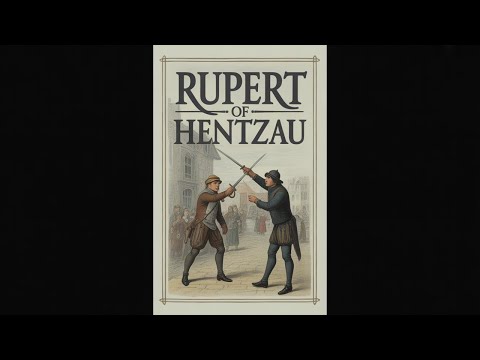
Beyond his celebrated breakthrough, Hope penned numerous other popular and critically well-received books. *The Dolly Dialogues* offers a series of sophisticated conversations satirizing the manners and romantic entanglements of the British upper class. *The Prisoner of Zenda* tells the thrilling tale of an English gentleman impersonating a king to save his throne. Its immediate success led to the equally popular sequel, *Rupert of Hentzau* (1898), which continues the dangerous political and romantic predicaments of the characters. Later works such as *Quisanté* (1900) offered a more serious look at political ambition and moral compromise, while *Second String* (1910) presented a nuanced study of social dynamics and personal attachment. His collection *Comedies of Courtship* (1896) further showcased his talent for dissecting the lighter side of romantic dilemmas.
Anthony Hope's writing is characterized by its elegant language, sharp wit, and a keen understanding of human nature, often expressed through engaging dialogue. His narratives frequently balance suspense and high drama with an underlying current of irony or social satire. Recurring themes in his work include the conflict between duty and personal desire, the artificiality of societal expectations, the allure of adventure, and the profound impact of individual choices on destiny. For instance, the premise of *The Prisoner of Zenda*, where a commoner must assume the identity and responsibilities of royalty, vividly illustrates his preoccupation with the burdens of status and the unexpected demands of fate, forcing his protagonist to confront the true meaning of honor and sacrifice.
Hope’s contribution to literary history is undeniable, primarily as the progenitor of the "Ruritanian romance," a genre featuring adventure, intrigue, and romance set in fictional Central European kingdoms. This specific brand of historical fantasy influenced countless later adventure writers and helped define a particular vein of popular fiction that appealed to readers' desires for escapism and heroic action. Beyond these thrilling tales, his social comedies and novels of manners showcased his versatility and perception, cementing his reputation as a significant voice of his time, whose work enjoyed widespread adaptations for stage and screen throughout the twentieth century.
Today, the charm and excitement of Anthony Hope’s narratives remain, ready to transport new audiences through the accessible medium of free audiobooks.
More on Wikipedia →