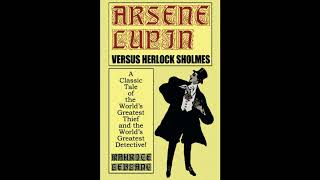
The Complete Collection of Arsène Lupin 10 Books Box Set
Step into a world where charm is a weapon and wit is the sharpest tool in the box, a landscape where the lines between hero and villain blur into a thrilling dance. The Complete Collection of Arsène Lupin 10 Books Box Set introduces you to the original gentleman-burglar, a character who redefined the crime genre and continues to influence storytellers today. Maurice LeBlanc’s creation is not merely a thief; he is a magician of misdirection, a master of disguise, and a figure of audacious intelligence who operates just beyond the reach of the law. Why should a listener care today? Because Lupin's exploits offer a timeless fantasy of cleverness triumphing over convention, a vicarious thrill that challenges us to reconsider where true justice lies, all delivered with an infectious sense of fun and theatricality that never ages. He is the original anti-hero, always one step ahead, making him endlessly entertaining. The stories generally unfurl in the opulent and often corrupt high society of early 20th-century France. We find ourselves in grand Parisian salons, on speeding international trains, within the walls of ancient châteaux, and amidst the glittering treasures of the wealthy elite. The central figure, Arsène Lupin, is a man of a hundred faces, never truly revealing his true self. He might appear as a dapper aristocrat one moment, a bumbling detective the next, or even a kindly old gentleman, all to facilitate his next incredible exploit. His targets are often those whose wealth is ill-gotten or whose moral compass is clearly broken, lending a peculiar sense of ethical righteousness to his audacious thefts. His perpetual foil is the dogged but perpetually outmaneuvered Inspector Ganimard, whose pursuit of Lupin becomes a running joke, a testament to Lupin's unparalleled ingenuity. The arc across these ten books isn't a single, linear narrative of character development, but rather a grand tapestry woven from individual adventures, each showcasing a new facet of Lupin's genius. From his first appearance escaping a transatlantic liner in "Arsène Lupin, Gentleman-Cambrioleur," to solving complex murders, recovering national treasures, and even dabbling in international espionage, Lupin's adventures are diverse and surprising. He not only steals jewels and paintings but also outwits rival criminals, thwarts sinister plots, and occasionally even acts as a benevolent guardian, often leaving behind a calling card or a cryptic note that serves as a signature taunt to his baffled pursuers. The consistent thread is Lupin's dazzling intellect and his unwavering confidence in his ability to outmaneuver anyone who stands in his way, making each story a delightful puzzle for the listener. Maurice LeBlanc, born in 1864 in Rouen, France, initially pursued a career in journalism before turning his talents to fiction. Like many aspiring writers of his era, he initially tried his hand at more "serious" literary works, even drawing praise from figures like Guy de Maupassant. However, it was the serial publication of "Arsène Lupin" stories in the magazine Je sais tout beginning in 1905 that catapulted him to widespread fame. LeBlanc confessed that he began writing the Lupin stories only at the urging of an editor who sought a French answer to Arthur Conan Doyle's Sherlock Holmes. This genesis is evident in some of Lupin’s earliest adventures, where he famously encounters a thinly disguised version of Holmes himself, dubbed "Herlock Sholmès." LeBlanc wrote over fifty novels and short stories featuring Arsène Lupin, cementing his place in the annals of crime and adventure fiction. His work represents a significant contribution to French popular literature of the Belle Époque and beyond, influencing generations of writers and creating a unique archetype: the criminal protagonist who is simultaneously charismatic, intelligent, and morally ambiguous. LeBlanc's detailed plots, intricate disguises, and focus on the mechanics of the heist itself, rather than just the detection, set him apart from his contemporaries and gave his work a distinctive flair. He essentially inverted the detective story, shifting the focus from the pursuit of the criminal to the cleverness of the criminal's operations and escapes. One of the central themes that runs through the Arsène Lupin collection is the fascinating interplay between justice and law. Lupin, despite being a criminal, often operates with a peculiar moral code. He frequently targets individuals whose wealth is tainted, exposing their hypocrisy or recovering items that were themselves unjustly acquired. For instance, in "The Hollow Needle," he becomes entangled in a quest for a national secret that forces him to confront not only personal gain but also the fate of France, illustrating how his actions, while illegal, sometimes serve a higher purpose or a more equitable form of justice than the official channels. He might steal a precious necklace from a baron who acquired it through unethical means, thereby righting a hidden wrong in a spectacular fashion. Another prominent theme is identity and disguise. Lupin's genius lies in his ability to shed and assume identities with breathtaking ease, challenging the very notion of a fixed self. He is a master actor, a chameleon who can be anyone, anywhere. This theme is enacted repeatedly as he slips past guards or confounds witnesses by simply changing his posture, his voice, or a minor facial feature. In "Arsène Lupin vs. Herlock Sholmès," the entire conflict revolves around his ability to constantly present new personas, making it almost impossible for even the world's greatest detective to pin him down. This constant shapeshifting serves not only as a plot device but also as a commentary on the fluidity of human perception and the masks we all wear. The stories also subtly weave in social commentary, critiquing the moral failings of the upper classes and highlighting the arbitrary nature of status and wealth in society. The Arsène Lupin stories emerged during the Belle Époque, a period in French history from the late 19th century to the outbreak of World War I, characterized by optimism, economic prosperity, and significant technological and cultural advancements. This was an era of gaslight glamour, burgeoning industry, and a rapidly expanding middle class eager for entertainment. Culturally, there was a widespread fascination with progress, but also a growing awareness of social inequalities and the moral compromises often made by the powerful. Detective fiction, propelled by the success of Sherlock Holmes, was incredibly popular, satisfying a public appetite for intellectual puzzles and thrilling escapism. LeBlanc's work fit perfectly into this context. Lupin, with his blend of aristocratic bearing and criminal enterprise, offered a subversive fantasy. He represented a challenge to the established order, a charming figure who could outwit corrupt officials and incompetent police, making the ordinary citizen feel a vicarious sense of power. The stories provided a sophisticated diversion from daily life, appealing to the desire for adventure, mystery, and a hero who operated on his own terms, unburdened by conventional morality. Lupin became a symbol of French ingenuity and flair, a response to British literary dominance in the genre, and a reflection of the era's complex attitudes towards wealth, justice, and individual freedom. Listening to The Complete Collection of Arsène Lupin as an audiobook brings these vivid tales to life in an especially immersive way. A skilled narrator can artfully convey Lupin's nuanced personality—his inherent charm, his subtle arrogance, his lightning-quick wit—through vocal inflections and pacing. The length of this complete box set, encompassing several hours of listening, makes it an ideal companion for long commutes, relaxed afternoons, or as a background for tasks around the house. You can sink into the period atmosphere, hearing the clinking of teacups in a country manor or the hushed urgency of a clandestine meeting, all painted with the narrator's voice. Pay attention to how the dialogue truly shines when delivered orally, capturing the rapid-fire banter and the moments of suspense. The varied voices for Lupin’s numerous disguises, and for the baffled detectives and bewildered victims, add another layer of enjoyment, allowing you to fully appreciate the theatricality and intelligence that defines the adventures of Arsène Lupin.
Enjoyed The Complete Collection of Arsène Lupin 10 Books Box Set? A few ways to support us
Audible & Amazon links are affiliate; we may earn a small commission at no extra cost.
About this production
Human narration by a volunteer reader from LibriVox.org, the public-domain audiobook project. LibriVox volunteers record literary works whose copyright has expired in the United States, releasing the resulting recordings into the public domain.
The Complete Collection of Arsène Lupin 10 Books Box Set by Maurice LeBlanc(Gentlema. The underlying text is in the U.S. public domain. We do not republish any modern copyrighted edition, translation, or commentary.
The 4K cinematic visuals accompanying this audiobook are generated by an AI image model from prompts derived from the source text. No copyrighted photos, paintings, or stock footage are used. AI generation is disclosed on every video on our YouTube channel as required by YouTube's altered/synthetic content policy.
English subtitles are transcribed from the LibriVox recording with OpenAI Whisper. Translations into the 11 other supported languages are produced by Meta's NLLB-200 neural translation model. No human translator's copyrighted translation is used.
Questions about sourcing or rights? See our DMCA & Sourcing policy or contact us.
Enjoyed this audiobook?
If you'd like to own a copy of The Complete Collection of Arsène Lupin 10 Books Box Set or hear a professionally produced edition, the links below help support free audiobook production at no extra cost to you.
As an Amazon Associate we earn from qualifying purchases. Audible / print links are affiliate.