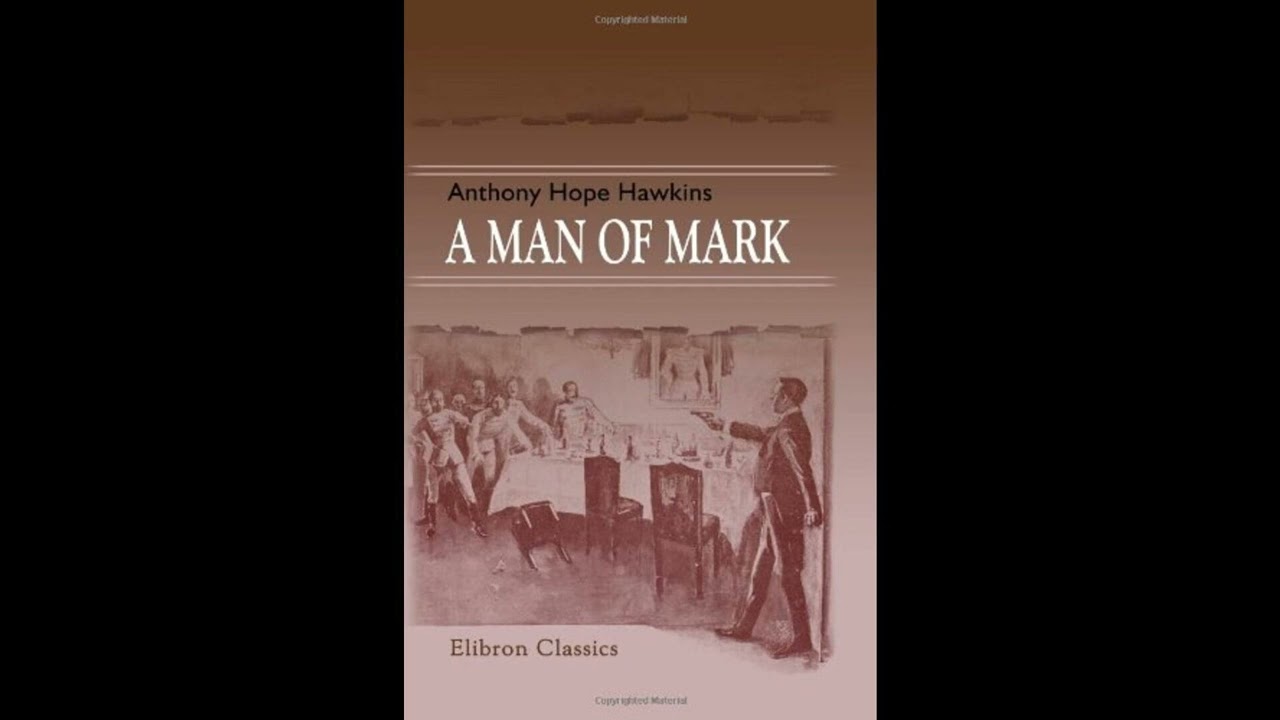
A Man of Mark
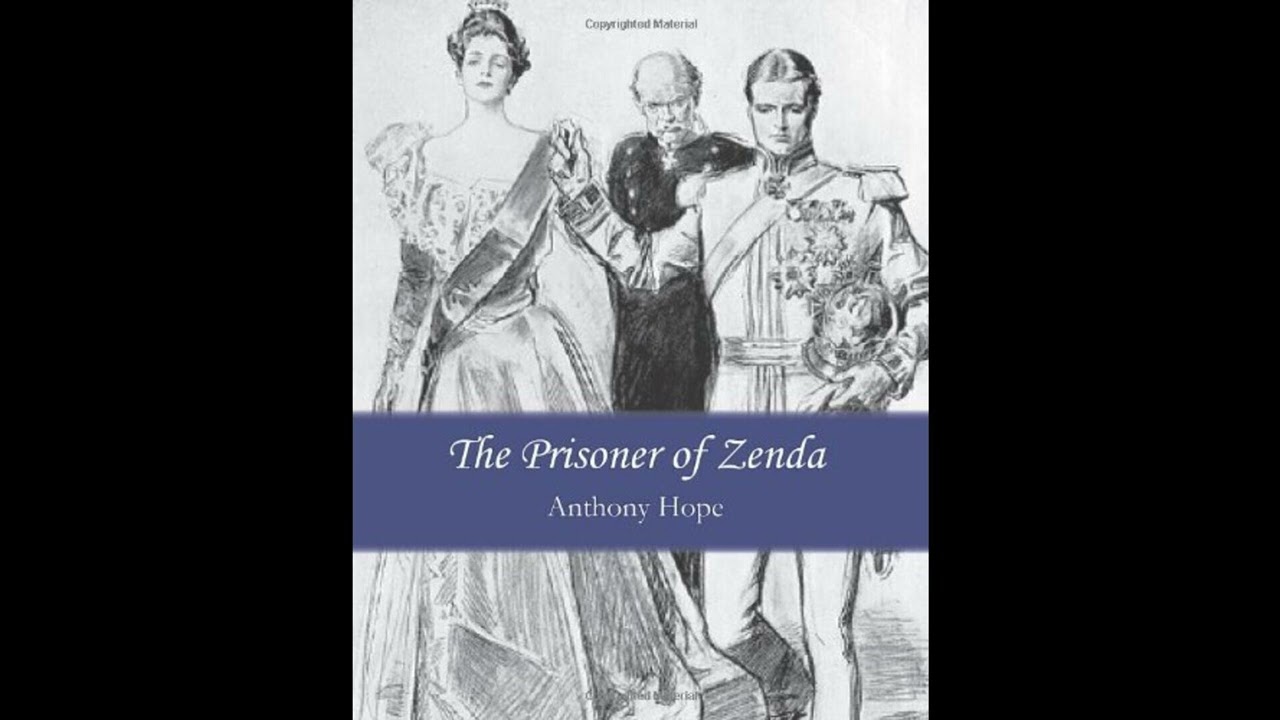
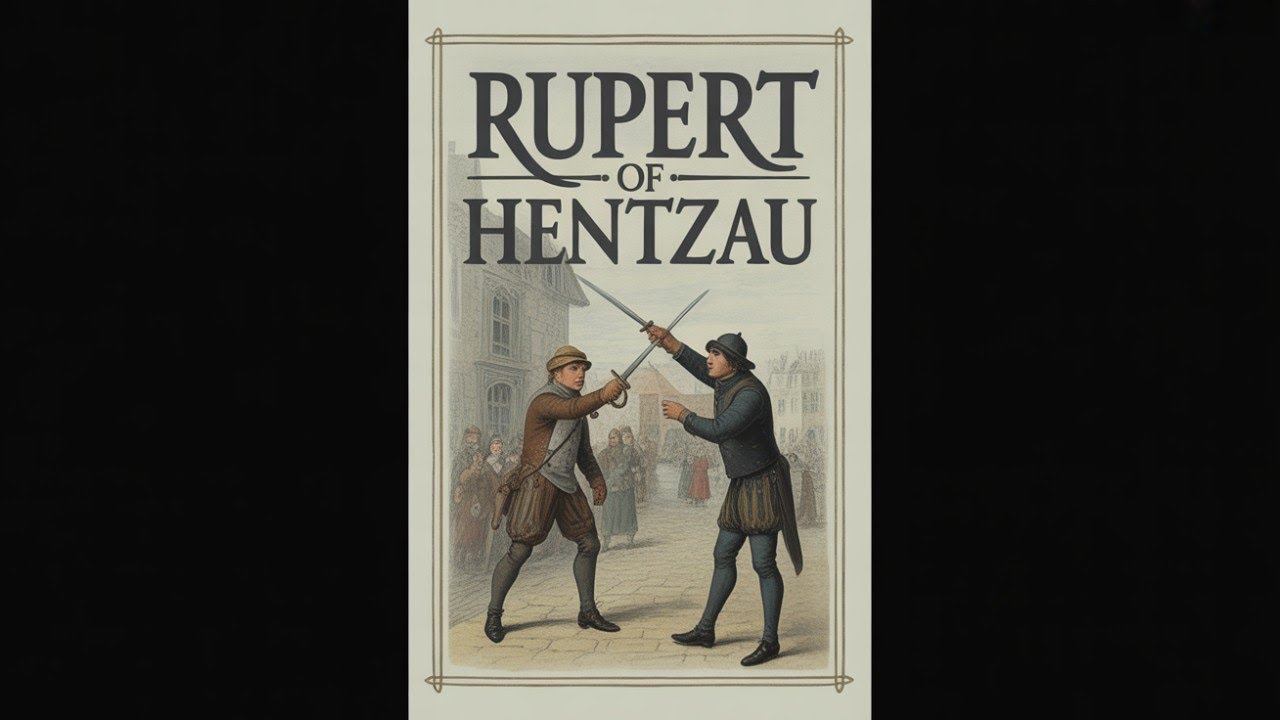
Anthony Hope's A Man of Mark invites listeners into a world where personal ambition clashes with political turmoil, an engrossing tale that speaks with surprising resonance to our own era of complex international relations and moral quandaries. Published in 1890, this early work from the author who would later pen the iconic The Prisoner of Zenda presents a compelling study of an ordinary individual thrust into extraordinary circumstances, forcing a reckoning with power, ethics, and identity. It is a story not just of adventure, but of the often-blurry lines between idealism and self-interest, making it a powerful listen for anyone who ponders the true cost of influence and the enduring challenges of leadership. The story transports us to the volatile, fictional South American republic of Aureataland, a land perpetually on the brink of political upheaval. Here we meet George Falkland, an astute but initially detached Englishman who arrives seeking opportunity and perhaps a touch of excitement. Falkland, a man of keen observation and a certain persuasive charm, quickly finds himself drawn into the dizzying vortex of Aureataland's political landscape. The republic is a hotbed of intrigue, controlled by a seemingly unassailable but deeply corrupt president, Señor Garcia, who governs through a network of patronage and quiet coercion. As Falkland navigates this unfamiliar terrain, he encounters a fascinating array of characters, each with their own designs on the future of Aureataland. There is the idealistic revolutionary, General de La Cruz, who dreams of genuine reform, and the president's beautiful, enigmatic wife, whose motivations are as veiled as the republic's true agenda. Falkland initially acts as an observer, but soon, through a combination of his own growing ambition and the manipulative forces around him, he becomes a key player in a brewing coup d'état. The central conflict intensifies as Falkland is forced to make increasingly difficult choices, weighing his personal gain against the welfare of a nation he has grown to understand, if not fully embrace. The narrative skillfully builds tension, charting Falkland's ascent within the conspiratorial circles and the moral compromises he faces as the stakes grow higher and the line between ally and adversary becomes increasingly blurred. The creator of this fascinating narrative was Anthony Hope Hawkins, born in London in 1863, the son of a vicar. Educated at Marlborough College and Balliol College, Oxford, he pursued a career in law, being called to the bar in 1887. However, the pull of literature proved stronger, and he began writing fiction in his spare time. His early novels, including A Man of Mark, laid the groundwork for the style and themes that would soon bring him widespread fame. By 1894, with the publication of The Prisoner of Zenda, he achieved immense popular success, practically inventing the literary subgenre known as "Ruritanian romance," tales of intrigue set in fictional European principalities. Hawkins would go on to write numerous other novels and plays, including the popular sequel Rupert of Hentzau, and was knighted in 1918 for his contributions to literature and public service during World War I. He was a master of constructing intricate plots and creating memorable characters, often exploring themes of duty, honor, and the nature of power, usually with a keen sense of irony and social observation. His place in the literary canon is secured as a significant figure in late Victorian and Edwardian adventure fiction, a writer who blended high drama with psychological depth, paving the way for many subsequent tales of political intrigue and identity confusion. He passed away in 1933, leaving behind a body of work that continues to entertain and provoke thought. A Man of Mark articulates several powerful themes, particularly that of ambition and moral compromise. George Falkland, initially driven by a desire for excitement and influence, finds himself ensnared in a web of deceit that challenges his ethical boundaries. Early in the story, his pragmatic English sensibilities clash with the fervent, often ruthless, political methods of Aureataland. He might, for instance, initially dismiss the overt corruption of President Garcia as merely "the way things are done" in this republic, yet as he becomes more deeply involved in the plot to overthrow Garcia, he is confronted with his own capacity for manipulation and the painful reality of making decisions that affect countless lives. The book vividly renders how the pursuit of power can gradually erode one's principles, forcing Falkland to question his own character. Another prominent theme is identity and the performance of roles. Falkland, an outsider, assumes a significant role within Aureataland's power struggles, effectively adopting a new identity as a political player. This shift is not merely superficial; it affects his perceptions and actions. He moves from being a detached observer to an active participant, and the narrative questions whether his "English" identity remains intact amidst the machinations of the republic. His outward composure often masks internal turmoil, highlighting the struggle between who one truly is and the persona one must project to survive in a high-stakes environment. The novel also touches on the corrupting influence of power itself, showing how it can twist even the best intentions, and the inherent fragility of political systems built on personal loyalties rather than rule of law. The genesis of A Man of Mark is firmly rooted in the intellectual and political currents of the late nineteenth century. This was a period when the British Empire was at its zenith, and there was a widespread public fascination with foreign lands, particularly those seen as less "civilized" or politically stable. Books like Hope's allowed readers to vicariously experience adventure and intrigue in exotic settings, often through the eyes of an English gentleman whose moral compass served as a subtle commentary on the perceived differences between cultures. Furthermore, the late 1800s saw the rise of new republics and the fragmentation of old empires, particularly in regions like the Balkans and South America, creating a real-world backdrop of political instability and the struggle for national identity that resonated deeply with stories of coups and shifting allegiances. Hope's work tapped into this zeitgeist, offering both thrilling escapism and a subtle means of discussing the ethics of power and intervention in a rapidly changing world. Listening to A Man of Mark as an audiobook offers a unique and intimate way to experience this foundational work of adventure and intrigue. The several hours of narrative provide ample opportunity to become thoroughly immersed in the political machinations of Aureataland and George Falkland's complex inner life. Listen for the narrator's skillful portrayal of the distinct voices and temperaments of the various characters – the subtle menace of Garcia, the earnest idealism of de La Cruz, and the evolving internal conflict within Falkland himself. The pacing of the narration will allow the political drama to unfold naturally, building suspense as Falkland becomes more deeply entangled. Pay attention to the subtle shifts in atmosphere, from initial curiosity to growing tension and moral urgency, all conveyed through careful voice acting and interpretation of Hope's compelling dialogue. It's an opportunity to truly hear the intricate workings of a mind grappling with the seductive, perilous allure of power.
Enjoyed A Man of Mark? A few ways to support us
Audible & Amazon links are affiliate; we may earn a small commission at no extra cost.
About this production
Human narration by a volunteer reader from LibriVox.org, the public-domain audiobook project. LibriVox volunteers record literary works whose copyright has expired in the United States, releasing the resulting recordings into the public domain.
A Man of Mark by Anthony Hope. The underlying text is in the U.S. public domain. We do not republish any modern copyrighted edition, translation, or commentary.
The 4K cinematic visuals accompanying this audiobook are generated by an AI image model from prompts derived from the source text. No copyrighted photos, paintings, or stock footage are used. AI generation is disclosed on every video on our YouTube channel as required by YouTube's altered/synthetic content policy.
English subtitles are transcribed from the LibriVox recording with OpenAI Whisper. Translations into the 11 other supported languages are produced by Meta's NLLB-200 neural translation model. No human translator's copyrighted translation is used.
Questions about sourcing or rights? See our DMCA & Sourcing policy or contact us.
Enjoyed this audiobook?
If you'd like to own a copy of A Man of Mark or hear a professionally produced edition, the links below help support free audiobook production at no extra cost to you.
As an Amazon Associate we earn from qualifying purchases. Audible / print links are affiliate.