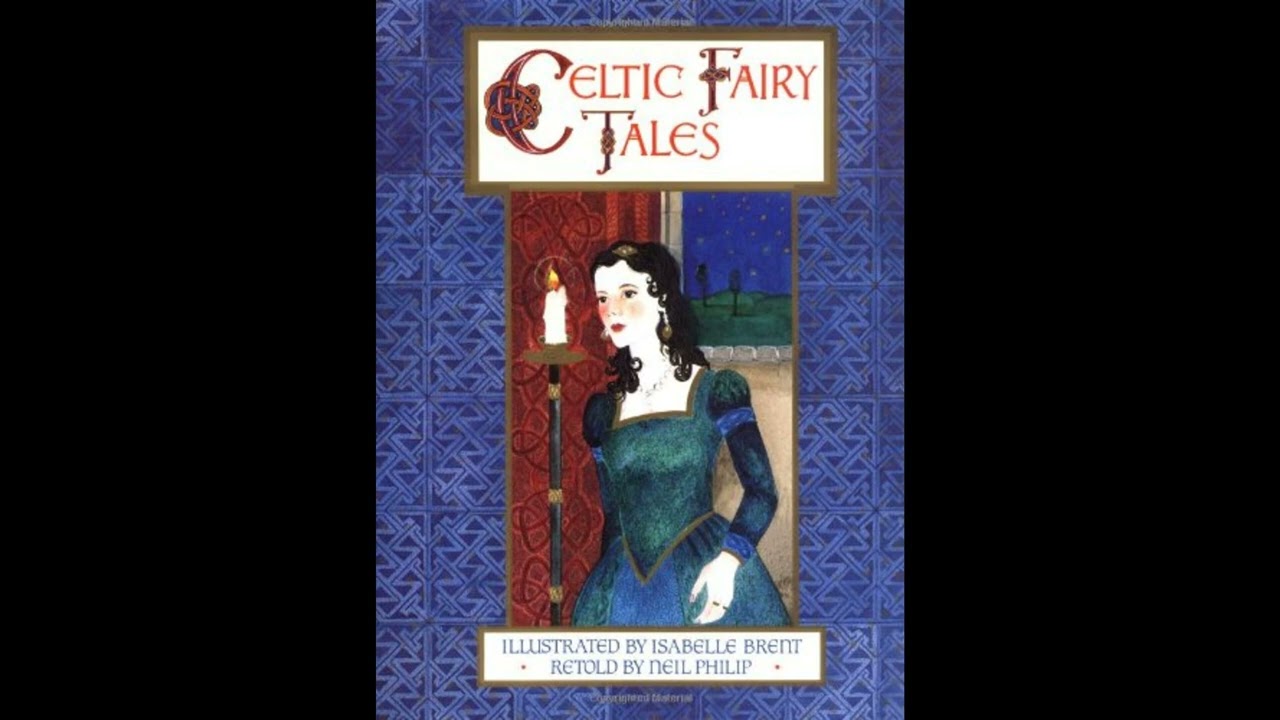
Celtic Fairy Tales
Step into a realm where the veil between worlds thins, where ancient forests hold forgotten secrets, and where the everyday farmer might just stumble upon the court of a fae king. Neil Philip’s "Celtic Fairy Tales" is more than a mere collection of stories; it is an invitation to experience the very heartbeat of a culture steeped in magic, wonder, and a profound connection to the land. These narratives, drawn from the wellsprings of Irish, Scottish, Welsh, and Cornish traditions, offer a vivid window into a consciousness where supernatural encounters are not just possible but probable, shaping human destinies with capricious grace or formidable power. Listening to these tales today allows us to reconnect with primal fears, universal hopes, and the enduring human struggle against forces both seen and unseen, reminding us of the timeless nature of storytelling and the deep roots of our shared mythology. Within this expansive collection, listeners will encounter a sprawling landscape of mist-shrouded islands, deep, green glens, and crumbling castles, where the boundaries of reality frequently dissolve into myth. The protagonists are often ordinary folk—young lovers, brave warriors, clever peasants, or lonely hermits—whose lives are dramatically altered by encounters with the unseen world. Main characters range from heroic figures like Finn Mac Cumhaill and his legendary Fenian knights, whose deeds echo with martial prowess and a keen understanding of the wild, to more humble individuals caught in the whims of fate or the machinations of powerful spirits. There are also the mysterious inhabitants of the Otherworld: the beautiful, perilous queens of Faerie, the mischievous piskies and brownies, the fearsome giants, and the wise, shape-shifting animals who often offer aid or subtle warnings. The central conflicts within these tales frequently arise from the collision of the human and supernatural realms. Characters might find themselves seeking magical objects, attempting to outwit cunning creatures, or striving to undo ancient curses. A common arc involves a protagonist venturing into an enchanted realm, whether by accident or design, where they face trials of courage, wit, and moral character. Their success often depends on respecting ancient customs, understanding the unspoken rules of the fae, or simply demonstrating kindness when it is least expected. Consequences for breaking promises, showing disrespect, or succumbing to greed are often severe, underscoring the deep moral framework embedded within these narratives, even as they delight in the whimsical and the fantastic. These tales, rather than presenting a single linear story, weave a mosaic of experiences, each one a unique prism reflecting the enduring interplay between human resilience and the unpredictable forces of an enchanted world. Neil Philip, born in 1955 in Kent, England, has established himself as a distinguished folklorist, author, and poet. His career has been dedicated to the study, collection, and retelling of myths, legends, and folk tales from cultures around the globe, making these often complex and archaic narratives accessible to a contemporary audience. Philip studied at Oxford University, where he specialized in English literature, a background that clearly informs his discerning eye for narrative structure and poetic language. Throughout his prolific career, he has authored or edited more than one hundred books, spanning various genres from poetry and fiction to non-fiction scholarship on folklore. Among his many notable works, "The Penguin Book of English Folk Tales" stands as a testament to his meticulous scholarship and ability to present traditional stories with both academic rigor and engaging prose. He has also penned "The Book of Fairies" and several retellings of classic myths, demonstrating his breadth of knowledge across different mythologies. Philip’s contribution to the literary canon lies in his role as a modern conservator and interpreter of oral traditions. He approaches his work not merely as a storyteller but as an ethnographer, carefully researching and often comparing different versions of a tale to present what he considers to be the most authentic or illuminating rendition. His approach positions him within a movement that seeks to re-evaluate and preserve the cultural heritage embedded in folklore, moving beyond sanitized children's versions to present stories in their fuller, sometimes darker, and always more complex forms. The tales Philip collects in "Celtic Fairy Tales" enact several enduring themes, often blurring the lines between instruction and entertainment. One prominent theme is the liminality between worlds, the idea that the human and supernatural realms are not separate but constantly bleed into one another. For instance, in many stories, a character might simply step over a threshold, wander off a familiar path into an unfamiliar glade, or accept a gift from a stranger, only to find themselves irrevocably caught in the Otherworld. This is beautifully illustrated when a farmer, tending his sheep on a seemingly ordinary hillside, hears music not of this earth and follows it into a hidden hollow, emerging days later to find centuries have passed in his absence. Another significant theme is the power of bargains and promises, particularly with magical beings. Breaking a sworn word, even one made under duress or in ignorance, often carries dire and inescapable consequences. A tale might feature a hero who, in exchange for a wish or rescue, promises something dear—perhaps his firstborn child or seven years of service—only to spend the rest of his life grappling with the repercussions, emphasizing the weight and sanctity of one's word in a world where unseen forces hold sway. Furthermore, the collection frequently highlights the theme of transformation and disguise, both literal and metaphorical. Characters and supernatural entities regularly change form, blurring identities and challenging perceptions of reality. A beautiful swan might shed its feathers to reveal a maiden, or a haggard old woman might unveil herself as a powerful sorceress or queen. This motif reinforces the idea that appearances can be deceiving and that true character or power often lies hidden beneath a misleading exterior. Finally, the tales consistently evoke nature's magic and ancient wisdom, presenting the land itself as a living entity imbued with spirit and memory. Sacred wells, ancient trees, and mysterious hills are not mere scenery but potent forces that can offer aid, wisdom, or danger. Often, a character's ability to navigate their challenges comes from an intuitive understanding or respect for these natural powers, or from listening to the counsel of wise elders whose knowledge is rooted in generations of observing the land and its unseen inhabitants. Neil Philip’s "Celtic Fairy Tales" emerged in a period of significant cultural and literary introspection, roughly in the late 20th and early 21st centuries. This era saw a renewed academic and popular interest in the preservation of national and regional folklore, fueled partly by growing awareness of cultural heritage in the face of globalization. There was a desire to move beyond the simplified, often moralistic children's retellings of earlier centuries and to present these stories with their original complexities, ambiguities, and sometimes darker edges intact. Philip's work, therefore, aligns with a broader intellectual movement that sought to understand folklore as a vital expression of communal identity and historical consciousness. This period also witnessed an explosion in comparative mythology studies, allowing Philip to draw connections between Celtic tales and global mythic patterns, while simultaneously emphasizing their unique cultural flavor. His collection speaks to a contemporary hunger for stories that connect us to ancient roots, offering a sense of wonder and meaning in an increasingly rationalized world. Listening to "Celtic Fairy Tales" as an audiobook offers a uniquely immersive and profoundly intimate experience. With several hours of narration, the format allows the stories to unfold at their own deliberate pace, inviting listeners to truly sink into each narrative without the visual distractions of a printed page. A skilled narrator will undoubtedly bring a diverse cast of characters to life—from the lilting accents of Irish fishermen to the regal tones of fae queens, the gruff pronouncements of giants, and the whispered counsel of forest spirits. The pacing should ebb and flow, allowing moments of magical wonder to breathe, building tension during perilous encounters, and delivering the punchline of a clever trick with precise timing. Listeners should pay attention to how the voice creates atmosphere, evoking the mist of a moorland, the rustle of leaves in an ancient wood, or the echoing silence of a forgotten cairn. The spoken word, in this context, becomes a direct conduit to the oral tradition from which these tales sprang, making this audiobook an ideal companion for long drives, quiet evenings at home, or any moment one seeks to escape the ordinary and step into a world of ancient enchantment.
Enjoyed Celtic Fairy Tales? A few ways to support us
Audible & Amazon links are affiliate; we may earn a small commission at no extra cost.
About this production
Human narration by a volunteer reader from LibriVox.org, the public-domain audiobook project. LibriVox volunteers record literary works whose copyright has expired in the United States, releasing the resulting recordings into the public domain.
Celtic Fairy Tales by Neil Philip. The underlying text is in the U.S. public domain. We do not republish any modern copyrighted edition, translation, or commentary.
The 4K cinematic visuals accompanying this audiobook are generated by an AI image model from prompts derived from the source text. No copyrighted photos, paintings, or stock footage are used. AI generation is disclosed on every video on our YouTube channel as required by YouTube's altered/synthetic content policy.
English subtitles are transcribed from the LibriVox recording with OpenAI Whisper. Translations into the 11 other supported languages are produced by Meta's NLLB-200 neural translation model. No human translator's copyrighted translation is used.
Questions about sourcing or rights? See our DMCA & Sourcing policy or contact us.
View 10 famous quotes from this book →
Enjoyed this audiobook?
If you'd like to own a copy of Celtic Fairy Tales or hear a professionally produced edition, the links below help support free audiobook production at no extra cost to you.
As an Amazon Associate we earn from qualifying purchases. Audible / print links are affiliate.